5 min read
Reflective Series – Lessons Behind Building Nap OS
Over the past decade, I have spent countless hours thinking about one deceptively simple question:
What actually creates employability?
When most people answer that question, they point to qualifications, certifications, AI tools, recruitment platforms, or increasingly sophisticated hiring software. Technology certainly matters, but after years of building Nap OS, I have come to a different conclusion.
The scarcest asset in workforce development is not technology.
It is not artificial intelligence.
It is not capital.
It is not even talent.
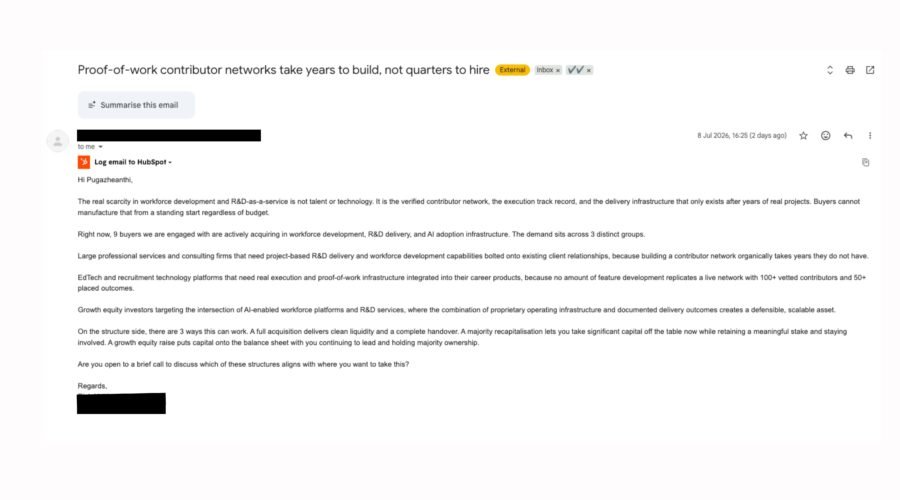
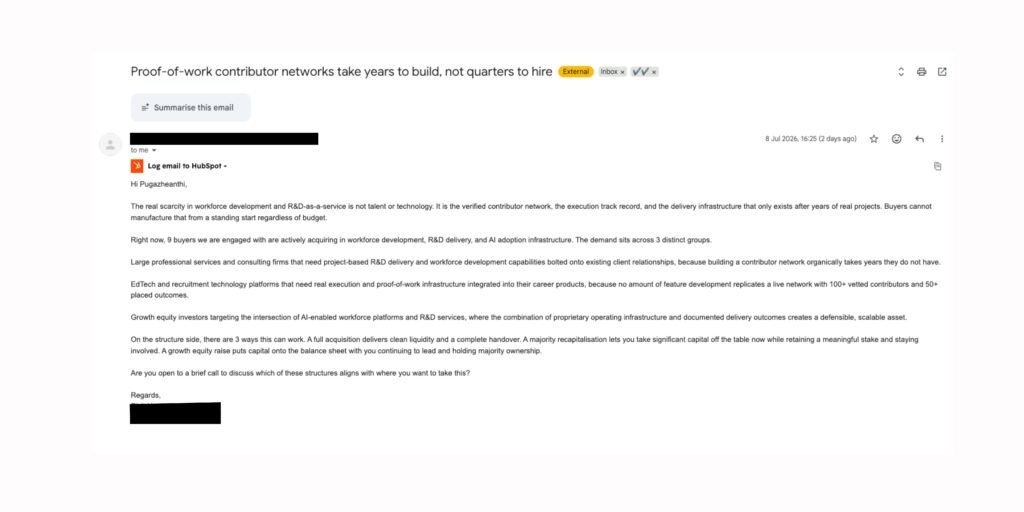
The scarcest asset is a verified proof-of-work contributor network built through years of real execution.
That realization fundamentally changed how I think about careers, recruitment, and workforce development.
Software Can Be Built. Trust Cannot.
Modern software has become remarkably accessible.
A talented engineering team can recreate most software products within months. AI has accelerated that timeline even further. User interfaces can be copied, workflows replicated, and features reverse engineered faster than ever before.
But there is one thing software alone cannot create.
History.
History is built project by project.
Employer by employer.
Candidate by candidate.
Reference by reference.
Outcome by outcome.
That accumulated history becomes something much more valuable than software itself.
It becomes trust.
The Difference Between Building Software and Building Infrastructure
When people think about career technology, they often think about products.
Job boards.
Applicant tracking systems.
Learning platforms.
Portfolio websites.
Recruitment marketplaces.
These are products.
But beneath every successful workforce platform lies something much more difficult to create.
Infrastructure.
Infrastructure is invisible until someone tries to recreate it.
A verified contributor network is infrastructure.
Employer relationships are infrastructure.
Operational processes are infrastructure.
Delivery capability is infrastructure.
None of these assets appear overnight.
Proof of Work Cannot Be Manufactured
One observation has become increasingly clear throughout my journey.
Proof of work cannot simply be manufactured because a company decides it needs it.
A contributor network is not built by hiring recruiters.
It is built by delivering hundreds of real projects.
Verified work experience is not created by issuing certificates.
It is created when individuals repeatedly demonstrate capability in authentic environments.
Employer trust is not created through marketing.
It is earned through consistent delivery over time.
Every successful project creates another reference.
Every reference creates more credibility.
Every credible contributor attracts additional opportunities.
Eventually, the system begins reinforcing itself.
That is where the real value starts to emerge.
Time Is an Unfair Advantage
Money accelerates many things.
It can buy software.
It can hire employees.
It can fund advertising.
It can acquire technology.
But time creates assets that money alone cannot purchase immediately.
A contributor network represents thousands of interactions accumulated over years.
Each relationship carries context.
Each completed project strengthens reputation.
Each successful outcome increases confidence.
These layers compound slowly.
There are very few shortcuts.
Even organizations with significant resources often discover that building trusted delivery infrastructure organically requires patience.
The process cannot simply be compressed into a quarterly objective.
The Compounding Effect of Verified Experience
One verified project has value.
Ten verified projects create credibility.
One hundred verified projects begin creating trust.
Thousands of verified experiences eventually become infrastructure.
This compounding effect is often underestimated.
Unlike traditional resumes, verified work accumulates rather than expires.
Every project strengthens the individual’s professional identity.
Every employer interaction contributes another layer of evidence.
Every successful delivery improves the quality of future matching.
Over time, the network becomes more intelligent because it contains more proof rather than more claims.
Why Nap OS Chose Verification Instead of Volume
Since the beginning of Nap OS, I have been less interested in helping candidates submit more applications.
Instead, I became interested in helping people create stronger evidence.
The distinction matters.
Most recruitment platforms optimize for activity.
More jobs.
More applications.
More clicks.
More resumes.
Nap OS is built around a different assumption.
Professional credibility compounds.
Every verified work experience strengthens the next opportunity.
Every employer-backed reference becomes part of a lifelong professional record.
Rather than creating temporary hiring transactions, the objective becomes building permanent professional assets.
That philosophy has shaped nearly every decision inside Nap OS.
Networks Are Built Through Contribution
Contributor networks are not simply collections of users.
They are communities built around shared execution.
People contribute.
Projects get completed.
Employers provide feedback.
References become verifiable.
Knowledge transfers across participants.
The network improves because everyone inside it contributes to its credibility.
This creates an entirely different dynamic from platforms built purely around transactions.
Participation becomes cumulative.
History becomes valuable.
Trust becomes measurable.
The Real Barrier Is Not Technology
Technology continues improving every year.
Artificial intelligence continues lowering the cost of software development.
Building products has become easier.
Building trusted ecosystems has not.
Creating thousands of verified experiences still requires people.
Maintaining employer relationships still requires consistency.
Generating meaningful references still requires successful outcomes.
These remain fundamentally human processes supported by technology rather than replaced by it.
The future of workforce development will likely belong to organizations that combine both.
Looking Beyond Recruitment
Perhaps the biggest lesson I have learned is that verified work experience extends beyond recruitment.
It influences education.
It influences entrepreneurship.
It influences workforce development.
It influences immigration.
It influences investment.
Increasingly, professional opportunity depends less on what someone claims and more on what they can demonstrate.
That shift creates an entirely different way of thinking about career infrastructure.
Rather than asking whether someone possesses a qualification, organizations increasingly ask whether they possess evidence.
Verified evidence becomes portable.
Reusable.
Longitudinal.
Compounding.
Building Something That Outlasts Software
One reflection continues to stay with me.
Technology evolves quickly.
Business models change.
Markets shift.
Artificial intelligence will continue transforming how products are built.
But trust remains remarkably durable.
Trust earned through years of execution becomes increasingly valuable precisely because it cannot be instantly recreated.
That realization has reinforced my conviction about where Nap OS should continue investing.
Not simply in better software.
Not simply in more AI.
But in building a system where verified work experience compounds into lifelong professional credibility.
Because software may attract users.
Features may generate attention.
Marketing may create awareness.
But lasting workforce infrastructure is built differently.
It is built through thousands of real experiences, verified contributions, trusted relationships, and consistent execution over many years.
Those are the assets that become difficult to replicate.
Those are the assets that continue appreciating long after individual features become obsolete.
And perhaps that is the most important lesson I have learned throughout this journey:
Proof-of-work contributor networks take years to build—not quarters to hire.