7 min read
The Employment Route Is No Longer the Only Route
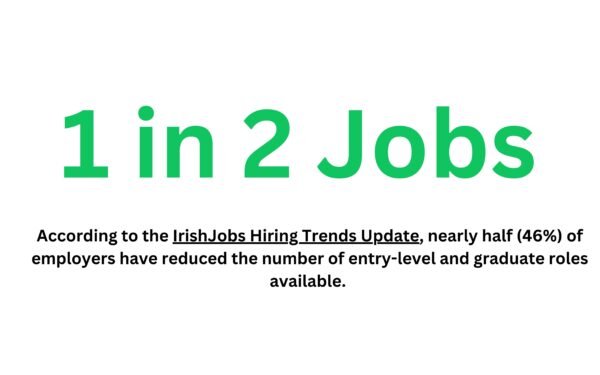
For most of the last century, the path from classroom to career ran through a single corridor: finish school, earn a degree, polish a CV, and wait to be chosen by an employer. That corridor is narrowing. Graduate underemployment keeps climbing, hiring decisions are still largely made on paper qualifications rather than demonstrated capability, and the skills taught in most classrooms rarely map onto what a modern workplace actually needs. This is not a niche phenomenon. It reflects a broader mismatch between how education is structured and how work, and increasingly venture creation, actually happens in a fast-changing, AI-influenced economy. At the same time, a growing number of high school students, along with self-directed learners moving through undergraduate and postgraduate programmes, are proving that they don’t need to wait for a job offer to start creating value. They are already building small products, testing ideas online, and looking for a structured way to turn curiosity into a genuine venture. Nap OS Incubate was built for exactly this group of people.
What Nap OS Incubate Is
Nap OS Incubate is the entrepreneurship layer of Nap OS, a broader operating system for employability and entrepreneurship developed by Napblog Limited. The wider platform also includes a Workforce layer, which helps individuals become job-ready through AI-guided skill development, and a Recruit layer, which connects verified talent to employers on the basis of capability rather than a CV. Incubate serves a different kind of learner: the one who would rather build the opportunity than apply for it. Rather than treating entrepreneurship as an unstructured, informal extra bolted onto education, Incubate treats venture creation as a guided, repeatable pipeline, one that carries a person from a raw idea through validation, business modelling, MVP development, and eventually funding readiness, with an AI coach and human mentors involved at each stage.
Built for High Schoolers and Self-Directed Learners
The target users of Incubate include aspiring founders still in secondary school, university students, postgraduate researchers, accelerators, universities, and innovation hubs looking for a structured on-ramp into venture building. Many teenagers today are already comfortable building things: apps, content channels, small online shops, or side projects that never get a formal outlet. What they usually lack is not motivation but structure, mentorship, and a credible route to funding. The same is true of self-intuitive learners further along in undergraduate and postgraduate study, people who learn best by doing rather than by following a fixed lecture sequence, and who often find the standard academic timetable too slow or too disconnected from the real practice of building something. Nap OS Incubate meets both groups on their own terms. Instead of a rigid curriculum, it offers an adaptive framework that moves at the pace of the individual and the idea, so a teenager with a business concept and a final-year postgraduate student with a research-based venture can both progress through the same underlying system, each at their own speed.
From Idea to Funding: How the Pipeline Works
Because the pipeline lives inside a single browser-based workspace, the learner is not toggling between disconnected apps for coaching, planning, and tracking; the tools are designed to work as one continuous surface. An AI startup coach offers ongoing, personalised guidance rather than a one-off workshop. An idea validation engine helps a learner stress-test assumptions before too much time is invested in the wrong direction. A business model builder turns a loose concept into a structured plan covering customers, revenue, and cost. From there, an MVP roadmap generator breaks the plan into a sequence of buildable steps, so the learner is producing something tangible early rather than spending months in the planning stage. A funding readiness system then prepares the venture for the practical realities of raising capital, while mentor matching connects the founder to relevant, experienced guidance rather than generic advice. Throughout the process, a venture tracking dashboard and founder progress signals give both the learner and any supporting institution, whether a school, university, or accelerator, a clear, ongoing view of how the venture is developing. The result is not a certificate or a one-time pitch competition, but a structured, trackable pipeline from first idea to a fundable venture.
Why This Matters for the Economy
The case for building this kind of pipeline goes beyond individual opportunity. Youth unemployment and underemployment remain persistent problems in many economies, and traditional workforce development spending often struggles to translate into real outcomes. A system that helps young, high-potential individuals build their own ventures rather than compete for a shrinking pool of entry-level roles changes the underlying economics. A founder does not simply fill a job; over time, a founder tends to create several. Encouraging entrepreneurship earlier, while someone is still in secondary school or moving through undergraduate study, means that self-sufficiency becomes a first option rather than a fallback after a difficult job search. It also reduces the economic cost of failure for the individual, since a structured incubation pathway, with mentorship and validation built in, is designed to surface a flawed idea early rather than after a year of unsupported effort. For governments, this offers a more direct route to executing skills policy and easing pressure on youth employment programmes. For universities, it strengthens graduate outcomes and employer engagement without requiring an overhaul of the existing academic structure. For the wider economy, it means a steady supply of independent, capable individuals who are creating value and, in many cases, employing others, rather than depending entirely on existing organisations to hire them.
Early Signals This Model Works
Nap OS Incubate does not exist purely as a concept slide. The wider Nap OS platform already has early paying users on its Workforce side at a monthly subscription price point, and two technology companies are in active discussions about using the platform on the employer side. The venture is also generating real traffic and audience data through a daily newsletter that has already produced well over one hundred editions and built a subscriber base of a few thousand readers, with organic search around homeschooling and further education pathways in Ireland acting as a major discovery channel. None of this proves that every learner who enters Incubate will build a fundable company, and no incubation system honestly can promise that. What it does show is that there is real demand, on both the individual and employer side, for a more structured, verified alternative to the CV-based system that currently dominates hiring and, by extension, the on-ramp into entrepreneurship.
Part of a Larger Loop
Incubate does not operate in isolation. It sits alongside Workforce and Recruit as part of what Nap OS describes as a closed-loop talent ecosystem: individuals develop skills, get hired or gain real work experience, and some of them go on to build ventures of their own, which in turn create further opportunities for the next group of learners entering the system. A student might begin on the Workforce side, building a verified, capability-based profile; move into real work experience or employment through Recruit; and later, once they have both skills and a validated idea, step into Incubate to build something of their own. Each pass through the loop compounds the last, adding more skills, more outcomes, and more data that make the system more useful for the next person who joins it. This is also why the system is described internally as an operating system rather than a single tool: it is meant to be the continuous layer someone returns to across a career, not a one-off programme they complete and leave behind. Entrepreneurship, in this framing, is not a separate track reserved for a small number of unusually confident people. It is simply the next stage available to anyone who has built enough capability and conviction to take it.
Building a Generation of Self-Sufficient Founders
The traditional route from school to degree to job application is not disappearing, and for many people it remains the right path. But it is no longer the only credible one, and it is increasingly not the fastest way for a capable, self-directed young person to create real value. Nap OS Incubate gives high school students and self-intuitive learners in undergraduate and postgraduate study a structured, mentor-supported way to move from an early idea to a fundable venture, without needing to wait for permission from an employer first. Multiply that across a generation, and the effect is not just a set of individual success stories. It is a meaningful shift toward a more independent, self-sufficient population of high-potential individuals, one that strengthens the wider economy by expanding who gets to create jobs, not just who gets to apply for them.