7 min read
In today’s competitive job market, standing out as a fresh graduate or career switcher has never been harder. Employers increasingly demand not just qualifications, but demonstrated, verifiable experience. Yet most job seekers find themselves stuck in a frustrating loop — they can’t get hired without experience, and they can’t gain experience without being hired. Nap OS was built to break exactly this cycle. By transforming job seekers into domain-specific Research Interns, Nap OS creates a clear, structured pathway from aspiration to employment.
The Broken Promise of Traditional Hiring
The traditional hiring model has long favoured candidates with existing credentials, prestigious degrees, or well-known employer names on their CVs. For millions of talented individuals who lack access to top universities or corporate internships, this system creates an insurmountable barrier. Early-career professionals are often judged not on what they can do, but on where they have been — a criterion that perpetuates inequality and causes businesses to miss out on genuine talent.
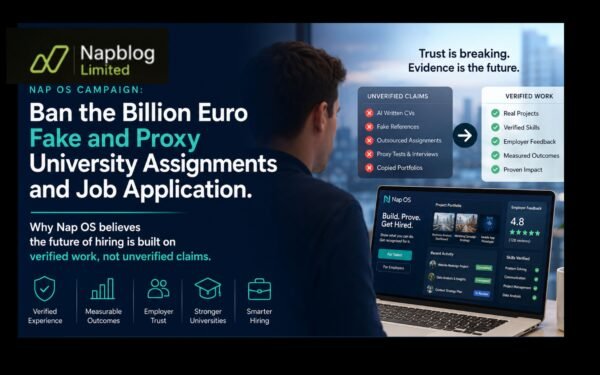
Nap OS challenges this model at its core. Rather than asking “Where have you worked?”, the platform asks “What can you do, and can you prove it?” This shift in perspective is what makes the Nap OS Research Intern programme so powerful. It enables job seekers to build real, verifiable evidence of their capabilities by working on meaningful projects within their chosen domain — before they ever land a formal role.
What Is a Nap OS Research Intern?
A Nap OS Research Intern is not a traditional intern in the conventional sense. There is no requirement for a formal university partnership, no gatekeeping through HR departments, and no geographic restriction. Instead, any motivated job seeker can join Nap OS, select a domain that aligns with their career aspirations — whether it is AI and technology, sustainability, business strategy, healthcare, finance, or marketing — and immediately begin contributing to real projects and research tasks within that domain.
The platform is designed so that every task a Research Intern completes is documented, tracked, and converted into verifiable proof of ability. These are not simulated exercises or academic assignments. They are real contributions to business challenges, market research, product development, innovation testing, and strategic problem-solving. This means that when a Research Intern finishes a project on Nap OS, they have tangible evidence — deliverables, outcomes, and documented results — that they can present to future employers with full confidence.
The Transformation Journey: From Job Seeker to Employed Professional
The transformation that Nap OS enables follows a logical, structured progression. When a job seeker joins the platform, the first step is domain selection. Nap OS encourages users to choose a domain that genuinely interests them and aligns with the type of role they want to secure. This intentionality matters enormously. When someone is working in a field they care about, their quality of output improves, their engagement deepens, and the skills they develop are directly transferable to the kinds of roles they are targeting.
Once a domain is selected, the Research Intern is matched with relevant projects. These projects are drawn from real organisational needs — businesses and organisations use Nap OS to get research, validation, and strategic support, while simultaneously providing job seekers with real-world experience. This dual-value model is one of Nap OS’s most important innovations: both sides benefit meaningfully from the same interaction.
As the intern works through tasks, they receive structured workflow support from the Nap OS platform. This includes guidance on research methodology, decision-making frameworks, and professional deliverable formats. The platform’s career intelligence tools help interns understand not just how to complete tasks, but why those tasks matter in a business context. This context-awareness is precisely what employers look for in candidates — the ability to connect individual actions to broader outcomes.
Building a Verified Portfolio That Speaks to Employers
One of the most significant barriers job seekers face is the inability to demonstrate their skills in a way that employers trust. Certificates and degrees indicate theoretical knowledge, but they do not prove execution ability. A portfolio of actual project outputs, however, tells a very different story. Nap OS is built around this insight.
Every piece of work completed through the platform is stored in a verified portfolio that the Research Intern owns and controls. This portfolio documents not just the outputs of their work, but the process: the research questions they explored, the decisions they made, the challenges they overcame, and the results they delivered. When presented to a hiring manager, this kind of evidence is far more compelling than a list of course completions or a generic CV entry claiming proficiency in a skill.
The verified nature of the portfolio is particularly important. Employers increasingly struggle to trust self-reported skills. Nap OS solves this problem by ensuring that every deliverable is documented within the platform context — the project scope, the organisation’s needs, and the measurable outcomes are all recorded. This gives employers confidence that what they are seeing represents genuine capability, not exaggerated claims.
Domain Expertise Developed in Context
What distinguishes Nap OS from generic online learning platforms is that skills are developed in context, not in isolation. A job seeker learning data analysis on a traditional course completes pre-designed exercises in a controlled environment. A Nap OS Research Intern applies data analysis skills to an actual research problem with real stakes. The difference is transformational — not only in the depth of learning but in the confidence and articulation that the intern develops.
This contextual skill development means that Nap OS Research Interns arrive at job interviews with stories to tell. They can describe the specific challenge they worked on, the methods they used, the obstacles they navigated, and the outcomes they produced. This kind of specific, evidence-backed storytelling is what separates candidates who get hired from those who do not. Interviewers remember stories; they forget bullet points.
Furthermore, because the domains available on Nap OS reflect real industry sectors and emerging fields — including AI adoption, sustainability, digital transformation, and business innovation — Research Interns are developing skills that are directly aligned with where the job market is heading. This future-orientation is essential in an era where industries are evolving rapidly and employers are prioritising adaptability and applied intelligence over static credentials.
Leadership Confidence and Decision-Making Clarity
Beyond technical skills, Nap OS builds the kind of professional confidence that comes only from real accountability. When a Research Intern makes a recommendation based on their research and sees that recommendation informing a business decision, something shifts in how they see themselves. They are no longer a job seeker hoping someone will give them a chance — they are a professional whose work produces outcomes.
This psychological transformation is as important as the portfolio building. Employers can detect genuine confidence in interviews. They can recognise the difference between someone who has read about strategic thinking and someone who has actually exercised it under real conditions. Nap OS Research Interns develop this authentic confidence through experience, not aspiration.
The platform also develops decision-making clarity — the ability to assess a situation, weigh options, and commit to a course of action. This is a skill that is difficult to teach in a classroom but emerges naturally when individuals are working on real projects with real consequences. Nap OS creates the conditions for this growth through its structured, execution-focused approach to internship work.
A Bridge for Organisations and Talent Alike
Nap OS’s model benefits not just job seekers but also the organisations that use the platform. Businesses can bring Research Interns onto their projects to explore new opportunities, validate ideas, conduct competitive analysis, or support strategic planning — all while observing how these individuals perform in real conditions. This makes Nap OS a uniquely effective talent discovery tool. Organisations can identify exceptional candidates through their work, not through their applications.
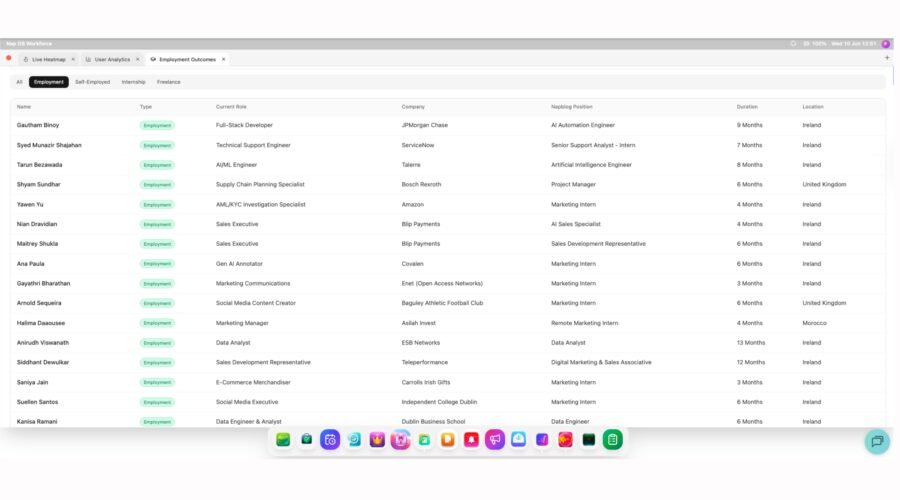
This dynamic addresses one of the most persistent problems in recruitment: the gap between how candidates present themselves in interviews and how they actually perform in the role. By observing a Research Intern’s work directly, organisations get the clearest possible signal of fit. Many Nap OS Research Interns have transitioned directly into employment with organisations they first engaged through the platform — a testament to the effectiveness of this real-world-first approach.
Conclusion: The Future of Employment Starts with Execution
The world of work is changing. Credentials are becoming less important than capability, and demonstrated execution is becoming the currency of career advancement. Nap OS is at the forefront of this shift, providing a platform where job seekers can stop waiting for permission and start building the evidence that makes employment inevitable.
By transforming job seekers into Research Interns within their chosen domains, Nap OS gives individuals the tools, the experience, and the verified proof they need to compete effectively in any job market. The path from aspiration to employment is no longer blocked by a lack of experience — it is opened by the willingness to work, to learn, and to build something real. That is the promise of Nap OS, and for thousands of early-career professionals, it is a promise that is already being fulfilled.