10 min read
Nobody told us cold outreach was going to work this well. We were prepared for silence. We got conversations instead — real ones, the kind where someone who has applied to hundreds of jobs without a single callback still takes the time to reply, reflect, and then ask: “How does Nap OS actually work?”
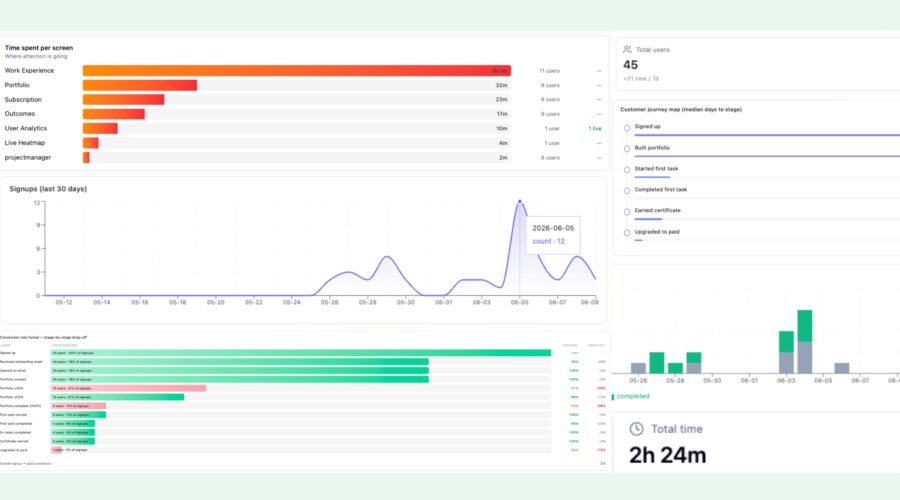
Out of 100 cold outreaches sent on LinkedIn, 92 received responses. No templates dressed up as personal messages. No inflated value propositions. Just a single, honest question and a problem that turned out to be universal — yet somehow, nobody had named it plainly enough until now. Of those 92 conversations, 45 users went through the full Nap OS onboarding journey and signed up. That’s a 45% product conversion rate from cold outreach. In a world where 2–3% is considered decent, this number deserved an explanation.
This is that explanation.
The Message That Started Everything
The outreach message was stripped of everything typically used to make cold messages “convert.” No teaser about a revolutionary product. No flattery. No forced personalisation that reads like it came from a CRM merge field. The message opened with a simple line: “Quick question.” Then it asked one thing:
“For graduates looking for their first professional role in Ireland, which do you think is the biggest challenge? Lack of experience / Lack of industry connections / Lack of interview opportunities.”
That was it. No pitch. No link. No ask.
The framing was built on one insight tested across earlier conversations: people who are silently frustrated with a problem will engage the moment someone acknowledges that problem exists — and asks them to name it, not just hear about a solution. The message put the user’s experience at the centre, not the product.
What happened next was the opposite of what most founders expect from cold outreach. People didn’t just reply with a single option. They replied with paragraphs.
What the Conversations Actually Sounded Like
An MSc AI graduate based in Ireland wrote back: “Lack of industry connections, limited Irish work experience, and getting interview opportunities. Graduates have skills but lack networks.” An MSc International Business graduate followed with something even more pointed: “Lack of Irish work experience and industry connections. Also experiencing sponsorship challenges while actively job seeking.” A Data Analytics graduate was more direct still: “Interview opportunities are the biggest challenge. Graduates gain skills and projects but struggle to get interviews. Irish work experience matters enormously.”
And then came the message from an MSc Business Management graduate who had applied to hundreds of jobs without a single callback. The exact words: “Personally applied to hundreds of jobs without success.”
This is the pattern that emerged across dozens of conversations: the problem isn’t that graduates lack ambition, effort, or even skills. The problem is structural. The Irish job market — particularly for international graduates on Stamp 1G visas — operates on a paradox: you need Irish work experience to get a job, but you can’t get a job without Irish work experience. A Cloud Computing graduate named it perfectly: “Interview opportunities and lack of Irish experience. International graduates face the experience paradox.”
The responses weren’t generic frustration. They were careful, articulate, and specific. An ACCA-qualified professional with Ex-EY experience replied: “Lack of interview opportunities and industry connections.” A Molecular Biology and Quality Specialist noted: “Depends on field. Even experienced professionals struggle. Industry connections are important.” A Full Stack Engineer with over 16 years of global experience summarised it as: “Lack of interview opportunities. Often linked to lack of experience.” Even professionals with strong international backgrounds were hitting the same invisible wall.
What was striking wasn’t just the consistency of the problem — it was the emotional relief in how people responded when asked. Replying to a cold message on LinkedIn takes effort. Nobody does it unless they feel the question genuinely touches something real. The 92% response rate wasn’t a conversion trick. It was proof of suppressed demand finally finding a place to land.
The Second Question: Who Should Fix This?
Once the first response came in — and it almost always came in — the conversation moved to its second phase. The follow-up was equally deliberate: “From your perspective, who should take the initiative to solve this problem? University, Recruitment Agencies, Government Laws, or a Startup to solve this problem so that the hiring system stays fair?”
This question did something important. It shifted the user from passive respondent to active thinker. It invited them to take a position on a systemic problem, and in doing so, it revealed where they had placed their trust — and where they had lost it.
The answers were wide-ranging and, again, unexpectedly rich. A Trinity College Dublin graduate replied that universities should do more — noting that at top Irish universities, international students pay fees of around 27,000 euros per year and yet receive no meaningful guarantee of employment support or industry placement. The view was pointed: “Universities should take the guarantee of helping with jobs and placements and just not open a CV clinic.” An MSc International Management graduate replied that “Government Laws” needed to change to make the system fair. A graduate with a background in business analysis and product management replied that a startup approach — one that rewards execution over credentials — was the most viable path.
A particularly detailed response came from a graduate working at the University of Galway, who noted that even universities could do more to expose students to work culture. She mentioned that job seekers themselves must understand the problem and that employability awards — like those offered at the University of Galway — are a step in the right direction. But she was clear that the responsibility is currently spread too thin: “It’s the University which must take responsibility to create opportunities for new comers.”
A Data Science and Analytics professional — with expertise spanning Python, SQL, ML, AWS, SAP and Stamp 1G status — didn’t wait for institutions. He wrote: “I believe it should be a shared responsibility but startups can have the biggest immediate impact. Universities can help students build industry connections. Recruitment agencies can create more opportunities for graduates and government policies can encourage fair hiring practices. However, innovative startups that connect graduates directly with employers could be the most agile solution.”
These weren’t talking points. These were people thinking out loud about a problem they live with every day.
When the Product Was Mentioned, Nobody Left
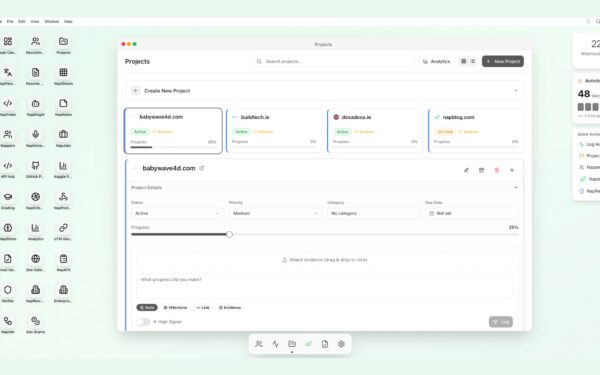
Only after two or three genuine exchanges — once the person had been heard, once they had placed their opinion on record — was Nap OS introduced. The transition was deliberately low-pressure: “I agree with you. Would you mind watching a 5-minute product/solution fit video to share how close we are at solving the problem from your perspective? And also, Nap OS at napblog.com with a free account — which has already helped 50 jobs — we are working towards helping 100,000 job seekers land jobs in the next 5 years by partnering with Universities, Gov State Agencies and Recruitment Agencies by fixing the Gap.”
The responses to the product reveal were not what you would typically expect from cold outreach. Nobody politely declined and ended the conversation. Several people said “I agree and thanks” and moved directly to the onboarding flow. A Stamp 1G professional who described himself as a fresher with strong knowledge in software development and AI — who had been building his own projects while the job market failed him — said: “Your ‘execution over credentials’ line stopped me, because it is exactly how I have been running my own career lately. Rather than waiting for the perfect role, I have been building.” He went further: “What you have built with Nap OS and the Napblog Loop genuinely resonates with me. Turning real project delivery into proof of capability is a sharp answer to a hiring system that mostly rewards paper.”
This was the moment the article’s title was born — not from a marketing brainstorm, but from a real person’s real words, sent unprompted in a cold outreach reply.
What the Numbers Actually Mean
100 outreaches. 92 responses. 45 signups. Let’s be precise about what these numbers represent and what they don’t.
The 92% response rate is almost unheard of in cold outreach. Typical LinkedIn cold message response rates sit between 10% and 30% for well-crafted messages in warmer categories. The reason this campaign broke that ceiling was not luck, targeting, or a clever subject line. It was problem clarity. The message didn’t ask for a meeting, didn’t ask for a favour, and didn’t ask the recipient to evaluate a product they knew nothing about. It asked them to share their experience. That is a fundamentally different ask.
The 45% signup rate — 45 out of 92 meaningful conversations converting into actual product accounts — is where the product’s value proposition gets validated, not just the outreach strategy. Getting a response is easy if you ask the right question. Getting someone to create an account on a product they had never heard of 20 minutes earlier requires something more: trust that the product understands the problem, and confidence that the solution is credible enough to try.
The profiles of the 45 who signed up spanned MSc graduates across fields including International Business, Data Analytics, AI, Cloud Computing, Agrifood Sustainability, International Management, and Business Management. The common thread wasn’t their discipline — it was their situation. Stamp 1G visa holders. Freshers competing against candidates with Irish work experience they haven’t had the chance to gain yet. Professionals applying to hundreds of jobs and receiving silence in return. These are the people Nap OS was built for, and the outreach found them where they were already thinking about the problem.
The Congratulations That Came Back
What made this campaign unusual — beyond the numbers — was what happened after the signups. Several people who went through the onboarding process sent unsolicited congratulations. An Agrifood Sustainability MSc graduate wrote: “Best of luck with Nap OS, it sounds like an interesting initiative.” A Business Analysis and Product Management professional with CSPO and SCRUM certifications who initially declined to sign up wrote back days later to say the product conversation had stayed with him and asked if there were still opportunities to be involved.
This is the signal that matters most for an early-stage product: not just conversion rates, but what people say after the conversion. When 45 people sign up from cold outreach and a meaningful portion of them come back to offer encouragement, to share feedback, or to ask how they can help — that’s not a marketing win. That’s product-market resonance at the earliest possible stage.
The conversations also surfaced a consistent frustration with recruitment agencies, which multiple respondents described as gatekeepers who rarely provide feedback, rarely close the loop with candidates, and operate in a way that reinforces the experience paradox rather than solving it. One respondent noted that “even the recruitment agencies can create more opportunities for graduates.” Another pointed to government policy as a missing piece. A third flagged sponsorship barriers as a layer of difficulty on top of the experience gap that international graduates already face.
Nap OS was not positioned as the only solution. The conversations were honest about the systemic nature of the problem. But what the campaign demonstrated — clearly, at scale, in the words of real people navigating a real market — is that there is a gap nobody has filled. And that the people caught in that gap are not passive. They are articulate, motivated, and ready to engage with anything that takes the problem seriously.
Why This Matters Beyond the Numbers
This campaign wasn’t run to prove that Nap OS can do outreach. It was run to validate that the problem Nap OS is solving is real, urgent, and felt acutely by the people most affected by it. The conversations were the research. The signups were the confirmation. The congratulations were something rarer: early community formation around a shared frustration that finally has a product attached to it.
The experience paradox — needing Irish experience to get a job, needing a job to get Irish experience — is not a new observation. But few have approached it with a two-sided solution: a platform that turns what you build and execute into verifiable proof of capability, and that partners with the universities and agencies that international graduates already trust. The fact that a Stamp 1G holder with strong AI and software development skills would rather build his own AI tools and face recognition apps than wait for the “perfect role” that never arrives is not a story of failure. It is a story of a broken system producing its own workaround — and Nap OS is that workaround, formalised, systematised, and built to scale.
If 92 out of 100 cold strangers respond to a message that simply asks them to describe their experience, the message is about more than outreach craft. It’s a signal about demand. The 45 who signed up turned that signal into something real. And the conversations that accompanied those signups — detailed, honest, and generously shared — are the foundation that Nap OS is building on.
The unemployment problem in Ireland for international graduates isn’t unsolvable. It’s just been waiting for someone who shows up as a peer, asks the right question, and earns the right to introduce a solution. That is what Nap OS did, one conversation at a time, 100 times over.