5 min read
For many international graduates, the visa question looms over everything else before a single interview even happens. A candidate can have the right degree, the right skills, and the right attitude, but if a company sees that sponsorship might be required down the line, the application often quietly disappears into a pile marked “not this time.” It’s rarely stated outright in a rejection email, but it’s felt in the silence that follows an otherwise promising conversation. This isn’t a complaint about the existence of visa rules themselves, but about how few employers seem willing to even explore the option. Sponsorship starts to feel like a taboo subject, something companies would rather avoid dealing with than investigate on a case-by-case basis. For a graduate who has invested years and significant money into an Irish education, this can feel like being told the goalposts moved after the game already started.
Then there’s the second, perhaps even more universal frustration: the strange expectation that a graduate should already have two to three years of experience before they can be considered for what is technically an entry-level position. This isn’t a niche problem limited to a few industries; it shows up across sectors, from technology to business services to operations. A job listing will describe itself as “graduate-friendly” or “entry-level,” and yet the requirements section reads like a shopping list for someone who has already spent years in the workforce. It creates a paradox that every graduate knows intimately: how do you get experience if every opportunity to gain it demands that you already have it? This isn’t just an inconvenience, it’s a structural gap that pushes talented, capable people to the margins of the job market before they’ve even had a fair chance to prove themselves.
Closely related to this is the specific expectation around “Irish work experience.” For international graduates, this phrase can feel like a moving target. It’s not enough to have worked in retail, hospitality, or part-time roles during studies, and it’s not enough to have relevant experience from one’s home country either. There’s an unspoken assumption that experience gained outside Ireland, or outside a narrow definition of “relevant” local experience, simply doesn’t count in the same way. This leaves many graduates in a frustrating loop, applying for roles that technically match their skill set, only to be told that what they have doesn’t fit the specific flavour of experience the employer is looking for. It’s worth asking whether this expectation is really about capability, or whether it has become a shorthand that recruiters use without examining whether it’s fair or necessary for the role in question.
None of this is to say that recruiters and hiring managers are acting in bad faith. Many are simply working within systems and expectations that have built up over time, often shaped by high application volumes and a desire to reduce risk. But if the goal is truly to bring new talent into the workforce, there needs to be an honest conversation about what graduate roles are supposed to look like. A role advertised as suitable for someone at the start of their career should not, in practice, require the equivalent of a mid-career professional. Recruiters and companies would benefit from being more realistic about what they’re actually asking for, because the mismatch between job titles and job requirements doesn’t just frustrate candidates, it also means companies may be filtering out people who could have grown into excellent employees, given the chance.
From a job seeker’s point of view, one of the most promising ideas for narrowing this gap is stronger collaboration between employers and colleges themselves. Imagine a system where partnerships between companies and universities created structured pathways, not vague promises of “networking opportunities,” but real contract-based roles or short-term placements that let students gain genuine, verifiable experience before they even finish their degree.
Even a modest contract role with modest pay could make a meaningful difference, because it would give graduates something concrete to point to on their CV, something that says “I have already done this kind of work in this kind of environment.” It shifts the burden away from graduates having to somehow manufacture experience out of thin air, and instead builds a bridge between education and employment that benefits everyone involved. Campus recruitment done well isn’t just a marketing exercise for companies, it’s a genuine investment in the next generation of talent, and it could substantially ease the anxiety that so many final-year students carry with them into their last semester.
It’s also worth remembering that this isn’t purely a graduate problem. Experienced professionals face their own version of this same frustration, just from a different angle. Someone with five or ten years of experience in one specialization might find themselves boxed in, unable to pivot into an adjacent field because employers want someone who has already done that exact job title before. Career changers, people returning to work after a break, and professionals looking to move into new industries all encounter their own versions of the same rigid thinking that keeps graduates locked out. Any solution built to address the graduate experience gap should, ideally, keep an eye on this wider pattern too, because the underlying issue is the same: a hiring culture that too often values a narrow definition of “proven experience” over genuine potential and transferable skill.
What job seekers are really asking for isn’t a lowering of standards. Nobody wants to be handed a role they’re not capable of doing. What they want is a fairer, more transparent process, one where the criteria for a role actually match its title, where visa status is discussed openly rather than used as a silent filter, and where “experience” is defined broadly enough to include the very real skills built through study, part-time work, projects, and international backgrounds. They want systems that create genuine on-ramps into the workforce, whether through structured campus partnerships, contract-to-hire arrangements, or simply a more honest look at what an entry-level role should really ask for.
The frustration graduates feel isn’t really about deserving special treatment. It’s about wanting the process to be logical and honest. If a role is advertised for someone starting out, it should be built for someone starting out. If sponsorship is genuinely not possible for a role, that should be stated clearly upfront rather than discovered through silence.
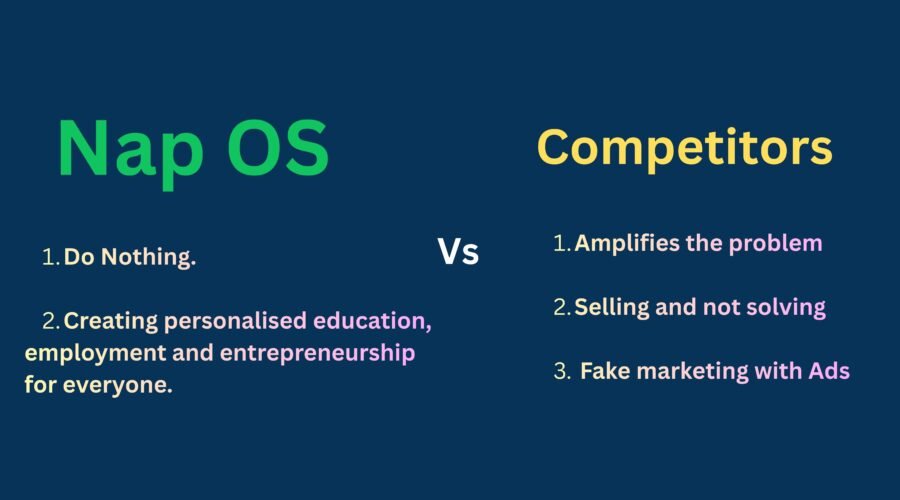
And if the solution to youth unemployment is going to come from new platforms, new technology, or new recruitment models, it has to be built with these lived frustrations in mind, not just as a feature on a list, but as the actual problem being solved. Anything less risks becoming another well-intentioned idea that ultimately amplifies the same frustrations it set out to fix.
Mail to palani@napblog.com to get personalised work experience and pathway to professional journey.