7 min read
A project-based workforce development and placement product could offer universities a stronger bridge between learning and employment. For Nap OS, EIC Accelerator suitability depends on demonstrating breakthrough innovation—not simply addressing an important problem.
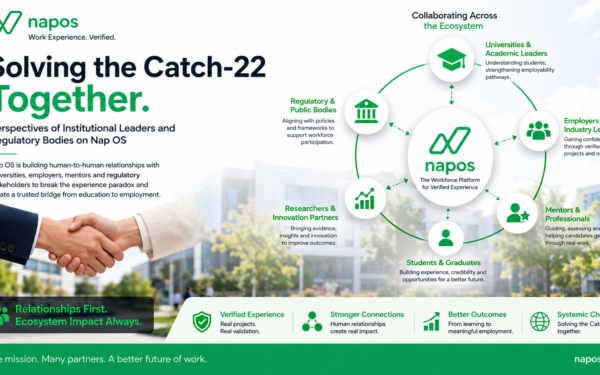
Nap OS’s ambition is to help people build relevant experience and demonstrate what they can do. Applied to European universities, that ambition becomes a product proposition: connect students, university teams, and employers through structured projects, assessed contributions, and evidence that supports placement decisions.
Could this proposition suit the European Innovation Council’s EIC Accelerator?
Potentially—but suitability is not established by the information currently available. The EIC Accelerator supports game-changing innovations with market-creating or market-disrupting potential, substantial scaling ambition, and risks that private investors alone cannot adequately finance. It is not a general-purpose grant for university employability services or ordinary software expansion.
For Nap OS, the opportunity is to build a compelling university product while proving that its underlying innovation meets this higher threshold.
The Product Opportunity: Connecting Learning with Demonstrated Capability
Nap OS’s proposed university-facing product can be understood as a workforce development and placement support system.
Its purpose would be to help students move through a connected journey: identify a career direction, complete relevant work, receive structured feedback, assemble evidence, and use that evidence in employer conversations.
The distinction is important. A placement system that only advertises vacancies addresses access to opportunities. A learning system that only hosts content addresses access to instruction.
Nap OS’s proposed value sits between those activities: helping students demonstrate how they apply knowledge.
For a university, the intended benefit would be greater visibility into student readiness and development needs. For employers, it would be more informative material to assess. For students, it would be a clearer explanation of their contribution.
These are product objectives, not verified outcomes.
A University Workflow Built Around Evidence
A university deployment could organise the experience into five stages.
First, students identify target roles and complete a baseline assessment.
Second, university teams and participating employers help define projects aligned with selected capabilities.
Third, students complete tasks, document decisions, and submit deliverables.
Fourth, reviewers assess the work against published criteria.
Finally, students present their evidence alongside applications or placement discussions.
Consider a hypothetical business student completing a customer-research project. A finished presentation alone reveals relatively little. A structured record could explain the research question, source selection, analysis, recommendations, feedback, and individual responsibilities.
That record would give an employer something specific to examine.
However, it should distinguish simulated work from client delivery and identify assistance received. Credibility depends on accurate descriptions, not impressive labels.
Placement Support Is Not a Placement Guarantee
Nap OS should describe its placement role precisely.
Supporting employer discovery, preparing candidates, recording project assessments, and tracking recruitment progress are different from securing employment.
A university product could help coordinate these activities without promising that every participant receives a job.
Its reporting should separate:
- Participation and project completion.
- Demonstrated capability against assessment criteria.
- Employer engagement and interview invitations.
- Placement starts and subsequent retention.
- Outcomes that remain unknown.
This separation would protect students from unrealistic expectations and help universities assess value.
It would also strengthen the commercial proposition. A buyer needs to know which parts of the process Nap OS controls, which depend on partners, and which depend on labour-market conditions.
A credible product makes those boundaries visible.
What the EIC Accelerator Actually Funds
The EIC Accelerator is a Horizon Europe programme for eligible start-ups and SMEs developing and scaling innovations with substantial market potential. Its published offer includes grants of up to €2.5 million for innovation activities at technology readiness levels 6–8, and investment components of €1 million to €10 million for scaling and other activities at TRL 6–9, subject to the relevant conditions.
Those figures are funding limits, not an indication of what Nap OS would receive.
The programme also offers Business Acceleration Services, including access to expertise, coaches, partners, and innovation networks.
For Nap OS, the central implication is that an application should focus on a defined innovation and its development risks.
Funding university subscriptions or expanding a conventional placement service would not, by itself, establish an Accelerator case.
Eligibility and Competitiveness Are Different Questions
An SME established in an EU Member State or a Horizon Europe Associated Country falls within the programme’s stated applicant categories. Other specified applicant arrangements also exist.
Nap OS would still need to confirm its applicant entity, SME status, location, ownership circumstances, and compliance with the applicable call conditions.
Universities could potentially act as customers, pilot hosts, research collaborators, or validation partners. Their involvement would not automatically make Nap OS eligible or competitive.
Nor should a university partnership be described as EIC endorsement.
The useful distinction is straightforward: eligibility determines whether an applicant can participate; competitiveness concerns whether the innovation, market case, team, and financing need justify selection.
Nap OS must establish both through evidence rather than assume one from the other.
The Hardest Question: What Is Technologically Breakthrough?
Nap OS’s university mission is relevant, but relevance alone is insufficient.
Its EIC case would need to answer: what can this technology achieve that existing approaches cannot achieve adequately?
A combination of portfolios, project management, vacancy listings, and standard AI tools may be commercially useful. That combination does not automatically demonstrate a game-changing innovation.
Potential research directions could include reliable assessment of individual contributions, explainable mapping between project evidence and role requirements, or privacy-preserving verification across institutions.
These are possible development directions—not confirmed Nap OS capabilities.
Any claimed breakthrough would require comparisons, technical results, and clear limitations. Adding “AI-powered” to the product description would not substitute for that work.
The key word is differentiation: a defensible advance supported by evidence.
Demonstrating Technical Readiness
The EIC’s published funding scope places importance on technology readiness. Nap OS should therefore avoid treating the existence of a website or working dashboard as proof that its core innovation has reached the required stage.
If the proposed breakthrough concerns assessment reliability, that component needs validation.
If it concerns evidence verification, the team needs to show how verification performs under realistic conditions.
A readiness dossier could contain:
- A description of the core technical innovation.
- System architecture and evaluation protocols.
- Results from relevant deployment settings.
- Comparisons with appropriate alternatives.
- Failure cases and unresolved risks.
- A development plan tied to measurable milestones.
No current TRL can responsibly be assigned from the product descriptions available here.
Readiness should follow demonstrated performance, not the maturity of the marketing presentation.
Building a European Market Case
A European university strategy should be more specific than “sell to universities across Europe.”
Nap OS needs an initial customer segment, purchasing rationale, deployment model, and expansion hypothesis.
A focused starting point might be selected degree programmes where project outputs can be assessed consistently and employers can define relevant tasks.
The team would then need to test who pays, who uses the system, who reviews work, and who benefits.
Pricing should account for the full delivery model. If each participant requires substantial mentor time, that cost matters alongside software hosting and development.
European expansion would also require testing across languages, institutional processes, and employer expectations.
The EIC expects ambition to scale. Nap OS’s task is to show how scale could work operationally and commercially, rather than treating Europe’s universities as one uniform customer group.
Explaining Why EIC Support Is Necessary
The Accelerator specifically targets companies seeking substantial funding where the risks are too high for private investors alone.
Nap OS would therefore need a financing argument beyond “investment would help us grow.”
What technical uncertainty remains? Why is resolving it expensive? Which milestones would change the company’s investment prospects? What can commercial revenue or private capital reasonably fund?
A credible case might connect funding to a difficult validation programme, a novel technical component, or a cross-institutional demonstration—provided those activities genuinely match the innovation.
Routine sales expansion should not be presented as research risk.
The funding request should explain how public support would advance a defined innovation while creating a credible route towards sustainable private financing.
Preparing a Credible Application
The current EIC page describes a short proposal, a full proposal, an interview, and subsequent grant or investment procedures. The short stage includes a 12-page form, a pitch deck of up to ten slides, and a video of up to three minutes. Full proposals require additional material covering finances, company structure, intellectual property, and implementation where relevant.
Nap OS should prepare the underlying evidence before polishing those formats.
Its priorities should include technical benchmarking, pilot documentation, customer validation, intellectual-property strategy, financial modelling, and a milestone-based development plan.
For 2027, the published full-proposal batching dates are 20 January, 17 March, 1 September, and 4 November. Meeting a date should remain secondary to submitting a defensible case, with current requirements checked before submission.
The Right Route—and an Honest Conclusion
EIC Accelerator Open accepts proposals across technology fields, while Accelerator Challenges require alignment with predefined topics. Based on the university workforce proposition described here, Open is the more plausible route to investigate unless a specific Challenge genuinely matches the innovation. That is a preliminary assessment, not an eligibility decision.
Nap OS can build a valuable university product without being suitable for the EIC Accelerator.
Its strongest path is to develop both cases honestly: demonstrate customer value through university delivery, and separately establish whether the technology offers a defensible breakthrough with the necessary readiness, scale potential, and financing risk.
The goal is not to make Nap OS sound like an EIC company.
It is to build, test, and document a product whose capabilities justify the claim.