8 min read
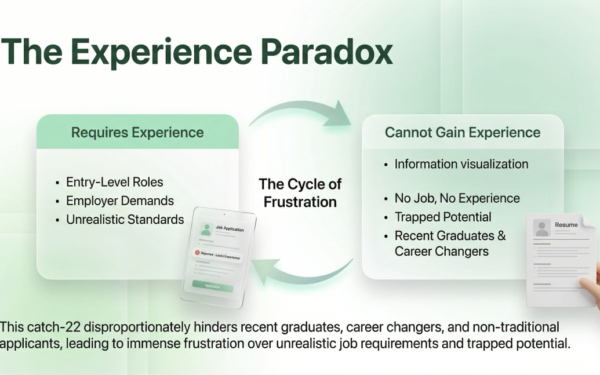
You need experience to get the opportunity, but you often need the opportunity before you can build the experience.
A degree can demonstrate that someone has studied a subject. A CV can describe previous activities. An interview can reveal personality and communication skills. But none of these necessarily answers the question an employer ultimately wants answered:
Can this person actually contribute to meaningful work?
This is the problem that sits at the heart of Nap OS.
But as we continue developing Nap OS, we have realised that the opportunity is bigger than simply helping people find employment.
The bigger opportunity is to create an entrepreneurial workforce culture where students and early-career professionals can simultaneously develop their employment capability and entrepreneurial capability through real projects.
That is the thinking behind the evolution of Nap OS Workforce, Nap OS Incubate and Nap OS Recruit.
And this was one of the themes explored in our latest conversation with Priyal, where we discussed the Unique Value Proposition of Nap OS and why we believe the future of employability needs to move beyond the traditional CV.
The problem isn’t always a lack of talent
When a student or graduate says:
“I don’t have enough experience.”
What they often mean is:
“I haven’t had enough opportunities to demonstrate what I can do.”
There is a difference.
There are thousands of capable students and graduates who have technical skills, academic knowledge, creativity, ambition and ideas.
But capability without an opportunity to demonstrate it can remain invisible.
This creates a frustrating cycle:
Education → Graduation → Job applications → Rejection → “Need experience” → More applications → More rejection
At some point, the candidate begins to believe that they are the problem.
But perhaps the system itself needs another mechanism.
What if people could build meaningful experience before the traditional employment opportunity?
What if a student could work on a real project, contribute to a team, solve a problem, produce an output, receive feedback and build evidence of that contribution?
That is where Nap OS Workforce begins.
Nap OS Workforce: Building capability through work
Nap OS Workforce is designed around the principle that work experience should be something people can actively build, not merely something they have to wait for an employer to give them.
The model is project-based.
Instead of simply telling someone:
“Improve your CV.”
We ask:
“What can you actually work on?”
A project creates an environment where someone can demonstrate:
- communication;
- problem-solving;
- technical capability;
- collaboration;
- ownership;
- project execution;
- research;
- creativity;
- accountability;
- professional behaviour.
The result is not simply another line on a CV.
It is evidence of execution.
That distinction matters.
Because employment capability isn’t only about what someone says they can do.
It is increasingly about what they can demonstrate.
But employability is only one side of the opportunity
This is where our thinking about Nap OS has evolved.
If we only help students become better candidates for jobs, we are solving one part of the problem.
What about the student who wants to build a company?
What about the graduate who has a business idea but has never actually executed one?
What about the person who doesn’t know whether they want employment, freelancing, entrepreneurship or some combination of all three?
This is where Nap OS Incubate becomes important.
Nap OS Incubate: Building entrepreneurial capability
Entrepreneurship is often presented as something that happens after someone has a great idea.
In reality, entrepreneurship is much more about execution.
You need to research a market.
You need to speak to people.
You need to test assumptions.
You need to build something.
You need to communicate.
You need to sell.
You need to analyse feedback.
You need to make decisions with incomplete information.
You need to keep going when the first approach doesn’t work.
These are capabilities that can be developed through practice.
That’s why we see Incubate not simply as a place for startups, but as an environment where aspiring entrepreneurs can develop entrepreneurial capability through projects and execution.
A student doesn’t necessarily need to begin with:
“I am going to become a founder.”
They can begin with:
“I want to work on something real.”
That project may eventually become:
- a portfolio project;
- a startup experiment;
- a research project;
- a freelance opportunity;
- an internship;
- a job;
- or a business.
The important thing is that the individual is doing, rather than only preparing to do.
The USP: Employment capability + entrepreneurial culture
This is becoming an increasingly important part of the Nap OS proposition.
Our USP is not simply:
“We help graduates get jobs.”
It is closer to:
Nap OS creates an environment where people can build employment capability and entrepreneurial capability through personalised, project-based work.
That creates a different culture.
A traditional employability system can unintentionally train people to think:
“How do I become qualified enough to apply?”
An entrepreneurial workforce culture asks:
“What can I build, contribute, test or solve?”
That shift is powerful.
Because the same capabilities that make someone employable can also make someone entrepreneurial.
Communication.
Problem-solving.
Leadership.
Research.
Execution.
Customer understanding.
Technical skills.
Project management.
Commercial awareness.
These capabilities don’t belong exclusively to employment or entrepreneurship.
They are workforce capabilities.
The role of Priyal and the aspiring community
Our conversation with Priyal was particularly valuable because it represents exactly the kind of dialogue we want Nap OS to encourage.
Priyal is an aspiring entrepreneur and student, and conversations with people at this stage are important because the future workforce is not simply made up of employees.
It includes:
Students.
Graduates.
Founders.
Future founders.
Freelancers.
Researchers.
Professionals.
Employers.
The boundaries between these identities are becoming increasingly fluid.
A student can be an employee today and a founder tomorrow.
A graduate can work on a startup while building professional experience.
A professional can become an entrepreneur while continuing to learn.
An entrepreneur can return to employment.
We don’t want Nap OS to force people into one category.
We want to create an ecosystem where people can grow with and as an aspiring community.
The reciprocity principle
This leads to another important concept behind Nap OS:
Growth should be reciprocal.
A healthy community shouldn’t work as:
Platform → gives → user takes
It should work as:
Person ↔ Project ↔ Community ↔ Organisation ↔ Opportunity
Everyone should be capable of creating value for someone else.
A student gains experience.
A project owner gets work completed.
A startup gains talent.
A mentor contributes knowledge.
A researcher gains a real-world environment.
An employer discovers capability.
The individual develops.
The community becomes stronger.
This is the win-win model we want to develop through Nap OS.
And this is why we don’t see Nap OS simply as a job board.
A job board primarily facilitates a transaction:
Job → Candidate
Nap OS is trying to build a longer-term capability loop:
Person → Project → Experience → Evidence → Capability → Opportunity → More Experience
Nap OS Recruit: Connecting capability to opportunity
The third component is Nap OS Recruit.
Recruitment traditionally relies heavily on CVs, qualifications, job descriptions and interviews.
Those tools aren’t disappearing.
But they can be complemented by something much richer:
Evidence of actual work.
Imagine an employer being able to understand not only:
“This person studied Python.”
but also:
“This person used Python to solve this particular problem, contributed to this project, produced this output and received structured feedback.”
That creates a different kind of hiring signal.
The goal isn’t to eliminate the CV.
The goal is to make the candidate’s demonstrated capability more visible.
That is where Workforce and Recruit connect.
Workforce helps people build capability.
Incubate helps aspiring entrepreneurs build through execution.
Recruit helps translate demonstrated capability into opportunities.
One ecosystem, not three disconnected products
This is important.
Workforce, Incubate and Recruit are not intended to operate as three isolated products.
They represent three sides of the same workforce infrastructure.
Workforce
Build capability.
Incubate
Build entrepreneurial capability.
Recruit
Connect demonstrated capability with opportunity.
Together:
Build → Demonstrate → Connect
That is the broader Nap OS vision.
Why this matters for students
For students, this means their university years don’t have to be limited to lectures, exams and waiting for graduation.
They can become a period of active capability building.
Instead of asking:
“What should I put on my CV?”
They can start asking:
“What can I contribute to?”
Instead of:
“How can I get my first job?”
They can ask:
“What project can give me my first meaningful professional experience?”
Instead of:
“I want to become an entrepreneur someday.”
They can ask:
“What can I build or test this month?”
These are very different questions.
And different questions produce different behaviour.
Building an entrepreneurial workforce culture at scale
Ultimately, this is the bigger ambition behind Nap OS.
We don’t want to build another platform that simply helps people apply for opportunities.
We want to help create a culture where people continuously create opportunities, participate in projects, build evidence and develop capability.
At scale, that could create an entirely different workforce dynamic.
Imagine thousands of students and graduates continuously working on meaningful projects.
Imagine employers being able to discover capability through evidence rather than relying solely on credentials.
Imagine universities having a structured mechanism for connecting students with real-world projects.
Imagine aspiring entrepreneurs developing their ideas through execution rather than waiting for the perfect moment.
Imagine a person building a career portfolio that reflects not only where they studied or worked, but what they actually built and contributed.
That is the direction we are exploring with Nap OS.
From employability platform to Workforce Operating System
This is ultimately why we use the term Workforce Operating System.
An operating system provides infrastructure through which different activities can happen.
Our ambition is to create that type of infrastructure around people, projects, evidence, capability and opportunity.
The long-term question is not simply:
“How do we help someone get a job?”
It is:
“How do we help people continuously develop the capability to participate, create and contribute in the workforce?”
Employment is one outcome.
Entrepreneurship is another.
Learning is another.
Project execution is another.
The common layer connecting them is capability.
Growing with the community
Our conversation with Priyal is part of something bigger.
We want Nap OS to be shaped not only by founders and developers, but by the people who will actually live and work within the future workforce.
Students.
Graduates.
Aspiring entrepreneurs.
Job seekers.
Employers.
Researchers.
Educators.
Mentors.
Every conversation gives us another perspective on what is broken, what works and what needs to change.
And that is the culture we want to build:
Not a platform where people simply consume opportunities, but a community where people create, contribute, learn and grow together.
Because the future of employability may not be about waiting until someone gives you your first opportunity.
It may be about creating the infrastructure that allows you to earn your first experience through meaningful contribution.
And the future of entrepreneurship may not begin with incorporation.
It may begin with a student saying:
“I have an idea. Let me build something.”
That is the culture Nap OS wants to enable.
Workforce. Incubate. Recruit.
Build capability. Create evidence. Open opportunities.
And ultimately, help create an entrepreneurial workforce culture alongside employment capability — at scale.
About Nap OS
Nap OS is an AI-enabled Workforce Operating System being developed by Napblog, focused on personalised, project-based work experience, workforce development, entrepreneurship and evidence-driven hiring.