9 min read
You built systems that scale. You debugged production code at 2 a.m. You hold a degree from IIT, NIT, or one of India’s top engineering universities. By every technical measure, you are qualified. Yet every job listing in Ireland says the same thing: local experience required. And the Critical Skills Employment Permit — your pathway to working legally in Ireland — demands documented employer evidence that only a local job can provide. Welcome to one of the most frustrating catch-22s facing Indian international students in Ireland today.
This guide is written for you. If you are an Indian international student or graduate in Ireland with overseas Software Engineer qualifications, and you are trying to understand how to break into the Irish tech market, secure a Critical Skills Employment Permit, and build a sustainable life here, read on. And if this story sounds like yours, you are not alone — share your experience and CV with us at palani@napblog.com.
The Catch-22 That Stops Indian Software Engineers in Ireland
Ireland is home to the EMEA headquarters of Google, Meta, Apple, LinkedIn, Salesforce, Stripe, HubSpot, and Workday. It is one of the most dynamic tech ecosystems in the world, and Software Engineer roles attract salaries between €55,000 and €95,000. The demand is real. The opportunity is visible. But for an Indian international student holding overseas qualifications, the gate into that ecosystem is locked by a paradox that the system itself creates.
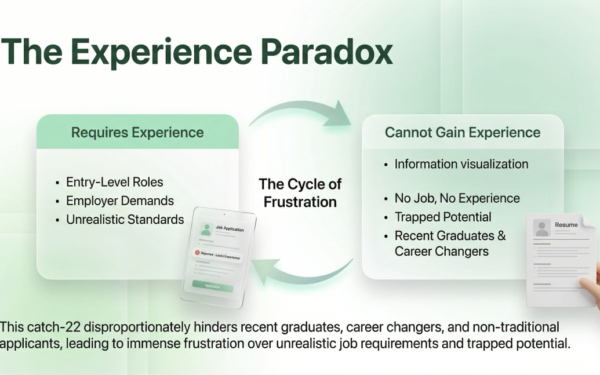
Ireland employers require local experience before they will hire. The Critical Skills Employment Permit requires documented employer evidence before it can be issued. But without a local job, that employer evidence cannot exist. Without the permit, the local job cannot be obtained. This circular barrier is not a myth or a misunderstanding — it is the daily reality for thousands of highly qualified Indian graduates who arrive in Ireland with strong STEM foundations, international project histories, and genuine ambition, only to find that none of it counts without a local reference.
The problem is compounded by three additional barriers that Indian candidates face specifically. First, Indian academic credentials need formal recognition in an Irish context — a degree from IIT or NIT carries enormous weight in India and in global tech circles, but Irish employers often do not know how to assess it. Second, employers question the relevance of Indian project experience, particularly if it was built in a hierarchical workplace culture rather than the flat, agile, cross-functional teams that Irish tech companies run. Third, without a local professional network, even the best-qualified candidates cannot get in front of the decision-makers who could give them a chance.
What the Critical Skills Employment Permit Actually Requires
The Critical Skills Employment Permit is Ireland’s primary work authorisation route for highly skilled professionals in shortage occupations. Software Engineer is on the eligible occupation list, and the minimum salary threshold is €38,000, rising to €55,000 and above for most commercial roles. To apply, both the employer and the applicant must produce specific documentation.
The employer must provide a letter on company letterhead confirming the job title and role responsibilities, the offered salary, the qualifications required for the position, and a statement explaining why the role cannot be filled from the domestic Irish or EU workforce. The applicant must provide certified degree certificates and academic transcripts, evidence of professional registration where applicable, a full employment history with dates and duties, and a skills assessment letter confirming NFQ Level 7 or higher equivalency for overseas qualifications.
The challenge is the skills assessment letter and the employer reference. Both require third-party verification of competencies that the candidate has demonstrated — but for an Indian international student with no local work history, obtaining that verification through traditional routes is extraordinarily difficult. This is precisely the gap that Nap OS was built to address.
What Ireland Tech Employers Actually Want
Understanding the Irish tech hiring environment is essential before applying for any role. Ireland’s tech sector has developed a distinct workplace culture shaped by the American multinationals that dominate the landscape. Employers expect agile delivery, cloud-first architecture, product thinking, and the ability to collaborate across flat, cross-functional teams. Communication is direct, self-advocacy is expected, and candidates who wait to be told what to do will struggle in interviews and on the job.
The technical requirements for Software Engineer roles are consistent across the sector. ATS systems screen for keywords including full stack, cloud native, microservices, DevOps, agile, sprint, code review, unit testing, and scalable. The core skills employers look for are JavaScript and TypeScript, Python, React, Node.js, AWS, Azure or GCP, Git, CI/CD pipelines, Agile and Scrum methodology, REST APIs, Docker, and Kubernetes. The toolchain typically includes VS Code, Jira, GitHub, Jenkins, Terraform, Datadog, and Postman.
Portfolio requirements have become more rigorous as the hiring market has grown more competitive. Hiring managers now expect to see a GitHub repository with at least three deployed projects, thorough README documentation, demonstrable CI/CD pipeline evidence, and contributions to code reviews. Certifications that carry weight include AWS Solutions Architect, Azure Developer, Google Cloud Professional, and the Certified Kubernetes Administrator. These are not optional extras — they are the baseline evidence that separates candidates who are considered from candidates who are screened out before a human ever looks at their application.
The Real Barriers Facing Indian International Students
The technical skills gap is real but closeable. The structural barriers are harder. An Indian international student in Ireland is typically managing several pressures simultaneously that their EU-national counterparts do not face. International student loan repayments do not pause while a graduate job searches. Immigration status creates time pressure — every month without a valid work permit is a month of uncertainty. The cultural transition from a hierarchical Indian workplace to a flat Irish team requires deliberate adaptation, and candidates who have not made that transition visibly in their CV and interview style are often passed over even when their technical ability is strong.
The most common rejection triggers are well-documented. No GitHub portfolio. No local project references. No demonstrable cloud experience. Missing agile vocabulary in the CV. An employment history that reads as technically competent but contextually unfamiliar to an Irish hiring manager. Indian credentials that have not been formally assessed against Irish standards. Each of these is a filter, and most candidates are eliminated before they reach a phone screen.
The biggest mistake Indian international students make is applying for roles without addressing these filters first. A technically excellent CV that lacks local experience evidence, an employer reference, or a verifiable skills portfolio will not progress in the current market. The solution is not to wait for a local employer to take a chance — it is to create the evidence before the application.
How Nap OS Solves the Catch-22
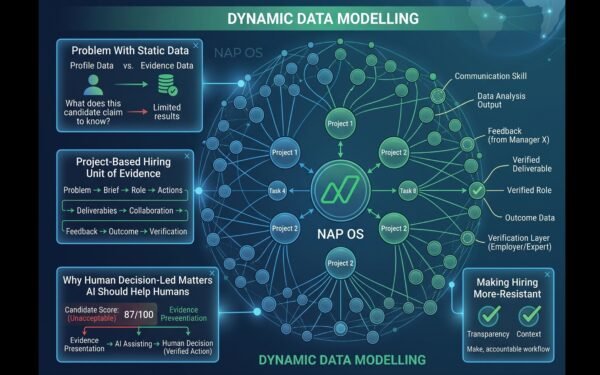
Nap OS is built specifically to resolve the experience paradox for international candidates pursuing work in Ireland, the UK, and the US. For Indian international students targeting Software Engineer roles and the Critical Skills Employment Permit, Nap OS delivers a structured programme that produces the exact evidence that both employers and the permit process require.
The programme begins with a personalised project brief matched to real Ireland employer requirements. The project is scoped and executed in VS Code and aligned directly to the evidence requirements of the Critical Skills Employment Permit. It replicates a genuine Ireland-based work environment with measurable KPIs, defined deliverables, and sprint-based delivery — the kind of documented work output that is indistinguishable from employed work in the eyes of a hiring manager or permit assessor.
On completion, Nap OS issues a formal employer-format reference letter confirming the candidate’s role title, responsibilities, and demonstrated competency. This letter directly addresses the two most common rejection triggers — unverified Indian credentials and absence of local employer reference — in a format that Irish employers and the Department of Enterprise, Trade and Employment recognise.
Alongside the employer reference, Nap OS builds a professional portfolio centred on a GitHub repository with three or more deployed projects, full README documentation, and CI/CD pipeline evidence. This is the exact portfolio specification that Irish hiring managers and permit assessors look for, and it is produced as a verified output of the programme rather than a self-reported claim. A formal skills verification certificate aligned to Irish professional standards is also issued, addressing the qualification recognition barrier that many Indian candidates encounter.
Throughout the programme, candidates receive one-to-one AI mentoring tailored to the specific challenges of an Indian international student adapting to the Irish tech environment. This includes support on transitioning from hierarchical to collaborative team dynamics, developing the self-advocacy communication style that Irish employers expect, and preparing for the interview formats — system design questions, live coding challenges, STAR behavioural interviews, and architecture walkthroughs — that are standard in the Irish market. Nap OS also connects candidates with Ireland-based Software Engineer professionals from the first day of the programme, beginning the network-building process that is otherwise nearly impossible to start from outside the market.
The outcome is a candidate with verified local experience, a formal employer reference, a professional portfolio, and a skills certificate — everything required to make a credible application for a Software Engineer role and a Critical Skills Employment Permit in Ireland.
What the Nap OS Programme Produces
The Nap OS programme runs for four to twelve weeks depending on the candidate’s starting point and the complexity of the project brief. At the end of the programme, candidates hold a complete employer-grade Software Engineer portfolio including a GitHub repository with deployed projects and CI/CD evidence, a formal employer reference letter in Ireland-standard format, an independent skills verification certificate, and a mentored preparation record covering system design, live coding, STAR methodology, and architecture discussion.
For Critical Skills Employment Permit applications specifically, Nap OS supports the full documentation package: academic credential verification guidance, employment history structuring, skills assessment letter, employer-grade project reference, portfolio audit, and language test preparation alignment. Every element of the Nap OS output is designed to address the documented evidence requirements of the permit process while simultaneously building a candidate profile that passes the ATS filters and impresses Irish hiring managers.
Frequently Asked Questions
Can an Indian international student get a Software Engineer job in Ireland without local experience? It is extremely difficult without verified evidence. Employers screen for local experience at the first stage, and permit assessors require documented employer references. Nap OS creates that evidence through a structured employer-simulated programme.
What does the Critical Skills Employment Permit require? The permit requires documented employer references confirming role, responsibilities, and salary, plus skills verification evidence and demonstrated competency in the occupation. Both the employer and the applicant must produce specific documentation, and overseas qualifications must be formally assessed against Irish NFQ standards.
How long does the Nap OS programme take? Four to twelve weeks produces a complete employer-grade Software Engineer portfolio, employer reference letter, and skills certificate. The timeline depends on the candidate’s existing skill level and the project scope agreed at the start of the programme.
Does overseas Software Engineer experience count for Irish employers? It helps as a foundation, but without local verification, employers discount it significantly. The absence of an Irish or UK employer reference, a verifiable portfolio, and locally recognised skills evidence means that overseas experience alone is typically not sufficient to progress past the first screening stage.
What is the biggest mistake Indian international students make when applying for Software Engineer roles in Ireland? Applying without local experience evidence, an employer reference, or a skills portfolio. These are the three filters that eliminate the majority of international candidates before a human reviewer ever sees the application. Addressing them before applying — rather than hoping an employer will make an exception — is the only reliable path to an interview.
Your Next Step
If you are an Indian international student in Ireland with Software Engineer qualifications and you are ready to break through the experience barrier, the Critical Skills Employment Permit catch-22 has a solution. Nap OS builds the verifiable Irish work evidence, employer reference, portfolio, and skills certificate that the permit process and the hiring market require — in four to twelve weeks, through a personalised programme designed for your exact situation.
Start your personalised Nap OS project at os.napblog.com.
And if this article describes your situation — if you are navigating the same barriers and want guidance from someone who understands the Irish tech market — share your story and your CV with us at palani@napblog.com. We read every message and we are here to help.