Last updated: May 29, 2026
7 min read
For a long time, technology companies believed branding was simply about consistency.
Choose one colour.
Choose one logo.
Stay rigid.
Stay recognisable.
Stay predictable.
But the greatest technology products in history eventually outgrow rigidity.
Because when products evolve, identity evolves.
And when identity evolves, visual systems evolve.
That is exactly where Nap OS finds itself today.
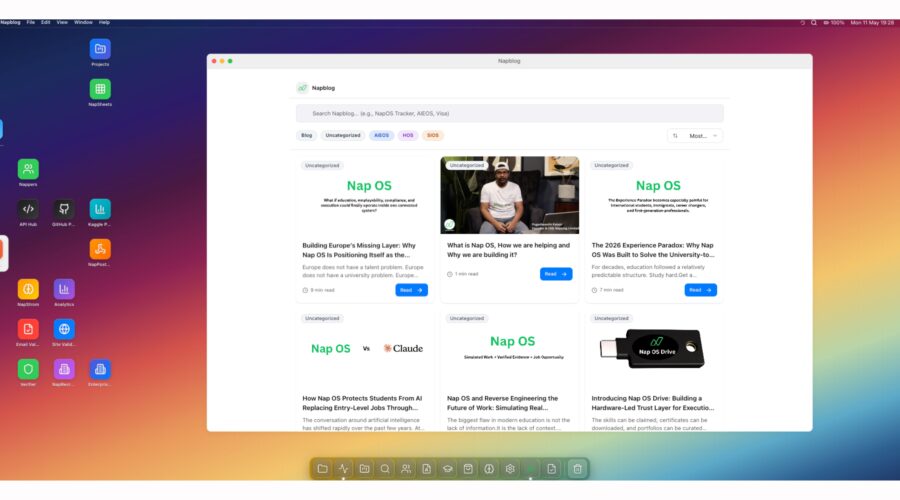
Nap OS began with a relatively simple visual identity — a basic dual-colour themed system designed around clarity, focus, and early-stage product discipline.
Simple.
Functional.
Minimal.
But products are not static.
Movements are not static.
Human growth is not static.
And certainly, a career operating system built for millions of people across industries, skills, ambitions, countries, and life stages cannot remain visually constrained forever.
Today, Nap OS is transitioning toward something bigger:
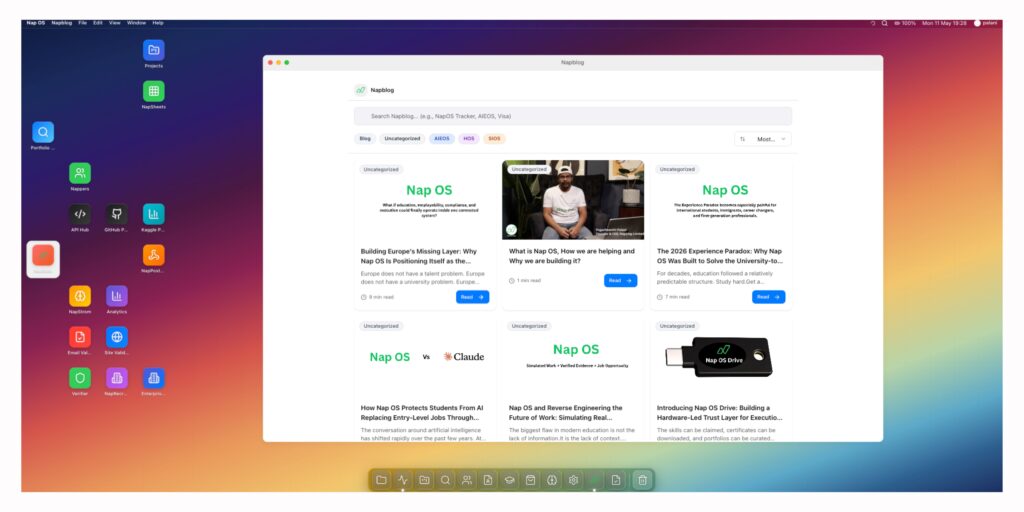
A dynamic multi-colour identity system.
Not for aesthetics alone.
Not because trends changed.
But because the product itself has evolved.
Just as some of the world’s most iconic technology companies evolved their visual language over time, Nap OS is now entering a phase where colour no longer represents branding.
Colour represents capability, execution, diversity, momentum, and human potential.
This transition is not cosmetic.
It is philosophical.
It is infrastructural.
And more importantly—
It reflects what Nap OS is becoming.
Why Dual-Colour Worked in the Beginning
Every startup starts with constraints.
Limited resources.
Limited design systems.
Limited users.
Limited complexity.
In early stages, simplicity wins.
Dual-colour systems create:
clarity,
recognition,
focus,
speed of implementation,
and psychological consistency.
For Nap OS, this mattered.
Because the mission in the beginning was singular:
Help students and professionals convert skills into execution-backed employability.
The system needed discipline.
Not visual complexity.
The focus was execution.
Portfolio creation.
Career proof.
Verified evidence.
Job readiness.
Everything needed to feel structured.
Almost operational.
Almost industrial.
The early visual identity reflected this.
Simple colours.
Clear pathways.
Low visual noise.
High clarity.
This helped communicate trust.
Especially in an education and recruitment market flooded with noise, exaggerated promises, and vague coaching systems.
Nap OS stood differently.
Minimal.
Practical.
Execution-first.
But something changed.
The product expanded.
Nap OS Is No Longer One Product
One of the biggest mistakes companies make is refusing to let branding evolve with product maturity.
What works for version one rarely works for version ten.
Nap OS is no longer just:
a career accelerator,
an internship simulator,
or a recruitment operating system.
It is becoming something far larger.
Nap OS now touches:
career portfolios,
skill execution,
recruitment systems,
learning simulations,
AI coaching,
workflow execution,
credential validation,
student employability,
research participation,
real-world projects,
execution tracking,
career analytics,
portfolio verification,
and eventually institutional infrastructure.
A single visual language cannot communicate this scale.
Because Nap OS itself is becoming modular.
Multi-dimensional.
Cross-functional.
And deeply human.
Different students use Nap OS differently.
A marketing student experiences Nap OS differently than an engineer.
A healthcare professional navigates differently than a software developer.
A migrant professional has different emotional and professional needs than a university graduate.
The product became diverse.
And the identity needed to reflect that diversity.
Why Colour Matters More Than People Think
People often underestimate colour.
But colour is psychology.
Colour is emotion.
Colour is memory.
Colour is meaning.
Humans process visuals faster than language.
Before someone reads your mission—
they feel your brand.
This matters enormously for a company like Nap OS.
Because careers are emotional.
Job searching is emotional.
Learning is emotional.
Identity formation is emotional.
Fear of rejection.
Fear of uncertainty.
Fear of being behind.
Fear of irrelevance.
Students do not simply need software.
They need belief.
They need direction.
They need clarity.
They need optimism.
A rigid, monochrome identity can unintentionally feel cold.
Institutional.
Administrative.
Even intimidating.
But a dynamic colour system can communicate something different:
possibility,
growth,
experimentation,
self-discovery,
adaptability,
and momentum.
That matters.
Especially for younger generations navigating a rapidly changing labour market.
Learning from Technology Evolution
Historically, some of the greatest technology companies transitioned visually when their mission expanded.
Early computing products were often rigid.
Technical.
Mechanical.
Monotone.
Because technology itself was limited.
But once computing became human—
design changed.
Interfaces became emotional.
Colour became interaction.
Identity became fluid.
Technology stopped being purely functional.
It became experiential.
Nap OS is entering that exact phase.
Because the future of employability is not simply:
“learn skill → get job.”
The future is:
learn,
experiment,
execute,
document,
improve,
adapt,
build proof,
and evolve continuously.
That journey is not linear.
So the interface should not feel linear either.
The Philosophy Behind the Multi-Colour Identity
This is where things become important.
Nap OS is not adopting multiple colours randomly.
Every colour will represent meaning.
Every colour will represent execution.
Every colour will represent pathways.
Because Nap OS is fundamentally built around skills becoming execution.
Imagine a system where colour itself becomes a behavioural language.
Blue may represent:
clarity,
systems,
strategy,
professional confidence.
Green may represent:
growth,
career momentum,
consistency,
personal development.
Orange may represent:
experimentation,
creative problem-solving,
entrepreneurship.
Purple may represent:
deep thinking,
research,
innovation,
cross-domain intelligence.
Red may represent:
urgency,
career activation,
interview readiness,
employment milestones.
Yellow may represent:
energy,
discovery,
learning curiosity.
Instead of one static brand—
Nap OS becomes an ecosystem.
An operating system.
A living environment.
Just like human careers.
Nap OS Is Becoming More Human
The future of software is not cold interfaces.
The future of software is human-centered systems.
Students today already face enormous psychological pressure.
The labour market changes monthly.
AI changes expectations rapidly.
Job descriptions evolve continuously.
Certificates lose signalling power.
Experience requirements increase.
Attention spans decline.
Mental exhaustion rises.
In such an environment—
career software cannot feel robotic.
It must feel empowering.
Alive.
Encouraging.
Adaptive.
A multi-colour system helps Nap OS psychologically feel more human.
Less transactional.
Less bureaucratic.
More alive.
Because career growth itself is colourful.
No one grows in a straight line.
People pivot.
Fail.
Restart.
Experiment.
Unlearn.
Rebuild.
Nap OS branding must visually mirror reality.
From Career Software to Career Identity
Another reason this matters:
Nap OS is slowly becoming more than software.
It is becoming identity infrastructure.
Students increasingly attach themselves to systems that shape who they become.
Think about it carefully.
People say:
“I’m an Apple user.”
“I’m a Notion person.”
“I use Figma.”
“I build in public.”
Software becomes identity.
Nap OS must become identity too.
Not through marketing claims—
through emotional connection.
People should eventually feel:
“I built my career through Nap OS.”
“I became disciplined because of Nap OS.”
“I transformed because of Nap OS.”
That emotional bond matters.
Dynamic visual systems strengthen belonging.
Because people see themselves inside the product.
Not outside it.
Why This Matters for International Growth
Nap OS is not building for one country.
The ambition is global.
Especially across:
Ireland,
France,
Germany,
Spain,
Netherlands,
Nordics,
and broader Europe.
Europe itself is diverse.
Different cultures.
Different languages.
Different educational systems.
Different personalities.
Different career expectations.
A narrow visual system often struggles internationally.
But dynamic systems scale better.
Because they allow localisation without losing identity.
The brand becomes adaptable.
Flexible.
Culturally transferable.
Still recognisable—
but not restrictive.
This becomes increasingly important as Nap OS expands through:
universities,
internships,
licensed recruitment,
career acceleration,
and institutional partnerships.
The Psychology of Career Progression Through Colour
There is another layer people miss.
Colour can reinforce behaviour.
Nap OS is fundamentally a behavioural system.
Streaks.
Execution logs.
Consistency.
Output tracking.
Project completion.
Skill validation.
Imagine if colours reflected progression.
A student begins with neutral tones.
As execution grows—
the system visually transforms.
More signals.
More confidence.
More visible credibility.
The interface itself starts feeling earned.
Not given.
That creates emotional motivation.
It becomes gamified—
without feeling childish.
Professional—
without feeling corporate.
Human—
without losing seriousness.
This balance matters enormously.
Why Timing Matters
Changing branding too early creates confusion.
Changing too late creates stagnation.
Nap OS is changing at the right time.
Because the platform itself is maturing.
The infrastructure is evolving.
The product ecosystem is expanding.
The philosophy is strengthening.
The positioning is becoming clearer.
This is not a rebrand.
This is an evolution.
A product becoming more honest about what it has already become.
What This Means for the Future of Nap OS
Over time, the multi-colour system will likely represent:
skills,
industries,
career paths,
execution states,
portfolio maturity,
learning progression,
project categories,
AI guidance,
and professional readiness.
Students will not simply use Nap OS.
They will navigate it.
Explore it.
Grow inside it.
Build inside it.
And visually feel their own evolution.
That is powerful.
Because the strongest products in history become mirrors.
They reflect who people are becoming.
Not who they currently are.
Nap OS is being designed for the future version of the student.
The future professional.
The future founder.
The future builder.
The future researcher.
The future immigrant navigating uncertainty.
The future graduate struggling with the experience paradox.
The future person trying to become employable in an AI-native world.
Final Reflection: Colour Is Not Decoration. It Is Direction.
At first glance, moving from a dual-colour theme to a multi-colour system may sound small.
A design choice.
A visual update.
But in reality—
it signals something much deeper.
Nap OS is growing up.
From product—
to platform.
From software—
to operating system.
From career support—
to career infrastructure.
From helping students survive—
to helping students evolve.
The future of employability will not be black and white.
It will be adaptive.
Dynamic.
Multidisciplinary.
AI-powered.
Human-centred.
Execution-first.
And increasingly colourful.
Because people are not static.
Careers are not static.
Learning is not static.
And Nap OS was never built to remain still.
It was built to evolve—
with the people building their futures through it.