9 min read
By Pugazheanthi Palani, Founder & CEO, Napblog Limited
There are products that begin with a business plan, and there are products that begin with a question.
For me, Nap OS began with a question: How can education, engineering, entrepreneurship and real-world work be connected in a way that allows a person to demonstrate what they can actually do?
That question did not begin with artificial intelligence. It did not begin with a startup accelerator, venture capital investment or a polished SaaS platform.
It began much earlier — through engineering, experimentation, academic projects, entrepreneurship and years of observing how people learn, build, work and struggle to access opportunities.
As Napblog Limited continues developing Nap OS, a Workforce Operating System, I increasingly see today’s product not as a sudden startup idea, but as the result of a long research and development journey that started almost a decade ago.
By 2027, that journey will represent roughly ten years of continuous experimentation and learning.
The first seed was planted in 2017.
The First Product Was Not Nap OS
In 2017, I was studying Mechanical Engineering at Anna University and developing my understanding of engineering, product development and entrepreneurship.
At that stage, I was not thinking about building a workforce operating system.
I was learning how products are designed.
Mechanical engineering teaches something fundamental: an idea is not a product until it can work in the real world.
You can have a drawing, a calculation, a theoretical model or a concept. But eventually, something must be designed, built, tested, improved and demonstrated.
That engineering mindset became deeply influential in my approach to entrepreneurship.
My academic environment exposed me to areas such as industrial design, AutoCAD, dynamics and kinematics, thermodynamics, computational fluid dynamics and manufacturing-related concepts. At the same time, I was developing an interest in entrepreneurship and founded an entrepreneur’s club during my undergraduate years.
The combination was important.
Engineering taught me to think about systems.
Entrepreneurship taught me to think about problems.
Academic work taught me to validate ideas.
And early product experiments taught me that building something is fundamentally different from simply talking about it.
That became the first seed of what would eventually become Nap OS.
From Engineering to International Business
My journey did not remain within mechanical engineering.
After completing my engineering degree, I moved towards international business and marketing, including a Master’s degree in International Business at Griffith College Dublin.
That transition might look unrelated to workforce technology at first.
In reality, it expanded the problem I was studying.
Engineering asks:
How can we build something that works?
Business asks:
Who needs it, why do they need it, and how can it create value?
International business adds another question:
How does the same problem change across countries, cultures, labour markets and economic systems?
This combination became increasingly relevant to the problem that Nap OS is now attempting to address.
People do not simply need education.
They need opportunities to apply education.
They need opportunities to work on meaningful projects.
They need evidence that demonstrates capability.
Employers need confidence that a person can contribute.
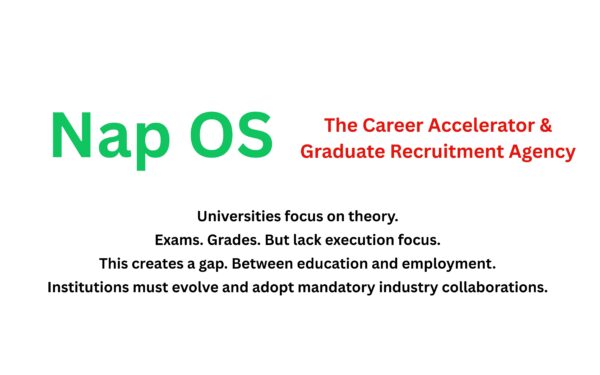
Universities need stronger connections between learning and employment.
And economies need systems that can convert human potential into productive activity.
These are not purely recruitment problems or purely education problems.
They sit somewhere between education, workforce development, innovation, entrepreneurship and economic participation.
That is the space where Nap OS is being developed.
Ten Years of Research Before the Workforce OS
One of the most important lessons from this journey is that research does not always happen inside a laboratory.
Research can happen through building.
It can happen through conversations with students.
It can happen through working with employers.
It can happen through observing graduates struggle to obtain their first opportunity.
It can happen through launching a product, seeing what works, seeing what fails and rebuilding it.
Since around 2016–2017, I have independently researched questions around employability, workforce development, entrepreneurship, business strategy, technology, education and innovation.
Over time, those questions became more specific:
Why can someone have a degree but still struggle to obtain their first job?
Why does the labour market ask for experience before giving someone an opportunity to obtain experience?
Why is a CV often treated as stronger evidence than actual project performance?
Why should learning stop at the classroom when real organisations have thousands of problems that need solving?
Could a person build professional experience through structured real-world projects before obtaining conventional employment?
These questions gradually shaped the intellectual foundation behind Nap OS.
The Engineering Principle Behind Nap OS
The original engineering mindset still influences the product today.
A mechanical engineer does not normally evaluate a machine based only on its description.
You test it.
You measure it.
You observe its performance.
You identify failures.
You improve the design.
Then you test again.
Why should workforce capability be completely different?
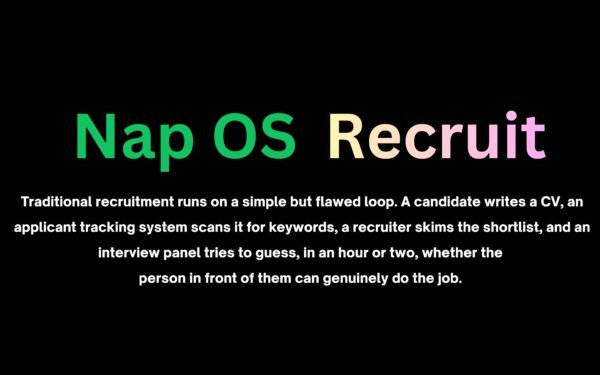
Traditional recruitment often relies heavily on CVs, qualifications, interviews and self-reported skills.
These are useful signals, but they do not necessarily provide complete evidence of capability.
Nap OS is being developed around a different proposition:
Give people opportunities to perform meaningful work, and create evidence from that work.
This is the foundation of what Napblog calls Personalised Work Experience and the broader concept of a Workforce Operating System.
Instead of waiting for someone to become employable before giving them experience, the system aims to help people progressively build evidence of employability through execution.
That could involve research projects, business problems, technology projects, marketing assignments, data analysis, product validation, entrepreneurship or other forms of professional work.
The objective is not simply to give somebody another certificate.
The objective is to help them build something they can demonstrate.
From Individual Experiments to Napblog Limited
The creation of Napblog Limited in Ireland represented an important transition.
What had previously existed as years of research, experimentation and independent work began becoming an organised company and product development programme.
Napblog Limited is now being developed as an Irish innovation, research and workforce development company.
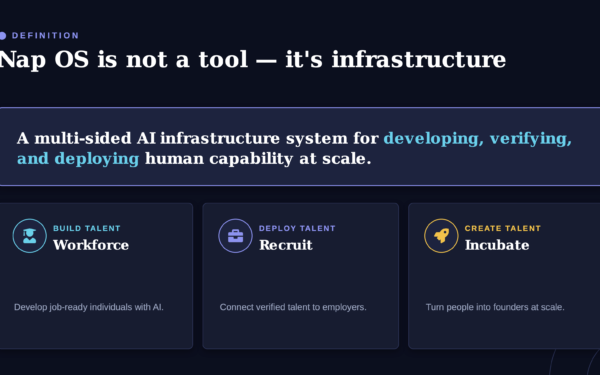
Its flagship product, Nap OS, is being developed as infrastructure connecting education, workforce development, project-based work, recruitment and entrepreneurship.
The platform has evolved into several connected areas.
Nap OS Workforce
Helping individuals build real-world experience and evidence of capability through structured work and projects.
Nap OS Recruit
Helping organisations identify talent through demonstrated project capability rather than relying exclusively on traditional credentials.
Nap OS Incubate
Helping students and early-career individuals move from problem discovery and experimentation towards entrepreneurship and validated ventures.
Together, these concepts represent a broader ambition.
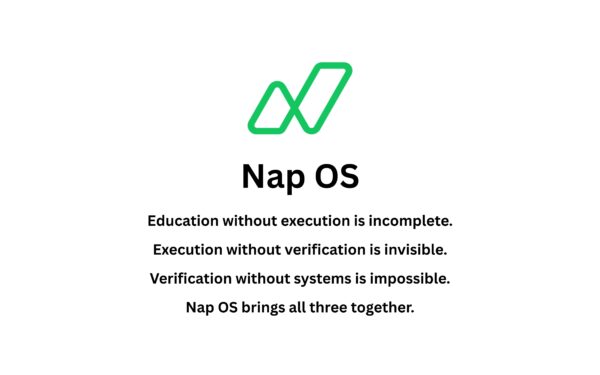
Learning should lead to doing. Doing should create evidence. Evidence should create opportunity. Opportunity should create economic participation.
The First Decade Was About Learning How to Build
The significance of 2017 is therefore not that the final Nap OS product existed at that time.
It did not.
The significance is that the product-development mindset began forming.
The early experiments created a foundation for understanding product design, academic validation, entrepreneurship and execution.
Over the following years, the journey expanded across engineering, international business, marketing, technology, research and workforce development.
There were experiments that worked.
There were experiments that did not.
There were ideas that were eventually abandoned.
There were products that had to be redesigned.
There were people who contributed.
There were students who gained experience.
There were employers who provided feedback.
And gradually, patterns emerged.
One of those patterns was particularly powerful:
People become more capable when they are given meaningful opportunities to execute.
That observation is central to Nap OS.
From a Student Entrepreneur to an R&D Company
There is also something personally significant about the journey.
In 2019, as a student entrepreneur connected with TiE Chennai, I was already thinking about entrepreneurship and the possibility of building internationally.
Today, the ambition is different in scale but connected to the same underlying belief.
Ireland can become a place where international talent does not simply come to study and then wait for an opportunity.
It can become a place where students, graduates, researchers, founders and professionals participate in the innovation economy by building, solving and contributing.
That is one reason Napblog Limited is being positioned not merely as a software company, but as an innovation and research-driven workforce company.
The objective is to build infrastructure that connects organisations with people who want to learn by doing.
Why Continue Developing Nap OS in 2027?
Some people might ask:
If the initial idea began almost ten years ago, why continue developing it now?
My answer is simple.
Because the problem has not disappeared.
In some ways, it has become more important.
Artificial intelligence is changing how organisations work.
Higher education is changing.
Recruitment is changing.
Remote work has expanded.
International mobility has increased.
Employers increasingly care about demonstrable skills.
Students want experience before graduation.
Graduates want evidence that differentiates them.
Companies want access to capable talent without increasing hiring risk.
At the same time, millions of people around the world possess potential that is difficult to demonstrate through conventional credentials alone.
The technology available in 2027 will be dramatically more capable than the technology available in 2017.
That creates an opportunity to revisit an old problem with new infrastructure.
AI can help personalise learning and work pathways.
Data can help build better evidence.
Automation can help match projects with capabilities.
Digital identities can help connect verified experience.
And collaboration platforms can allow organisations, universities and individuals to work together across borders.
The question is no longer whether technology can support this model.
The question is how responsibly and effectively we can build it.
Nap OS Is Still an Experiment
It is important to be honest about where we are.
Nap OS is not being presented as a finished solution to the world’s workforce problems.
It is a product and research journey.
Napblog has already built and launched a live commercial platform, generated recurring subscription revenue, worked with contributors internationally and supported people who progressed into employment, internships, further study and entrepreneurship.
Those experiences provide useful validation.
But they are not the end of the research.
The next stage requires stronger academic validation, institutional partnerships, employer pilots, independent evaluation and continued product experimentation.
That is particularly important as Nap OS expands from an individual workforce platform into a broader operating layer connecting people, projects, organisations, universities and innovation ecosystems.
The ambition is large.
The evidence must grow with it.
2027: Ten Years From the First Seed
Looking towards 2027, I do not see Nap OS as a product that suddenly appeared.
I see it as the continuation of a decade-long process.
The journey started with engineering.
It developed through entrepreneurship.
It expanded through international business.
It matured through research.
It was tested through real-world projects.
It evolved through working with people.
And today it is becoming a technology platform.
That is why the first product experiment matters.
It was not necessarily commercially successful.
It was not the Nap OS we know today.
But it taught a fundamental lesson:
If you want to change a system, you eventually have to build something that can operate inside the real world.
That principle has remained constant.
The Next Chapter: Building the Evidence
Napblog Limited’s next chapter is therefore not simply about building more software.
It is about building evidence.
Evidence that project-based experience can improve workforce transitions.
Evidence that students can contribute to meaningful projects before graduation.
Evidence that employers can evaluate talent through demonstrated capability.
Evidence that international talent can become contributors rather than simply applicants.
Evidence that entrepreneurship can begin earlier.
Evidence that universities and businesses can collaborate more effectively.
And evidence that technology can help transform potential into participation.
The first seed may have been planted in 2017.
The company, product and research methodology have evolved significantly since then.
But the underlying question remains remarkably similar:
What if people were given the opportunity to demonstrate what they can do before the world decides whether they are qualified to do it?
That is the question behind Nap OS.
And that is why, almost ten years after the first product-development experiments, Napblog Limited is still building.
Not because the journey has taken too long.
But because some problems require a decade of learning before you understand what you are actually trying to build.
2017 was the seed.
2027 can be the next chapter.
Nap OS is the product of the journey in between.
— Pugazheanthi Palani
Founder & CEO, Napblog Limited
Building Nap OS — Workforce Operating System
Research • Innovation • Workforce Development • Project-Based Experience • Entrepreneurship