7 min read
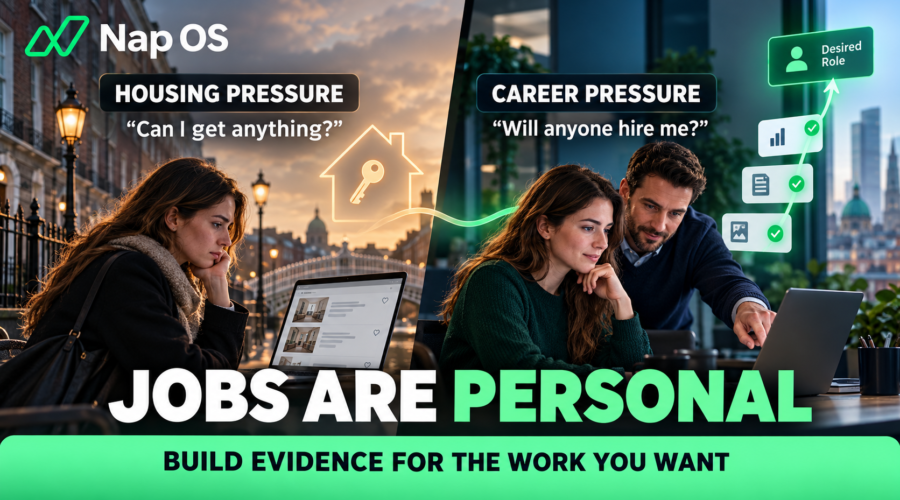
In Dublin, scarcity often teaches people to lower their expectations. Someone searching for a home may begin with clear needs around location, privacy, price and safety. After weeks of unanswered messages and crowded viewings, the question can change from ‘Is this right for me?’ to ‘Can I get anything at all?’ The same shift can happen during a long job search. A graduate or career changer starts with a direction, then repeated silence pushes them to apply everywhere and accept whatever appears first.
Housing and employment are not equal problems. A safe home is an immediate human need, and Dublin’s housing pressure can be severe. The comparison matters because scarcity can weaken choice in both searches. People stop asking whether an option suits them and begin treating any offer as a rescue. At Nap OS, we believe a person’s professional future should not be shaped only by urgency or the first employer willing to respond.
Scarcity Can Turn Choice Into Survival
A job pays the bills, but it also shapes how a person spends the week, which skills they develop and what opportunities become available next. Work affects confidence, professional identity and future earnings. Telling a job seeker to take anything may be practical for immediate income, but it is not a complete career strategy.
Many people in Ireland take hospitality, retail, delivery or other essential work to support themselves while aiming for a professional role in data, marketing, research, product, sales, operations or strategy. There is no shame in survival work. The problem begins when a temporary compromise becomes a permanent trap because the person has no structured way to build evidence for the career they want.
Long job searches make that trap stronger. Candidates receive automated rejections, vague advice to improve their CV and little information about what was missing. They may complete another course, add keywords and apply again, yet the central gap remains. Employers want evidence that the candidate can handle relevant work. The candidate needs an opportunity to produce it. Without a bridge between the two, effort increases but credibility may not.
The Local Experience Barrier
The barrier is especially visible for international graduates, immigrants and career changers. They may have a degree, overseas experience or strong technical knowledge, but employers often ask whether they understand the local market and workplace expectations. The candidate cannot gain local professional experience without an opportunity, while the opportunity is withheld because they do not yet have that experience.
A conventional CV can describe education, responsibilities and ambition. It cannot by itself prove how someone defines a problem, chooses a method, handles feedback or improves a weak first draft. A polished LinkedIn profile may help a person become discoverable, but it does not create the missing work. Better wording can communicate evidence that already exists. It cannot manufacture credible evidence where none has been built.
This is why Nap OS focuses on professional project experience rather than treating the CV as the product. The objective is to help a person create relevant work that can be examined, explained and discussed. The CV then becomes a summary of that work, rather than a collection of claims asking an employer for trust.
How Nap OS Builds Professional Evidence
The process begins with direction. A candidate identifies the role or professional area they want to move towards. Nap OS then connects that direction to a suitable project brief across areas such as strategy, marketing, sales, research, product and data. The brief gives the learner a defined business problem, expected outputs and a standard against which the work can be reviewed.
The candidate does the work. Depending on the brief, that may involve analysing a dataset, researching a market, designing a customer journey, preparing a go-to-market plan, mapping an operational process or building a product recommendation. The value comes from the decisions made along the way: what information was selected, which assumptions were challenged, how the output changed after feedback and whether the final recommendation is useful.
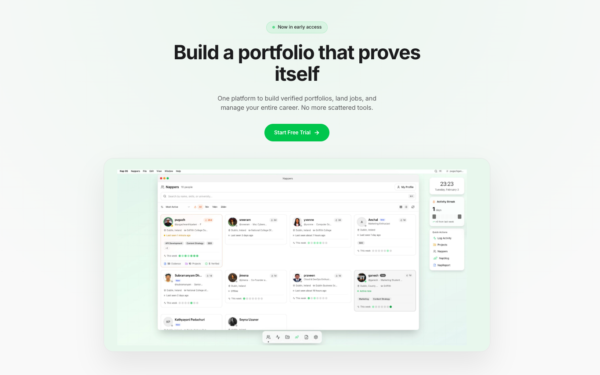
A completed evidence record can include the brief, working files, final deliverables, a decision log, feedback and revisions. With the paid human-review service, it can also include Project Manager verification and a reference based on observed work. This gives the candidate material for a portfolio and specific examples for an interview. It does not turn a project into employment, but it gives an employer more to assess than a self-description.
Why a Human Project Manager Matters
Nap OS remains free for people who want to select a brief and build independently. Some candidates need more than access to a task. They need help turning a broad ambition into a realistic scope, maintaining momentum and understanding whether the work meets a professional standard. That is why the Nap OS Project Manager exists.
The Project Manager is a navigator, reviewer and accountable human contact. They can question an unsupported assumption, ask for clearer evidence, identify where a deliverable is too academic and guide revisions. They also help the candidate explain the work to an employer. This judgement matters because a technically correct output can still be unclear, commercially weak or poorly presented.
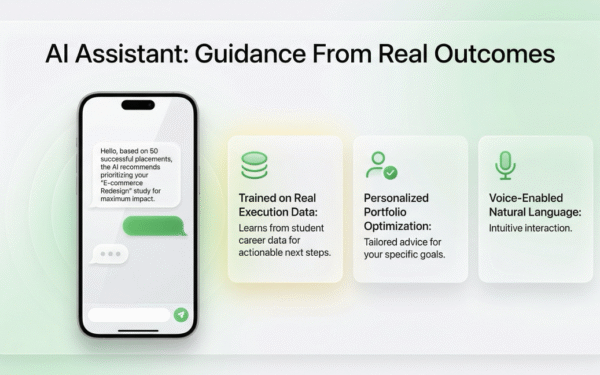
AI can help a learner research, organise information, generate options or test an approach. It cannot replace responsibility for the final work. A candidate must understand what they submit and be able to defend it. Human review helps separate thoughtful use of AI from work that has simply been generated and accepted without judgement. The Project Manager does not complete the project for the candidate. Their role is to make the candidate’s own execution stronger, clearer and more credible.
Building Toward the Job a Person Wants
Role relevance matters. Consider someone aiming for a customer experience or operations position after months in work that does not demonstrate those capabilities. A generic certificate adds a line to the CV. A focused project can produce a customer journey map, voice-of-customer analysis, service KPI dashboard, escalation workflow and process-improvement recommendation. Those outputs provide evidence connected to the desired role.
The same principle applies to a prospective data analyst who builds a retention analysis, explains the causes of customer drop-off and presents a dashboard with a written recommendation. It applies to a marketing candidate who researches an audience, defines a campaign, selects measurement criteria and reviews the results. The project does not guarantee that an employer will hire the person. It helps the person arrive with a stronger answer to the question, ‘What have you actually done?’
This approach supports sensible movement through adjacent roles. A candidate may discover that the first step is Customer Associate before Customer Experience Manager, or Junior Analyst before Data Analyst. That is different from abandoning a professional goal. The evidence supports informed progression instead of random applications and the hope that an unrelated job will lead to the right destination.
Free Access and Paid Human Review
Nap OS separates access to learning from the cost of human support. Self-directed learners can explore the platform and build project work without paying for a job opportunity. Paid plans cover the time required for Project Manager guidance, review, verification and a reference where the completed work supports one. Candidates are paying for a professional service around their project evidence, not for employment or access to a vacancy.
That distinction protects the purpose of the product. Nap OS cannot promise that a candidate will be hired, and employment is not guaranteed. Employers make their own decisions based on their needs, selection processes and assessment of each applicant. Nap OS can help a candidate reduce an evidence gap, improve the quality of their work and communicate it more clearly. Those are valuable outcomes even when the next application is not successful.
The aim is to return agency to the job seeker. Instead of waiting for an employer to grant the first chance, the candidate can start building. Instead of repeatedly changing CV wording, they can improve the underlying evidence and create a record of decisions, deliverables, feedback and progress that belongs to them.
A Better Response to Professional Uncertainty
Dublin’s housing pressure shows what happens when an essential search is dominated by scarcity. People compromise because they need stability. A person may still need to take an available job for income, but that job does not have to become the limit of their professional ambition.
Nap OS provides a parallel path. While earning, studying or searching, a person can build targeted professional experience and receive structured human support when they need it. The process will not remove every barrier in recruitment. It can make the candidate’s next conversation more specific. They can show the problem they worked on, the choices they made, the feedback they received and the improvement they delivered.
Jobs are personal because careers accumulate. Each role affects the evidence available for the next one. Nap OS exists to help people build that evidence deliberately, with a clearer destination and a Project Manager who can help them navigate the work. The promise is not a guaranteed job. The promise is a fairer starting point: relevant work completed by the candidate, reviewed by a human and presented as evidence an employer can assess.