8 min read
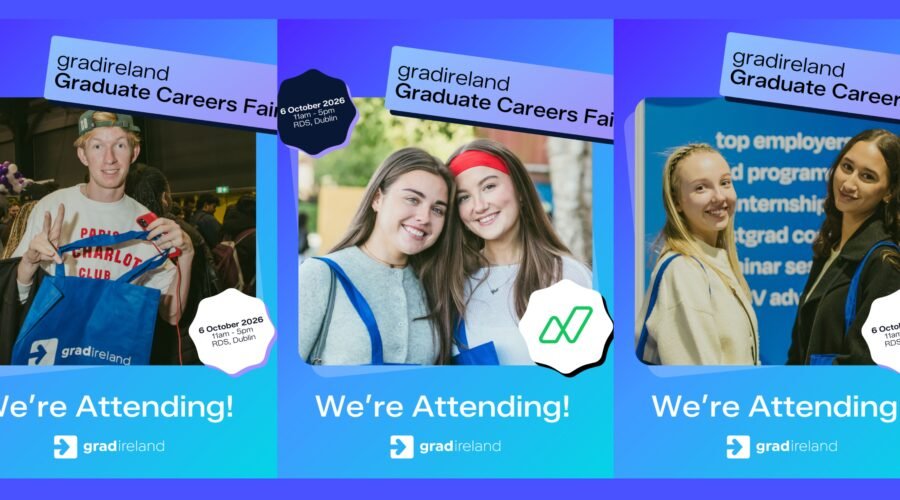
On 6 October 2026, Nap OS will be at the gradireland Graduate Careers Fair at the RDS in Dublin, inviting students, graduates, job seekers and employers to explore a different way of thinking about early-career hiring: project-based hiring.
The official gradireland event runs from 11:00–17:00 and is open to students, graduates and job seekers. More than 80 employers are expected to be actively recruiting across graduate jobs and internships.
For Nap OS, the event is not simply another careers fair.
It is an opportunity to start conversations around a fundamental question:
What if candidates could demonstrate what they can actually do before asking employers to believe what their CV says they can do?
That is the idea behind Nap OS Workforce and its project-based hiring model.
Why Nap OS is at GradIreland?
Traditional graduate recruitment often begins with a CV.
A candidate lists:
- Education
- Qualifications
- Previous employment
- Skills
- Achievements
- Interests
The employer then tries to determine whether that information is enough to predict future performance.
Nap OS approaches the problem differently.
Instead of starting with “What does this candidate say they can do?”, project-based hiring starts with:
“What can this candidate demonstrate?”
A student might complete a data-analysis project, marketing campaign, software prototype, market-research assignment, cybersecurity assessment, financial model or business-development project.
The project becomes evidence.
The evidence can then be connected to:
Skills → Work → Verification → Portfolio → Employer opportunity.
That is the Nap OS proposition.
Universities teach. Nap OS proves. Employers hire.
GradIreland itself provides students with career advice, employer opportunities, events and tools designed to help candidates develop and showcase their potential.
Nap OS wants to complement that ecosystem by asking another question:
How can students turn learning into verifiable evidence of capability?
What is project-based hiring?
Project-based hiring is an approach where candidates demonstrate relevant capabilities through real or realistic work projects rather than relying exclusively on CVs, interviews and academic credentials.
For example:
A student interested in marketing could complete:
Project: Build a three-week social-media campaign for a fictional or participating business.
Evidence: Campaign strategy, content calendar, audience analysis, creative assets and performance report.
Skills demonstrated: Market research, content creation, analytics, communication and project management.
Verification: Project review, assessment or employer feedback.
Now the candidate has something more substantial than:
“Strong marketing and communication skills.”
They have evidence showing how those skills were applied.
Why this matters now?
GradIreland’s current platform already helps candidates discover jobs, internships, employers, career advice and skills-based career opportunities. It also provides employer-facing recruitment infrastructure.
Nap OS sees an opportunity further upstream:
Before the job application.
The candidate can build evidence before applying.
The employer can understand evidence before making a hiring decision.
The university can potentially connect learning with practical work.
And the student can progressively build a workforce portfolio rather than waiting until graduation to discover that employers require experience.
This is especially important for candidates facing the familiar Catch-22:
You need experience to get a job, but you need a job to get experience.
Project-based hiring creates another pathway:
Learn → Build → Verify → Prove → Hire.
An invitation to the Nap OS stand
Nap OS is inviting three groups to the conversation at GradIreland.
Students
Come and ask:
“What projects could I build to demonstrate my skills?”
Whether you are in first year, approaching graduation, completing postgraduate study or changing career direction, projects can help you explore what you are capable of doing.
Job seekers
Come and ask:
“How can I turn my existing skills into stronger evidence?”
Your previous experience does not have to disappear when you change country, industry or career direction.
Projects can provide another way to demonstrate transferable capability.
Employers
Come and ask:
“What if we could see evidence of capability before hiring?”
Employers can think about projects not simply as assessments, but as potential bridges between talent discovery and recruitment.
100 FAQs About Project-Based Hiring
Understanding the concept
1. What is project-based hiring?
Hiring that uses practical project evidence alongside traditional recruitment information.
2. Is project-based hiring the same as an internship?
No. A project can be shorter, more focused and designed around a specific outcome.
3. Is it the same as freelancing?
No. Freelancing is a work arrangement; project-based hiring is a hiring and evidence model.
4. Why use projects?
Projects show how someone applies knowledge and skills.
5. Can students participate?
Yes, student projects are one important application.
6. Can graduates participate?
Yes.
7. Can experienced professionals participate?
Yes. Projects can demonstrate new or transferable capabilities.
8. Does project-based hiring replace CVs?
Not necessarily. It can strengthen the evidence behind the CV.
9. Does it replace interviews?
No. Projects can provide additional evidence for interviews and decision-making.
10. Does it replace qualifications?
No. Qualifications and demonstrated skills can complement each other.
Student questions
11. Can a first-year student build a project?
Yes.
12. Do projects need to be complicated?
No. A focused project can provide useful evidence.
13. Does every project need an employer?
No.
14. Can students create their own projects?
Yes, depending on the project model.
15. What makes a project valuable?
A clear objective, relevant skills, meaningful output and credible evidence.
16. Can projects be completed remotely?
Potentially, depending on project requirements.
17. Can projects be completed in teams?
Yes.
18. Can individual projects be better?
For some skills, individual work makes contribution easier to demonstrate.
19. Should students show their process?
Where appropriate, yes.
20. Should students show the final result?
Yes, where the project allows it.
Skills and evidence
21. What is verified experience?
Experience supported by credible evidence or assessment.
22. What does “proof of work” mean?
Evidence demonstrating that a person actually completed relevant work.
23. Why is proof important?
It can make skills easier for employers to understand.
24. Can soft skills be demonstrated?
Yes, through collaboration, communication, leadership and project behaviour.
25. Can technical skills be demonstrated?
Yes.
26. Can communication skills be demonstrated?
Yes, through presentations, reports and stakeholder interactions.
27. Can analytical thinking be demonstrated?
Yes, through analysis and problem-solving projects.
28. Can creativity be demonstrated?
Yes.
29. Can leadership be demonstrated?
Yes, particularly through team projects.
30. Can project management be demonstrated?
Yes.
Employer questions
31. Why should employers care about project evidence?
It can provide another source of information about candidate capability.
32. Can employers create projects?
Yes, employer-defined challenges can be used where appropriate.
33. Can projects reflect real business problems?
Yes.
34. Can employers assess project outcomes?
Yes.
35. Can employers provide feedback?
Yes, where the project structure supports it.
36. Can a project become a hiring opportunity?
Potentially.
37. Does completing a project guarantee employment?
No.
38. Can project evidence improve candidate differentiation?
It can help candidates demonstrate relevant capabilities more clearly.
39. Can employers compare project evidence?
Potentially, if projects use consistent criteria.
40. Can projects reduce uncertainty?
They can provide additional evidence for decision-makers.
Project design
41. What is a good project brief?
A clear problem, objective, deliverables, timeframe and evaluation criteria.
42. Should projects have deadlines?
Usually, yes.
43. Should projects have defined outputs?
Yes.
44. Should projects define required skills?
Ideally.
45. Should projects define complexity?
Yes, particularly when comparing projects.
46. Should projects define responsibility?
Yes.
47. Should projects have quality criteria?
Yes.
48. Can projects vary in size?
Absolutely.
49. Can projects take a few hours?
Yes.
50. Can projects take several weeks?
Yes, depending on the purpose.
Nap OS Workforce
51. What is Nap OS Workforce?
A workforce platform built around project-based work, skills and employment evidence.
52. What does Nap OS try to solve?
The gap between having potential and being able to demonstrate relevant experience.
53. What is the Nap OS Catch-22?
The “no experience without a job, no job without experience” problem.
54. How does project-based hiring address it?
By creating opportunities to build evidence through practical work.
55. Is Nap OS only for students?
No.
56. Is Nap OS only for international students?
No.
57. Can local students use it?
Yes.
58. Can international graduates use it?
Yes.
59. Can employers use Nap OS?
The model is designed to connect candidates and employers around projects and evidence.
60. Is Nap OS a traditional job board?
Its proposition goes beyond simply listing jobs by focusing on workforce evidence and projects.
International talent
61. Why might projects help international candidates?
They can provide locally understandable evidence of capability.
62. Can international experience still matter?
Absolutely.
63. Can projects demonstrate transferable skills?
Yes.
64. Can projects help someone changing country?
They can create additional evidence relevant to the new market.
65. Can projects help someone changing industry?
Yes.
66. Can projects demonstrate local market knowledge?
Yes, when the project is designed around that market.
67. Can projects help overcome the experience Catch-22?
They can create an alternative route to relevant experience.
68. Can project evidence complement international qualifications?
Yes.
69. Can projects help employers understand unfamiliar backgrounds?
Potentially.
70. Can a portfolio travel with a candidate?
Digital project evidence can potentially support mobility across opportunities.
Verification and trust
71. Why does verification matter?
Because evidence is more useful when employers can understand its credibility.
72. Who should verify a project?
That depends on the project and its assessment model.
73. Can employers verify projects?
Yes, where appropriate.
74. Can educators verify projects?
Potentially.
75. Can mentors contribute to verification?
Yes.
76. Is self-reported evidence enough?
It can be useful, but independent evidence can strengthen credibility.
77. Can project quality be scored?
Yes, if suitable criteria are defined.
78. Can skills be mapped to projects?
Yes.
79. Can multiple projects demonstrate one skill?
Yes.
80. Can one project demonstrate multiple skills?
Yes—and that is often valuable.
Hiring
81. Does project-based hiring guarantee interviews?
No.
82. Does it guarantee jobs?
No.
83. Does it remove human decision-making?
No.
84. Should employers still interview candidates?
Where appropriate, yes.
85. Can project evidence support shortlisting?
Potentially.
86. Can projects reveal practical capability?
Yes.
87. Can projects reveal problem-solving?
Yes.
88. Can projects reveal communication?
Yes.
89. Can projects reveal initiative?
They can provide evidence of how someone approaches work.
90. Can project-based hiring support skills-first hiring?
Yes, because the model focuses attention on demonstrated capability.
The future
91. Is project-based hiring a replacement for education?
No.
92. Is it a replacement for universities?
No.
93. Is it a replacement for recruiters?
No.
94. Is it a replacement for human judgement?
No.
95. What does it add?
Another layer of practical evidence.
96. What is the Nap OS philosophy?
Turn real project work into verified experience and employment opportunities.
97. What is the candidate journey?
Learn → Build → Verify → Prove → Hire.
98. What is the employer question?
“What can this candidate actually demonstrate?”
99. What is Nap OS trying to change?
The transition from education and potential to evidence and employment.
100. What should I do at the GradIreland fair?
Visit the Nap OS stand, bring your questions and start a conversation about what project-based hiring could mean for your career or organisation.
Meet Nap OS at GradIreland
The gradireland Graduate Careers Fair takes place on 6 October 2026 at the RDS in Dublin, from 11:00–17:00. The event is free and open to students, graduates and job seekers, with more than 80 employers recruiting across graduate jobs and internships.
Nap OS is inviting:
Students. Graduates. International talent. Job seekers. Employers. Universities. Careers professionals.
Come and challenge the traditional question:
“What does your CV say?”
with a more practical one:
“What can you prove you can do?”
That is where project-based hiring begins.
And that is the conversation Nap OS wants to have at GradIreland.
Universities teach. Nap OS proves. Employers hire.
Learn → Build → Verify → Prove → Hire.