3 min read
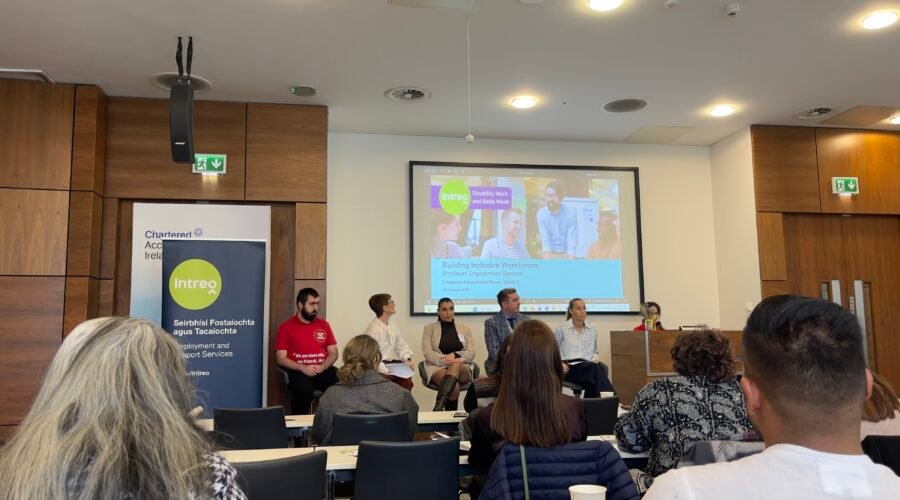
On 20 October 2026, I attended an Employer Engagement Session at the Chartered Accountants Building on Pearse Street, Dublin, representing Napblog Limited and Nap OS.
The invitation described a session focused on recruiting, retaining, and supporting people with disabilities, bringing employers together with Department representatives and inclusion experts.
For Nap OS, it was an opportunity to reflect on a fundamental question:
Are we giving people a fair opportunity to demonstrate their capabilities—or are we relying too heavily on how confidently they present themselves?
Talent is not always visible in a conventional application
A polished CV, a confident interview, and a familiar career history can make an applicant easy to understand. But an inclusive approach also asks whether the application and assessment process creates avoidable barriers.
The National Disability Authority recommends accessible recruitment materials and clear opportunities to request accommodations during applications and interviews. Inclusion therefore begins before a hiring decision is made.
For Nap OS, this is relevant to both the professionals we engage and the participants who use our learning programme.
Project-based learning offers another way to demonstrate capability
Nap OS’s model centres on participants completing practice projects, receiving professional feedback, and developing portfolio evidence.
Our intention is to help participants explain:
- What problem they worked on.
- How they approached it.
- What they produced.
- How they responded to feedback.
- What they would improve next time.
This can provide a richer conversation about skills than a list of qualifications alone. However, project-based assessment is not automatically inclusive. Instructions, deadlines, software, communication formats, and review criteria must also be examined for accessibility.
A timed presentation, for example, should not become the default test of capability where speed or public speaking is not essential to the skill being assessed.
Inclusion requires flexibility without losing clarity
The aim is not to remove meaningful standards. It is to distinguish the capability being assessed from unnecessary barriers in the assessment process.
Ireland’s Work and Access guidance describes reasonable accommodations as practical measures that enable people with disabilities to participate on an equal footing. Examples include changes to equipment, working arrangements, and access to training.
For our programme design, this raises practical questions:
- Can participants understand the brief and assessment criteria before starting?
- Can they request an accessible format?
- Are captions or written alternatives available for relevant sessions?
- Can an equivalent output be accepted where the original format is not essential?
- Is there a clear person to contact about access needs?
- Do mentors know how to respond respectfully to an adjustment request?
These are areas for Nap OS to review and improve—not claims that every measure is already implemented.
Mentoring should recognise the individual
Useful feedback is specific, respectful, and connected to the work.
Mentors should avoid confusing confidence with competence, communication style with motivation, or a request for an adjustment with an inability to contribute.
The National Disability Authority identifies low awareness, unclear procedures, delays in responding to accommodation requests, and lack of follow-up as barriers to effective accommodation. A well-intentioned statement is therefore not enough; a workable process matters.nda
As Nap OS develops its mentor network, these considerations should inform onboarding, project review, and participant support.
Our next step: turn reflection into a documented process
Following this session, my proposed priorities for Nap OS are to:
- Review participant and reviewer application materials for accessibility.
- Add a clear route for requesting adjustments.
- Review project briefs for unnecessary barriers.
- Introduce mentor guidance on inclusive feedback.
- Seek feedback from people with lived experience of disability.
- Record improvements and review whether they are working.
We should be transparent about what is already available, what needs improvement, and what support requires further preparation.
Attending this session was a learning opportunity. Our responsibility now is to translate that learning into a more accessible experience for the people who engage with Nap OS.
Pugazheanthi Palani
Founder, Napblog Limited | Nap OS