5 min read
Clarity Does Not Come Before Action
Most people wait.
They wait for:
- The perfect plan
- The right timing
- Full clarity
Before they begin.
But here is the paradox:
Clarity is not a prerequisite for action.
Clarity is a result of action.
This is where the philosophy of
“walk in and figure it out on the way”
becomes powerful.
It is not randomness.
It is not lack of planning.
It is a deeper system:
Intuition-led execution.
At Napblog Limited, this principle sits at the core of
Intuition Psychology OS (IPOS) —
an operating system built to bridge human decision-making
with real-world execution.
The Myth of Perfect Planning
Traditional thinking teaches:
- Analyse first
- Plan deeply
- Then execute
But reality behaves differently.
Because:
- Markets change
- Information is incomplete
- Outcomes are unpredictable
You cannot map a path
that has not been walked.
Yet most professionals try to do exactly that.
They attempt to:
- Predict every step
- Eliminate uncertainty
- Avoid mistakes
And in doing so,
they delay action.
The Alternative: Enter First, Understand Later
The “walk in” mindset flips the sequence:
- Enter the environment
- Interact with reality
- Learn through feedback
- Adjust direction
This is not chaos.
This is adaptive intelligence.
It is how:
- Founders discover product-market fit
- Professionals discover career alignment
- Individuals discover purpose
Intuition Is Not Guesswork — It Is Pattern Recognition
A major misunderstanding:
Intuition is often seen as:
- Emotional
- Irrational
- Unstructured
But in reality, intuition is:
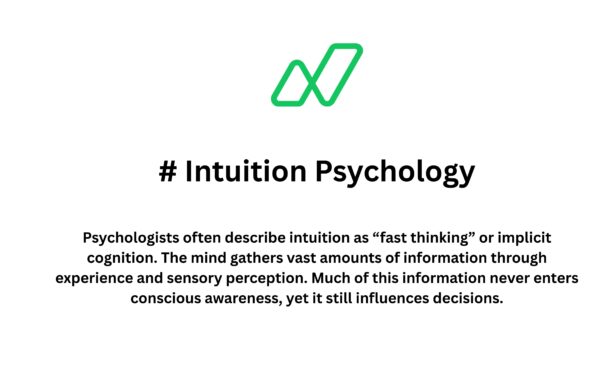
Fast pattern recognition built from experience, observation, and subconscious processing.
Your mind constantly:
- Collects signals
- Stores patterns
- Connects ideas
When you “feel” something is right,
it is often your brain processing
more data than you consciously realise.
IPOS frames intuition as:
A decision engine, not a feeling.
Why Walking In Works
1. Reality Provides Better Data Than Planning
No amount of research
can fully simulate real-world conditions.
When you step in:
- You see real constraints
- You meet real users
- You face real problems
This data is:
- Immediate
- Accurate
- Actionable
2. Movement Reduces Fear
Fear thrives in:
- Uncertainty
- Imagination
- Delay
But when you act:
- Unknowns become knowns
- Risks become measurable
- Decisions become clearer
Action dissolves fear.
3. Feedback Loops Accelerate Learning
When you “walk in,”
you create a loop:
- Act → Observe → Adjust → Repeat
This loop is the fastest
learning system available.
4. Direction Emerges Through Motion
Most people search for direction
before starting.
But direction is not found
in stillness.
It is revealed
through movement.
Applications in Professional Careers
1. Career Discovery
Many professionals ask:
“What should I do?”
But the better question is:
“What can I try?”
Instead of waiting for clarity:
- Take internships
- Explore roles
- Engage with industries
Each experience becomes data.
Over time, patterns emerge.
2. Skill Development
You don’t need
a perfect learning roadmap.
Start with:
- One skill
- One project
- One problem
As you move:
- Gaps become visible
- Skills become relevant
- Learning becomes targeted
3. Career Transitions
Switching careers often feels risky
because the path is unclear.
But clarity will not come
from thinking alone.
It comes from:
- Testing
- Networking
- Small experiments
Clarity is a result of action.
This is where the philosophy of
“walk in and figure it out on the way”
becomes powerful.
Applications in Business and Startups
1. Idea Validation
Instead of building fully,
start with:
- Conversations
- Prototypes
- Early users
Let the market guide you.
2. Product Development
Over-planning leads to:
- Delays
- Over-engineering
Walking in leads to:
- Faster launches
- Real feedback
- Better products
3. Go-To-Market Execution
No GTM strategy survives
first contact with the market.
But adaptive teams:
- Launch early
- Learn quickly
- Iterate continuously
The Psychological Shift: From Control to Trust
The biggest barrier
to this mindset
is psychological.
People want control.
They want certainty.
But real growth requires:
Trust in your ability to adapt.
This is the core of IPOS.
Not blind confidence.
But earned adaptability.
Why People Resist This Approach
1. Fear of Failure
Walking in means:
- You might be wrong
- You might fail publicly
2. Social Conditioning
We are taught to:
- Plan everything
- Avoid mistakes
- Seek approval
3. Perfectionism
People delay action
until everything is “ready.”
But readiness is an illusion.
IPOS Framework: Intuition-Led Execution Model
At Napblog Limited,
we structure this mindset
into a system:
1. Entry
Start before full clarity
2. Observation
Pay attention to signals
3. Pattern Recognition
Identify what works
4. Adjustment
Refine direction
5. Acceleration
Double down on what works
This transforms intuition
into a repeatable process.
The Long-Term Advantage
People who adopt this mindset:
- Learn faster
- Adapt quicker
- Build resilience
Over time,
this compounds into:
Strategic intuition
Where decisions become:
- Faster
- Smarter
- More aligned
Realisation: The Path Is Not Pre-Defined
One of the most important insights:
There is no fixed path.
Careers are not linear.
Businesses are not predictable.
Life is not structured
like a plan.
The path is created
as you walk it.
The Risk of Not Walking In
Choosing not to act
has consequences:
- Missed opportunities
- Slower growth
- Increased regret
Because while you wait:
Someone else is:
- Experimenting
- Learning
- Advancing
The Balance: Intuition + Structure
This does not mean
abandoning structure.
The optimal approach is:
- Direction (light planning)
- Action (walking in)
- Feedback (continuous learning)
This creates
a dynamic system
instead of a rigid plan.
The Role of Intuition Psychology OS
IPOS is designed to:
- Help individuals trust their intuition
- Provide structure to decision-making
- Bridge thinking and execution
It transforms:
Uncertainty → Direction
Action → Clarity
Experience → Strategy
Who This Is For
This mindset is critical for:
- Founders building in uncertainty
- Professionals navigating careers
- Students exploring paths
- Leaders making decisions
Conclusion: Start Before You Are Ready
The biggest mistake
is not failure.
It is hesitation.
Waiting for clarity
that only action can provide.
The truth is simple:
You do not find the path.
You reveal it.
By walking in.
Final Thought
If you are stuck:
- Overthinking
- Planning endlessly
- Waiting for certainty
Then the solution
is not more thinking.
It is one step forward.
Because in that step
you will learn more
than in months of planning.
Call to Action
Intuition Psychology OS (IPOS)
by Napblog Limited
Built for those who:
- Think deeply
- Act decisively
- Adapt continuously
Walk in.
Figure it out.
That is where the path begins.