6 min read
The recruitment landscape is undergoing a fundamental shift. Recent industry observations, including findings from hiring trend reports in Ireland, reveal an important paradox: employers are planning to hire more people, yet they are struggling more than ever to find the right candidates.
This paradox highlights a growing gap between credentials and proven capability. While universities produce graduates, and professionals accumulate qualifications, employers increasingly seek evidence of consistent execution—proof that a candidate can repeatedly apply their skills in real-world situations.
At Napblog Limited, this observation reinforces the core philosophy behind Nap OS, our execution-first career operating system. The market signals are clear: the future of recruitment will rely less on static resumes and more on verifiable execution histories.
The Current Hiring Landscape: Confidence with Caution
Recent hiring trend observations show that confidence among employers is beginning to return. Around one in four organisations expect to increase hiring in 2026, indicating a gradual recovery following periods of global economic volatility.
However, the increase in hiring intentions does not necessarily mean that recruiting will become easier. Many companies report that finding suitable candidates is still extremely difficult.
A key metric highlights this challenge:
The median recruitment time now sits around 10 weeks for many roles.
For organisations operating in competitive industries such as technology, engineering, consulting, and data services, this delay can slow innovation and operational growth.
Employers are not simply searching for people with degrees or certificates. Instead, they are looking for individuals who demonstrate capability, adaptability, and execution consistency.
The Skills Gap Is Expanding
Another observation from hiring trend research is the increasing difficulty employers face in identifying talent with the right combination of skills.
Approximately seven out of ten employers report difficulty finding candidates who possess future-ready skills.
These skills fall into two categories:
1. Hard Skills
These include technical capabilities such as:
- Artificial Intelligence
- Data analysis
- Software engineering
- Site reliability engineering
- Data engineering
Demand for these roles continues to grow rapidly. In fact, the IT sector alone has experienced around 20% job growth, driven by the expansion of digital infrastructure and AI-driven services.
2. Soft Skills
Equally important are human-centric capabilities such as:
- Leadership
- Communication
- Collaboration
- People management
- Adaptability
Employers increasingly recognise that technical expertise without the ability to work effectively within teams or manage projects can limit long-term value.
This combination of technical and behavioural capability is difficult to evaluate using traditional hiring tools.
The Resume Problem
Despite the rapid evolution of the labour market, the resume remains the primary evaluation document in most hiring processes.
However, resumes present several limitations:
- They show claims, not proof.
- They highlight past roles, not execution patterns.
- They rarely show consistency over time.
- They cannot demonstrate real work outputs.
A resume might state that a candidate “worked on data analytics projects,” but it rarely shows:
- What problems were solved
- How frequently the candidate practiced their skills
- What results were achieved
- Whether the work was independently executed or collaborative
This lack of visibility creates friction for employers trying to identify reliable talent.
The Rise of Execution-Based Talent Evaluation
The hiring challenges facing employers suggest that recruitment is moving toward a new model: execution-based evaluation.
Instead of asking what a candidate studied, organisations are increasingly asking:
- What has the candidate built?
- What have they executed consistently?
- What projects demonstrate their capability?
- What learning actions have they documented?
Execution evidence provides a far more reliable indicator of capability than static credentials.
This shift is particularly relevant for:
- graduates entering the workforce
- career switchers
- freelancers and independent professionals
- technology and innovation roles
These groups often have skills that are difficult to represent through traditional CV structures.
Nap OS: Designed for the Execution Economy
Nap OS was created to address this exact challenge.
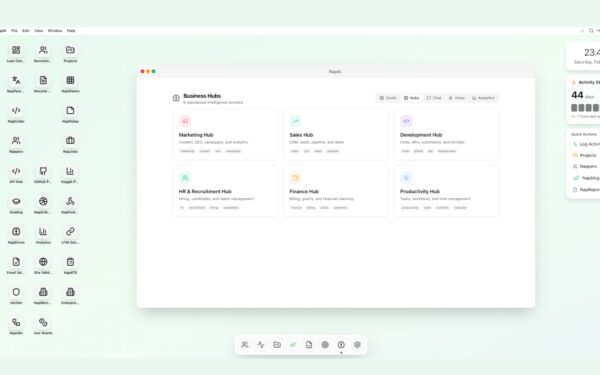
Rather than functioning as a typical career platform, Nap OS operates as an execution-first career operating system.
Its core concept is simple:
Careers should be built through consistent execution, not just credentials.
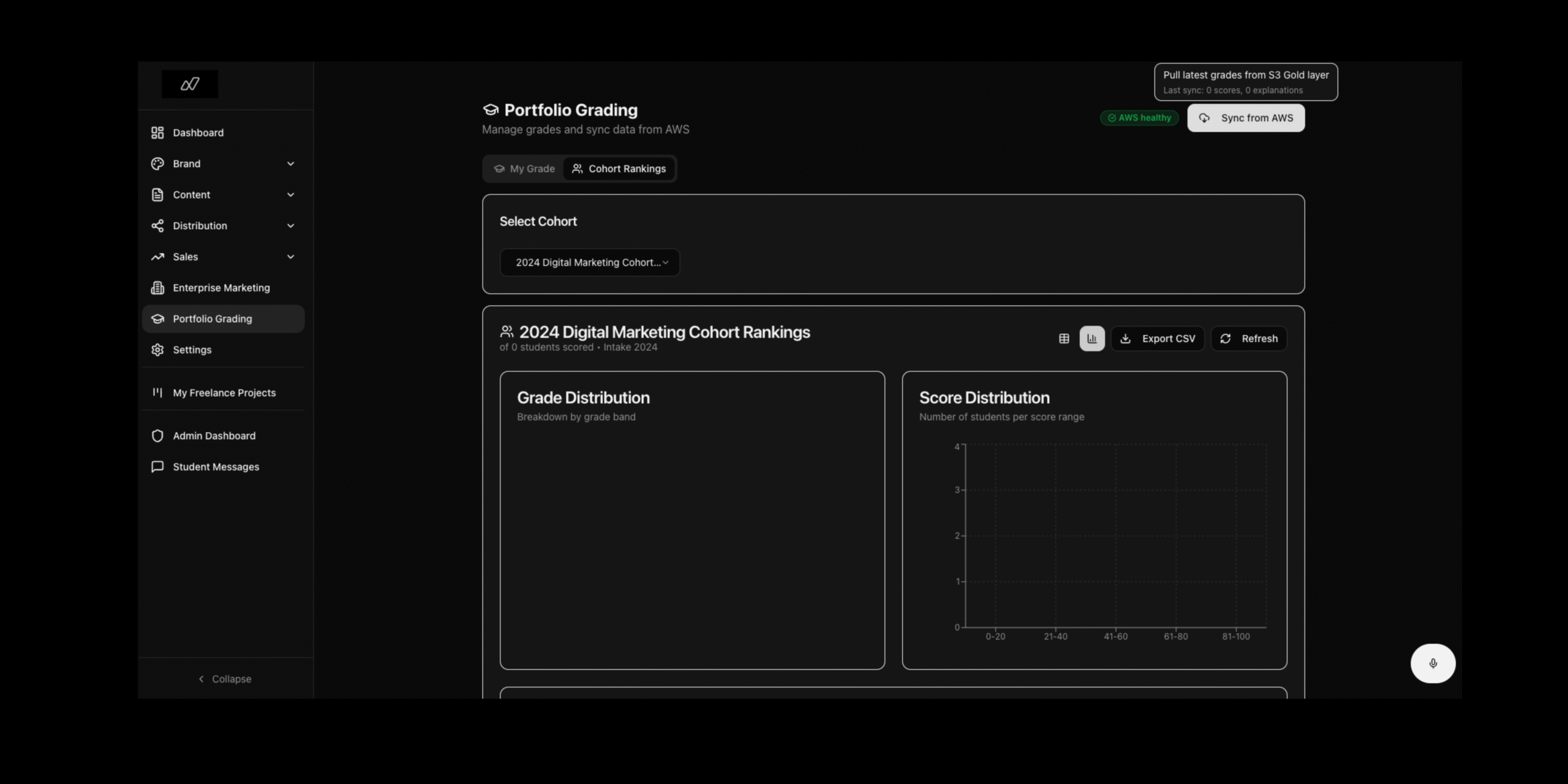
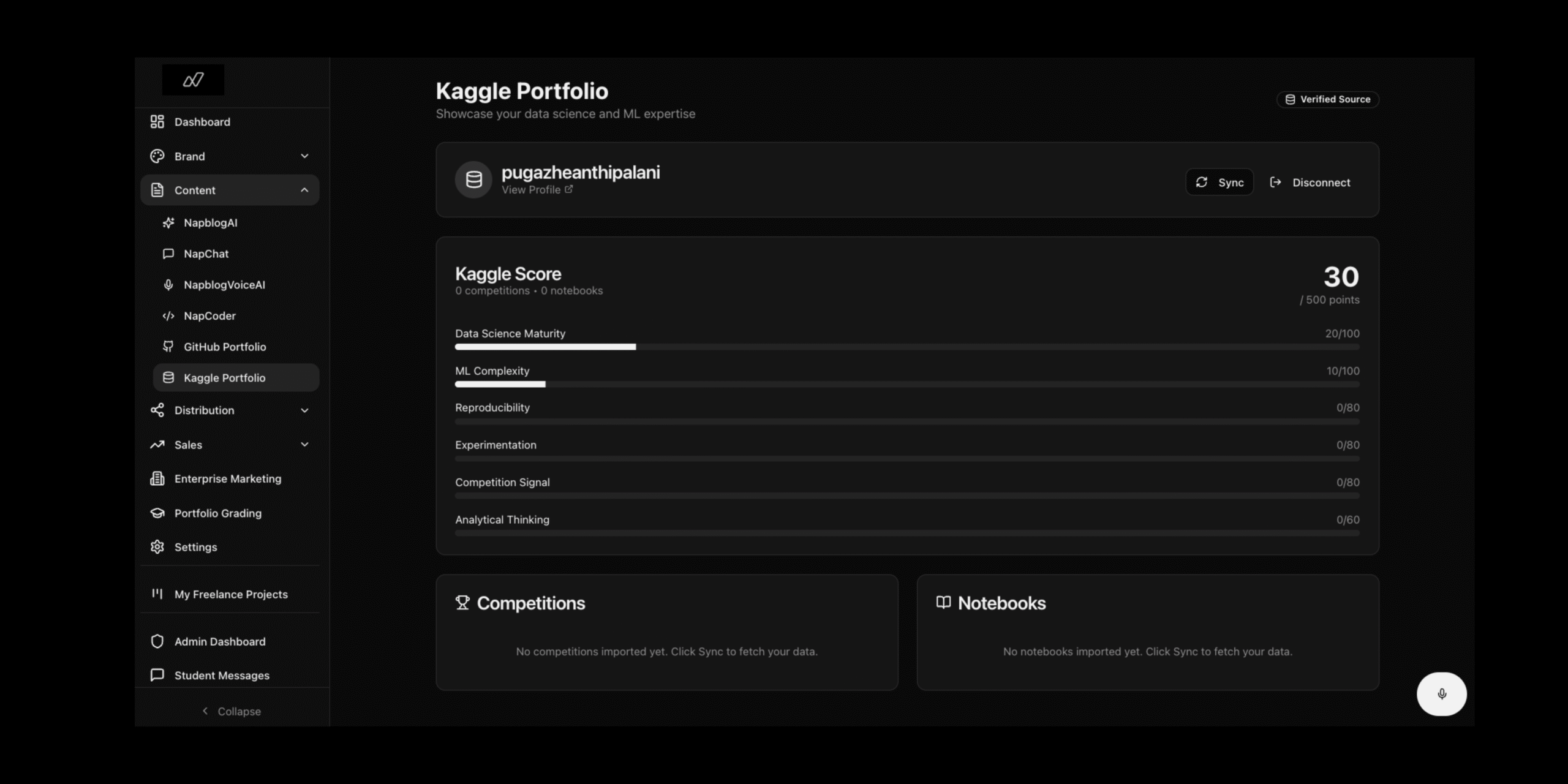
Nap OS allows individuals to log, track, and demonstrate the work they execute over time.
This creates a verifiable timeline of capability development, transforming career growth into a transparent and measurable process.
From Skill Claims to Skill Logs
One of the most important concepts behind Nap OS is the Skill Log.
Instead of simply stating that they possess a skill, users can document:
- projects completed
- experiments conducted
- problems solved
- collaborations executed
- learning milestones achieved
Over time, these logs create an execution history, similar to a developer’s Git repository or a researcher’s publication record.
For employers, this provides something much more powerful than a resume:
proof of consistent capability development.
Why This Matters for Graduates
Graduates often face the classic employment paradox:
Employers want experience, but graduates need jobs to gain experience.
Execution-based systems help solve this problem.
Through structured projects, internships, collaborative work, and industry simulations, graduates can build documented evidence of capability before entering the workforce.
This transforms a graduate’s profile from:
“I studied business analytics.”
to
“Here are the analytics projects I executed across multiple real-world datasets.”
The difference is profound.
Why Employers Benefit
Employers also gain several advantages from execution-based candidate evaluation.
1. Faster Hiring Decisions
When candidates show real work evidence, recruiters can evaluate capability more quickly.
2. Reduced Hiring Risk
Execution histories demonstrate whether a candidate can consistently apply their skills.
3. Better Talent Matching
Employers can align candidate execution records with specific role requirements.
4. Stronger Workforce Development
Companies can identify individuals who show learning discipline and continuous improvement.
The Future Talent Signal
Another observation emerging from the hiring landscape is the importance of learning agility.
Technology, AI, and automation are evolving rapidly. The most valuable employees are not those who simply possess skills today, but those who can continuously develop new capabilities.
Execution tracking creates a powerful signal for this.
A candidate who consistently logs projects, learning milestones, and collaborative work demonstrates something deeper than technical knowledge:
they demonstrate discipline and growth behaviour.
In an uncertain economic environment, these qualities become critical.
The Opportunity for Education Institutions
Universities and business schools also have an opportunity to adapt.
Instead of measuring success purely through exam performance, institutions can encourage students to maintain execution portfolios throughout their academic journey.
This approach allows students to graduate with:
- academic knowledge
- project-based experience
- documented collaboration
- execution proof
The result is a graduate profile far more aligned with employer expectations.
A Changing Career Model
The broader implication of these hiring observations is that careers themselves are evolving.
The traditional model followed a linear path:
Education → Resume → Job → Promotion
But the modern model is increasingly becoming:
Learning → Execution → Proof → Opportunity
Nap OS is designed to support this new career architecture.
By enabling individuals to build execution-first career records, it creates a bridge between education, skills development, and employment.
Looking Ahead
As hiring activity increases in 2026 and beyond, the competition for talent will intensify.
However, the challenge will not be the number of candidates available.
The challenge will be identifying candidates who can consistently execute in real-world environments.
This is where execution-based career systems like Nap OS become increasingly valuable.
They provide clarity in a labour market often defined by uncertainty.
For employers, they offer a new way to discover reliable talent.
For graduates and professionals, they provide a powerful way to prove capability beyond credentials.
Final Observation
The labour market is sending a clear message.
Degrees alone are no longer enough.
Resumes alone are no longer sufficient.
The future belongs to individuals who can demonstrate what they have executed, built, and learned consistently over time.
Nap OS was built with this reality in mind.
And as hiring trends continue to evolve, the importance of execution-proof careers will only grow stronger.