5 min read
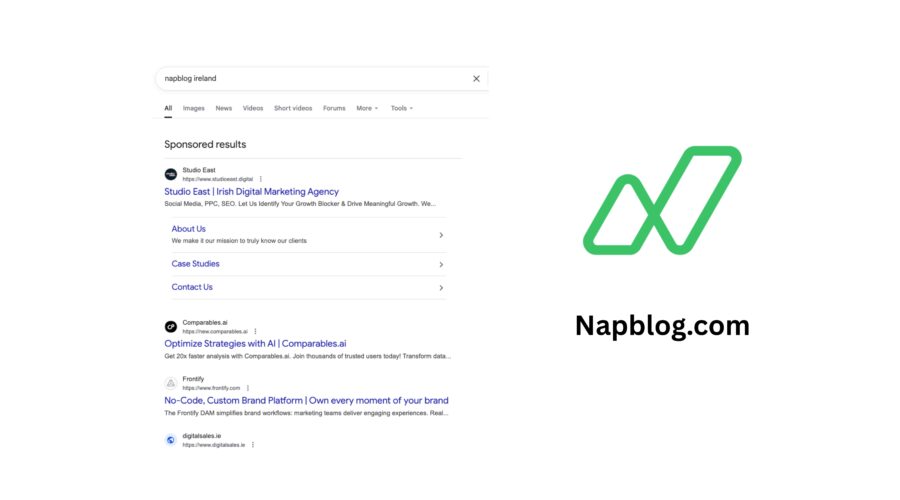
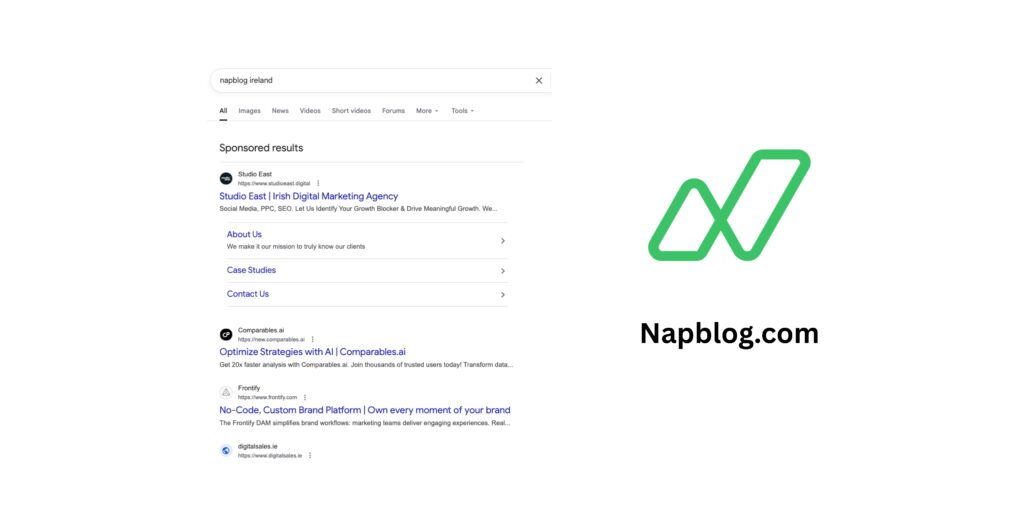
When users search for brand-related queries such as “Napblog Ireland”, the expectation is straightforward: the brand should dominate results. Yet, in practice, competing platforms, agencies, directories, or unrelated domains may appear alongside or even above the brand itself.
This phenomenon is not accidental — it is structural.
Search engines operate on signals of authority, relevance, and engagement, not ownership or intent. For organizations like Napblog Limited, this reality is not a limitation — it is a strategic diagnostic tool. Observing who ranks and why reveals systemic gaps in:
- Authority signals
- Content ecosystem depth
- Engagement loops
- Citation networks
- Semantic keyword ownership
This article explores — through research-backed reasoning — why competitors rank for the Napblog Ireland keyword and how these dynamics connect to broader structural AI execution and digital authority building.
1. Search Ranking Reality — Ownership ≠ Visibility
Search engines evaluate relevance using hundreds or thousands of signals rather than brand identity alone.
Factors commonly influencing ranking include:
- Keyword relevance
- Content depth
- User experience
- Engagement metrics
- Backlinks
- Authority reputation
Research shows that on-page SEO is only the foundation — ranking also depends on user behavior signals, traffic quality, and backlinks pointing to the site.
Additionally:
- High-quality content explaining topics better than others tends to outrank thin or shallow material
- Search engines favor pages that satisfy user intent more effectively than alternatives
- Strong engagement metrics reinforce ranking confidence
In short:
Search results are meritocratic from an algorithmic standpoint — not ownership-based.
This explains why competitors or unrelated pages can appear for brand-linked queries.
2. Keyword Relevance & Intent Alignment
One major reason competitors rank is superior alignment with search intent.
High-performing sites:
- Conduct deep keyword research
- Target long-tail variations
- Place keywords strategically across content
- Match semantic context
Competitors ranking higher often demonstrate:
- Focused keyword targeting
- Consistent keyword placement
- Strategic long-tail capture
Instead of guessing phrases, they optimize around how users actually search.
If competitor content matches intent more precisely, search engines may consider it more relevant — even when the keyword contains another brand name.
3. Content Depth as Authority Infrastructure
Search engines reward comprehensive knowledge ecosystems.
Top-ranking competitors frequently:
- Publish industry libraries
- Produce tutorials
- Release research reports
- Build glossary resources
These knowledge repositories attract:
- Organic traffic
- Backlinks
- Social shares
Such content structures signal authority and expertise to algorithms.
This creates a structural advantage:
Authority Snowball Effect
Content → Backlinks → Traffic → Engagement → Higher Rank → More Content Discovery
If Napblog content coverage around related thematic areas is narrower than competitor ecosystems, competitors may temporarily dominate visibility even for branded searches.
4. Backlinks — The Reputation Economy
Search engines interpret backlinks as endorsements.
The quantity and quality of backlinks influence authority perception and ranking position.
Competitors often outrank due to:
- Larger linking networks
- Industry directory inclusion
- Media mentions
- Citation consistency
Backlinking analysis is a recognized SEO strategy precisely because links represent structural authority signals within ranking calculations.
Even identical content can rank differently due to domain credibility strength.
5. Engagement Signals & Behavioral Feedback
Search engines track user interactions with results:
- Click-through rates
- Time spent on page
- Navigation depth
- Bounce patterns
Strong engagement suggests useful content, reinforcing ranking position.
Businesses ranking higher frequently generate:
- More listing clicks
- Calls or interaction requests
- Faster responses
These behavioral signals influence algorithmic confidence in relevance.
This means:
Ranking is partially crowdsourced — users collectively vote through behavior.
6. Local Search Optimization Gaps
For geographically contextual queries like “Ireland”, local signals matter.
Competitors may outperform due to:
- Fully optimized business listings
- Complete profile information
- Regular updates
- Photos and posts
- Strong review streams
Review activity alone contributes about 15% of local ranking factors.
Additionally:
- Consistent citations across directories boost authority
- Inconsistent information damages credibility
Thus, local listing optimization is not administrative — it is algorithmic leverage.
7. Content Freshness & Update Frequency
Search engines reward recently updated content.
Sites publishing frequently are perceived as:
- More relevant
- More current
- More authoritative
Regular updates increase ranking potential compared to static sites.
If competitors maintain active content cycles while Napblog pages remain unchanged, algorithmic relevance shifts toward competitors.
8. Brand Signals & Popularity Feedback Loops
Ranking systems partially respond to popularity patterns.
Academic research indicates search rankings amplify popular sources due to feedback effects — sites receiving more attention attract even more visibility.
This creates:
Popularity Reinforcement
Visibility → Traffic → Visibility
Additionally:
- Recognizable brands earn higher click rates
- Social presence attracts backlinks
- Mentions build trust signals
These indirect signals influence ranking outcomes.
9. Domain Authority & Historical Reputation
Search engines consider:
- Site age
- Historical performance
- Trust consistency
- Traffic volume
Established reputations are difficult to displace quickly.
Even outperforming competitors short-term may not immediately change rankings because:
- Authority accrues over time
- Trust is historically weighted
SEO is therefore temporal, not instantaneous.
10. Algorithm Complexity & Signal Multiplicity
Recent disclosures suggest ranking systems may consider vast signal sets including:
- Click data
- Domain authority
- Site size
Some internal documentation referenced thousands of ranking factors.
While weights remain unknown, the implication is clear:
Ranking is multi-dimensional — never reducible to a single tactic.
This complexity ensures competitors can surface through varied strengths.
11. Strategic Interpretation for Napblog
Competitor ranking is not a failure — it is intelligence.
It reveals opportunities to strengthen:
Structural Layers
- Semantic content expansion
- Knowledge graph coverage
- Citation consistency
Authority Layers
- Backlink acquisition
- Media presence
- Directory inclusion
Behavioral Layers
- UX optimization
- Engagement loops
- Brand search stimulation
Temporal Layers
- Publishing cadence
- Content refresh cycles
12. Napblog Perspective — Structural AI Visibility
From a Nap OS philosophy standpoint:
Ranking competition is an execution signal.
It demonstrates:
- Ecosystem complexity
- Algorithmic negotiation
- Visibility as systemic outcome
Structural AI execution frameworks treat ranking not as a marketing task but as:
Digital Territory Engineering
This includes:
- Portfolio authority building
- Semantic ownership modeling
- Behavioral signal amplification
- Network graph optimization
Thus, competitor ranking becomes a data input for execution intelligence.
Conclusion
Competitors ranking for “Napblog Ireland” is neither random nor adversarial. It reflects algorithmic evaluation across multiple dimensions:
- Content relevance
- Authority depth
- Engagement signals
- Citation networks
- Local optimization
- Popularity reinforcement
Search visibility is not awarded — it is constructed through structural consistency over time.
For Napblog Limited, this insight aligns with its execution philosophy:
Visibility is not branding.
Visibility is system design.
Competitor presence in search results therefore serves as a real-time structural audit — revealing where authority can expand and where ecosystem execution can deepen.
And within a systemic AI execution model, such feedback is not friction.
It is fuel.