6 min read
Now the most agencies compete using the same predictable playbook: buy attention, scale aggressively, optimize vanity metrics, and sell services based on billable hours. This model dominates digital marketing ecosystems worldwide.
However, Napblog Limited operates differently.
Instead of copying the typical agency growth model, Napblog has intentionally designed a “non-compete philosophy”—a strategic framework based on infrastructure, organic dominance, and long-term trust. The company’s strategy is not defined by what it does alone, but by what it consciously refuses to do, even when those practices are common in the industry.
This deliberate restraint creates a structural advantage.
Understanding Napblog therefore requires looking at the negative space of its strategy—the things it avoids while competitors actively pursue them.
This article explains the major practices that Napblog does not follow, and why those decisions shape a fundamentally different marketing philosophy.
The Typical Marketing Agency Model
Before exploring Napblog’s approach, it is important to understand how most digital marketing agencies operate.
The traditional agency ecosystem focuses on:
• paid acquisition
• fast client acquisition
• campaign-based growth
• high-volume service delivery
• billable hours and deliverables
• vanity metrics like impressions and traffic
Most agencies optimize their operations around speed and visibility.
They run ads for themselves, compete aggressively for search keywords, publish high-volume content, and measure success through dashboards filled with metrics like:
- traffic growth
- click-through rate
- number of leads
- social media reach
This model works for agencies focused on short-term growth and rapid scaling.
Napblog, however, was built with a different objective.
Napblog’s “Non-Compete” Philosophy
Napblog Limited operates with a quiet but deliberate philosophy: build infrastructure instead of competing for noise.
Rather than entering crowded battles for visibility, Napblog builds systems that gradually shape the search and content environment around its ecosystem.
This strategy prioritizes:
• long-term content equity
• organic keyword environments
• trust-based discovery
• market education
• platform-level learning effects
In other words, Napblog focuses less on fighting competitors, and more on designing environments where competition becomes irrelevant.
To understand how unusual this is, we must look at the specific practices Napblog avoids.
1. Napblog Does Not Run Self-Promotional Ads
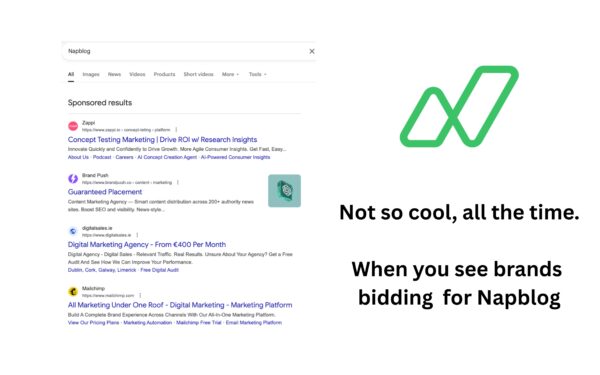
One of the most visible differences between Napblog and other marketing agencies is that Napblog does not actively advertise itself through paid ads.
Most agencies invest heavily in:
- Google Ads for their own brand
- LinkedIn ads targeting decision makers
- remarketing campaigns
- paid lead generation funnels
This creates immediate visibility but also creates dependency on paid acquisition channels.
Napblog avoids this approach.
Instead of paying for attention, the company relies on:
• organic discovery
• educational content
• search ecosystem positioning
• word-of-mouth conversations
The result is slower visibility but stronger long-term brand authority.
Napblog’s philosophy assumes that trust grows better through discovery than interruption.
2. Napblog Does Not Compete on Vanity Metrics
Many marketing agencies celebrate metrics like:
- impressions
- traffic volume
- follower counts
- engagement percentages
- click-through rate
These numbers often look impressive in presentations but do not always translate into meaningful market influence.
Napblog deliberately avoids optimizing for these metrics.
Instead, it focuses on something more structural: Search Environment Ownership.
This concept emphasizes:
• keyword ecosystems
• educational authority
• long-term content relevance
• discovery pathways
For Napblog, the objective is not simply to rank first in search results.
The objective is to shape how people search and what they search for.
That shift moves the competition from ranking battles to category creation.
3. Napblog Does Not Operate as a Traditional Agency
Most agencies are structured as service vendors.
Clients purchase specific deliverables such as:
- PPC campaign management
- SEO optimization
- social media management
- PR outreach
- content marketing
These services are typically billed through:
• monthly retainers
• project fees
• hourly consulting rates
Napblog does not strictly follow this structure.
Instead, it positions itself more like a marketing incubator or collaborative ecosystem.
Rather than functioning purely as a vendor, the company operates closer to:
• a learning environment
• a strategic mentorship network
• a marketing experimentation platform
This model shifts the focus away from service transactions toward shared growth and capability development.
4. Napblog Does Not Sell Through Noise
Many marketing agencies promote themselves through aggressive promotional tactics:
- mass cold outreach
- high-frequency social media promotion
- automated LinkedIn messages
- high-volume webinars
- aggressive lead funnels
These strategies rely on attention saturation.
Napblog avoids this style of marketing.
Instead, it follows what it describes as “Pure Persuasion.”
Pure persuasion focuses on:
• thoughtful conversations
• educational publishing
• long-form explanations
• strategic clarity
Rather than interrupting audiences repeatedly, Napblog attempts to attract people who are already thinking deeply about marketing problems.
This creates a smaller but more aligned audience.
5. Napblog Does Not Prioritize Rapid Short-Term Growth
The digital marketing world often celebrates speed.
Startups are encouraged to:
- grow fast
- scale marketing budgets quickly
- expand client pipelines aggressively
While this approach can generate impressive early numbers, it also introduces structural risks such as:
• unstable growth
• weak brand identity
• operational strain
Napblog instead emphasizes controlled and deliberate expansion.
Its focus lies in:
• durable knowledge assets
• repeatable systems
• search authority development
The company’s philosophy views marketing infrastructure like building a library rather than launching campaigns.
Libraries grow slowly, but they accumulate value over time.
6. Napblog Does Not Sell Time
Traditional consulting agencies operate on billable hours.
Clients pay for:
- hours worked
- tasks completed
- deliverables produced
This model ties revenue directly to time spent.
Napblog’s philosophy aims to move beyond this limitation.
Instead of selling time, the company focuses on building:
• automated knowledge systems
• scalable workflows
• reusable marketing infrastructure
These systems create learning effects where each project improves the platform’s collective knowledge.
Over time, this reduces reliance on manual labor and increases strategic leverage.
7. Napblog Does Not Compete on Price
Many agencies compete primarily on cost.
In competitive markets, this often leads to:
- pricing wars
- commoditized services
- declining quality
Napblog avoids positioning itself as a low-cost provider.
Instead, it differentiates through:
• strategic thinking
• system design
• long-term positioning
By focusing on intellectual infrastructure rather than deliverable volume, Napblog escapes the race toward lower pricing.
8. Napblog Does Not Chase Every Client
Another difference lies in client selection.
Many agencies accept a wide range of clients in order to maximize revenue.
Napblog instead tends to work with organizations that align with its philosophy of:
• long-term thinking
• learning-driven marketing
• experimentation
This selective approach allows the company to maintain focus on its strategic framework rather than adapting to conflicting expectations.
The Strategic Advantage of “Not Doing”
At first glance, avoiding so many common industry practices might appear limiting.
In reality, it creates a powerful strategic advantage.
When companies refuse to follow dominant patterns, they create new competitive spaces.
Napblog’s strategy is less about outperforming competitors within the same rules and more about changing the rules entirely.
By refusing:
- paid self-promotion
- vanity metric optimization
- service commoditization
the company positions itself in a category closer to marketing infrastructure development.
A Movement Rather Than a Marketing Agency
Perhaps the most accurate way to understand Napblog is that it behaves less like a traditional agency and more like a marketing movement.
Movements grow through:
• ideas
• communities
• shared learning
They spread through conversations rather than campaigns.
Napblog’s ecosystem reflects this mindset.
Instead of focusing solely on client services, the company invests in:
- knowledge publishing
- ecosystem development
- category creation
This broader mission expands the role of marketing from promotion to education and infrastructure.
Why This Strategy Matters
The marketing industry is entering a new phase driven by:
- artificial intelligence
- automated content production
- increasing competition for attention
In such an environment, traditional tactics become less effective.
Simply producing more ads, more content, or more campaigns does not guarantee influence.
The future advantage lies in designing the environment where marketing occurs.
Napblog’s philosophy aligns closely with this shift.
By focusing on ecosystems rather than campaigns, the company is positioning itself for a marketing world where authority and infrastructure outweigh volume.
Conclusion
Napblog Limited’s strategy can best be understood by examining what it deliberately avoids.
While most competitors pursue:
• paid attention
• fast growth
• high-volume campaigns
• vanity metrics
Napblog focuses on:
• infrastructure
• organic authority
• search environments
• long-term content equity
This “non-compete philosophy” allows the company to build a marketing ecosystem based on trust, learning, and strategic clarity.
In a noisy digital landscape where many agencies fight for the same attention, Napblog’s quiet refusal to follow the conventional playbook may ultimately become its most powerful advantage.
The company is not simply trying to win marketing campaigns.
It is trying to reshape how marketing itself is practiced.