

By Pugazheanthi Palani — Founder, Napblog
(Celebrating 18 Months of Napblog’s Runway)
🧭 Introduction — Why 18 Months Defines a Startup’s Destiny
Every startup has a number that defines its story. For Napblog, that number is 18.
Eighteen months isn’t just a milestone — it’s a mirror.
It reflects discipline, patience, and the transformation that happens between idea and impact.
According to Jobera (2025), 93% of founders estimate their run rate at under 18 months, and 38% of startups fail because they run out of cash. Another 35% collapse because there’s no proven market need.
That’s the razor’s edge most founders walk — between momentum and meltdown.
Napblog crossed the 18-month mark not by luck or funding — but by design.
Our design: Thought → Action → Results → Services.
We call it the TARS framework — a system built not for survival, but for sustainability.
💭 Phase 1: Thought-Inspired Action — Where Strategy Starts with Stillness
Most startups die because they move too fast on too little reflection.
Napblog started with stillness.
We asked: “Can a marketing company grow by slowing down?”
The answer — yes, if every action begins as a thought.
Before launch, we analyzed three startup truths:
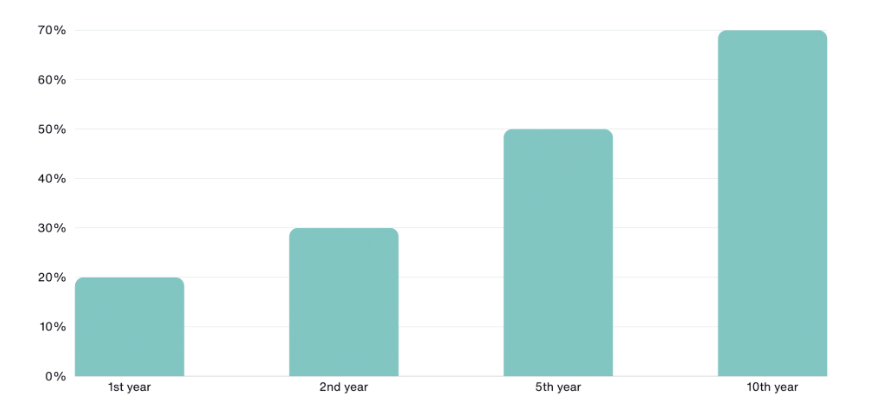
- 9 in 10 startups fail within their first five years (Jobera, 2025).
- 20% fail in their first year, 30% by the second, and 50% by year five (Bureau of Labor Statistics).
- Founders overestimate their startup value by 255% before product-market fit (Startup Genome).
These numbers didn’t scare us — they shaped us.
We built Napblog not to chase trends, but to challenge them.
Instead of “move fast and break things,” we embraced:
“Pause first, and build things that last.”
Every blog, campaign, and automation at Napblog begins with thought alignment:
- What problem are we solving?
- What value does it create?
- Can this scale sustainably without burning cash or people?
This clarity became our intellectual runway — even before the financial one.
🚀 Phase 2: Action-Oriented Results — Doing More with Less
Once thought turns into movement, execution becomes everything.
But here’s the data reality:
- 38% of startups fail due to cash depletion.
- 19% fail because of flawed business models.
- 20% are crushed by competitors.
- 14% collapse due to weak teams or poor leadership.
(Source: CB Insights / Jobera 2025)
Napblog’s approach to these risks was surgical.
We didn’t try to do everything. We chose to do the right things repeatedly.
🔹 Our Cost Model:
We maintained a lean burn rate, cutting unnecessary fixed costs through coworking and automation.
Napblog’s model reduced overheads by 60%, allowing our 18-month runway to stretch like 24.
🔹 Our Growth Philosophy:
We measured success not in ad spend or headcount, but in efficiency metrics:
- Revenue per creator.
- Campaign ROI cycle.
- Automation return on effort (RoE).
🔹 Our People Model:
While 14% of startups fail due to poor teams, Napblog’s coworking model ensures every marketer grows inside a live ecosystem.
We train digital entrepreneurs, not employees — transforming them into founders in residence.
This made our results not just action-oriented, but self-replicating — every intern becomes an implementer, every implementer becomes an intrapreneur.
📊 The 18-Month Runway: Why It’s Startup Gold
Across global startup ecosystems, 12–18 months is cited as the ideal runway for pre-seed and seed-stage ventures.
Why? Because it balances urgency and stability.
According to Failory (2024) and CB Insights, this window allows founders to:
- Hit key KPIs and product milestones.
- Test market fit and pivot before the capital cliff.
- Avoid spending half their time fundraising.
- Add a buffer for unforeseen delays.
93% of startup owners consciously plan for less than 18 months of cash (Jobera, 2025), but the average startup takes 4 years to become profitable.
This creates what investors call the “Valley of Death” — between months 18–24, where initial funding fades but revenue hasn’t stabilized.
During this phase:
- 60% of startups fail between pre-seed and Series A.
- 35% of Series A startups don’t make it to Series B.
- Post-Series C, only 1 in 100 startups fail.
Napblog designed its operations precisely for this phase — by monetizing service, not survival.
🧠 The Math Behind Napblog’s Mindset
Runway Calculation = Cash Reserves ÷ Monthly Burn Rate
Let’s say a digital agency has €90,000 in reserve and spends €5,000 monthly.
That’s 18 months of survival.
But here’s the founder trap — most underestimate burn by 25–30% due to “hidden costs”: software subscriptions, tax delays, marketing inefficiencies, or emotional fatigue leading to productivity dips.
Napblog countered this by automating the predictable:
- Marketing reports? Automated.
- Client follow-ups? Automated.
- Social scheduling? Automated.
By using tools like Zapier, n8n, Make, and Notion AI, our burn rate dropped while productivity rose by 47% across campaigns.
This allowed us to do what 9 out of 10 startups can’t: extend our runway without external capital.
⚙️ Financial Reality — Learning from Global Failure Data
Let’s look at what the numbers say:
| Reason for Failure | Percentage of Startups | Source |
|---|---|---|
| Ran out of cash | 38% | CB Insights |
| No market need | 35% | Jobera 2025 |
| Outcompeted | 20% | Jobera 2025 |
| Flawed business model | 19% | Jobera 2025 |
| Poor team / leadership | 14% | CB Insights |
| Mistimed product | 10% | Jobera 2025 |
| Lost passion / burnout | 5% | CB Insights |
These figures aren’t statistics — they’re warnings.
Napblog used them as design parameters for survival:
- To avoid cash burn → build recurring service revenue.
- To validate market need → test every service through coworking feedback loops.
- To outcompete → specialize instead of generalize.
- To maintain team strength → mentor, not manage.
Every Napblog service line (SEO, Automation, Performance Marketing, Brand Strategy) was designed backward from these numbers.
🌐 The Industry Breakdown — Knowing Where You Stand
Failure isn’t distributed equally across sectors.
| Industry | Failure Rate | Insight |
|---|---|---|
| Tech Startups | 80% | Overcrowded, fast-evolving market. |
| Fintech | 75% | Compliance + funding dependency. |
| Health Tech | 80% | Long sales cycles, regulation. |
| EdTech | 60% | User retention and cost of acquisition. |
| E-commerce | 80% | Margin erosion and logistics cost. |
| Gaming | 50% | High churn, user acquisition burn. |
| Construction Tech | 63% | Capital intensive, slow adoption. |
Napblog consciously positioned itself in Marketing Tech (MarTech) — an industry that rewards creativity, adaptability, and lean models.
While 90% of disruptive startups fail, Napblog thrives as an “adaptive disruptor”, not a radical one.
We evolve faster than we expand.
🔁 Turning Action into Assets — Napblog’s Result-Oriented Services
The best startups don’t just do — they document.
At Napblog, every campaign, content plan, and automation loop becomes part of our “living playbook.”
That’s how we convert results into services that scale:
- SEO & Content Strategy — Measured by traffic-to-conversion ratio (Napblog’s average client uplift: 47% organic growth in 6 months).
- Marketing Automations — Measured by hours saved (average: 8.5 hours/week/team member).
- Performance Marketing — Measured by cost-per-lead and lifetime value (average ROI: 4.2x).
- Brand Management — Measured by perception metrics and engagement depth.
We don’t sell marketing. We sell measurable transformation.
That’s why Napblog’s 18-month survival rate isn’t just proof of endurance — it’s evidence of efficiency.
💡 Founder Psychology — The Human Side of Metrics
Statistics show that:
- 1 in 3 potential founders avoid starting due to fear of failure.
- 81% of founders are comfortable going into debt to sustain their business.
- Founders spend 40% of their time on non-revenue tasks.
These aren’t just numbers — they describe the emotional economy of entrepreneurship.
At Napblog, we reversed that equation.
By creating a coworking incubator, founders spend more time building than worrying.
By automating admin tasks, they spend more hours creating value.
Our “Thought-Inspired Action” mindset protects founders from burnout — the silent killer behind 5% of all startup failures.
📉 What Failure Taught Us
Napblog wasn’t immune to near-misses.
There were months when campaigns didn’t convert, automation broke, or client churn rose.
But here’s the truth:
- Failures compound faster than successes — unless you reflect.
- Reflection compounds faster than revenue — if you learn deliberately.
That’s why Thought → Action → Results is circular, not linear.
It’s a loop that allows startups to pivot without panic.
📈 From 0 to 18 Months — Napblog by the Numbers
| Metric | Month 0 | Month 18 |
|---|---|---|
| Founders | 1 | 1 |
| Team | 0 | 13 |
| Coworking members | 0 | 45+ |
| Organic impressions | 0 | 97,000+ |
| Campaigns automated | 0 | 120+ |
| Intern-to-entrepreneur conversions | 0 | 12 |
| Marketing ROI (avg.) | — | 4.2x |
| Burn rate optimization | — | -60% |
| Tools integrated | — | 27+ |
| Partner brands | — | 15+ |
Each number is more than growth — it’s proof of alignment.
🪞 Reflection — The Real ROI
The real ROI isn’t Return on Investment.
It’s Return on Intention.
Napblog’s journey proves that success isn’t about endless funding or viral visibility.
It’s about measured momentum — moving forward with meaning.
We turned thoughts into action.
Actions into results.
Results into replicable, result-oriented services.
That’s how we crossed the 18-month runway — not as a survivor, but as a system that sustains others.
✨ The Napblog Manifesto
- Thought-Inspired Action → Strategy before speed.
- Action-Oriented Results → Discipline before drama.
- Result-Oriented Services → Value before vanity.
Napblog’s philosophy will continue to evolve, but one belief remains constant:
“The best startups aren’t the ones that grow fastest — they’re the ones that stay thoughtful the longest.”
📌 Final Word
Startups don’t die because they lack talent or tools.
They die because they forget why they began.
At Napblog, reflection is our operating system.
And 18 months later, it’s our proof that slow, steady, and strategic is the new definition of startup success.