5 min read
Every country has a moment.
A moment where culture becomes currency.
A moment where identity becomes influence.
A moment where attention becomes economic power.
For Ireland, that moment is St. Patrick’s Day.
But here’s the truth most people don’t fully understand:
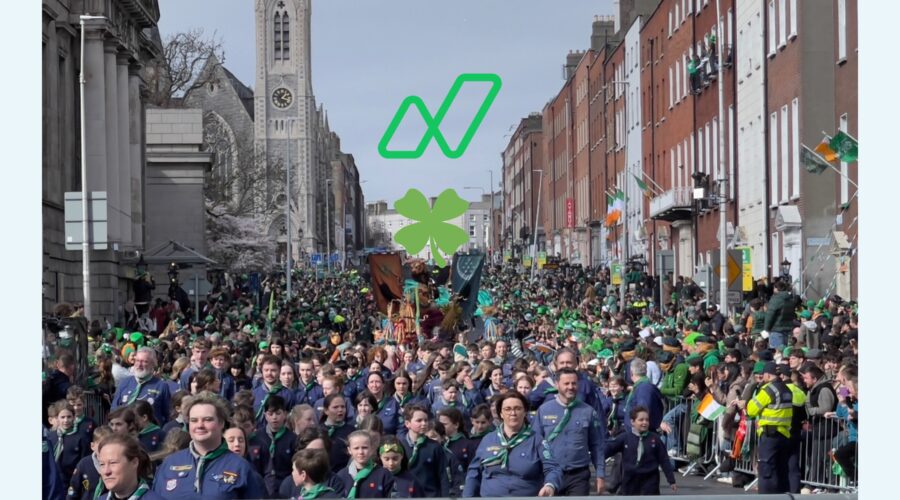
St. Patrick’s Day is not a festival.
It is Ireland’s largest global marketing campaign.
And from the perspective of Napblog Limited, it might be one of the most efficient government-backed marketing systems in the world.
The Misunderstood Question: “How Much Does Ireland Spend?”
People often ask:
“How much does the Irish government spend on St. Patrick’s Day?”
That’s the wrong question.
The right question is:
“How much return does Ireland generate from St. Patrick’s Day?”
Because when you look at the numbers, the strategy becomes obvious.
- Dublin alone generates around €122 million in economic impact during the festival
- Regional festivals add nearly €130 million more across the country
- Historically, the festival has delivered tens of millions in tourism spend from a budget under €2 million
Let that sink in.
A few million in public spending → hundreds of millions in economic return.
That’s not spending.
That’s leverage.
The Real Strategy: Marketing Disguised as Celebration
The Irish government does not treat St. Patrick’s Day as an event.
It treats it as:
- a global brand amplification system
- a tourism funnel
- a trade and investment campaign
In fact, official government programmes explicitly position the event as a platform to:
- promote trade
- attract investment
- strengthen international partnerships
This means:
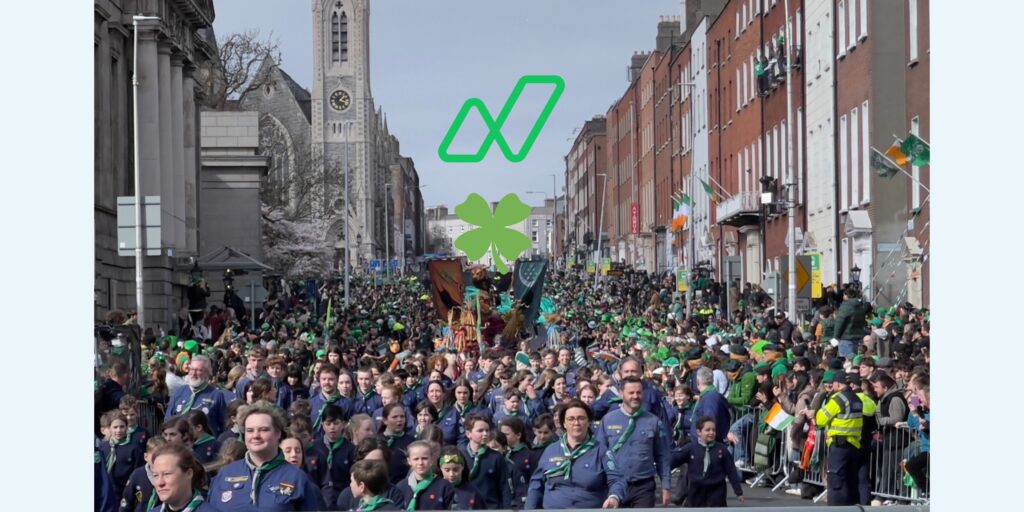
Every parade, every green landmark, every global celebration is part of a coordinated marketing strategy.
The Global Distribution Engine
What makes Ireland’s approach unique is distribution.
Through Tourism Ireland, the country executes a global campaign that most startups would dream of.
Consider this:
- Campaign reach of 350 million people globally
- Over 2,500 media placements worldwide
- Broadcast partnerships across major international networks
- Social media reach in the millions
And then there’s the genius move:
Global Greenings.
From the Empire State Building to the Leaning Tower of Pisa, landmarks across the world turn green.
This is not decoration.
This is free global advertising at scale
The ROI Model: Why Governments Rarely Get This Right
Here’s the most important insight.
Ireland has cracked something most governments fail to do:
Measuring marketing as an economic multiplier.
According to Tourism Ireland:
- Every €1 spent on marketing returns approximately €25 in economic value
That’s a 25x ROI.
In startup terms?
That’s better than most venture-backed growth campaigns.
Napblog Insight: This Is Not Tourism — This Is Funnel Design
From a Napblog POV, this entire system can be understood as a full-stack marketing funnel.
Top of Funnel (Awareness)
- Global media coverage
- Social campaigns
- Green landmarks worldwide
Middle of Funnel (Consideration)
- Travel content
- Influencer campaigns
- Cultural storytelling
Bottom of Funnel (Conversion)
- Bookings
- Flights
- Hotels
- Experiences
Post Funnel (Retention)
- Repeat tourism
- Word-of-mouth
- diaspora engagement
Ireland has essentially built:
A national-level marketing funnel powered by culture.
The Hidden Layer: Diaspora Marketing
One of the most underrated strategies is diaspora leverage.
Millions of people worldwide identify with Irish heritage.
St. Patrick’s Day activates them.
This creates:
- emotional connection
- cultural participation
- travel intent
It’s why cities like New York become extensions of Ireland during the festival.
This is not accidental.
It’s strategic identity marketing.
Economic Flywheel Effect
What makes the system powerful is not just direct revenue.
It’s the flywheel.
St. Patrick’s Day:
→ attracts tourists
→ increases global visibility
→ boosts future bookings
→ strengthens Ireland’s brand
→ attracts investment
This aligns with Ireland’s broader economic positioning as:
- a tourism destination
- a business hub
- a cultural brand
The Future: Where Government Spend Is Evolving
From Napblog Limited’s perspective, the future of St. Patrick’s Day marketing will evolve in three major directions.
1. From Tourism to Talent Attraction
Ireland is no longer just selling visits.
It is selling:
- relocation
- education
- careers
Expect future campaigns to position Ireland as:
“A place to live, not just visit.”
2. AI-Driven Personalised Campaigns
The next phase will shift from mass campaigns to:
- personalized travel targeting
- AI-driven content distribution
- predictive visitor behaviour
This is where platforms like Nap OS can integrate into the ecosystem.
Because the same system used for career acceleration can also:
- track user intent
- map behavioural signals
- personalise journeys
3. Creator-Led Global Distribution
Traditional media is declining.
Creators are rising.
Future St. Patrick’s Day campaigns will rely heavily on:
- TikTok creators
- YouTube storytellers
- micro-influencers
The shift will be from:
“broadcasting Ireland”
to
“experiencing Ireland through people.”
The Risk Nobody Talks About
Despite the success, there are risks.
- rising accommodation costs
- local infrastructure pressure
- uneven regional funding
Some reports already highlight financial strain on smaller communities trying to host events
If not managed properly, the system could become:
centralised in major cities, limiting national impact.
Napblog Prediction: The €500M Opportunity
Based on current growth trends:
- €122M (Dublin)
- €130M (regional)
- increasing global exposure
It is realistic to project that:
St. Patrick’s Day could drive €300M–€500M annually within the next decade.
Why?
Because:
- global reach is expanding
- tourism demand is rising
- Ireland’s brand is strengthening
The Strategic Gap (Napblog Insight)
Here’s where things get interesting.
Despite its success, Ireland’s St. Patrick’s Day strategy is still:
campaign-driven, not system-driven.
There is no unified platform that:
- tracks global engagement
- connects visitors to opportunities
- converts attention into long-term economic value
This is where Napblog Limited sees the biggest opportunity.
Enter Nap OS: The Missing Layer
Imagine if every person who engages with Ireland during St. Patrick’s Day could:
- build a career pathway
- connect with Irish companies
- explore education opportunities
- join business ecosystems
That’s where Nap OS becomes powerful.
Because it transforms:
attention → opportunity → execution
Final Thought: Ireland Is Not Spending — It Is Investing
The narrative needs to change.
Ireland is not “spending” on St. Patrick’s Day.
It is:
- investing in global visibility
- building cultural influence
- driving economic growth
And most importantly:
It is turning identity into infrastructure.
Napblog Closing Perspective
From the lens of Napblog Limited, St. Patrick’s Day is more than a festival.
It is:
- a case study in national branding
- a blueprint for cultural marketing
- a model for economic amplification
And the next evolution?
Will not just be about celebrating Ireland.
It will be about building systems that capture and scale the value created during that celebration.