4 min read
The Moment You Search Your Own Brand
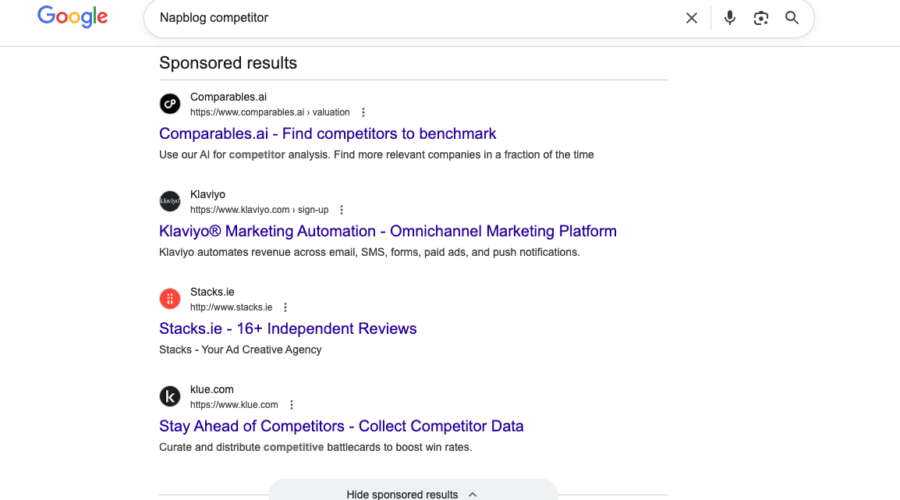
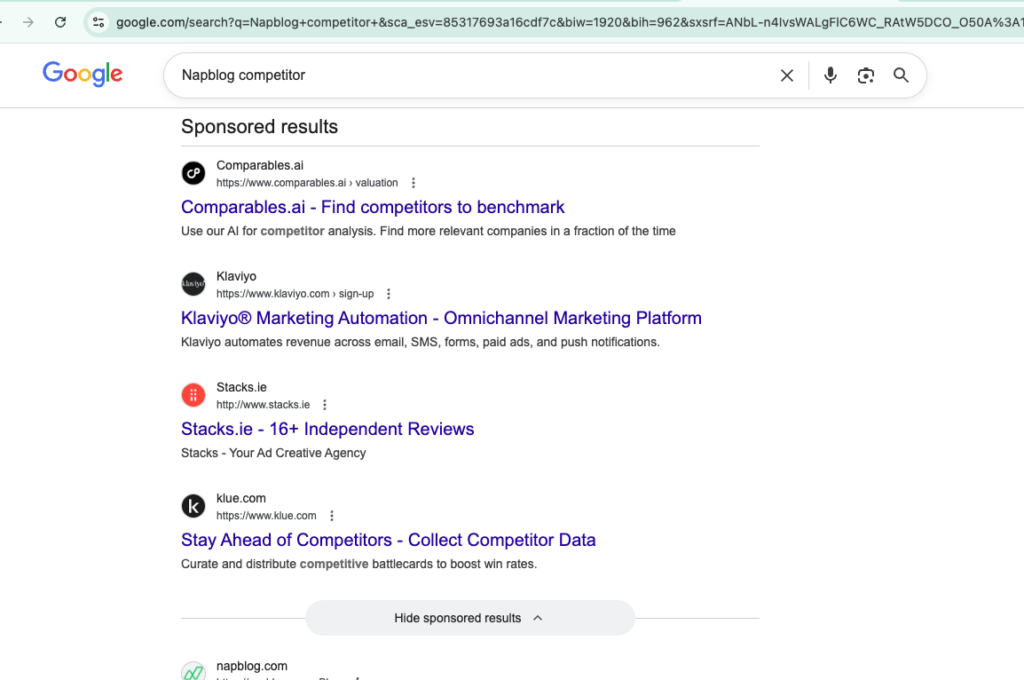
Type your brand into Google.
“Napblog”
And something interesting happens.
You expect control.
But you see competition.
Ads from other companies.
Platforms.
Agencies.
Tools.
Some directly targeting your keyword.
Some indirectly positioning themselves.
This is not a mistake.
This is the system.
At Napblog Limited, we don’t see this as a threat.
We see it as a signal.
If competitors are bidding on your brand,
you have built something worth capturing.
Understanding the SERP Battlefield
Search Engine Results Page (SERP) is not neutral.
It is:
- Competitive
- Auction-driven
- Intent-based
When someone searches “Napblog”:
Google doesn’t think:
“Show Napblog only.”
It thinks:
“Show the best result for this intent.”
And advertisers…
enter the auction.
Types of Competitors Appearing on “Napblog” Searches
Based on current SERP behaviour, three categories emerge:
1. Direct Competitors
Companies offering similar services:
- SEO
- PPC
- AI marketing
- Recruitment systems
Example positioning includes:
- Agencies similar to Social Gravity
- Marketing platforms like Aprimo and Marmind
They compete for:
- Visibility
- Clicks
- Consideration
2. Indirect Competitors (Tool-Based)
Platforms that solve adjacent problems:
- CRM tools
- Email automation
- Analytics systems
Examples include:
- Klaviyo
- Competitive intelligence tools like Klue
They are not Napblog.
But they intercept intent.
3. Opportunistic Advertisers
These are:
- Agencies
- SaaS tools
- Marketplaces
They bid on your keyword simply because:
It converts.
Is It Legal to Bid on Competitor Keywords?
Yes.
In most jurisdictions, including Ireland and the EU:
You CAN:
- Bid on competitor brand names
- Show ads for those keywords
You CANNOT:
- Mislead users
- Impersonate the competitor
- Use trademarked names in deceptive ways
What You CAN Do (Strategically)
1. Bid on Competitor Keywords
You can run ads for:
- “Napblog alternatives”
- “Nap OS competitors”
This allows you to:
- Capture high-intent users
- Enter consideration stage
2. Position Differently
Don’t copy.
Differentiate.
Example:
Instead of saying:
“We are Napblog”
Say:
“We solve X differently”
3. Use Comparison-Based Messaging
Smart messaging includes:
- “Compare before you choose”
- “See alternatives”
This builds trust.
4. Build Landing Pages for Competitor Intent
Dedicated pages like:
- “Napblog vs [Your Product]”
- “Best alternatives to Napblog”
This improves:
- Relevance
- Conversion
5. Leverage SEO Alongside Ads
Ads are temporary.
SEO compounds.
Create content like:
- Competitor comparisons
- Market analysis
- Use-case breakdowns
What You SHOULD NOT Do
1. Do Not Mislead
Never:
- Pretend to be Napblog
- Use deceptive URLs
- Confuse users intentionally
This damages:
- Trust
- Brand reputation
2. Do Not Copy Brand Identity
Avoid:
- Similar logos
- Similar messaging
- Mimicking tone
Because differentiation wins long-term.
3. Do Not Attack Aggressively
Negative campaigns like:
- “Napblog is bad”
- “Avoid Napblog”
Backfire.
Why?
Because:
- It signals insecurity
- It reduces credibility
The Ethics of Competitor Bidding
Here is where most marketers fail.
They focus on:
- What is allowed
But ignore:
- What is respected
At Napblog Limited, we define this clearly:
Just because you can, doesn’t mean you should blindly.
When to Respect Competitors
1. When They Built the Category
If a brand created awareness:
- Respect the origin
Because you are benefiting from:
- Their education effort
2. When You Are Early Stage
Instead of attacking leaders:
- Learn from them
Observe:
- Their messaging
- Their positioning
3. When Your Product Is Not Ready
Don’t intercept traffic if:
- You can’t deliver value
Because short-term clicks…
lead to long-term damage.
The Napblog Philosophy on Competition
We don’t see competitors as enemies.
We see them as:
- Signals
- Benchmarks
- Market validators
If companies bid on “Napblog”:
It means:
- The keyword has value
- The brand has recognition
How Napblog Should Respond
1. Own Your Brand Keyword
Run defensive campaigns:
- “Napblog Official”
- “Nap OS Platform”
Control the narrative.
2. Strengthen Organic Presence
Ensure:
- Your website ranks #1
- Your content dominates
3. Educate the Market
Publish:
- Thought leadership
- Product insights
- Case studies
Make it hard to replace you.
4. Build Brand Recall Beyond Search
So users don’t just search:
“Napblog”
They search:
“Napblog directly”
The Real Game: Attention vs Trust
Anyone can buy attention.
But trust…
must be earned.
Competitor ads:
- Capture attention
But your product:
- Builds trust
Why Competitor Bidding Alone Fails
Because it is:
- Short-term
- Transactional
Without:
- Product depth
- Brand clarity
It doesn’t sustain.
The Long-Term Strategy
Winning companies don’t rely on:
- Competitor traffic
They build:
- Direct demand
- Brand authority
The Shift from Interception to Creation
Instead of asking:
“How do we capture Napblog traffic?”
Ask:
“How do we become a searched brand?”
That is the real game.
Final Thought
Competitor keyword strategy is not wrong.
But it reveals something deeper:
You are entering someone else’s narrative
The goal is not just to compete there.
The goal is to create your own.
Conclusion: Play Smart, Play Fair, Play Long-Term
Google Ads allows competition.
But markets reward:
- Clarity
- Trust
- Execution
At Napblog Limited, we believe:
You can:
- Compete aggressively
Without:
- Losing integrity
Because in the long run:
The brands that win are not the ones who capture the most clicks.
They are the ones who deserve them.