4 min read
The Invisible System That Runs Your Life
Every decision you make…
is not random.
It comes from something deeper.
Your belief system.
What you think is right.
What you think is possible.
What you think is true.
At Napblog Limited, through Intuition Psychology OS, we define this clearly:
Your belief system is your internal operating system
And like any system…
if it is not updated…
it starts producing errors.
The Core Problem: Unchecked Beliefs
Most people don’t question their beliefs.
They inherit them.
From:
- Family
- Society
- Education
- Experience
And then…
they operate based on them.
Without validation.
Without reflection.
Why This Is Dangerous
Because beliefs shape:
- Decisions
- Reactions
- Judgments
If beliefs are flawed…
everything built on them becomes unstable.
The Role of Rational Thinking
Rational thinking is not about:
- Over-analysing everything
It is about:
Testing your beliefs against reality
It is the process of asking:
- “Is this true?”
- “Is this useful?”
- “Is this still relevant?”
Intuition vs Rationality — Not Opposites
Many people think:
- Intuition = feeling
- Rationality = logic
But in Intuition Psychology OS, they work together.
Intuition gives direction
Rationality validates it
Without rationality…
intuition becomes bias.
Without intuition…
rationality becomes rigid.
The Concept of “Exercising Rational Thinking”
Just like the body…
the mind needs exercise.
Rational thinking is not automatic.
It must be trained.
Repeatedly.
Consistently.
What Happens When You Don’t Exercise It
You start:
- Believing assumptions
- Reacting emotionally
- Avoiding difficult truths
And slowly…
you drift away from reality.
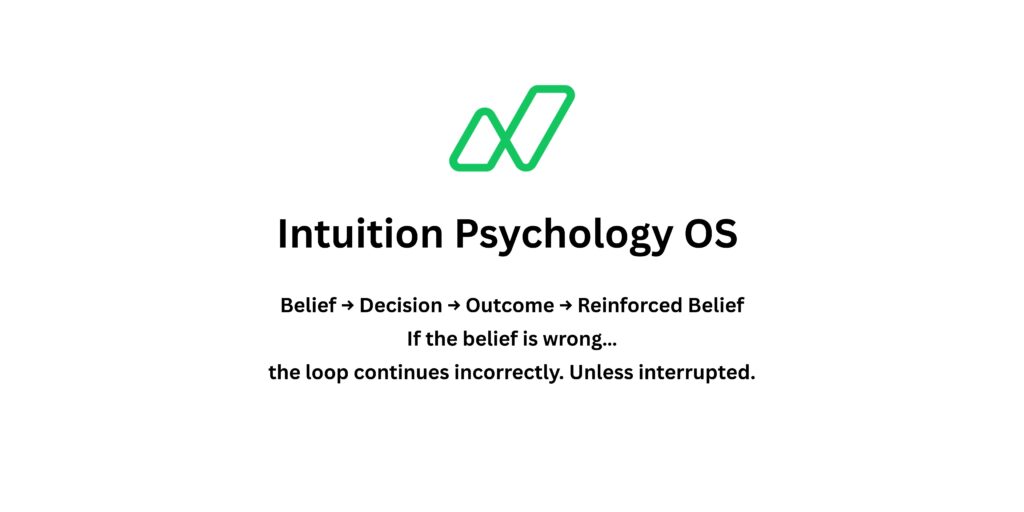
The Belief System Loop
Here’s how it works:
Belief → Decision → Outcome → Reinforced Belief
If the belief is wrong…
the loop continues incorrectly.
Unless interrupted.
Rational Thinking as the Interruption
Rational thinking breaks the loop.
It asks:
- “Was the outcome because of my belief?”
- “Or was I wrong?”
This creates correction.
Why This Leads to a Regret-Less Life
Regret comes from:
- Poor decisions
- Unquestioned beliefs
- Emotional reactions
When you think rationally:
- You evaluate before acting
- You reduce impulsive mistakes
You may still fail.
But you understand why.
And that reduces regret.
Regret vs Responsibility
People with weak rational thinking:
- Blame situations
- Blame others
People with strong rational thinking:
- Analyse decisions
- Take responsibility
Responsibility reduces regret.
The Impact on Quality of Life
A stable belief system creates:
- Mental clarity
- Emotional balance
- Better decisions
This directly improves:
- Personal life
- Professional life
The Workplace Connection
Most workplace problems are not technical.
They are psychological.
Driven by:
- Assumptions
- Ego
- Miscommunication
How Weak Belief Systems Affect Work Culture
1. Misinterpretation
People assume intent incorrectly.
2. Emotional Reactions
Decisions are taken personally.
3. Lack of Accountability
Blame culture develops.
How Rational Thinking Improves Work Culture
1. Clear Communication
People ask:
- “What do you mean?”
Instead of assuming.
2. Objective Decision-Making
Decisions are based on:
- Data
- Context
Not emotion.
3. Constructive Feedback
Feedback becomes:
- Insight-driven
- Growth-focused
Not personal attacks.
The Intuition Psychology OS Framework
At Napblog Limited, we structure this into a system:
1. Belief Awareness
Identify:
- What you believe
- Why you believe it
2. Rational Testing
Ask:
- “Is this true?”
- “Is this useful?”
3. Feedback Integration
Use outcomes to:
- Adjust beliefs
4. Intuition Alignment
Combine:
- Rational validation
- Internal sensing
Daily Exercises to Strengthen Rational Thinking
Exercise 1: Thought Auditing
At the end of the day, ask:
- “What assumptions did I make today?”
Exercise 2: Opposite Thinking
Challenge yourself:
- “What if the opposite is true?”
This expands perspective.
Exercise 3: Evidence Check
Before believing something, ask:
- “What is the evidence?”
Exercise 4: Slow Decision Making
Don’t react instantly.
Pause.
Think.
Respond.
Exercise 5: Emotional Separation
Recognise:
- Feeling ≠ Fact
This reduces bias.
The Role of Failure
Failure is data.
Not identity.
Rational thinkers use failure to:
- Learn
- Adjust
- Improve
Why Most People Avoid Rational Thinking
Because it is uncomfortable.
It forces you to:
- Admit mistakes
- Question identity
- Accept uncertainty
But growth lives there.
The Long-Term Outcome
When you consistently exercise rational thinking:
You build:
- Strong beliefs
- Better decisions
- Emotional stability
This leads to:
- Less regret
- Higher clarity
- Better relationships
Work Culture Transformation
In organisations where rational thinking is strong:
People:
- Communicate clearly
- Take responsibility
- Focus on solutions
This creates:
- High performance
- Low conflict
- Sustainable growth
Final Thought
You don’t need more motivation.
You need better thinking systems.
Conclusion: Discipline Your Mind, Design Your Life
A regret-less life is not about:
- Perfect decisions
It is about:
- Conscious decisions
And conscious decisions come from:
- Exercised rational thinking