Last updated: February 17, 2026
5 min read
Search is no longer a list of links. By 2026, search has become an answer-driven, AI-mediated decision engine. The phrase “AO SEO 2026” has emerged from this shift, where AI Overviews (AO) and Answer Engine Optimization (AEO) redefine how brands are discovered, evaluated, and trusted.
Traditional SEO focused on rankings. SEO in 2026 focuses on representation: whether your brand is cited, summarized, and recommended by AI systems. This newsletter explains what AO SEO really means, why it matters commercially, and how any brand—B2B, B2C, local, or global—can structure content to dominate AI-powered search experiences.
This is not a prediction. It is already happening.
From Search Engines to Answer Engines
For two decades, SEO revolved around keywords, backlinks, and rankings. That model assumed users would click links and explore websites. AI has broken that assumption.
Modern search behavior looks like this:
- Users ask complex, conversational questions
- AI systems synthesize direct answers
- Many searches end without a click
- Visibility happens inside the answer, not below it
Platforms such as Google now surface AI Overviews that summarize multiple sources into a single response. This is the foundation of AO SEO.
Answer Engines do not rank pages. They select sources.
If your brand is not structured for selection, it becomes invisible—even if your classic SEO metrics look strong.
What “AO SEO 2026” Actually Means
AO SEO is not a new buzzword layered on top of SEO. It is a structural evolution of optimization itself.
AO SEO in 2026 combines five disciplines:
- Answer Engine Optimization (AEO) – Designing content to be extracted as direct answers
- Semantic & Entity SEO – Optimizing meaning, not just keywords
- E-E-A-T Engineering – Demonstrating real-world credibility and experience
- AI Optimization (AIO) – Training AI systems to recognize and trust your brand
- User Intent & UX Alignment – Matching content depth to decision stages
Together, these determine whether your brand appears in AI Overviews, voice assistants, enterprise copilots, and zero-click results.
Why Traditional SEO Alone Is No Longer Enough
Classic SEO answers the question:
“Can we rank?”
AO SEO answers a more important one:
“Will AI trust us enough to answer on our behalf?”
Here is what changed:
| Old SEO Model | AO SEO Model |
|---|---|
| Keywords | Entities & intent |
| Rankings | Citations & summaries |
| Traffic volume | Decision influence |
| Backlinks | Brand authority |
| Page-level | Knowledge-level |
In 2026, being cited by AI often matters more than being clicked by humans.
The Rise of Answer Engine Optimization (AEO)
AEO is the operational core of AO SEO.
What AEO Optimizes For
- Featured snippets
- AI Overviews
- Voice search responses
- Conversational AI answers
- Zero-click SERP visibility
How AEO Content Is Structured
High-performing AEO content typically includes:
- Clear question-based headings
- Concise, definitive answers (40–120 words)
- Follow-up depth below the primary answer
- Explicit definitions and explanations
- Contextual examples
AI systems favor clarity over creativity and precision over persuasion when selecting answers.
E-E-A-T: The Trust Infrastructure of 2026 SEO
Google’s quality framework—Experience, Expertise, Authoritativeness, Trustworthiness—has moved from guideline to algorithmic backbone.
AI systems evaluate:
- Who wrote this?
- Why are they qualified?
- Is this consistent with known facts?
- Is the brand repeatedly validated across the web?
Practical E-E-A-T Signals That Matter
- Author bios with real credentials
- First-hand experience and case studies
- Consistent brand mentions across authoritative sites
- Transparent business information
- Updated, maintained content
In AO SEO, trust is not implied—it is computed.
From Keywords to Semantics and Entities
AI does not think in keywords. It thinks in relationships.
For example:
- “AO SEO 2026” connects to entities like AI search, answer engines, content authority, and user intent
- Brands are treated as entities with attributes: industry, credibility, expertise, relevance
Semantic SEO ensures your content explains:
- What something is
- How it relates to other concepts
- Why it matters
- When it should be chosen
If your content does not clearly define these relationships, AI will source someone else who does.
Structured Data: The Language AI Understands Best
Structured data is no longer optional infrastructure. It is machine-readable credibility.
Key schema types for AO SEO:
- Article & BlogPosting
- FAQPage
- HowTo
- Organization
- Person
- Product & Service
Structured data helps AI:
- Identify authoritative sections
- Attribute content correctly
- Understand context and intent
Think of schema as training data for AI, not just markup for search engines.
Multimedia as a Ranking and Trust Signal
Text alone is insufficient in 2026.
AI systems increasingly rely on:
- Images for context validation
- Videos for experiential confirmation
- Diagrams for conceptual clarity
Brands that publish original visuals—not stock placeholders—send stronger authority signals.
Multimedia also increases:
- Dwell time
- Content comprehension
- Multi-surface visibility (search, video, discovery feeds)
GEO, AEO, and AIO: The Integrated Visibility Model
Modern optimization is not one discipline—it is a system.
GEO – Geo Engine Optimization
Ensures visibility in:
- Local AI answers
- Map-based results
- “Near me” conversational queries
AEO – Answer Engine Optimization
Ensures:
- Inclusion in AI Overviews
- Featured answers
- Zero-click authority
AIO – AI Optimization
Ensures:
- Brand recall inside AI tools
- Mentions in copilots and assistants
- Long-term AI training exposure
Brands that integrate all three own the full discovery journey, from question to conversion.
User Experience Is Now an Algorithmic Signal
UX is no longer about aesthetics alone.
AI evaluates:
- Page speed and stability
- Mobile usability
- Content readability
- Logical information hierarchy
Poor UX reduces:
- Crawl efficiency
- Content extraction accuracy
- Trust scoring
In 2026, bad UX actively suppresses AI visibility.
Clarifying the “AO” Confusion
The term “AO” can mean different things in different contexts. In SEO discussions, clarity matters.
- AO in SEO: AI Overviews and Answer Optimization
- AO in sports: Australian Open tennis tournament
- AO in government: Administrative Officer roles
- AO Foundation: Medical education organization
For digital marketers, AO SEO 2026 strictly refers to AI-driven answer visibility, not these unrelated domains.
How Any Brand Can Win with AO SEO in 2026
This strategy is not reserved for enterprise brands.
Step-by-Step AO SEO Framework
- Map your audience’s real questions
- Build answer-first content clusters
- Establish author and brand credibility
- Implement structured data correctly
- Publish experiential, original insights
- Measure visibility beyond clicks
Success is measured by:
- AI citations
- Brand mentions in answers
- Assisted conversions
- Share of voice in AI results
The Strategic Reality
SEO in 2026 is not dying.
It is evolving into influence engineering.
Brands that adapt early will:
- Shape market narratives
- Own category definitions
- Become default answers
Brands that resist will still publish content—but AI will summarize competitors instead.
Final Thought from Napblog
AO SEO 2026 is not about gaming algorithms. It is about earning algorithmic trust at scale.
When AI systems decide who to quote, recommend, or summarize, they choose brands that:
- Think clearly
- Explain precisely
- Act transparently
- Demonstrate real-world value
That is not just good SEO.
That is good business.
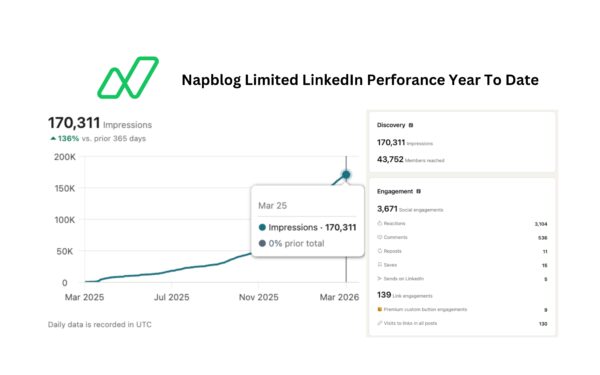
Great content that answers real questions is the future of brand visibility. Follow Napblog’s content strategy on LinkedIn.