7 min read
Nap OS’s perspective on international fees, placement access, and the need to connect education with demonstrable capability.
“Why am I paying so much more if I still cannot get the experience employers expect?”
It is a fair question for an international student to ask. Tuition is a major investment, and students deserve clear information about what their programme includes, what career support is available, and which outcomes cannot be guaranteed.
But the discussion needs an accurate starting point. A claim that international students universally pay five times more requires a specific course-level comparison. Likewise, it is incorrect to say that Irish university placements are available only to EU students. University College Cork explicitly explains how eligible international students can undertake placements that form part of their degree.
The stronger question is this: when students make a substantial investment in Irish education, how can institutions help them build relevant experience and demonstrate their capabilities?
That is the problem Nap OS seeks to address.
Why the Fee Comparison Needs Context
Ireland’s Free Fees Initiative helps explain part of the difference between what some students pay.
Under the initiative, the State may pay tuition for eligible students undertaking approved full-time undergraduate courses at eligible institutions. Eligibility depends on several conditions, including nationality or qualifying status, residency, previous study, and course requirements. It is not simply a benefit automatically available to every Irish or EU citizen.
This matters when comparing costs. An eligible student’s contribution payment is not necessarily the full tuition price of the education they receive.
A meaningful comparison should identify the same programme, academic year, study level, fee category, and any subsidy or scholarship.
“Five times more” should therefore be used only where published figures support it—not as a universal description of Irish higher education.
A Funding Explanation Does Not End the Fairness Debate
Explaining a fee difference does not remove the need for accountability.
Students can understand that public subsidies have eligibility rules while still asking whether the service they receive is clear, accessible, and worthwhile.
An institution should be able to explain:
- Whether a placement is compulsory, optional, or unavailable.
- Whether the institution arranges placements or supports applications.
- Whether employer selection remains competitive.
- Which alternatives exist if a student does not secure a placement.
- What careers support continues after graduation.
These questions are especially important before a student accepts an offer.
A higher fee does not purchase a guaranteed job. Equally, a university should not allow broad employability language to imply a guaranteed outcome when the actual offer is more limited.
Transparency should come before recruitment.
International Students Are Not Categorically Excluded from Placements
UCC’s published guidance directly contradicts the idea that non-EU students cannot undertake course placements.
It states that students on qualifying degree programmes at NFQ Level 7 or above can undertake an internship where it forms part of their course. The placement must be integral to the programme and contribute to the final award. Its duration cannot exceed half the course, and the work cannot be undertaken in a self-employed capacity.
These are conditions, not a blanket exclusion.
However, permission to participate is different from securing an offer. A student may be eligible for a placement while still facing competitive recruitment.
The fair assessment is therefore programme-specific: what opportunities exist, who can apply, how selection works, and what support is provided?
Without that information, neither universal exclusion nor universal equality of experience should be assumed.
Work Permission and Hiring Decisions Are Different Issues
International students’ employment permissions can differ from those of EEA students.
UCC explains that EEA nationals can take full-time or part-time employment while studying. Non-EU/EEA students holding Stamp 2 permission can generally undertake casual employment for up to 20 hours weekly during term and 40 hours during designated holiday periods. Stamp 2A does not permit work. Course-integrated placements are addressed separately in the guidance.
Those distinctions can affect how an opportunity must be structured.
But they do not establish that every employer prefers local candidates or that universities deliberately disadvantage international students.
Where a student experiences rejection, the relevant question is what caused it: eligibility, scheduling, role requirements, competition, misunderstanding, or potentially unfair treatment?
A responsible discussion should investigate the reason rather than assume it.
The Experience Gap Is Still a Serious Product Problem
Even without proving a universal preference for local applicants, the practical challenge remains important.
Consider a hypothetical international postgraduate student who understands their subject but has not yet completed a project they can discuss confidently with an Irish employer.
Their CV may show qualifications and previous experience. An interviewer may nevertheless ask for a relevant example: a business analysis, technical deliverable, research recommendation, or team contribution.
The candidate needs more than a statement that they are capable. They need material that makes the claim understandable.
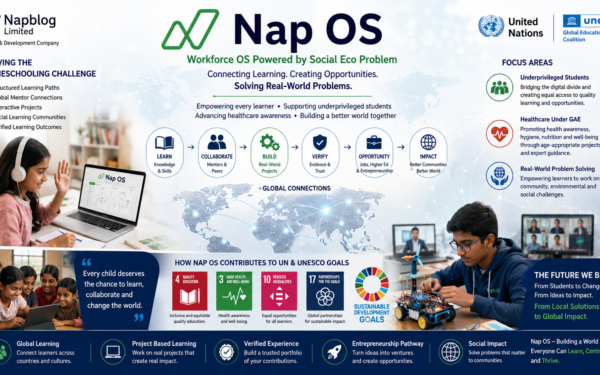
Nap OS’s product purpose is to help learners build that material through structured projects, feedback, and documented contributions.
The intended benefit is not a replacement for employment. It is a clearer foundation for demonstrating selected capabilities before or alongside the search for work.
What Nap OS Can Add
Nap OS’s published methodology describes a project-based practice platform: participants complete career-matched briefs, produce assessed deliverables, and organise evidence of their work. It explicitly describes the experience as a simulation rather than employment.
That distinction should remain central to the product.
A simulated project can help a learner practise analysis, communication, planning, or technical execution. It cannot honestly be presented as a job at an Irish company if no such employment occurred.
Nap OS should therefore help participants describe their experience precisely:
“I completed a structured project, produced this deliverable, received feedback against these criteria, and can explain my decisions.”
That is a credible claim. Inventing an employer relationship or overstating verification would undermine the trust the product is meant to build.
From a Project File to Meaningful Evidence
Imagine a student targeting an entry-level marketing role.
A hypothetical Nap OS project could ask them to analyse a market, compare competitors, identify an audience, and recommend a campaign approach.
The final presentation would be only one part of the evidence. A stronger record would include:
- The original brief.
- The participant’s responsibilities.
- Sources and assumptions.
- Drafts or development milestones.
- Reviewer feedback.
- Revisions and limitations.
An employer could then ask why the candidate chose particular sources or changed a recommendation.
This turns a vague claim—“I have marketing skills”—into a more specific conversation.
The project would not prove readiness for every marketing responsibility. It would give the candidate an honest example of applied work.
“Irish Experience” Should Not Become a Marketing Shortcut
Nap OS must be careful about the phrase “Irish work experience.”
A project designed around an Irish business context is not automatically employment in Ireland. Feedback from an Ireland-based reviewer does not, by itself, make someone an employee. A portfolio entry does not confer immigration permission.
The product should distinguish between:
- Independent or simulated practice.
- An authorised live project for an organisation.
- A formally arranged academic placement.
- Paid employment.
Each category has different implications and responsibilities.
For international students, accurate labelling is particularly important because employment conditions matter. UCC also cautions that remote work for an overseas employer does not remove the need to comply with Irish immigration and tax requirements.
A digital platform should never be promoted as a workaround for those rules.
Universities Should Build Alternatives Without Downgrading Placements
Project-based practice should complement placements, not become an excuse to withdraw meaningful workplace opportunities.
Where a programme includes placement support, students should receive a clear explanation of what that support entails. UCC, for example, states that placement officers assist students on programmes containing a placement component. Assistance is not the same as an unconditional guarantee.ucc
Nap OS could explore a complementary university model: preparation before applications, additional practice where appropriate, and structured reflection after an experience.
Any partnership would need agreement on assessment, staff responsibilities, accessibility, costs, and data handling.
Students should also understand whether a project carries academic credit or is an extracurricular activity.
The objective is to create a stronger pathway—not to relabel a simulation as the placement a student expected.
Do Not Add Another Unclear Cost
An employability product serving students concerned about high fees has its own responsibility to be transparent.
Nap OS should clearly state what a participant receives, the level of support included, the assessment process, and the limits of any completion record.
A student should not need to purchase additional services merely to discover what the original offer meant.
The same principle applies to outcomes. A completed project is not an interview. An interview is not a job offer. Employment is not permanent immigration status.
Institution-funded access or employer-supported cohorts could be explored where commercially and operationally feasible. Such arrangements should be described as proposals until agreed.
A fair product helps students understand the decision before asking them to pay.
Measure the Pathway, Not Just the Marketing
Universities and Nap OS should assess whether their support is useful.
Relevant measures could include project completion, assessment consistency, participants’ ability to explain their work, employer feedback, and subsequent recruitment progress.
Any comparisons between student groups would need careful context: programme, qualification level, previous experience, work permission, response rates, and timing.
Without that context, a headline can obscure more than it explains.
The goal is not to promise identical outcomes. It is to identify avoidable barriers and make support more effective.
International students deserve neither exaggerated recruitment promises nor assumptions that they lack capability.
They deserve clear information, fair access to relevant opportunities, and credible ways to demonstrate their work.
Nap OS’s role is to contribute to that final piece: helping learners turn study and practice into evidence they can explain with confidence—without pretending that a platform alone can solve fees, hiring, or immigration.