7 min read
Nap OS is looking for welcoming spaces where students can sit beside experienced Project Managers, choose a relevant project and begin building evidence of what they can do. We are inviting government facilities, social organisations, universities, employers, professional clubs, community groups, restaurants and other accessible venues to host a Students and Project Manager Bootcamp on work experience and references.
The request is deliberately simple. A host provides a suitable room for a few hours, a day or a recurring programme. Nap OS brings the project briefs, facilitation and Project Manager support. Students attend free of charge, explore projects linked to their intended careers, ask practical questions and learn how to convert activity into a portfolio record that can be discussed with an employer. A partnership may be a single session or develop into a long-term local programme.
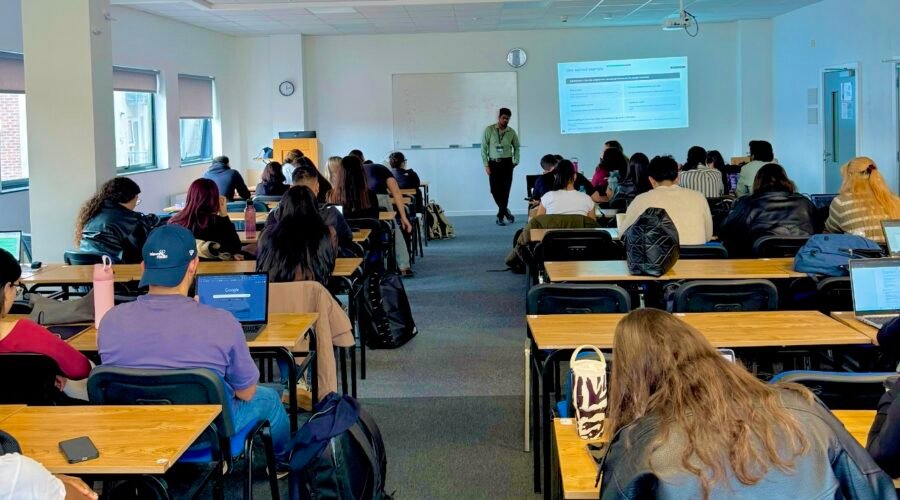
This model has already shown its value in an education setting. At Independent College, more than 100 students joined a Nap OS session to explore how project-based work can help them move from academic knowledge towards professional evidence. The room became more than a lecture venue. It became a place where students could connect career goals with real problems, ask direct questions and understand the standard of work expected outside the classroom.
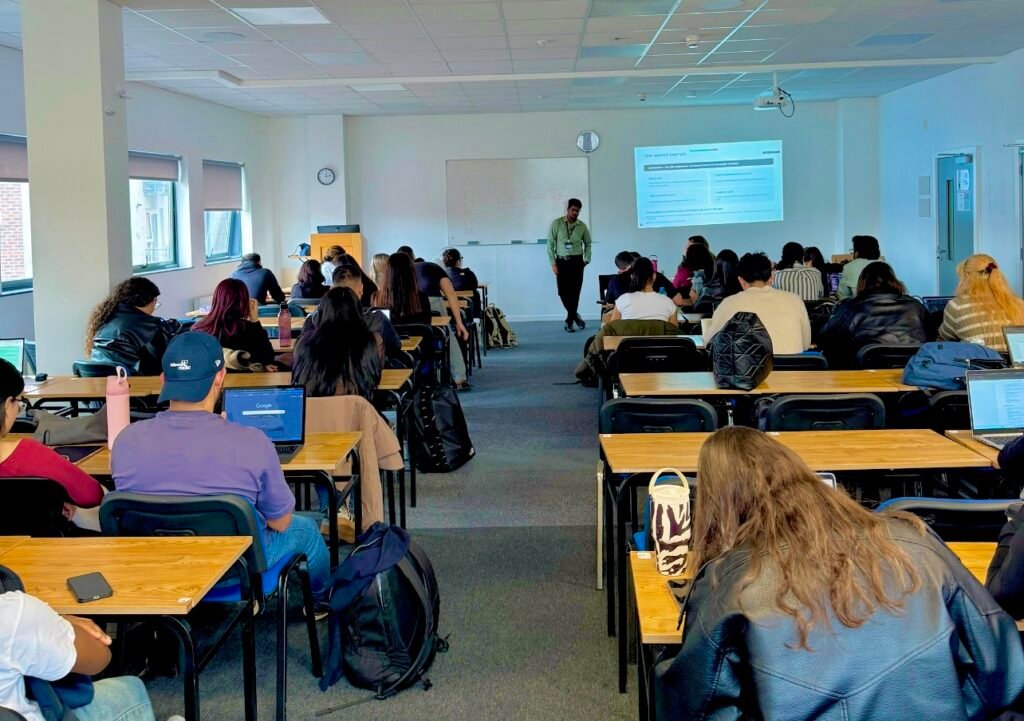
Nap OS student engagement session at Independent College Dublin
The problem a room can help solve
Many students are told that they need experience before they can be considered for a job. Yet the routes for acquiring that experience are limited. Internships are competitive, part-time employment may be unrelated to the student’s intended profession, and international graduates may face the additional question of local experience. Online courses can develop knowledge, but completing a course does not always produce evidence that an employer can examine.
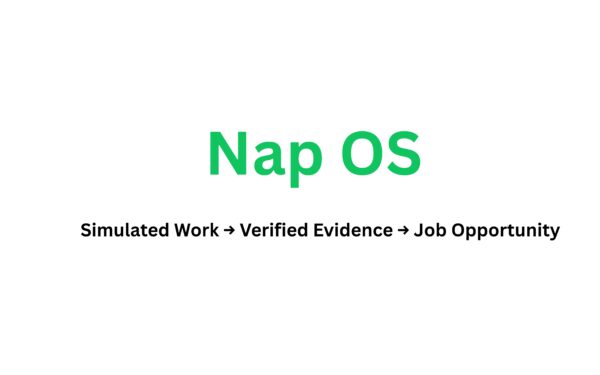
Nap OS addresses this gap through project briefs across Strategy, Marketing, Sales, Research, Product and Data. A learner can select a problem that matches the role they want, plan the work, create a deliverable and record the decisions behind it. When human review is added, a Project Manager can question the approach, identify weaknesses, ask for revisions and verify what the learner actually produced. The resulting evidence is more useful than a general claim that the student is motivated or familiar with a tool.
Digital access matters, and Nap OS project briefs can be explored independently. Physical access matters too. Some learners begin faster when they can enter a room, speak to a person and work beside others facing the same uncertainty. A venue creates a visible starting point. It reduces the distance between hearing about an opportunity and taking the first practical step.
What happens during a bootcamp
A bootcamp begins with the student’s desired direction rather than a generic presentation. Participants identify the type of role they want and select a project domain that can produce relevant evidence. Someone interested in marketing may develop a launch, content distribution or market research project. A data learner may analyse a dataset and explain a recommendation. A product learner may investigate a user problem, define requirements and test a proposed solution.
The Project Manager then helps the learner convert the brief into a workable plan. The student must define the problem, intended outcome, deliverables, timeline and evidence to retain. The manager does not do the project for the student. The value comes from asking better questions, setting a professional standard and making the learner accountable for the choices made.
Students can also bring work already in progress. They may ask why a portfolio feels weak, how to explain an academic project in an interview, what proof is missing from a CV claim or how AI-assisted work should be disclosed. The session gives them a place to receive a direct answer and leave with a next action. Longer partnerships can add follow-up workshops where learners return with deliverables, receive feedback and document improvement.
Why hosts can create meaningful social impact
The proposed contribution is practical: make underused space available and help local students access structured professional support. A classroom outside teaching hours, a meeting room in a civic building, a community hall, an employer training room, a club function room or a quiet restaurant area can become a temporary project studio. The space does not need to be elaborate. It needs appropriate seating, a safe and accessible environment and, where possible, power and internet access.
For universities, the workshop can complement careers education by helping students act on advice. For employers, it can support early talent development and offer insight into how candidates approach problems before a formal recruitment process. For government and social organisations, it creates a direct employability intervention that can reach graduates, migrants, career changers and people who may not already have professional networks. For clubs and hospitality venues, it is a visible way to contribute to the local community during suitable off-peak hours.
The host is not expected to promise employment, endorse every participant or operate the programme. Nap OS remains responsible for the project-based format and its communication. The purpose of the partnership is to create access: a place where learners can begin, ask questions and meet a human reviewer.
From free access to verified evidence
Nap OS is free for self-directed learners. A student can explore a brief, begin the work and develop a portfolio without paying for access to the project itself. Bootcamp entry is also intended to be free for students when a partner provides the space. This keeps the first step open to people who are curious but not yet ready to commit to a paid service.
Paid Nap OS options apply when a learner chooses structured human support, Project Manager review, verified project evidence or a reference justified by completed work. Payment is for review and support, not for recruitment or job placement. Participation does not guarantee employment, and a reference is not automatic. Its credibility depends on the manager being able to describe the work observed, the learner’s responsibility and the quality of the outcome.
That boundary is important for both students and hosts. The bootcamp should not be presented as a guaranteed route to a job. It is a route to practice, feedback and stronger evidence. The student remains responsible for doing the work, and employers remain responsible for their own hiring decisions.
A partnership that can start small
Nap OS is open to different hosting formats because useful spaces operate in different ways. A university may offer a two-hour evening workshop for one class. A local authority or community organisation may host a monthly open clinic. An employer may provide a project room and invite staff members to answer industry questions. A club may support a weekend session. A restaurant may make a quiet section available between busy periods. Each arrangement can be designed around the venue’s capacity and safeguarding, accessibility and operating requirements.
A first session can be treated as a pilot. Nap OS and the host agree the intended audience, capacity, duration, facilities and communication responsibilities. Students register in advance where necessary. The session then produces simple evidence for review: attendance, project interests, questions raised, briefs selected and agreed next steps. No inflated success claim is required. The partners can decide whether the format created enough learner value to repeat.
If the relationship continues, the host can become part of a local rhythm of execution. Students may attend an introductory session, work independently, return for review and later present what they built. This repeated contact is where confidence becomes capability. It also gives a partner a more substantial social-impact story than a one-off motivational talk because the emphasis remains on work completed and improvement observed.
What Nap OS brings
Nap OS brings an evidence-first method. The team can introduce the project domains, help participants select an appropriate brief, explain the expected deliverables and show how to retain a professional record. Project Managers can review reasoning and outputs rather than limiting the session to CV advice. Where a partner has relevant expertise, its staff or members may contribute industry context without taking ownership of the learner’s work.
The Independent College session demonstrated the demand for this kind of direct engagement. More than 100 students were able to hear the model together, question it and consider how it related to their own careers. The next stage is to create more places where that conversation can turn immediately into project selection and execution.
Nap OS therefore invites public bodies, educational institutions, employers, social-impact organisations, clubs, community spaces and restaurants to consider one straightforward question: is there a room that could help students begin building professional evidence? Even a few available hours can create a useful starting point. A recurring space can create a pathway.
Organisations interested in hosting a free-entry Students and Project Manager Bootcamp can contact Nap OS through napblog.com. Hosts can begin with one carefully planned session, learn from participant feedback and expand only when the format works for their community. Together, we can give learners access to relevant projects, human answers and a practical way to start building the work experience they are repeatedly asked to prove.
Contact: palani@napblog.com – Pugazheanthi Palani, Founder & CEO – Nap OS. Napblog Limited