Last updated: May 29, 2026
6 min read
What If Most Growth Advice Is Backwards?
There is a common belief in business.
If growth is slow, increase marketing.
If pipeline is weak, increase sales.
If awareness is low, run ads.
If conversions are poor, hire more closers.
This sounds logical.
It is also often incomplete.
At Napblog Limited, through Nap OS, we challenge a harder truth.
Many companies do marketing because the product has not earned demand.
Many companies do sales because the marketing has not created trust.
Many companies scale activity before they validate fit.
And then they confuse movement with traction.
Nap OS was built on a different philosophy.
We do not rely first on ads.
We do not begin with cold sales pressure.
We begin with traction.
Because traction is evidence.
And evidence is stronger than noise.
What Conventional Wisdom Gets Wrong
Traditional growth systems often operate in this order:
Build product.
Launch website.
Run ads.
Start outreach.
Push pipeline.
Increase budget.
Hope conversion improves.
But if the product is weak, ads amplify disappointment.
If positioning is unclear, sales calls multiply confusion.
If trust is missing, outreach creates resistance.
The market responds honestly.
Founders often respond emotionally.
More spend.
More hustle.
More tactics.
Instead of deeper questions.
The Real Growth Hierarchy
Growth usually works in this order:
Problem clarity.
Product usefulness.
User retention.
Word of mouth.
Organic pull.
Then scalable acquisition.
Marketing should amplify something already working.
Sales should accelerate something already trusted.
When these are used too early, they become expensive compensation mechanisms.
What Is Traction Really?
Traction is not vanity metrics.
It is not impressions.
It is not likes.
It is not random traffic.
Traction is repeated evidence that the market values what you built.
People returning.
People referring.
People asking to join.
People engaging without bribery.
People converting because the pain is real and the solution resonates.
Traction is market behaviour.
Not founder optimism.
Why Nap OS Starts with Traction
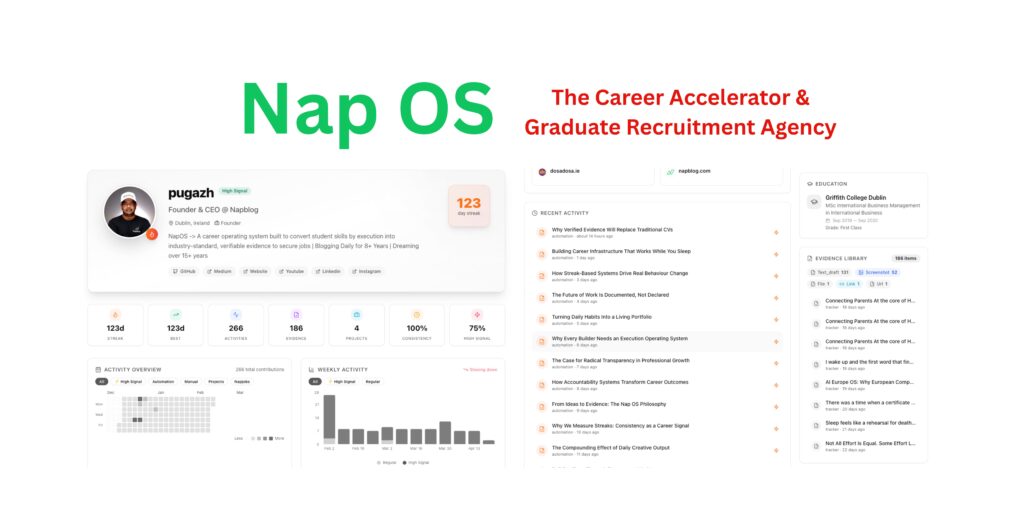
Nap OS is not another job board.
Not another resume database.
Not another empty promise platform.
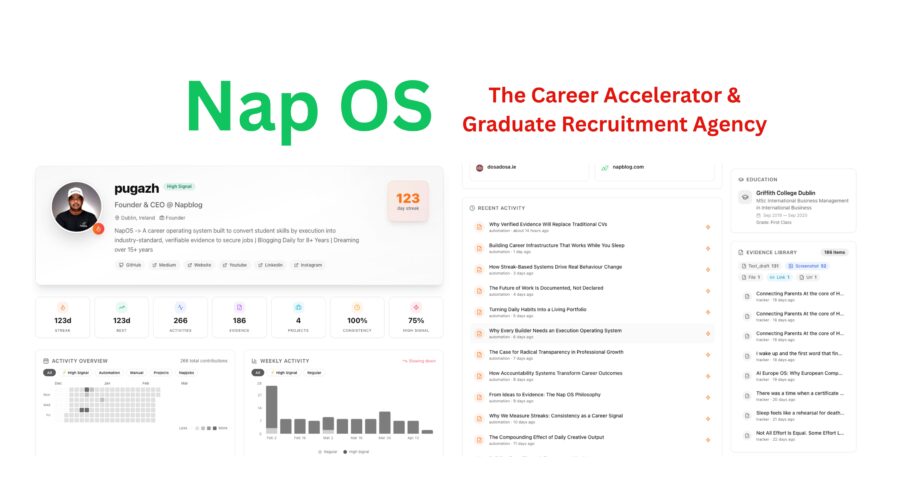
It is a career operating system built around visible execution, verified portfolios, streak-based consistency, and proof of work.
That means our product itself creates signal.
Users build evidence.
Employers see proof.
Candidates improve through action.
This naturally creates conversation.
Because it solves a real frustration:
Too many people claim skills.
Too few can show them.
The Hidden Failure of Traditional Recruitment Models
Most recruitment systems depend on archives.
Static CVs.
Old titles.
Generic bullet points.
Keyword filtering.
Guesswork interviews.
This creates friction for employers and frustration for candidates.
So companies add more recruiters.
More outbound messages.
More sourcing tools.
But they are often scaling inefficiency.
Nap OS asks a simpler question.
What if employability was live, visible, and evidence-based?
That question itself creates traction because it challenges pain people already feel.
Why We Don’t Lead with Ads
Ads are useful when message-market fit exists.
When landing pages convert.
When referrals already happen.
When retention proves value.
Without those signals, ads become tuition fees for lessons you should have learned cheaper.
You pay to discover people do not care enough.
That is expensive feedback.
Nap OS prefers earned attention first.
Thought leadership.
Public execution.
Partnerships.
Community relevance.
Visible outcomes.
This gives cleaner feedback.
Why We Don’t Depend on Sales Calls
Sales calls can close opportunities.
But they cannot permanently fix weak trust.
If every customer requires persuasion, the system is fragile.
If every deal depends on founder charisma, the model is bottlenecked.
If every objection repeats, positioning is unclear.
Nap OS prefers inbound trust signals.
When employers already understand the problem.
When candidates already want proof systems.
When institutions already see student outcome value.
Then conversations become easier, faster, healthier.
Traction Signals for Nap OS
Traction does not need to shout.
It often whispers first.
For Nap OS, traction appears through patterns such as:
Students wanting live portfolios instead of dead CVs.
Graduates seeking structure, not scattered effort.
Immigrants needing evidence to overcome “no local experience.”
Employers asking for execution-ready talent.
Universities wanting better outcomes for placements.
Partners seeing value in a streak-based behaviour model.
These are not random events.
They are market signals.
The Power of Build in Public
We believe trust compounds in public.
When you document product thinking.
When you show systems being built.
When you reveal lessons.
When users witness evolution.
This creates a different kind of marketing.
Not interruption.
Attraction.
Not noise.
Narrative.
Not campaigns only.
Credibility over time.
Questioning the Saying: Marketing Fixes Growth
Many founders assume marketing can rescue weak products.
Sometimes marketing can create a temporary spike.
But spikes are not foundations.
If users leave quickly, the truth returns.
Marketing should not be a mask.
It should be a magnifier.
Magnify value, not defects.
Questioning the Saying: Sales Solves Revenue
Sales can generate revenue.
But if the product requires constant explanation, simplification is needed.
If churn follows closes, expectation mismatch exists.
If only discounts win deals, value perception is weak.
Sales can accelerate.
It should not carry the whole company forever.
The Nap OS Growth Philosophy
We think in layers.
Layer one: Solve painful reality.
Layer two: Make proof visible.
Layer three: Create repeatable user wins.
Layer four: Earn organic trust.
Layer five: Add scalable distribution.
This order matters.
Skip layers and costs rise.
What Product Market Fit Looks Like for Nap OS
Product market fit is not applause.
It is pull.
Users keep showing up.
People tell others.
Stakeholders ask how to join.
Institutions see relevance.
Employers understand efficiency gains.
The message becomes easier each month, not harder.
That is fit emerging.
Traction vs Vanity
A viral post is not always traction.
A spike in signups is not always traction.
Press mentions are not always traction.
If behaviour after attention is weak, it was visibility, not demand.
We care about behaviour after first contact.
Do they return?
Do they build?
Do they refer?
Do they ask deeper questions?
That is signal.
Why Niche Pain Wins First
Broad markets are tempting.
Specific pain converts faster.
Nap OS can resonate deeply with:
Graduates lacking experience.
Career changers needing proof.
International talent needing credibility.
Employers tired of hiring guesswork.
Solve painful niches first.
Expansion comes later.
The Role of Community as Distribution
Communities spread products that help identity and outcomes.
If users feel smarter, stronger, clearer, faster through your product, they share it.
Nap OS is designed to make progress visible.
Visible progress is shareable.
That becomes distribution without ad dependency.
The Founder Trap We Avoid
Many founders fall in love with tactics.
Funnels.
Sequences.
Paid hacks.
Cold scripts.
These can help later.
But obsession with tactics before fit delays truth.
The truth is either:
People want this enough.
Or they do not yet.
How to Build Traction Before Spend
Talk to users constantly.
Ship improvements fast.
Document results publicly.
Collect testimonials rooted in outcomes.
Partner with aligned institutions.
Create content that teaches the pain clearly.
Make the product itself easier to recommend.
These are lower-cost, higher-learning moves.
Why This Matters in 2026 and Beyond
Attention is expensive.
Trust is scarce.
Acquisition costs rise.
People ignore cold noise.
Products with built-in proof and community pull gain advantage.
That is why traction-first systems matter more now than before.
A Founder’s Perspective
As builders, we respect sales.
We respect marketing.
But we respect sequence more.
Wrong tool, wrong time creates waste.
Right tool, right time creates compounding growth.
Nap OS chooses timing with discipline.
What Happens When Traction Comes First
Marketing becomes easier.
Sales cycles shorten.
Partnerships open faster.
Users understand faster.
Retention improves.
Referrals grow.
Spend becomes leverage, not life support.
Conclusion: Growth Should Be Earned Before It Is Bought
The old pattern says:
If growth is slow, market harder.
If revenue is slow, sell harder.
Nap OS asks a better question:
What if the market is asking for stronger proof first?
At Napblog Limited, we believe traction is the cleanest teacher.
It tells you what resonates.
What confuses.
What retains.
What spreads.
So we do not start with ads.
We do not depend on sales calls.
We build systems people want to talk about.
We create evidence people want to trust.
We solve pain people already feel.
Then growth becomes less forced.
Because the strongest product market fit does not need to beg for attention.
It begins to attract it.