Last updated: May 29, 2026
8 min read
Many people believe intuition is a mysterious ability that only a small number of individuals possess. Phrases like “trust your gut” or “I had a feeling about it” often make intuition sound like a supernatural talent rather than a psychological skill.
Modern psychology, however, suggests something different.
Intuition is not magic. It is a natural cognitive ability rooted in experience, pattern recognition, emotional awareness, and subconscious processing. In fact, nearly every human being uses intuition daily—often without realizing it.
When a driver instinctively brakes before fully recognizing danger, when a doctor quickly identifies symptoms from subtle cues, or when a business leader senses an opportunity before data confirms it, intuition is at work.
This raises an important question:
Who can learn and practice intuition psychology—and are there any limitations to developing it?
The short answer is simple: almost anyone can develop intuition, but the process requires awareness, practice, and discipline. Like any psychological skill, intuition has strengths, boundaries, and conditions that influence how reliable it becomes.
In this article, we explore who can cultivate intuition psychology, how different individuals benefit from it, and the key limitations people must understand when using intuitive thinking.
Understanding Intuition Psychology
Before discussing who can learn it, it is important to understand what intuition psychology actually means.
Intuition psychology refers to the study of how humans make rapid judgments and decisions using subconscious mental processes rather than deliberate analysis.
Psychologists often describe intuition as “fast thinking” or implicit cognition. The mind gathers vast amounts of information through experience and sensory perception. Much of this information never enters conscious awareness, yet it still influences decisions.
Several psychological mechanisms contribute to intuition:
- Pattern recognition – identifying similarities based on past experience
- Emotional signaling – bodily sensations that signal potential outcomes
- Implicit learning – knowledge acquired unconsciously over time
- Thin-slicing – making judgments from small amounts of information
In practical terms, intuition acts like a mental shortcut that helps people navigate complex environments quickly.
Rather than replacing logic, intuition complements analytical thinking. Together, they create a balanced decision-making system.
Who Can Learn Intuition Psychology?
The encouraging reality is that intuition is universal. Almost everyone possesses the neurological capacity to develop intuitive awareness.
However, different groups of people may cultivate it in different ways.
1. Individuals Seeking Personal Growth
People interested in self-development are among the most common learners of intuition psychology.
These individuals use intuition to improve:
- decision-making
- emotional awareness
- creativity
- life direction
For example, someone facing career choices might combine logical evaluation with intuitive reflection to identify what feels aligned with their values.
Practices such as mindfulness, journaling, and reflective thinking help individuals recognize intuitive signals that might otherwise be ignored.
Over time, these methods sharpen internal awareness and strengthen intuitive confidence.
2. Professionals in High-Stakes Fields
Many professions rely heavily on intuitive expertise.
Experienced professionals often develop rapid recognition skills that allow them to respond quickly to complex situations.
Examples include:
Medical Professionals
Doctors and nurses frequently rely on clinical intuition when diagnosing patients. Subtle symptoms, body language, and pattern recognition allow them to detect issues even before laboratory results arrive.
Firefighters and Emergency Responders
Emergency personnel often describe moments when they “sense danger” seconds before a building collapses or a situation escalates.
These instincts usually come from years of accumulated experience, not supernatural insight.
Business Leaders and Entrepreneurs
Successful entrepreneurs often speak about intuitive judgment when evaluating opportunities, partnerships, or market trends.
While data analysis remains essential, intuition can help leaders act decisively in uncertain environments.
3. Psychologists, Therapists, and Coaches
Mental health professionals regularly use clinical intuition when working with clients.
Subtle cues such as tone of voice, emotional expressions, and behavioral patterns can reveal deeper issues that may not be explicitly stated.
Therapists develop intuitive sensitivity through:
- long-term experience
- empathy training
- observation of human behavior
- reflective supervision
In these contexts, intuition helps professionals understand unspoken emotional dynamics.
However, ethical guidelines require that intuition be supported by evidence-based practices rather than used as the sole basis for decisions.
4. Creative Thinkers and Innovators
Artists, writers, designers, and inventors often rely on intuitive insight during the creative process.
Creative breakthroughs frequently emerge from subconscious connections rather than linear reasoning.
Many creators describe moments where ideas seem to “appear suddenly.”
These intuitive flashes often result from:
- long-term immersion in a field
- subconscious idea synthesis
- mental incubation periods
Creative intuition allows individuals to combine knowledge in unexpected ways, leading to innovation.
5. Everyday People Navigating Life Decisions
Perhaps the most important point is that intuition is not restricted to experts or professionals.
Everyday decisions involve intuitive judgment:
- choosing trustworthy relationships
- sensing potential risks
- navigating social interactions
- making quick judgments about unfamiliar situations
Humans evolved with intuition as a survival mechanism.
Recognizing and refining this ability can improve everyday life.
How People Can Practice Intuition Psychology
Developing intuition requires intentional practice. While intuition exists naturally, strengthening it involves learning how to recognize and interpret subconscious signals.
Several practices can help.
1. Keeping an Intuition Journal
One of the simplest and most effective methods is maintaining an intuition journal.
This involves recording:
- intuitive impressions
- decisions made based on intuition
- the eventual outcomes
Over time, patterns become visible.
People learn when their intuition tends to be accurate and when it may be influenced by emotions or bias.
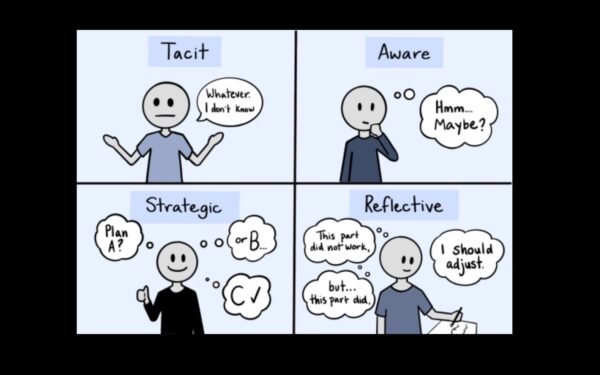
This reflective practice strengthens metacognition, or awareness of one’s own thinking processes.
2. Practicing Mindfulness and Stillness
Intuition often becomes clearer when the mind is calm.
Meditation, mindfulness, and quiet reflection reduce mental noise and allow subtle signals to surface.
Many people find that intuitive insights appear when they:
- take quiet walks
- meditate
- practice deep breathing
- disconnect from constant stimulation
Stillness creates space for subconscious processing.
3. Building Expertise in Specific Areas
Intuition becomes far more reliable when supported by deep knowledge and experience.
A beginner’s intuition in a complex field is often inaccurate because the mind lacks sufficient patterns to recognize.
However, after years of practice, professionals develop expert intuition.
For example:
- A chess grandmaster can recognize winning strategies instantly.
- An experienced mechanic can detect engine problems by sound.
- A seasoned investor can sense risky financial patterns.
Expertise transforms intuition into a powerful cognitive tool.
4. Reflecting on Emotional Signals
The body often signals intuitive responses through physical sensations such as:
- tension
- excitement
- calmness
- discomfort
Learning to notice these emotional cues can provide valuable information.
However, emotional signals must be interpreted carefully because fear or anxiety can mimic intuitive warnings.
The Limitations of Intuition Psychology
Despite its strengths, intuition has important limitations.
Understanding these limitations prevents overconfidence and misuse.
1. Intuition Depends on Context
Intuition works best in stable environments where patterns repeat over time.
For example:
- medicine
- sports
- engineering
- emergency response
In chaotic or unfamiliar situations, intuitive judgments can be unreliable.
When environments change rapidly, past experience may no longer apply.
2. Cognitive Bias Can Distort Intuition
Human thinking is influenced by cognitive biases such as:
- confirmation bias
- availability bias
- overconfidence bias
These biases can make intuitive judgments feel correct even when they are inaccurate.
For example, a person might trust a first impression because it matches their expectations, even if evidence suggests otherwise.
Learning about cognitive biases helps individuals question intuitive assumptions.
3. Emotional Stress Can Block True Intuition
Strong emotions can interfere with intuitive signals.
Stress, fear, anger, or anxiety may create reactive impulses that feel intuitive but are actually emotional responses.
Distinguishing between genuine intuition and emotional reactivity requires practice and self-awareness.
Calm states of mind generally produce more reliable intuitive insights.
4. Intuition Should Not Replace Analytical Thinking
One of the most common misconceptions about intuition is that it should replace logic.
In reality, the most effective decisions combine both intuitive and analytical thinking.
Logic provides structured reasoning, while intuition offers rapid pattern recognition.
Together, they create balanced judgment.
For example:
- intuition may highlight a potential opportunity
- analysis confirms whether the opportunity is viable
Ignoring either system can lead to poor decisions.
5. Beginners Often Misinterpret Intuition
People new to intuition psychology sometimes assume every strong feeling is intuitive guidance.
This can lead to mistakes.
True intuition tends to be:
- calm rather than dramatic
- subtle rather than overwhelming
- clear rather than emotionally charged
Developing accurate intuition requires experience, reflection, and humility.
Ethical Considerations in Using Intuition
Intuition also raises ethical questions, especially when applied to other people.
Responsible use of intuition requires several principles.
Respect Personal Boundaries
People should avoid claiming they can “read” others or make definitive judgments about someone’s thoughts or intentions.
Avoid Manipulation
Intuition should support understanding, not manipulation.
Using intuitive insights to influence others without their consent can damage trust.
Support Evidence-Based Decisions
In professional contexts, intuitive impressions should always be supported by evidence, data, and ethical guidelines.
The Future of Intuition Psychology
Interest in intuition psychology continues to grow as researchers explore how subconscious processing influences human behavior.
Advances in neuroscience and cognitive science suggest that intuition is closely linked to complex neural networks that integrate memory, emotion, and perception.
As research progresses, intuition may become a key topic in fields such as:
- leadership development
- decision science
- artificial intelligence
- behavioral economics
- emotional intelligence training
Rather than dismissing intuition as irrational, modern psychology increasingly recognizes it as a fundamental aspect of human intelligence.
Conclusion: Intuition Is a Trainable Human Skill
So who can learn and practice intuition psychology?
The answer is simple: almost anyone.
Intuition is not limited to mystics, experts, or gifted individuals. It is a natural cognitive ability that evolves through experience, reflection, and awareness.
Professionals, creatives, therapists, entrepreneurs, and everyday individuals can all benefit from strengthening their intuitive skills.
However, intuition also has clear limitations.
It works best when supported by knowledge, calm emotional states, and analytical thinking. Without these conditions, intuitive judgments may become unreliable.
The most powerful approach is not choosing between intuition and logic, but learning to integrate both.
When intuitive insight and rational analysis work together, human decision-making becomes more adaptive, creative, and effective.
And perhaps most importantly, developing intuition does not require extraordinary talent—only curiosity, practice, and a willingness to listen to the subtle intelligence already present within the mind.