Napblog

January 10, 2026

SIOS Napblog.com German companies between 20% and nearly 30%, with large enterprises approaching 50% adoption and industrial leaders
AIEOS - AI Europe OS

AI Adoption in Germany: From Cautious Experimentation to a Trusted AI Powerhouse

Germany is undergoing a decisive shift in how artificial intelligence is perceived, governed, and deployed across its economy. Once characterized by careful pilots and risk-averse experimentation, German enterprises are now accelerating AI adoption at scale. Current studies place AI usage among German companies between 20% and nearly 30%, with large enterprises approaching 50% adoption and industrial leaders—particularly in automotive and manufacturing—well beyond that threshold. This newsletter article examines why AI adoption in Germany is rising, where it is most concentrated, what is holding it back, and how Germany is positioning itself as Europe’s anchor for “Trusted AI.” For AI Europe OS (AIEOS), Germany represents not just a market, but a blueprint for how regulated, ethical, and competitive AI can coexist. 1. Germany’s AI Adoption Rate: The Current Reality In 2024–2025, multiple independent studies converged on a clear conclusion: AI adoption in Germany has entered a growth phase. Across all businesses, between one-fifth and nearly one-third of German companies now use AI in at least one business function. This is a significant increase from approximately 11–12% in 2021–2023. While methodologies differ, the trajectory is consistent and upward. Germany now performs above the EU average, which remains closer to 14% for overall business adoption. This gap highlights Germany’s role as a continental frontrunner, even if it still trails digital-native economies such as Denmark or the Netherlands. The real story, however, emerges when adoption is broken down by company size. 2. Large Enterprises Lead, SMEs Follow Carefully AI adoption in Germany is strongly correlated with organizational scale. Germany’s economy is famously anchored in the Mittelstand—highly specialized, export-oriented SMEs. Their slower uptake is not due to lack of interest, but to structural constraints: limited in-house AI talent, regulatory uncertainty, and capital discipline. This is precisely where AI Europe OS plays a strategic role—providing compliance-aware, modular AI operating systems that lower entry barriers for smaller firms without compromising regulatory alignment. 3. Sectoral Leaders: Where AI Is Already Business-Critical AI adoption in Germany is not evenly distributed. Certain industries are far ahead, driven by competitive pressure and measurable ROI. Automotive and Advanced Manufacturing Over 70% of German automotive manufacturers and suppliers use AI in production. Applications include: This leadership reflects Germany’s industrial DNA: precision engineering combined with data-driven efficiency. IT, Legal, and Financial Services In these sectors, AI is primarily applied to language-intensive tasks—document analysis, compliance monitoring, fraud detection, and customer interaction automation. Generative AI as a Turning Point Generative AI has fundamentally altered board-level conversations. By 2025: This shift—from “optional experimentation” to “strategic necessity”—marks a structural change in how AI is budgeted, governed, and deployed. 4. The Strategic Role of Regulation: Constraint or Catalyst? Germany’s AI trajectory cannot be understood without acknowledging the regulatory environment shaped by the EU AI Act. Key Regulatory Frictions German companies consistently cite: At first glance, these appear as brakes on innovation. In practice, they are reshaping how AI is built rather than whether it is adopted. Germany is deliberately positioning itself as a global leader in Trusted AI—systems that are explainable, auditable, human-centric, and legally defensible. This approach aligns directly with AIEOS’s philosophy: AI should be operationally powerful and regulator-ready by design, not retrofitted after deployment. 5. The Talent Gap: Germany’s Most Persistent Bottleneck Despite capital availability and industrial demand, 60% of German companies report a shortage of qualified AI professionals. The challenge is twofold: This shortage disproportionately affects SMEs and regional enterprises, reinforcing the importance of AI platforms and operating systems that abstract complexity and embed governance. AI Europe OS addresses this gap by: 6. Cultural Context: Precision, Trust, and Risk Management Germany’s AI adoption curve is also shaped by cultural factors. German enterprises are often described as: While this slows early adoption, it produces high-quality, durable deployments. Once AI is approved internally, it tends to be deeply integrated and continuously optimized. This cultural alignment makes Germany a natural testing ground for enterprise-grade AI OS models, where reliability, traceability, and accountability matter as much as raw performance. 7. Institutional Signals: From Optional to Mandatory Recent studies by organizations such as KPMG, Bitkom, and the ifo Institute converge on one message: AI in Germany is no longer an innovation project. It is an operational imperative. Budgets are increasing. Formal AI strategies are becoming standard. Governance frameworks are moving from draft to execution. However, only a minority of companies currently have fully defined AI governance models, creating a widening execution gap between ambition and operational readiness. This is where AI Europe OS positions itself not as another AI tool—but as infrastructure. 8. Germany as Europe’s AI Anchor Economy Germany’s significance extends beyond its borders. As Europe’s largest economy, its AI standards often become de facto regional benchmarks. When German industry adopts: These practices ripple outward across supply chains, partners, and EU markets. For AIEOS, Germany represents: 9. What This Means for AI Europe OS AI Europe OS is not entering Germany at the beginning of the journey—but at the inflection point. German companies are asking new questions: AIEOS answers these questions by providing: In Germany, AI adoption is accelerating—but trust, compliance, and execution discipline will determine who succeeds. Closing Perspective: Germany’s Quiet AI Transformation Germany is not chasing AI headlines. It is building foundations. Its AI adoption story is not about explosive experimentation, but about systematic integration—embedding intelligence into the core of industrial, financial, and professional processes. As Europe moves toward an AI-regulated future, Germany is demonstrating that responsible AI can scale, and that regulation, when paired with the right operating systems, becomes a competitive advantage. AI Europe OS exists precisely for this moment. The future of European AI will not be chaotic.It will be structured, trusted, and operational. And Germany is showing the way.

SIOS: Napblog European Union, unemployment in 2025
AIEOS - AI Europe OS

SIOS: Regional Unemployment Snapshots in 2025, European Union and Euro Area

Across the European Union, unemployment in 2025 has remained relatively stable at around 6%, with the euro area slightly higher. However, stability does not equate to comfort for young people. Youth unemployment in parts of Southern and Northern Europe continues to exceed 12–15%, reinforcing a long-standing pattern: education is often used as a buffer against weak early-career prospects. As a result, outward student mobility—from both high- and mid-income EU states—remains strong. Ireland In Ireland, overall unemployment in 2025 has stayed near 5%, reflecting strong fundamentals in technology, pharmaceuticals, and financial services. Yet youth unemployment remains disproportionately higher. This divergence explains why Irish students increasingly pursue postgraduate degrees abroad, particularly in specialised fields such as AI, data analytics, and global business—areas perceived as offering stronger international employability. United States The United States has experienced a gradual rise in unemployment toward the mid-4% range in 2025. While historically low, this increase has coincided with layoffs in technology, media, and professional services—industries that traditionally absorb international graduates. For US-bound students, unemployment trends now interact more heavily with visa policy and post-study work opportunities, making employment outcomes a central concern in study-abroad decision-making. United Kingdom The United Kingdom has seen unemployment edge above 5%, with employers becoming more selective amid economic uncertainty. At the same time, persistent labour shortages in healthcare, engineering, and STEM continue to attract international students seeking structured post-study pathways. Youth Unemployment: The Real Driver of Study Abroad Demand While general unemployment figures shape headlines, youth unemployment shapes behaviour. In 2025, individuals aged 18–29 face: For this demographic, studying abroad functions as: When domestic employment prospects appear uncertain, students increasingly interpret international education as a calculated investment, not an indulgence. How Unemployment Shapes Abroad Study Interest 1. Education as an Alternative to Unemployment Historically, periods of rising unemployment correlate with higher enrolment in higher education. In 2025, this pattern persists—but with a global twist. Students are not merely studying more; they are studying differently: 2. ROI Becomes Central to Decision-Making Unemployment pressure has made students far more analytical. Questions that now dominate student conversations include: This shift explains why destinations with clear graduate pathways outperform those with purely academic reputations. 3. Destination Choice Is Employment-Led In 2025, students increasingly rank destinations based on: Countries perceived as education-only destinations struggle to maintain demand when unemployment uncertainty rises. Brain Drain, Brain Circulation, and Strategic Migration High unemployment in home countries continues to fuel outward student mobility. However, the narrative has evolved from brain drain to brain circulation. Many students now: In this model, studying abroad is not about permanent migration—it is about maximising employability in a volatile global labour market. The Role of Policy in Converting Interest into Enrolment Unemployment alone does not guarantee higher international enrolment. Policy clarity is decisive. Key policy factors in 2025 include: When unemployment rises but policies tighten, student interest weakens. When unemployment rises and policies remain open, demand accelerates. What This Means for Students For students navigating 2025’s labour-market uncertainty: Students who align education with labour-market demand consistently outperform peers who treat international study as a purely academic pursuit. What This Means for Platforms Like SIOS For SIOS, these trends reinforce the importance of: In an era where unemployment shapes aspiration, platforms that bridge education, policy, and employment intelligence become essential infrastructure for global mobility. Conclusion: Unemployment as a Catalyst, Not a Constraint In 2025, unemployment is not deterring international education—it is redefining it. Students are not fleeing job markets blindly. They are responding rationally to uncertainty by investing in skills, credentials, and geographies that offer resilience. Studying abroad has evolved from a leap of faith into a strategic, employment-led decision. For those who understand this shift—students, institutions, and platforms alike—uncertainty becomes opportunity.

Napblog Competitor Ads Analysis Jan 10th (2026)
Blog

Napblog Competitor Ads Analysis Jan 10th (2026)

When someone searches for Napblog on Google and encounters sponsored results from global platforms, it is not accidental. It is a deliberate, data-backed decision by mature advertising organisations that understand one truth: branded keywords signal intent. This document analyses how top companies leverage competitor-branded searches—specifically around Napblog—to capture attention, redirect demand, and position themselves as alternatives or category leaders. This is not a surface-level comparison of ad copies. This is a strategic examination of why companies like Klaviyo, X (formerly Twitter), Camphouse, and Common Good appear in sponsored placements, how their messaging is architected, and what it reveals about the current and future state of marketing competition. The Strategic Context: Searching for Napblog A branded search such as “Napblog” represents: For competitors, this is premium inventory. For Napblog, it is proof of market relevance. The sponsored results shown are not random tools; they represent four distinct strategic archetypes: Each competes differently, but all intersect at the same moment: attention. Competitor 1: Klaviyo – Owning the AI Marketing Narrative Ad Positioning Klaviyo’s ad focuses on AI autonomy: This is not feature selling. It is labour displacement messaging—appealing directly to marketers overwhelmed by execution fatigue. Strategic Objective Klaviyo is not trying to steal Napblog users directly. Instead, it is: Competitive Insight Klaviyo’s weakness is also its strength: scale. It optimises for B2C CRM universality, whereas Napblog operates closer to idea velocity, experimentation, and strategic cognition. Napblog is not competing with Klaviyo on automation. It competes on thinking. Competitor 2: X Ads – Monetising Influence at Scale Ad Positioning X positions itself around: The tone is aggressive, performance-oriented, and numbers-heavy. Strategic Objective X Ads intercepts branded searches to: Competitive Insight X sells distribution, not strategy. It assumes the marketer already knows: Napblog exists earlier in the chain—before media spend—where thinking, framing, and narrative formation occur. Competitor 3: Camphouse – Controlling the Operations Layer Ad Positioning Camphouse uses credibility signals: This is CFO-friendly language. Strategic Objective Camphouse targets: By bidding on Napblog, Camphouse is positioning itself adjacent to strategic planning conversations, not creative ones. Competitive Insight Camphouse assumes campaigns already exist. Napblog questions why campaigns exist at all. Operations versus origination. Competitor 4: Common Good – Purpose as Differentiation Ad Positioning Common Good is values-driven: This is emotional, ethical advertising. Strategic Objective They aim to: Competitive Insight Common Good competes in outcomes, not platforms. Napblog overlaps philosophically but diverges structurally: Napblog is not an agency—it is an ideation engine. Cross-Competitor Pattern Analysis 1. Everyone Is Buying Thinking Time Despite different surfaces, all competitors: 2. AI Is Table Stakes AI is no longer differentiation. It is assumed. The real differentiation is: 3. Napblog Is the Signal Competitors do not bid on irrelevant brands. They bid on: Napblog’s presence in competitor ads confirms its strategic gravity. What Napblog Represents to the Market Napblog is not perceived as: Napblog is perceived as: This is why platforms with billions in valuation still feel the need to appear next to it. Strategic Recommendations for Napblog Conclusion: Competition Is Recognition Competitor ads on Napblog-branded searches are not a threat. They are a recognition signal. In 2026, competition is no longer about features—it is about where thinking begins. Napblog occupies that space. And that is why the world’s largest platforms are paying to stand beside it.

NapOS Tracker: How a 3rd-Year Marketing Student Turns Consistency Into a Career?
NapOS

NapOS Tracker: How a 3rd-Year Marketing Student Turns Consistency Into a Career?

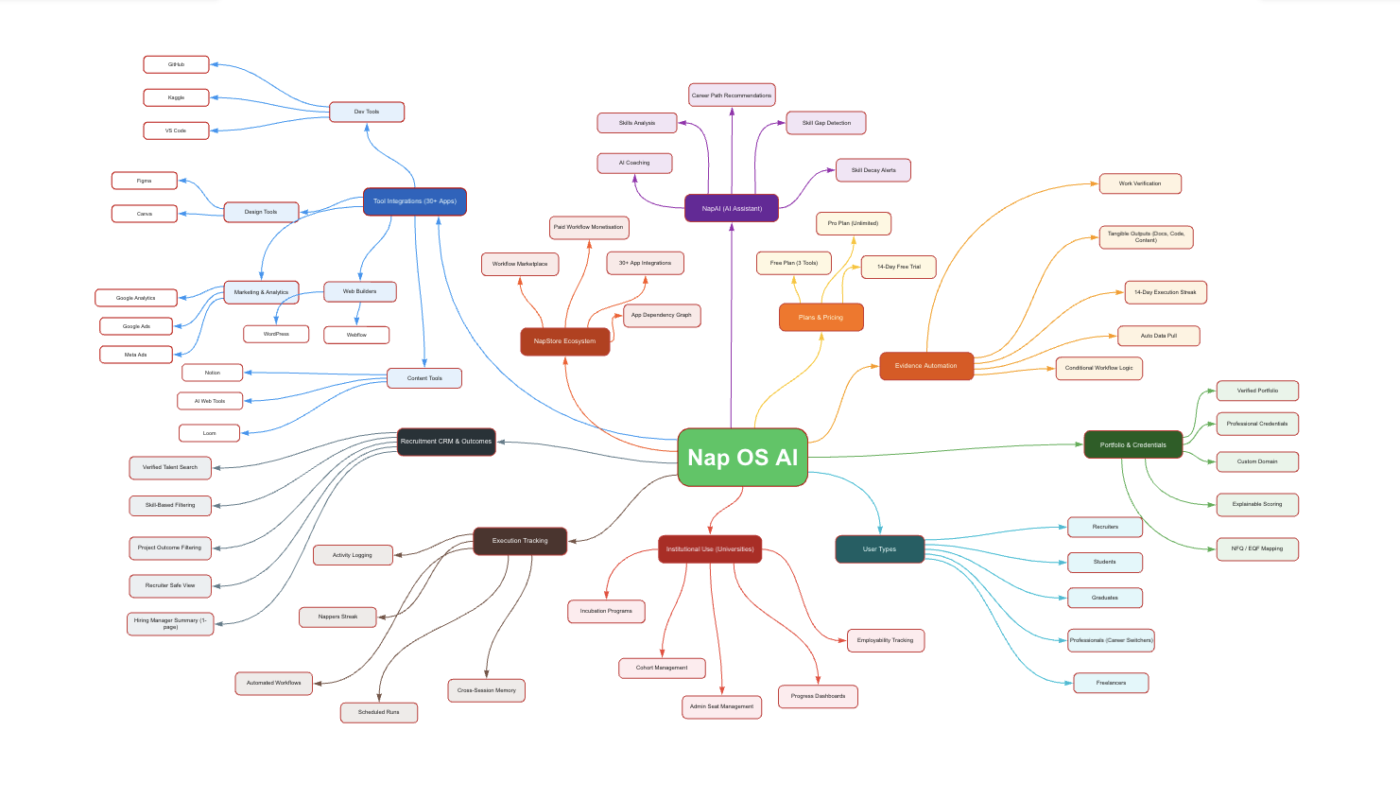
By the time a marketing student reaches their third year, something quietly shifts. The excitement of starting university has worn off. The pressure of “what comes next” starts to feel real. Internships are no longer optional. LinkedIn stops being a social app and starts feeling like a scoreboard. CVs feel thin. Everyone seems busy, productive, and confident—at least on the surface. This is the exact moment where most students don’t fail because of lack of talent.They fail because of inconsistency, fragmentation, and uncertainty. NapOS Tracker was built for this moment. Not as another productivity tool.Not as a generic habit tracker.But as a student-first operating layer that helps a 3rd-year marketing student feel in control, stay consistent, and quietly compound effort into a portfolio that actually gets noticed. This is the story of how. The Reality of a 3rd-Year Marketing Student Let’s be honest about where a typical 3rd-year marketing student stands. They’ve completed: Yet when they open a blank CV or portfolio, they feel stuck. Questions keep looping: Most students are doing work.They just aren’t capturing, structuring, or signaling it properly. Effort exists. Evidence doesn’t. NapOS Tracker exists precisely to close that gap. The Emotional Problem Before the Career Problem Before we talk about features, it’s important to talk about how students feel. A 3rd-year student doesn’t wake up thinking: “I need a portfolio architecture.” They wake up thinking: NapOS Tracker doesn’t start by demanding output.It starts by reducing mental friction. Instead of asking: “Build a perfect portfolio.” It asks: “What did you do today?” That single shift changes everything. Day One: The First Small Win When a student opens NapOS Tracker for the first time, the interface doesn’t overwhelm them. They see: On Day One, the student logs something small: Nothing flashy. But something important happens psychologically. For the first time, effort feels counted. NapOS Tracker tells the student: “This matters. This is evidence.” That feeling is addictive—in a healthy way. Consistency Without Motivation Most tools rely on motivation. NapOS Tracker relies on structure. Marketing students don’t fail because they’re lazy.They fail because motivation fluctuates. NapOS Tracker removes the need to “feel motivated” by: A student doesn’t think: “I need to build a portfolio.” They think: “I’ll just log today’s activity.” One log becomes a streak.A streak becomes identity.Identity becomes confidence. This is how consistency is built quietly. Turning Daily Activity Into Portfolio Evidence Here’s where NapOS Tracker fundamentally differs from traditional trackers. It doesn’t just record time.It records signal. Every logged activity can be: Over weeks, something powerful happens. The student can see their marketing journey forming: What once felt like “random effort” now looks like a coherent story. That story becomes the portfolio. The Shift: From Student to Marketer-in-Progress Around week three or four, a subtle shift happens. The student stops asking: “What should I do?” And starts asking: “What’s worth logging today?” That question changes behavior. They: Why? Because NapOS Tracker removes the fear of: “What if this doesn’t matter?” Everything matters when it’s logged, contextualized, and connected. This is how students start thinking like marketers, not just studying marketing. Building a High-Signal Portfolio Without Realizing It By mid-semester, the student opens their Tracker history. They see: Their portfolio is no longer a rushed end-of-semester task. It’s already built. NapOS Tracker turns time into leverage. Instead of cramming: This is how confidence replaces anxiety. Preparing for Internship Season (Without Panic) When 4th semester internship season approaches, most students panic. NapOS Tracker users don’t. Why? Because: When applying for internships, they don’t just submit a CV. They submit: Recruiters don’t need perfection.They need signal. NapOS Tracker trains students to produce signal daily. The Feeling Before the Interview The night before an interview, the student opens NapOS Tracker. Instead of fear, they feel grounded. They can see: They’re not pretending to be a marketer. They’ve been practicing like one for months. That confidence is visible in how they speak, explain, and reflect. And interviewers notice. Why This Works When Other Tools Fail NapOS Tracker works because it respects how students actually live. Most importantly, it helps students feel: “I’m not behind. I’m building.” That emotional reassurance is the foundation of consistency. From 3rd Year to Internship—and Beyond By the end of 3rd year, the student isn’t just internship-ready. They’ve built a habit: NapOS Tracker doesn’t end at the internship. It carries forward into: It’s not a tool they outgrow. It’s a system they evolve with. Final Thought: Small Actions, Big Outcomes NapOS Tracker proves a simple truth: Careers aren’t built in breakthroughs.They’re built in quiet, consistent days. For a 3rd-year marketing student, that consistency is the difference between: NapOS Tracker doesn’t promise overnight success. It delivers something far more valuable: Confidence earned through consistency. And that’s what turns students into professionals—before graduation.