Last updated: February 17, 2026
4 min read
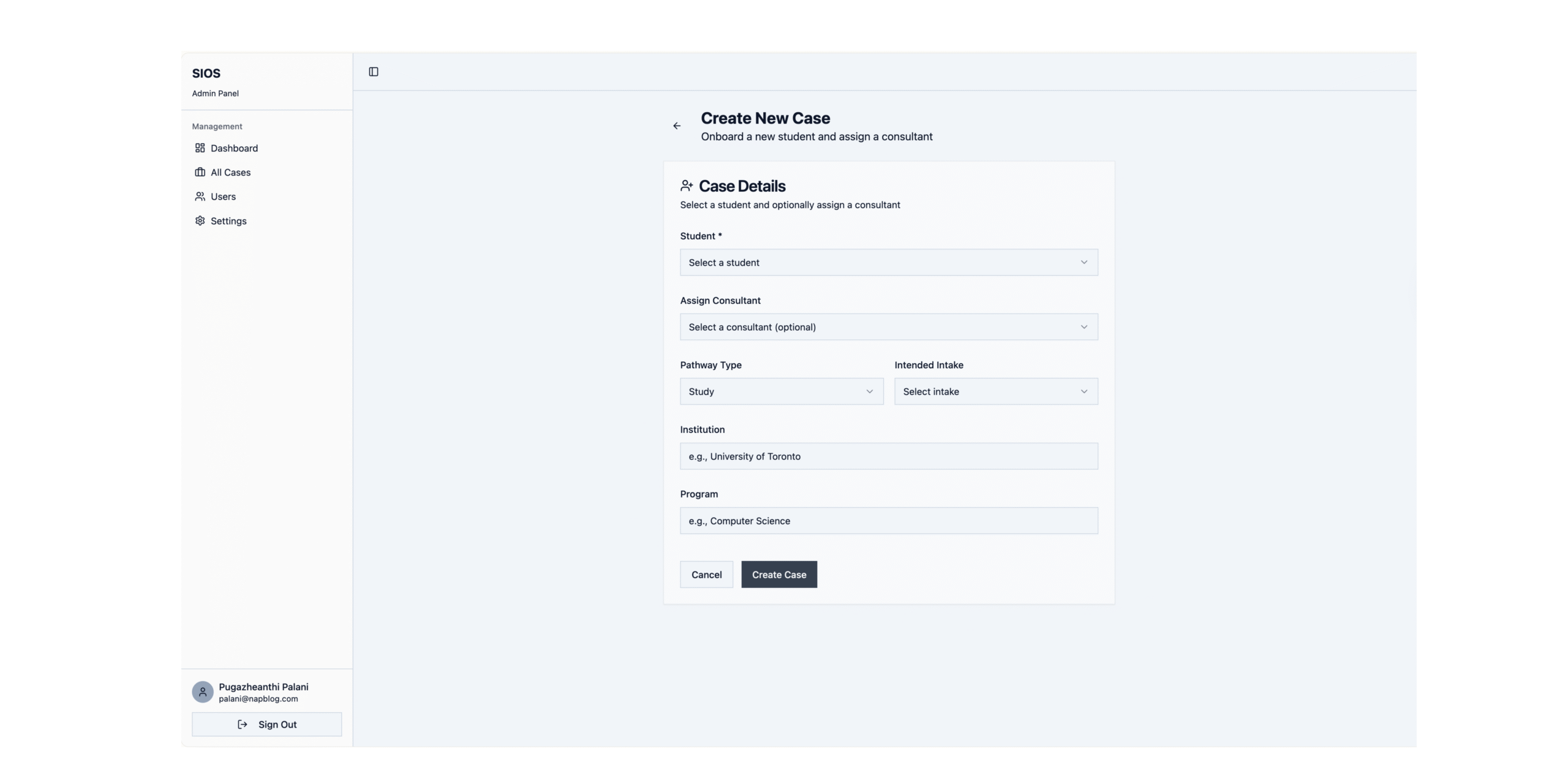
Studying abroad is not a single decision. It is a long, emotionally charged, high-risk process involving discovery, documentation, compliance, money, time, and trust. For decades, this journey has been managed using fragmented tools—spreadsheets, email threads, WhatsApp messages, shared folders, and human memory.
In 2025, this approach is no longer sustainable.
As global student mobility increases, visa scrutiny intensifies, and compliance expectations rise, the abroad study ecosystem faces a defining question: can human effort alone manage systemic complexity?
The answer is increasingly clear—no.
This is where Software as a Service (SaaS) becomes not just useful, but essential.
The Structural Problem in the Abroad Study Ecosystem
Before understanding the usefulness of SaaS, we must acknowledge the structural reality of the abroad study process.
The journey typically includes:
- Career and country discovery
- Course and university shortlisting
- Application management across multiple institutions
- Document collection and verification
- Financial planning and loan coordination
- Visa filing and interview preparation
- Pre-departure compliance
- Post-arrival follow-ups
Each stage depends on accuracy, timing, traceability, and accountability.
Yet, in most cases:
- Data is duplicated across tools
- Status tracking depends on manual follow-ups
- Errors are discovered late
- Students remain uninformed or confused
- Consultants operate reactively instead of strategically
This is not a people problem.
It is a system design problem.
What SaaS Changes at a Fundamental Level
SaaS does not merely digitise existing tasks. It re-architects the workflow.
At its core, a SaaS platform for abroad studies introduces:
- A single source of truth
- Structured, repeatable workflows
- Automated compliance checks
- Real-time visibility for all stakeholders
Instead of managing chaos manually, SaaS converts the abroad study journey into a governed process.
This shift is foundational.
Usefulness of SaaS for Education Consultants and Institutions
1. Workflow Automation Instead of Human Chasing
Consultants spend disproportionate time on:
- Reminding students for documents
- Updating application statuses
- Checking missing information
- Following up internally
SaaS automates these workflows:
- Tasks trigger automatically based on stage progression
- Reminders are system-driven, not consultant-driven
- Dependencies are enforced by logic, not memory
This reduces operational fatigue and increases throughput without increasing headcount.
2. Centralised Student Lifecycle Management
All student data—academic, financial, visa, communication—is stored within one structured system.
Benefits include:
- No data silos
- Complete audit trails
- Clear ownership at each stage
- Easier compliance reporting
For organisations operating across countries or teams, this is non-negotiable.
3. Reduced Errors and Higher Visa Confidence
Visa rejections are rarely caused by ambition. They are caused by:
- Missing documents
- Inconsistent information
- Incorrect sequencing
- Poor preparation records
SaaS platforms enforce:
- Mandatory document completeness
- Validation rules
- Timeline-based readiness checks
- Historical data reference
This moves visa filing from hope-based to evidence-based execution.
4. Scalable Growth Without Operational Collapse
Traditional consulting growth relies on hiring more counsellors. SaaS enables non-linear scalability.
With automation:
- One counsellor can manage more students
- Knowledge is embedded in the system, not individuals
- New team members onboard faster
- Service quality remains consistent
This is critical for sustainable growth.
Usefulness of SaaS for Students
For students, studying abroad is one of the most emotionally expensive decisions of their lives. SaaS directly improves their experience.
1. Clarity Over Confusion
Instead of scattered messages, students receive:
- A single dashboard
- Clear stage visibility
- Defined next steps
- Deadline awareness
This replaces anxiety with control.
2. Real-Time Transparency
Students can track:
- Application status
- Document review progress
- Visa readiness
- Financial milestones
Transparency builds trust—and trust reduces drop-outs.
3. Reduced Dependency on Individuals
When information is system-driven:
- Students are not dependent on one counsellor
- Progress does not stop if someone is unavailable
- Institutional reliability increases
This is especially important for first-generation international students.
4. Personalised, Data-Backed Guidance
Advanced SaaS platforms use structured data to:
- Suggest suitable countries or programs
- Flag risk areas early
- Align student profiles with realistic outcomes
Guidance becomes responsible, not aspirational guesswork.
Why SaaS Is Different from CRM, Excel, or Shared Drives
A common misconception is equating SaaS platforms with CRMs or spreadsheets.
The difference is fundamental.
- Excel tracks data. SaaS enforces process.
- CRM manages leads. SaaS manages outcomes.
- Shared drives store files. SaaS validates readiness.
SaaS is not a tool.
It is an operating system for decision-critical journeys.
How SIOS Views SaaS Responsibility in the Abroad Study Ecosystem
At SIOS, SaaS is not built to replace human guidance. It is built to protect it.
The responsibility is threefold:
- Reduce systemic risk for students
- Increase decision accountability for consultants
- Create transparency across the journey
SIOS treats automation as:
- A safeguard against human error
- A framework for ethical counselling
- A scalability layer for trust
In a world where one mistake can alter a student’s future, systems must be stronger than intentions.
The Long-Term Impact of SaaS on Global Student Mobility
Over time, SaaS adoption will:
- Standardise best practices across geographies
- Reduce rejection rates through data intelligence
- Democratise access to reliable guidance
- Shift the industry from volume-driven to outcome-driven
This is not just operational evolution.
It is structural reform.
Final Reflection: Automation Is About Responsibility, Not Speed
The usefulness of SaaS in the abroad study process is not measured by how fast applications move—but by how safely, transparently, and responsibly lives are guided.
In that sense, SaaS is not removing the human element.
It is ensuring that human effort is applied where it matters most: mentorship, judgment, and care.
That is the role of platforms like SIOS.
Not to replace people—but to build systems worthy of the dreams they carry.
For students in Ireland, SaaS tools are now essential infrastructure. See how Napblog supports students on LinkedIn.