Last updated: February 17, 2026
4 min read
Founder & CEO, Napblog — More Importantly, a Blogger
I am writing this with quiet pride.
Not because of a title.
Not because of a company.
But because I am completing my 100th month of blogging — more than 3,000 days of writing.
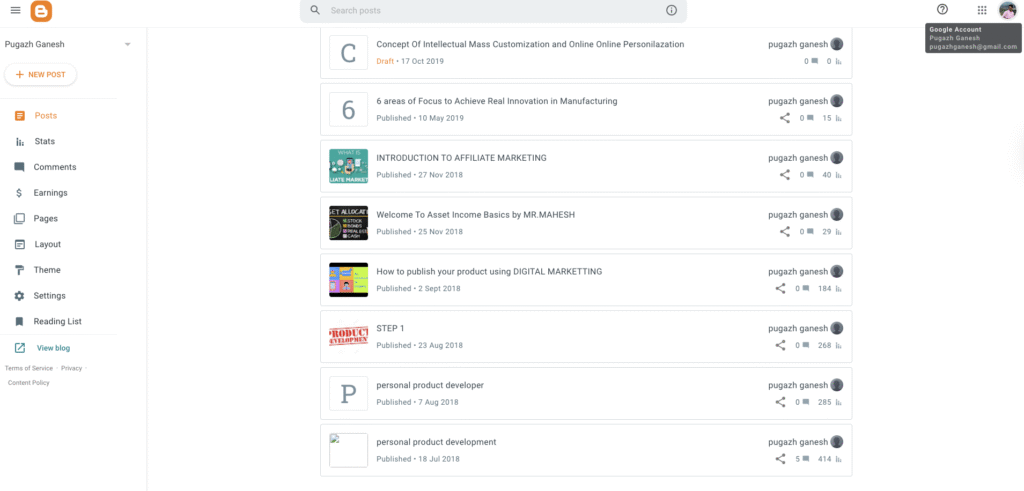
On August 17, 2017, I published my first blog article.
The topic was simple: “What is Blogging?”
The platform was basic: Google Blogger.
No strategy deck.
No monetization plan.
No personal brand framework.
Just a young mechanical engineering student, a blue diary, and a need to think clearly.
Eight-plus years later, here I am — founder of Napblog — still writing.
Not because I have to.
But because I cannot not write.
This article is not advice.
It is not motivation.
It is not storytelling for engagement.
This is evidence.
Before Blogging: The Blue Diary Phase
Before the internet saw my words, paper did.
In 2016–2017, I maintained a small blue diary.
Every day, I wrote:
- What I learned
- What I didn’t understand
- What scared me
- What I wanted to become
At that time, my immediate goal was clear:
Shortlist universities for Summer 2017.
But something else was happening subconsciously.
Writing gave me:
- Clarity of thought
- Emotional regulation
- Pattern recognition
I didn’t know the term metacognition then.
I was simply thinking by writing.
That habit never left me.
Blogging was not a leap.
It was a natural extension.
The First Blog: August 17, 2017
My first blog was not confident.
It was not polished.
It was not SEO-friendly.
But it was honest.
I wrote about:
- What blogging meant to me
- Why people write
- How beginners should start
I used Google Blogger because it removed friction.
No domain obsession.
No design paralysis.
Just write.
That single decision — choosing ease over perfection — shaped the next 100 months.
Discovering a Mentor Without Meeting Him
Around the same time, I discovered Deepak Kanakaraju, founder of DigitalDeepak.com.
I did not meet him.
I still haven’t.
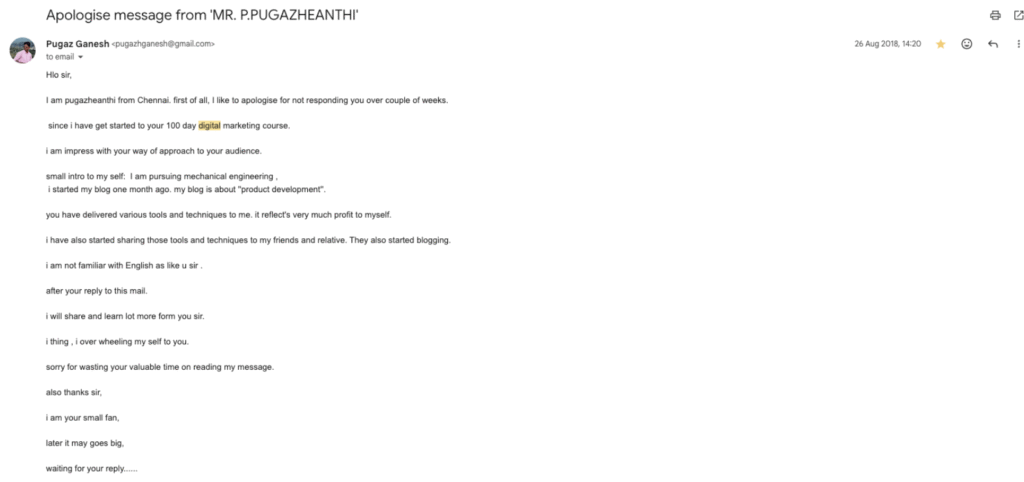
But I learned from him extensively through:
- Newsletters
- YouTube videos
- The 100-Day Digital Marketing Course
- E-books
- Internships
- Alpha Club
- Mentoring sessions
- Mastermind discussions
- Live workshops
What stood out was not tactics.
It was clarity.
His work demonstrated something critical:
Marketing is not manipulation.
It is structured communication.
That principle quietly embedded itself into my thinking — long before Napblog existed.
Falling in Love With Writing (Without Realizing It)
I did not “decide” to become a writer.
I became one by repetition.
Every blog post helped me:
- Slow down my thinking
- Validate ideas
- Remove assumptions
- Replace imagination with evidence
I strongly dislike hallucination writing — content without grounding.
I never wanted to sound smart.
I wanted to be accurate.
Writing forced accountability.
If I claimed something, I had to:
- Test it
- Experience it
- Observe outcomes
That discipline shaped not just my blogging — but my leadership later.
Flow State: Writing for Its Own Sake
There is a psychological concept called Flow State:
Being completely involved in an activity for its own sake.
That is how I write.
Not for:
- Likes
- Shares
- Algorithms
- Virality
But because writing places me in deep focus.
Time disappears.
Noise fades.
Only thought remains.
That is why consistency became natural.
Evidence Over Imagination
Over the years, I have:
- Shared resources with strangers
- Emailed mentors I had never met
- Sent PDFs to people who didn’t ask
- Apologized for delayed replies
- Admitted my English was not perfect
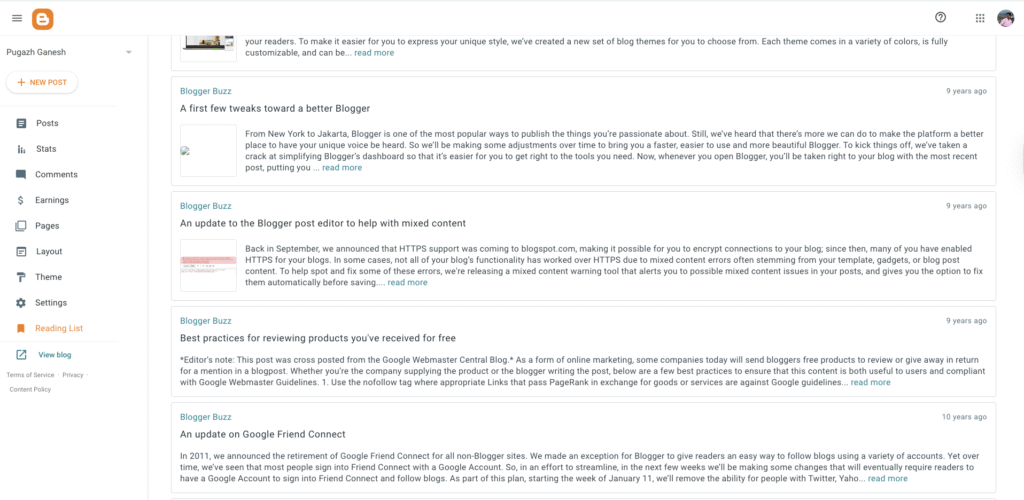
You can see the evidence:
- Old emails
- Early blog dashboards
- Traffic maps
- Archived drafts
- Clumsy grammar
- Honest effort
I am not embarrassed by them.
They prove continuity.
From Mechanical Engineering to Marketing Thinking
My background in mechanical engineering shaped how I blog.
I think in:
- Systems
- Inputs and outputs
- Feedback loops
- Failure modes
Blogging became my sandbox.
Each article was a test:
- Will this idea hold?
- Does this logic break?
- Can someone replicate this?
That mindset later became Napblog’s first principle:
Marketing is providing the right information, at the right time, to the right people.
The Compound Effect of Daily Actions
From Month 1 to Month 100:
- I never waited to be “ready”
- I never hesitated to reach out
- I never hid behind introversion
I contacted people via:
- Phone
- In person
This went against my childhood conditioning.
But I intentionally practiced:
- Listening like a leader
- Speaking with clarity
- Writing with responsibility
Not to appear like a leader —
but to become one.
Blogging Was the Training Ground for Napblog
Napblog did not begin as a company.
It began as:
- Thought discipline
- Documentation habit
- Learning archive
Before there were interns, clients, or platforms —
there were blog posts.
That is why I say this clearly:
I am a founder because I was a blogger first.
Why This Matters (Even If No One Reads It Today)
I do not know who will read this:
- This year
- Next year
- Or in the next 3–7 years
But I know this:
Daily actions compound.
Outcomes become predictable.
If even one aspiring marketer reads this and realizes:
- Consistency beats talent
- Writing builds thinking
- Evidence outlasts hype
Then this 100-month journey has already paid off.
Closing Thought
I am proud — not of success — but of continuity.
Titles will change.
Companies will evolve.
Markets will shift.
But the habit of sitting down and writing honestly —
that stays.
This is Part 1.
The story continues.
—
Pugazh
Founder & CEO, Napblog
More importantly, a Blogger
Writing has been a core part of the Napblog founder journey from the very beginning. Follow updates on LinkedIn.