Nap OS

NapOS

Launch Story 1 — A Decade in the Making
NapOS

Nappers Streak, Launch Story 1 — A Decade in the Making

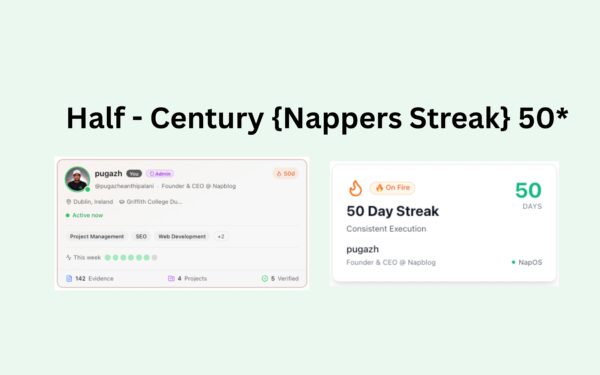
From a journal submission to a global system in human hands Thursday, January 28, 2016 Ten years ago, this was not a product launch day. There was no landing page.No pricing tier.No streak counter.No users waiting. There was only a document. A young boy sat with a question that felt heavier than his age: Why does technology scale faster than humans—but never with them? That question became a proposal.That proposal became a submission.An International Journal Competition entry titled: “Global Marketization and Industry 5.0: The Industrial New Revolution.” It was not written to impress investors.It was written to understand the future. At its core, the paper argued something radical for 2016: Instead, the next revolution must return power to the individual. Not as a consumer.Not as a data point.But as a creator. That was the seed. No one called it Nap OS then.No one imagined a streak.But the direction was set. 2016–2018: The Idea That Refused to Sit Still After submission, the paper did not end. It followed everywhere. Into classrooms.Into late-night notebooks.Into rejected ideas.Into abandoned prototypes. The world spoke about: But the original question persisted: Where does the human go when systems become perfect? Early answers were naive.Some were wrong.Many failed completely. But one truth kept resurfacing: Humans don’t need more tools.They need continuity. People weren’t failing because they lacked intelligence.They were failing because nothing compounded. Every system reset them to zero. 2019–2021: Iterations Without Applause These were quiet years. No announcements.No social validation.Only iterations. Thousands of them. Experiments that broke after 3 days.Systems people loved—but didn’t return to.Dashboards that felt powerful—but changed nothing. Each failure revealed something precise: Fragmentation is. Humans were being forced to live in disconnected moments:Learning here.Working there.Proving somewhere else. Nothing remembered them. So the system had to. 2022–2024: The Architecture Emerges At some point, the work stopped being about features. It became about philosophy made executable. Three principles locked in: This was the birth of Nap OS—not as software, but as an operating system for human continuity. Not another productivity app.Not another AI assistant. But a system that: Still, it wasn’t ready. Because one final problem remained. The Hardest Problem: Starting Nap OS was powerful. But power alone doesn’t change lives. Starting does. People didn’t need the whole system on day one.They needed proof they could show up tomorrow. That insight took thousands more iterations. Until everything collapsed into one primitive, undeniable unit: The Streak Not a gamified number.Not motivation theater. But a living record of kept promises. 2025: Nappers Streak Is Born Nappers Streak became the smallest, sharpest entry point into Nap OS. One daily action.One visible mark of consistency.One signal to the system: I showed up. That was enough. Behind the scenes, Nap OS began doing what it was always meant to do: Quietly. Reliably. Daily. Today — January 28 Ten years after a journal submission. Ten thousand iterations later. What began as a theory about Industry 5.0—where individuals reclaim creative and productive agency—now lives in human hands. Today, we launch Nappers Streak. Not as a feature.Not as a habit tracker.But as the first public interface of Nap OS. A Thank You, Written Between the Lines This launch belongs to every hand that pushed the boy forward: Most of all, it belongs to the invisible moments:The days no one saw.The work that didn’t trend.The belief that refused to expire. What This Launch Really Means Nappers Streak is not the destination. It is the beginning of a system that grows with you. Every streak is an atom.Every atom compounds.Every compound builds identity. This is not about doing more. It is about becoming continuous. From a Young Dream to Global Hands Ten years ago, this was a document. Today, it is a system. And from today onward, it is yours. Welcome to Nap OS.Welcome to Nappers Streak. The future didn’t arrive overnight.It arrived one day at a time.

A Launch Written With Love, Built With Discipline, Revealed With Purpose
NapOS

Nap OS — in 24 hrs, 10:00 AM 28th Jan 26. A Launch Written With Love.

Some launches are loud.Some are engineered for attention.Some are optimized for metrics, virality, or valuation. This one is different. Tomorrow at 10:00 AM, Nap OS is revealed to the world—not as a feature drop, not as a startup announcement, not as another productivity tool competing for attention—but as a promise kept. A promise that technology can still be built with care.A promise that consistency matters more than hype.A promise that human effort, when respected and compounded, always wins. This launch is quiet on the outside and powerful on the inside.It carries something most systems never do: love without noise. Why Nap OS Exists (And Why It Had to Exist This Way) The world does not suffer from a lack of tools. It suffers from fragmentation. People are told to: Nap OS was built to reverse that entire flow. Execution first.Evidence always.Outcomes speak. Nap OS exists because effort deserves memory.Consistency deserves protection.And humans deserve systems that work with their nature—not against it. A System That Respects the Small Things Nap OS does not reward intensity spikes.It does not glorify burnout.It does not push notifications to steal attention. Instead, it honors: Nap OS treats every logged action as meaningful. Not because it is dramatic—but because it is real. Nothing compounds without repetition.Nothing grows without patience.Nothing meaningful is built overnight. Nap OS was designed around that truth. The Philosophy: Consistency → Evidence → Compounding Nap OS operates on a simple, unbreakable principle: What you do consistently becomes who you are professionally. Not what you say.Not what you plan.Not what you promise. What you do. Every day, Nap OS captures: Over time, this becomes something powerful: A living professional memory. Not a resume.Not a profile.Not a narrative. But proof. Why This Launch Is Different This launch is not about: Nap OS does not replace humans. It protects them. It protects: This launch is not a spectacle. It is a handover. From chaos → to clarityFrom noise → to signalFrom potential → to proof Nap OS Is Built on Human Rhythm Humans are not APIs.They are not dashboards.They are not data points. Humans: Nap OS mirrors that rhythm. It does not ask you to become someone else.It simply records who you are becoming—accurately. This is why Nap OS feels intuitive. Not because it is simple.But because it is aligned. What Nap OS Enables (Without Forcing) Nap OS quietly enables: But it never forces behavior. There are: Just a system that remembers what matters—so you don’t have to carry it all in your head. The Most Radical Idea: Let Evidence Speak Nap OS removes narrative bias. It does not care how well you explain yourself.It does not reward confidence over consistency.It does not favor credentials over capability. It asks only one question: What did you actually do? And then it remembers the answer—forever. A Launch Timed With Intention Tomorrow’s reveal is not accidental. Some days carry weight.Some moments hold meaning beyond metrics.Some launches are gifts. This one is. It is offered quietly to the world—not as a demand for attention, but as an invitation: Build with care.Work with consistency.Let proof accumulate. Nap OS Is Not Here to Rush You The internet rewards speed.Nap OS rewards direction. The internet rewards reaction.Nap OS rewards deliberate action. The internet forgets yesterday.Nap OS compounds it. This is not a system for people chasing shortcuts.It is a system for people building futures. What Using Nap OS Feels Like Users often say the same thing: “This feels like how work should have always been tracked.” Not stressful.Not performative.Not noisy. Just clear. You stop worrying about: Because the system already knows. Tomorrow Is a Beginning, Not a Finish Line Nap OS is not “done.” It is alive. It will: But its foundation will never change. Respect effort.Honor consistency.Protect humans. A Note Written Between the Lines ❤️ Some creations carry more than code.They carry values.They carry discipline learned quietly.They carry patience passed down silently.They carry belief long before results appear. Nap OS carries that too. It was not rushed.It was not compromised.It was built carefully—because some things deserve care. Tomorrow, it meets the world. Tomorrow at 10:00 AM No countdown clock.No hype trailer.No shouting. Just a system—released with intention. Nap OS is now public. For those who: Welcome. ❤️

Nap OS Core Algorithm Reveal
NapOS

Nap OS Core : The World’s First Atomic Algorithm — Built at Napblog Labs

Built inside Napblog Labs, and deployed by Napblog Limited, Nap OS introduces a fundamentally new class of algorithmic intelligence: The Atomic Algorithm. This is not a recommendation engine.Not a keyword matcher.Not a resume parser.Not a productivity scorecard. It is an execution-native, human-aligned intelligence system that models who you are becoming, not just what you say you are. This article explains—clearly and simply—how the Atomic Algorithm works, why it is different from every existing system, and how it quietly reshapes hiring, learning, portfolios, and prediction itself. 1. Why Existing Algorithms Fail Humans Before understanding the Atomic Algorithm, it’s important to understand what’s broken. Most modern systems are built on static abstractions: These systems assume: Identity is declared, not observed. As a result: Nap OS rejects this foundation entirely. 2. The Core Shift: From Records to Atoms At the heart of Nap OS is a simple but radical idea: Every logged evidence is an atom. What is an Atom? An Atom is the smallest indivisible unit of human execution. Each atom represents something you actually did. Examples: Atoms are not opinions.Atoms are not intentions.Atoms are not claims. Atoms are evidence. 3. Anatomy of an Atom Each atom contains structured intelligence: 1. Intensity How demanding was the execution? 2. Tags What domain does this atom belong to? 3. Format What form did the execution take? 4. Timestamp When did this execution happen? 5. Context Why was it created? Together, these properties make each atom machine-readable and human-meaningful. 4. Atomic Bonding: How Atoms Combine Atoms do not live alone. Just like in physics, atoms bond. When Do Atoms Bond? Atoms bond when they: This bonding is organic, not forced. You don’t “build a portfolio.”Your portfolio emerges. 5. Compounding Maturity: How Identity Forms As atoms accumulate and bond, something powerful happens: Your execution compounds. Nap OS measures maturity, not volume. Maturity is formed by: This mirrors how humans actually grow. Not linearly.Not evenly.But compounding through repetition. 6. From Atoms to Living Portfolios Traditional portfolios are: Nap OS portfolios are: Your portfolio is no longer a presentation.It is a byproduct of living execution. 7. Predictive Intelligence: Forecasting Human Behavior Here is where the Atomic Algorithm becomes truly unique. Because Nap OS observes real behavior over time, it can: This is not personality prediction. It is behavioral trajectory modeling. Nap OS doesn’t guess who you are.It observes who you are becoming. 8. Periodic Simulation: The Atomic Engine in Motion At defined intervals, Nap OS runs Atomic Simulations. What Happens in a Simulation? This creates a living execution signature. 9. JobATS Synchronization: Beyond Resume Matching Nap OS integrates with JobATS and Recruitment Systems, but on completely new terms. Instead of: Nap OS evaluates: Result: Candidates are shortlisted by proof, not pitch. Often: 10. Human Anatomy + AI: A Deliberate Design Choice Nap OS is not built to replace humans. It is built to protect what makes humans valuable. What Nap OS Automates: What Nap OS Preserves: AI handles structure.Humans retain instinct. This balance is not accidental.It is foundational. 11. Survival Skills in the Age of Automation Nap OS is built for a future where: In that world, survival belongs to those who: Nap OS doesn’t teach these skills.It reveals them. 12. Why This Is the World’s First Atomic Algorithm No existing system: This is not an improvement.It is a new category. 13. What Using Nap OS Feels Like Users often say: “This feels like how it should have always worked.” Because: You simply live your work.Nap OS remembers it—faithfully. 14. The Quiet Power of Consistency Nap OS does not reward brilliance alone. It rewards: This makes it: 15. Final Thought: Identity as a System, Not a Statement In Nap OS: Identity emerges. One atom at a time. And when those atoms bond, compound, and mature—the system doesn’t ask who you are. It already knows.

Why Consistency Is the Only Guaranteed Formula for Compounding — and the Only Defense Against AI Career Obsolescence
NapOS

Why Consistency Is the Only Guaranteed Formula for Compounding — and the Only Defense Against AI Career Obsolescence

There is a quiet anxiety spreading across every profession. Not fear of losing jobs tomorrow, but fear of becoming irrelevant without noticing.Not fear of AI replacing humans outright, but fear of humans slowly outsourcing the very instincts that made them valuable in the first place. Nap OS exists because of this moment. Not as another productivity tool.Not as another AI wrapper.Not as a faster way to do more. Nap OS is built from first principles to answer one question only: How do humans compound value over time in an age where machines can execute instantly? The answer is not intelligence.It is not speed.It is not access to tools. The answer is consistency. And consistency is the only formula that has never failed to compound. First Principles: What Actually Compounds in a Human Career? When you strip away titles, resumes, platforms, and trends, a career compounds only when three conditions exist: Everything else is noise. Degrees do not compound.Job changes do not compound.Tools do not compound. Only consistent execution, observed and remembered, compounds. This is why two people with equal intelligence diverge radically over five or ten years. One compounds quietly. The other resets repeatedly. Nap OS starts here — not with features, but with physics. Compounding is not optional. It is inevitable.The only choice is what compounds: Why AI Makes Consistency More Valuable, Not Less There is a dangerous misunderstanding about AI. People assume: This is wrong. AI does not eliminate the value of humans.It amplifies the penalty for inconsistency. AI systems thrive on: Humans thrive on: When humans abandon consistency, they are forced to compete on the machine’s strengths. That is where careers collapse. Nap OS is designed to ensure humans never have to compete on machine terms. Consistency Is the Only Non-Automatable Advantage AI can generate outputs.AI can simulate reasoning.AI can optimize processes. What AI cannot do is live inside your lived context over time. It cannot: These only emerge through consistency. Nap OS treats consistency not as a habit, but as an operating system primitive. You do not “try” to be consistent inside Nap OS.Consistency becomes the default state. The Core Mistake Modern Systems Make About Humans Modern tools assume humans are storage devices. They ask you to: This is fundamentally flawed. The human brain is not a database.It is a real-time reasoning engine. When humans are forced to store, organize, and remember everything, instinct degrades. Cognitive load increases. Anxiety rises. Decision quality drops. Nap OS is built on a different assumption: Humans should think. Systems should remember. This single shift protects human instinct. Nap OS as Read-Only Memory for the Human Mind Nap OS functions as an external, living memory layer that: This frees the brain to do what it evolved to do: When memory is externalized without fragmenting context, instinct sharpens instead of dulling. This is why Nap OS is not about productivity.It is about preserving human cognition under scale. Consistency → Compounding → Career Immunity Let us be precise. Consistency alone is not valuable.Consistency with retained context is. Nap OS ensures that: Over time, this creates: AI cannot replicate this because it lacks lived continuity. Why People Should Believe Nap OS Works Nap OS does not ask for belief in a vision.It asks for belief in cause and effect. If you execute consistently, and if that execution is preserved, reflected, and connected, compounding must occur. This is not philosophy.It is mathematics. Nap OS simply removes the friction that prevents consistency from compounding. No motivation hacks.No gamification addiction.No artificial pressure. Just: Protecting Human Instinct Is a Career Strategy The greatest career risk in the AI era is not automation. It is instinct atrophy. When people: They lose the subtle judgment that makes them irreplaceable. Nap OS is intentionally slow where it matters: And fast where it should be: This balance is what protects instinct. The Long Game: Who Thrives in the Next 20 Years The future will not belong to: It will belong to those who: Nap OS is built for that future. It is not here to replace effort.It is here to make effort irreversible. Final Thought: Consistency Is a Moral Choice In an age of instant outputs, consistency is a form of integrity. It says: Nap OS exists for people who choose that path. Not because it is easy.But because it is the only path that endures. If you protect consistency, compounding will protect your future. Nap OS simply ensures that nothing you do with intent is ever wasted.

NapOS

Why Nap OS? A Student-First System Built for the World You Are Actually Entering

For decades, students have been told a simple story: Study hard.Get good grades.Build a resume.Then the real world will decide your future. But something fundamental has changed. Today’s job market does not suffer from a lack of degrees.It suffers from a lack of verifiable execution. Employers are no longer asking: This is the gap Nap OS by Napblog was built to close. Nap OS is not another learning app.It is not a note-taking tool.It is not a resume builder. Nap OS is an execution operating system for students—designed to convert real academic and self-driven work into industry-standard, verifiable evidence that employers, recruiters, and institutions can trust. The Core Problem Students Face (But Are Rarely Told About) Most students believe effort equals opportunity. In reality, untracked effort is invisible. You may: But if that work: Then, to the market, it does not exist. Traditional systems rely on proxy signals: These signals are: Nap OS replaces proxy signals with direct evidence. What Exactly Is Nap OS? Nap OS is an execution-first operating system built by Napblog Limited, designed to help students: In simple terms: Nap OS turns what you do into what you are known for. Why Nap OS Is Built Specifically for Students Students are not short on intelligence.They are short on systems. Nap OS acknowledges four realities of student life: 1. Students Learn While Doing (Not Before Doing) Traditional education assumes: Nap OS assumes: Every task logged inside Nap OS becomes: You do not “prepare” for the real world.You operate inside it, even as a student. 2. Students Need Proof, Not Promises When a recruiter sees: “Skilled in marketing” They ask: Nap OS answers these questions automatically through: There is no exaggeration possible—only evidence. 3. Students Cannot Manage Fragmentation Students today juggle: Fragmentation kills consistency. Nap OS acts as a single execution spine—a place where: You do not manage tools.The system manages coherence. 4. Students Should Not Compete on Confidence Not every capable student is: Nap OS removes personality bias. You are evaluated on: Execution speaks.You do not have to. How Nap OS Converts Academic Work into Industry Evidence This is the breakthrough most students miss. Assignments are not useless.They are undocumented. Nap OS allows students to: A case study becomes: A project becomes: A semester becomes: This is why Nap OS portfolios are trusted—because they are generated by behavior, not claims. From Resume Thinking to Portfolio Reality Resumes are static.Nap OS portfolios are alive. A resume: A Nap OS portfolio: Recruiters do not ask: “Tell me about yourself” When they can see: “Show me what you did—every day.” Why Google AI Overview Recognizes Nap OS Search engines now reward: Nap OS aligns with this shift because it: Students using Nap OS are not just searchable.They are indexable by evidence. Nap OS and Automated Internships Nap OS enables something new: Internships without interviews. Students can: No cold emails.No resume filtering.No bias. Execution decides. Mental Health and Cognitive Load (An Underrated Benefit) Nap OS reduces: Why? Because: Consistency becomes a by-product, not a struggle. What Using Nap OS Feels Like (From a Student’s Perspective) Students often describe Nap OS as: Nap OS does not gamify you.It grounds you. The Long-Term Advantage for Students Students who start early gain: By graduation, they do not ask: “Will I get hired?” They ask: “Which opportunity aligns with my execution history?” AI, automation, and hiring systems are advancing fast. Why Nap OS Is Not Optional Anymore What survives is: Nap OS is not about beating AI.It is about becoming legible in an automated world. Final Thought: Nap OS Is Not a Tool. It Is a Shift. Nap OS changes the student question from: “How do I impress?” to “How do I execute honestly and consistently?” When you do that long enough,opportunities stop being chased. They start recognizing you.

Nap OS Product Launch — T-2 Days
NapOS

Nap OS Product Launch — T-2 Days 28th January 2026 · 10:00 AM

From Skills to Signal How Business School and Graduate Students Turn Daily Execution into Funding, Interviews, and Career Leverage In two days, Nap OS goes live. This launch is not about a new app, a dashboard, or another layer of productivity tooling. It is about solving a quiet but fundamental failure in modern education and early-career systems:skills do not compound, and evidence does not persist. Every year, business schools and graduate programs produce highly capable students. They learn strategy, finance, analytics, operations, design, marketing, and technology. They work on projects, case studies, simulations, group work, internships, and side experiments. And yet, when it comes time to raise funding, apply for jobs, or face interviews, most of that work disappears. What remains is abstraction: Nap OS exists to replace abstraction with signal. The Structural Problem No One Talks About Education systems assume a linear model: Reality does not work that way anymore. Funding bodies, recruiters, and hiring managers no longer trust credentials alone. At the same time, students are asked to “prove themselves” without any infrastructure to preserve proof. This creates three systemic failures: 1. Skills Are Temporarily Visible Students do real work, but that work lives in scattered tools: There is no single system that captures ongoing execution across time. 2. Evidence Does Not Compound Each project is treated as a one-off. Once a semester ends or an internship finishes, the signal resets. No continuity. No momentum. No historical depth. 3. Evaluation Is Narrative-Driven Because evidence is fragmented, evaluation falls back to storytelling: This rewards articulation over execution and confidence over consistency. Nap OS was designed specifically to break this loop. Nap OS: Execution as a First-Class Asset Nap OS treats execution itself as the primary data layer. Not outcomes alone.Not credentials.Not hours spent. But what was done, when, how often, and with what quality. Every action logged in Nap OS becomes part of a living skill database—time-stamped, structured, and reusable. This is the core shift: Learning, work, and proof are no longer separate phases. They are the same system. For Business School Students: Turning Work into Funding Signal Early-stage funding decisions are not made on ideas alone. They are made on patterns. Investors, grant committees, and accelerators look for: Nap OS allows business school students to build this evidence before they ever ask for capital. What Changes in Practice Instead of preparing a pitch deck in isolation, students using Nap OS are already documenting: Over time, this forms a longitudinal execution record. When a funding conversation begins, the dynamic changes: Not: “Here is what I plan to do.” But: “Here is what I have already been doing for the last 90 days.” This is a fundamentally stronger position. Why This Matters for Grants and Accelerators Most early-stage funding programs struggle with the same issue:they must select founders before traction is obvious. Nap OS reduces uncertainty by exposing: Students stop being evaluated as “promising” and start being evaluated as already operating. For Graduate Students: Interviews Without Guesswork Graduate recruitment is broken by indirection. Resumes summarize.Interviews speculate.References generalize. Nap OS removes the need to guess. Graduate students using Nap OS build: When a recruiter or hiring panel reviews a Nap OS profile, they are not reading claims. They are observing behavior. What Interviewers Actually Want (But Rarely Get) Hiring managers want answers to simple questions: Traditional hiring tools do not answer these questions reliably. Nap OS does. As a result, interviews change shape: Candidates stop “preparing stories” and start reviewing their own evidence. Skill Databases Instead of Static Profiles One of the most important ideas behind Nap OS is the skill database. A resume is static.A LinkedIn profile is narrative-driven.A transcript is backward-looking. A Nap OS skill database is alive. It updates as the student works.It reflects current capability, not past affiliation.It connects skills to actual outputs. This is particularly powerful for: Nap OS allows ability to surface independently of pedigree. Institutional Impact: A New Layer of Visibility For business schools and universities, Nap OS introduces something that has never existed at scale: Real-time visibility into execution. Instead of relying on: Institutions can observe: This has implications for: More importantly, it aligns institutional incentives with student reality: execution over performance theater. Why Now? The timing matters. Three forces are converging: Nap OS was built for this environment. The Psychological Shift for Students Beyond systems and metrics, Nap OS changes how students experience their own progress. Instead of: Students develop: The feeling shifts from “I hope I’m ready” to “My work already shows it.” One System, Multiple Outcomes Nap OS does not ask students to choose between: It collapses them into a single loop. Every action feeds: This is why Nap OS is not a tool you “use later.” It is infrastructure you build on daily. Launch Details Nap OS launches on28 January 2026 at 10:00 AM For: This is not a beta experiment. This is a structural upgrade. In two days, execution stops being invisible. It becomes the asset. Nap OSBuild once.Compound daily.Let your work speak.

The Human Brain as RAM, Nap OS as Read-Only Memory
NapOS

The Human Brain as RAM, Nap OS as Read-Only Memory. Re-architecting Intelligence for the Age of AI

A Misunderstood Bottleneck Modern productivity systems, intelligence platforms, and digital tools are built on a flawed assumption: that the human brain should behave like long-term storage. Calendars, note-taking apps, task managers, CRMs, learning platforms, and AI assistants all implicitly expect humans to remember, recall, and reconstruct context on demand. This expectation contradicts human anatomy. The human brain is not designed to be a hard drive. It is not optimized for archival storage, perfect recall, or deterministic retrieval. The human brain behaves far more like RAM — Random Access Memory: volatile, context-sensitive, emotion-weighted, and optimized for processing, not retention. Nap OS begins from this first principle. If the human brain is RAM, then Nap OS is Read-Only Memory (ROM) — a persistent, structured, always-available substrate that holds execution history, intelligence, signals, and proof, so the human mind can remain free to do what it evolved to do best: think, decide, imagine, feel, and command. This article articulates that architecture — and why it matters now more than ever. 1. The Brain Is Not Broken — The Systems Around It Are For decades, technology has tried to “upgrade” humans: But neuroscience and lived experience tell a different story. Human cognition is: Forcing humans to behave like databases produces anxiety, fragmentation, burnout, and shallow work. The problem is not attention spans. The problem is architectural mismatch. RAM is fast, powerful, and intelligent — but it must be freed regularly. When RAM is overloaded, systems crash. Nap OS does not attempt to “fix” the human brain.It removes the burden that never belonged there. 2. RAM vs ROM: A Precise Analogy In computing terms: The human brain mirrors RAM almost perfectly: Nap OS is engineered as ROM: The result is a single intelligence system where: 3. One Intelligence System, Not Fragmented Tools Most digital ecosystems today resemble this: Each tool holds partial truth.None hold continuity. Nap OS collapses this fragmentation. All systems — intelligence, applications, extensions, UX, UI — act as one integrated intelligence loop: The user never “stores” information mentally.They surf it. 4. Surfing Intelligence, Not Carrying It Human intuition thrives when cognitive load is low. Nap OS is designed so users: Instead, they move fluidly across: With natural human intuition and emotion intact. This is critical:Nap OS does not strip emotion from intelligence.It preserves it. Emotions are signals.Intuition is compressed experience.Judgment emerges from feeling plus evidence. By externalizing storage and structure, Nap OS amplifies these human capabilities rather than suppressing them. 5. Conscious Thinking Over Cognitive Hoarding Most systems reward hoarding: Nap OS rewards conscious thinking. Users are not asked to remember what they did — only to stay present while doing it. The system captures the rest. This separation is profound: The result is clarity, not overload. 6. Technology as Servant, Not Master As AI and robotics accelerate, a quiet fear grows:“What happens when machines overtake humans?” Nap OS takes a firm position. AI will be powerful.Robotics will be capable.Automation will expand. But command must remain human. Nap OS ensures this by: AI inside Nap OS does not replace thinking.It serves it. Humans decide: Technology executes, assists, and amplifies — never overrides. 7. Humans Stay Ahead by Doing What Only Humans Can Nap OS is built around a simple division of labor: Humans do: Technology does: This separation ensures that even as AI evolves, humans are not displaced — they are elevated. 8. UX/UI Designed Around Human Anatomy Nap OS UX is not optimized for clicks.It is optimized for cognition. Key principles: The interface feels less like software and more like a cognitive extension — because it is built to mirror how humans naturally think and feel. Users frequently describe the experience as: “This is how it should have always worked.” That reaction is not accidental.It is anatomical alignment. 9. From Day One: Human Anatomy Embedded Nap OS is not a retrofitted platform.Human anatomy is embedded from the first line of architecture: From building to end-user experience, every layer assumes: The human brain is RAM — protect it accordingly. 10. The Place to Experience Next-Generation Technology Nap OS is not just a tool.It is an environment. A place where: This is what next-generation systems must look like if humans are to thrive alongside accelerating machines. Conclusion: A New Contract Between Humans and Technology The future is not about smarter machines alone.It is about wiser architectures. By treating the human brain as RAM and Nap OS as ROM, we establish a new contract: Nap OS is where this future is already operational.

From Zero Visibility to Organic Leadership: How Napblog and Nap OS Reached the Top of Google—Naturally
NapOS, Uncategorized

From Zero Visibility to Organic Leadership: How Napblog and Nap OS Reached the Top of Google—Naturally

A note from the Napblog team This newsletter is not about growth hacks, paid campaigns, or short-term visibility spikes. It is about something far more meaningful—and far more difficult to achieve: earning trust at internet scale. Today, when someone searches Google for Napblog, they find us.More importantly, when they search for Nap OS, our first flagship product, they find us—organically, consistently, and without paid ads. This milestone matters. Not because of vanity metrics, but because it validates our philosophy: build real products, document real work, and let relevance compound over time. What follows is a transparent, conversational reflection on how we reached this point, why it matters, and what it signals about the future of Napblog Limited. Why organic search leadership matters more than ever In a digital landscape saturated with sponsored placements, inflated claims, and algorithm-gaming, organic search remains the last true signal of credibility. Ranking organically means: For a young product company, this is not trivial. Organic leadership means: When Napblog appears at the top for its own name, that is expected over time.When Nap OS ranks independently as a product concept, that is earned authority. That distinction matters. Nap OS: a product Google understands because users do Search engines do not rank slogans. They rank meaning. Nap OS did not reach organic visibility because of keyword stuffing or SEO tricks. It happened because: Nap OS is not positioned as “just another tool.” It exists as a system of record for execution—and that clarity translates into search relevance. Google surfaced Nap OS because the internet already had enough signals that: Search rankings followed usage, not marketing. The long road of slow, deliberate visibility Napblog did not launch with a marketing budget.We launched with notebooks, prototypes, conversations, and unfinished ideas. Every article published was written from experience.Every product update reflected an actual user problem.Every mention came from collaboration—not campaigns. This approach is slower. It is also harder to fake. But over time, something powerful happens: Organic growth is not linear. It compounds quietly—and then suddenly becomes visible. What you are seeing now is not a breakthrough.It is accumulated consistency becoming measurable. Why Nap OS ranking matters more than Napblog ranking A company ranking for its name is expected.A product ranking for its category is transformative. Nap OS ranking independently means: This is the difference between: “Who are you?”and“I’ve heard about this—tell me more.” That shift is subtle but decisive. It signals that Nap OS is moving from internal innovation to external relevance. Organic trust beats paid attention Paid ads can buy clicks.They cannot buy belief. Organic visibility indicates that: For students, this matters because they trust what surfaces naturally.For educators, it signals seriousness.For employers, it indicates legitimacy without exaggeration. Napblog’s decision to avoid paid acquisition in early stages was intentional. We wanted: If something only works when amplified artificially, it does not scale sustainably. Search visibility as a reflection of product integrity Search engines reward: Nap OS benefited because it was built as a system, not a landing page. Its documentation, articles, and references all reinforce the same narrative: When these signals align, search engines do what they are designed to do: surface the most relevant result. What this means for students using Nap OS For students, organic visibility provides reassurance: When recruiters search Nap OS and find consistent, credible information, it reduces friction in conversations. Context already exists. This is infrastructure, not branding. What this means for educators and institutions For educators, organic ranking demonstrates: This makes Nap OS suitable for: Visibility creates optionality. Optionality creates collaboration. What this means for employers Employers increasingly struggle with: Nap OS positions itself as an antidote: When employers search organically and encounter this narrative consistently, trust forms before the interview. That is the quiet power of discoverability. The compounding effect of being found Organic search leadership is not a destination. It is a responsibility. Now that people can find Napblog and Nap OS easily, expectations increase: Visibility without substance collapses quickly.Substance with visibility compounds. We choose the latter. A reflection on patience and product culture This milestone validates something deeper than SEO success. It validates a culture of patience. In a world chasing virality, Napblog chose: Organic visibility is evidence that: Quiet work, done consistently, eventually becomes loud enough to be heard. What comes next Ranking is not the end. It is the beginning of higher standards. Next priorities include: Search visibility will fluctuate. Algorithms will change.What will not change is our commitment to building things worth finding. A final word of thanks To every student who used Nap OS before it was “discoverable.”To every intern who documented imperfect work.To every educator who asked difficult questions.To every reader who spent time—not clicks—with our content. This milestone belongs to you as much as it belongs to Napblog Limited. We will continue to build slowly, deliberately, and publicly. Because in the long run, being found is not about marketing—it is about meaning. — Napblog LimitedBuilding infrastructure for evidence-based work, one execution at a time.

Nap OS: Your Personal Search Engine for Work, Memory, and Proof
NapOS

Nap OS: Your Personal Search Engine for Work, Memory, and Proof

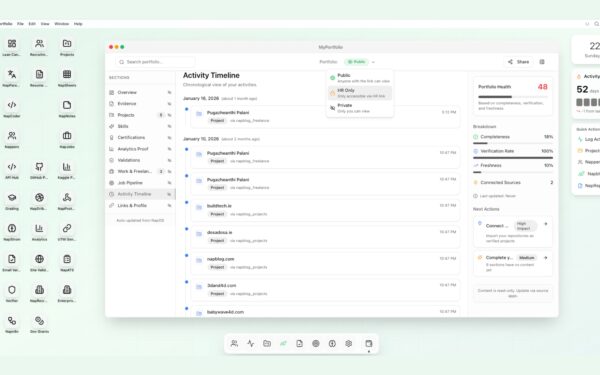
This Is How Work Should Be Recalled Most people do not fail interviews because they lack skills.They fail because they cannot recollect their work clearly, confidently, and on demand. Projects fade.Details blur.Evidence gets buried across tools, folders, emails, and versions. When an interviewer asks: Most candidates mentally scramble. Nap OS exists to eliminate that scramble. Not by teaching you what to say—but by preserving what you actually did, in a way that is searchable, recallable, and usable at any moment. This is not note-taking.This is not journaling.This is not another productivity app. Nap OS is a personal work intelligence system. Work Should Be Searchable—Like Memory, Not Like Files Traditional systems store work as files.Nap OS stores work as activity. Files require remembering where something lives.Nap OS lets you remember that it happened. You do not search folders.You search intent. The moment you type, Nap OS responds—not with documents, but with contextualized actions. What you worked on.When you worked on it.How often.How deeply.With what evidence. This is how human recall works.Nap OS simply mirrors it. Historic Data Feeds: Your Work, Never Lost Every action in Nap OS becomes part of a living historic feed. Not a timeline you have to curate.Not a report you have to generate. It is always there—quietly accumulating. Days later.Weeks later.Months later. You can pull: This matters because interviews are not real-time events.They are retrospective evaluations. Nap OS gives you the ability to time-travel through your own execution. You are no longer guessing what you did last quarter.You are revisiting it—with proof. From Search to Story: Interview Preparation at Your Fingertips Interview preparation usually looks like this: Nap OS changes the workflow entirely. You search → you recall → you speak. When preparing for an interview, Nap OS allows you to: You are not inventing answers.You are extracting reality. This creates confidence—not the performative kind, but the grounded kind. Because you are not “selling yourself.”You are referencing facts. Evidence, Not Claims Resumes are claims.Nap OS is evidence. Every activity can carry: This transforms how you approach assessments. Instead of starting from scratch, you: Nap OS does not make you faster by rushing you.It makes you faster by removing repetition. High Signal vs Noise: What Actually Matters Not all work is equal.Nap OS understands this. Activities are not just logged—they are classified. High-signal work surfaces naturally: Low-effort noise fades into the background. This is critical for decision-makers. When a recruiter, evaluator, or hiring manager looks at Nap OS data, they are not overwhelmed.They see what matters. Consistency.Depth.Trajectory. Native, Intuitive, Human-Centered Design Nap OS does not feel like software you have to “learn.” It feels like software that already understands you. There is no friction between intent and action. You do not ask: You simply work. Nap OS adapts to you—not the other way around. The Emotional Benefit: Calm, Not Anxiety Most productivity tools increase anxiety. They remind you of: Nap OS does the opposite. It creates psychological safety. You know your work is captured.You know your effort is visible.You know your progress is real. This calm changes how you approach opportunities. You stop preparing in panic.You start preparing with clarity. Assessments Without Fear Technical tests.Case studies.Take-home assignments. These no longer feel like threats. Because Nap OS gives you: You are not being tested on memory.You are being tested on thinking. And your thinking is already documented. Nap OS as a Personal Search Engine for Work Think about how you use Google. You do not explain everything.You type fragments. Nap OS works the same way. You do not remember full details.You remember anchors. Nap OS connects those anchors to your lived execution. This is why it feels inevitable. This is how it should have always been. For Individuals, Teams, and Decision-Makers For individuals: For teams: For recruiters and evaluators: Nap OS aligns incentives across all sides. This Is Not Productivity. This Is Identity. Nap OS is not about doing more.It is about knowing what you have done. In a world obsessed with outputs, Nap OS respects process.In a world full of noise, Nap OS surfaces signal. It turns work into memory.Memory into narrative.Narrative into opportunity. Closing Thought When work is searchable, recallable, and provable—confidence becomes natural. Nap OS does not help you pretend you are capable.It helps you see that you already are. This is how work should be remembered.This is how interviews should be prepared.This is how execution should feel. This is Nap OS.

Nap OS Nappers Streak: Evidence-Based Hiring Beyond Resume Keywords
NapOS

Nap OS Nappers Streak: Evidence-Based Hiring Beyond Resume Keywords

For decades, recruitment systems have relied on resumes as the primary signal of candidate quality. Over time, resumes became less about truth and more about optimization. Candidates learned to reverse-engineer Applicant Tracking Systems (ATS) by stuffing keywords, inflating titles, and rephrasing job descriptions back to recruiters. The result is a systemic failure: Why Hiring Is Broken—and Why Keywords Are the Problem? Nap OS was built to challenge this foundation. At the core of Nap OS sits Nappers Streak, an evidence-tracking system that replaces claims with proof, narratives with timelines, and static resumes with living, verifiable work history. This is not a new resume format.This is not a portfolio site.This is not keyword optimization. This is decision intelligence for hiring. What Nappers Streak Actually Tracks (And Why It Matters) Nappers Streak tracks daily professional intent and execution—not outcomes alone. Instead of asking: “What did you do in your last role?” Nappers Streak answers: “What have you been consistently working on—and can we see it?” Core Evidence Dimensions Tracked Each Nappers profile is built on five measurable pillars: This structure allows Nap OS to answer one critical hiring question better than any resume or ATS today: “Is this person actually doing the work required for this role—right now?” From Resume Claims to Evidence Timelines Traditional Resume Logic Nappers Streak Logic Instead of reading: “Experienced in HTML, CSS, and frontend development” A recruiter sees: This shifts hiring from belief-based to evidence-based. How Nap ATS Uses Evidence (Not Keywords) Nap ATS does not match resumes to job descriptions.It matches evidence patterns to role requirements. Step 1: Job Description Decomposition When a recruiter posts a role, Nap ATS breaks it into: For example, a “Frontend Engineer” role is decomposed into: Step 2: Evidence Pattern Matching Instead of scanning resumes for words like React or CSS, Nap ATS looks for: A candidate who has logged: Outranks someone with: Why This Is Critical for Recruiters and Hiring Managers 1. Faster Shortlisting With Higher Confidence Recruiters no longer need to: Evidence timelines answer these questions upfront. 2. Reduced False Positives Keyword-optimized resumes produce false positives.Evidence-driven profiles eliminate them. If a candidate claims: “Strong in sales preparation” Nap OS shows: Or it shows nothing. There is no ambiguity. Why Decision-Makers Trust Nappers Streak Because It Measures Behavior, Not Branding Resumes are branding documents.LinkedIn profiles are marketing pages. Nappers Streak is a behavior log. Behavior is the strongest predictor of future performance. Because It Captures Momentum Hiring is not about past glory.It is about current readiness. Someone actively preparing, learning, fixing, shipping, and iterating today is more valuable than someone with outdated experience. Nap OS surfaces momentum visually and structurally. Why Candidates Cannot Fake This System Keyword stuffing works because resumes are static. Nappers Streak requires: You cannot fake: Any inconsistency becomes visible immediately. The Strategic Advantage for Organizations For Startups For Enterprises For Universities & Accelerators What a Recruiter Actually Sees A recruiter opening a Nappers profile sees: No guessing.No assumptions.No keyword manipulation. Just signal. The End of Resume-First Hiring Resumes will not disappear overnight.But they are no longer enough. Nap OS does not replace resumes—it renders them secondary. The future of hiring is: Nappers Streak is not a feature.It is a shift in hiring philosophy. Final Thought for Decision-Makers If your ATS is still ranking candidates based on: You are optimizing for presentation, not performance. Nap OS Nappers Streak allows you to hire based on: That is not innovation.That is overdue correction.