Napblog

NapOS

NapOS Nappers Catalogue
NapOS

NapOS Nappers Catalogue: The Connectivity Layer That Turns Individual Effort Into a Living System

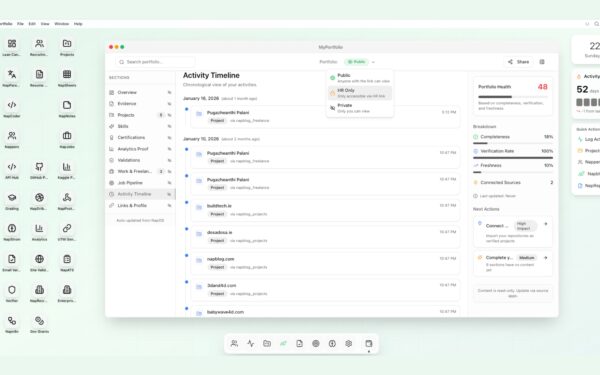
Why Connectivity Is the Missing Layer in Student Operating Systems Most student platforms fail not because they lack features, but because they treat students as isolated users. Dashboards are personal. Portfolios are individual. Progress is private. Even when collaboration exists, it is shallow—comments, likes, or shared folders that do not translate into long-term signal. NapOS was designed to challenge that assumption. The Nappers Catalogue is not a contact list, not a social feed, and not a traditional network. It is a connectivity layer—a structured, evidence-aware, signal-driven directory of people operating inside NapOS. Its purpose is to turn fragmented individual effort into a visible, navigable, and compounding system of execution. In NapOS, work matters only when it is logged, verified, connected, and reusable. Nappers is where this principle becomes visible. What Is the Nappers Catalogue? At a surface level, Nappers appears simple: a directory of people inside NapOS. But its true function is architectural. Nappers is a live catalogue of execution profiles, where each individual is represented not by a bio or follower count, but by: This catalogue becomes the human index of NapOS—a way to explore the system through people rather than files or features. Every Napper is not just a user. They are a node. And nodes, when connected through shared signals, form a system. From Contacts to Capability Maps Traditional platforms store people as contacts: NapOS stores people as capability maps. Each Napper profile answers a more important question: What has this person actually done, consistently, and recently? Instead of static resumes, the Nappers Catalogue exposes living execution data: This reframes connectivity from who you know to who is executing. In an academic and early-career context, this shift is profound. Students no longer compete on polish or confidence alone. They surface through signal density. Discovery as a First-Class Feature One of the most important design decisions in Nappers is that discovery comes before connection. Users do not need to “add” someone to benefit from their presence in the system. Instead, they can: This transforms Nappers into a learning surface. Students begin to see patterns: Connectivity emerges naturally from observation, not forced networking. The Role of Evidence in Connectivity Evidence is the atomic unit of NapOS. In the Nappers Catalogue, evidence does more than validate individual work—it becomes connective tissue. When evidence is logged: This creates a feedback loop: Unlike social platforms where visibility is gamed, NapOS ties visibility to execution behavior. This is why Nappers does not need likes, comments, or follower counts. The system already knows who is active and who is not. Portfolio Strength as a Shared Language One of the most subtle but powerful elements of the Nappers Catalogue is the portfolio strength indicator. Low. Medium. High. This simple classification acts as a shared language across the ecosystem: Portfolio strength is not a judgment. It is a diagnostic signal. Inside Nappers, it allows users to: Most importantly, it grounds connectivity in reality, not aspiration. The Profile Panel: A Living Execution Snapshot Clicking on a Napper does not open a social profile. It opens an execution snapshot. The profile panel is intentionally structured to answer four questions immediately: Everything else—skills, links, details—comes after. This ordering is deliberate. NapOS prioritizes behavior over branding. Links as Extensions, Not Substitutes External links (GitHub, LinkedIn, Portfolio, Twitter) exist in Nappers, but they are secondary. NapOS reverses the traditional hierarchy: This ensures that connectivity inside NapOS is grounded internally first. External links act as extensions, not proof. For students, this is critical. It reduces anxiety around perfection and shifts focus toward daily execution. Activity Streaks and Temporal Awareness One of the most overlooked dimensions of connectivity is time. Nappers surfaces temporal signals clearly: This answers a simple but powerful question: Is this person active right now? Connectivity becomes dynamic rather than historical. Students can align with peers who are currently building, not just those who once performed well. This temporal awareness turns NapOS into a living system, not an archive. Nappers as a Motivation Engine Visibility changes behavior. When students know that: They behave differently. Not out of pressure, but out of identity reinforcement. Nappers creates a quiet but persistent motivation loop: This is motivation without gamification gimmicks. University-Level Connectivity At the institutional level, Nappers becomes even more powerful. The “My University” view transforms Nappers into: Universities can: This is not surveillance. It is operational insight. From Networking to Signal Alignment Traditional networking asks: “Who should I talk to?” Nappers reframes the question: “Who is operating at a similar or aspirational execution level?” This reduces noise and increases relevance. Students connect not because they should, but because their work trajectories align. Nappers as the Backbone of NapOS Connectivity NapOS has many components: Nappers is what binds them together through people. It is the human-facing index of the entire operating system. Without Nappers: With Nappers: Long-Term Vision: A Verifiable Talent Graph As NapOS evolves, Nappers naturally grows into something larger: This has implications far beyond students: All without requiring students to “sell themselves.” The system speaks on their behalf. Conclusion: Connectivity Built on Proof, Not Performance The NapOS Nappers Catalogue is not a feature. It is a philosophy made visible. It asserts that: In doing so, Nappers transforms NapOS from a personal productivity tool into a collective execution ecosystem. Not a network.Not a feed.Not a directory. A living catalogue of people who are doing the work.

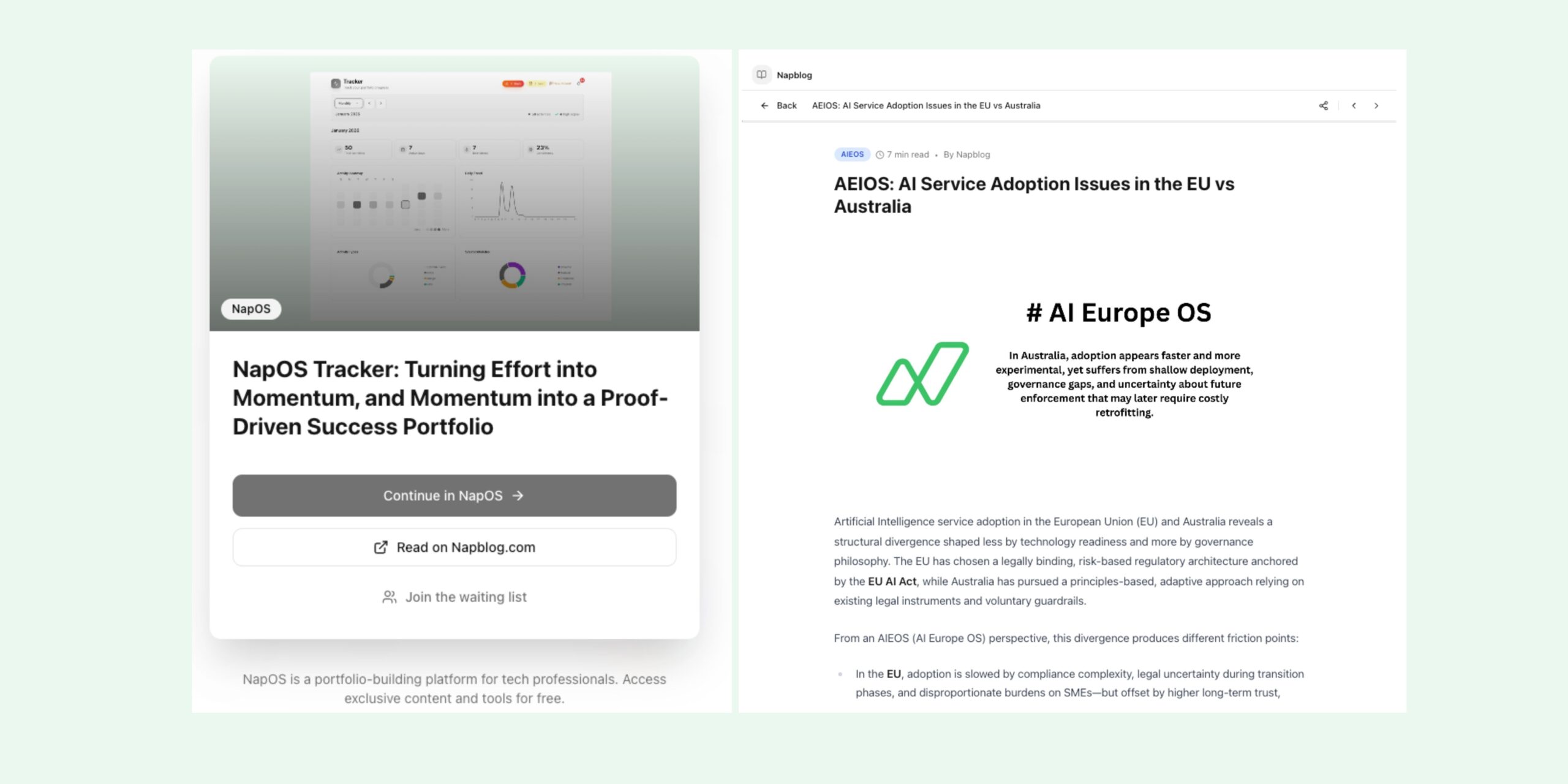
NapOS Tracker: How a 3rd-Year Marketing Student Turns Consistency Into a Career?
NapOS

NapOS Tracker: How a 3rd-Year Marketing Student Turns Consistency Into a Career?

By the time a marketing student reaches their third year, something quietly shifts. The excitement of starting university has worn off. The pressure of “what comes next” starts to feel real. Internships are no longer optional. LinkedIn stops being a social app and starts feeling like a scoreboard. CVs feel thin. Everyone seems busy, productive, and confident—at least on the surface. This is the exact moment where most students don’t fail because of lack of talent.They fail because of inconsistency, fragmentation, and uncertainty. NapOS Tracker was built for this moment. Not as another productivity tool.Not as a generic habit tracker.But as a student-first operating layer that helps a 3rd-year marketing student feel in control, stay consistent, and quietly compound effort into a portfolio that actually gets noticed. This is the story of how. The Reality of a 3rd-Year Marketing Student Let’s be honest about where a typical 3rd-year marketing student stands. They’ve completed: Yet when they open a blank CV or portfolio, they feel stuck. Questions keep looping: Most students are doing work.They just aren’t capturing, structuring, or signaling it properly. Effort exists. Evidence doesn’t. NapOS Tracker exists precisely to close that gap. The Emotional Problem Before the Career Problem Before we talk about features, it’s important to talk about how students feel. A 3rd-year student doesn’t wake up thinking: “I need a portfolio architecture.” They wake up thinking: NapOS Tracker doesn’t start by demanding output.It starts by reducing mental friction. Instead of asking: “Build a perfect portfolio.” It asks: “What did you do today?” That single shift changes everything. Day One: The First Small Win When a student opens NapOS Tracker for the first time, the interface doesn’t overwhelm them. They see: On Day One, the student logs something small: Nothing flashy. But something important happens psychologically. For the first time, effort feels counted. NapOS Tracker tells the student: “This matters. This is evidence.” That feeling is addictive—in a healthy way. Consistency Without Motivation Most tools rely on motivation. NapOS Tracker relies on structure. Marketing students don’t fail because they’re lazy.They fail because motivation fluctuates. NapOS Tracker removes the need to “feel motivated” by: A student doesn’t think: “I need to build a portfolio.” They think: “I’ll just log today’s activity.” One log becomes a streak.A streak becomes identity.Identity becomes confidence. This is how consistency is built quietly. Turning Daily Activity Into Portfolio Evidence Here’s where NapOS Tracker fundamentally differs from traditional trackers. It doesn’t just record time.It records signal. Every logged activity can be: Over weeks, something powerful happens. The student can see their marketing journey forming: What once felt like “random effort” now looks like a coherent story. That story becomes the portfolio. The Shift: From Student to Marketer-in-Progress Around week three or four, a subtle shift happens. The student stops asking: “What should I do?” And starts asking: “What’s worth logging today?” That question changes behavior. They: Why? Because NapOS Tracker removes the fear of: “What if this doesn’t matter?” Everything matters when it’s logged, contextualized, and connected. This is how students start thinking like marketers, not just studying marketing. Building a High-Signal Portfolio Without Realizing It By mid-semester, the student opens their Tracker history. They see: Their portfolio is no longer a rushed end-of-semester task. It’s already built. NapOS Tracker turns time into leverage. Instead of cramming: This is how confidence replaces anxiety. Preparing for Internship Season (Without Panic) When 4th semester internship season approaches, most students panic. NapOS Tracker users don’t. Why? Because: When applying for internships, they don’t just submit a CV. They submit: Recruiters don’t need perfection.They need signal. NapOS Tracker trains students to produce signal daily. The Feeling Before the Interview The night before an interview, the student opens NapOS Tracker. Instead of fear, they feel grounded. They can see: They’re not pretending to be a marketer. They’ve been practicing like one for months. That confidence is visible in how they speak, explain, and reflect. And interviewers notice. Why This Works When Other Tools Fail NapOS Tracker works because it respects how students actually live. Most importantly, it helps students feel: “I’m not behind. I’m building.” That emotional reassurance is the foundation of consistency. From 3rd Year to Internship—and Beyond By the end of 3rd year, the student isn’t just internship-ready. They’ve built a habit: NapOS Tracker doesn’t end at the internship. It carries forward into: It’s not a tool they outgrow. It’s a system they evolve with. Final Thought: Small Actions, Big Outcomes NapOS Tracker proves a simple truth: Careers aren’t built in breakthroughs.They’re built in quiet, consistent days. For a 3rd-year marketing student, that consistency is the difference between: NapOS Tracker doesn’t promise overnight success. It delivers something far more valuable: Confidence earned through consistency. And that’s what turns students into professionals—before graduation.

Napblog believes in Speed to test and validate in real-time
NapOS

Speed as a Philosophy: Why NapblogOS Is Built to Test and Validate in Real Time

where ideas move faster than institutions, speed is no longer a tactical advantage. It is a philosophical stance. For NapblogOS, speed is not about moving recklessly, shipping half-baked solutions, or glorifying hustle for its own sake. It is about respecting reality. Reality is feedback.Reality is friction.Reality is time-bound opportunity. NapblogOS is built on the belief that the fastest way to truth is not speculation, planning, or prediction—but contact. Contact with users. Contact with constraints. Contact with the real consequences of decisions. Speed, in this sense, is not about acceleration alone. It is about compression: compressing the distance between intention and evidence. This article explains why NapblogOS loves speed—not as a slogan, but as a governing philosophy. Speed Is Not About Shipping Faster — It Is About Learning Faster Most teams confuse speed with output. More releases. More updates. More visible activity. But output without learning is noise. NapblogOS approaches speed as a learning system. Every action exists to answer a question: Speed, therefore, is not measured in lines of code, number of launches, or frequency of announcements. It is measured in how quickly assumptions are invalidated or confirmed. The faster a wrong assumption dies, the cheaper it is. The faster a right assumption is reinforced, the stronger it becomes. NapblogOS optimizes for early truth, not early perfection. Validation Over Conviction Many products fail not because the idea was bad, but because conviction arrived too early. Teams fall in love with their own explanations before the world has had a chance to respond. NapblogOS deliberately avoids overcommitment to untested beliefs. Speed allows the system to stay intellectually humble. When feedback loops are short, ego has less time to solidify. This creates a culture where: Speed enables this humility. Slow systems require confidence. Fast systems require honesty. Real Time Is the Only Time That Matters There is a fundamental difference between simulated understanding and lived understanding. Simulated understanding comes from: Lived understanding comes from: NapblogOS privileges real-time validation because time delays distort truth. When feedback arrives weeks or months later, memory fades, context is lost, and causality becomes unclear. Real-time validation preserves signal integrity. Speed collapses the gap between action and consequence. Speed Forces Clarity When time is abundant, ambiguity thrives. When speed is required, clarity becomes mandatory. Fast systems demand: NapblogOS uses speed as a forcing function. It reveals unclear thinking immediately. Vague goals cannot survive rapid execution. Misaligned incentives surface quickly. Poorly defined problems resist fast resolution. In this way, speed is diagnostic. It exposes weaknesses that slow systems conceal. Speed Is a Respect Signal Moving quickly is not only an internal discipline; it is an external signal of respect. Respect for users’ time.Respect for users’ effort.Respect for users’ urgency. NapblogOS exists in contexts where people are trying to move their lives forward. Waiting weeks or months for feedback, iteration, or response is not neutral—it is costly. Speed communicates that momentum matters. This does not mean being careless. It means being responsive. It means acknowledging that delay is a decision with consequences. Fast Feedback Prevents Overengineering One of the hidden costs of slow validation is overengineering. When feedback is delayed, teams compensate by adding layers of logic, abstraction, and complexity “just in case.” Speed removes the need for speculation. Instead of building for every hypothetical scenario, NapblogOS builds to learn what actually happens. Fast feedback reduces the temptation to solve problems that do not exist. Simplicity survives speed. Complexity thrives in silence. Speed Aligns Philosophy With Reality A philosophy that cannot survive contact with reality is not a philosophy—it is an aesthetic. NapblogOS treats speed as a philosophical stress test. Every principle must endure: If a value only works when conditions are ideal, it is not a value—it is a preference. Speed ensures that principles are operational, not ornamental. Speed Builds Organizational Memory Fast iteration creates dense experiential memory. Instead of relying on theoretical knowledge, NapblogOS accumulates lived understanding. Patterns emerge faster: This memory compounds. Each cycle informs the next. Speed is what makes compounding possible. Slow systems forget. Fast systems remember. Speed Without Direction Is Chaos — Direction Without Speed Is Stagnation NapblogOS does not romanticize speed in isolation. Speed is meaningful only when paired with intent. Direction defines where.Speed determines how quickly truth is reached. The philosophy is not “move fast and break things,” but “move deliberately and learn quickly.” Speed is disciplined, not impulsive. It is constrained by purpose. Speed Reduces Fear Fear thrives in uncertainty. Long delays between action and feedback amplify anxiety. Teams imagine worst-case outcomes because reality has not yet spoken. Fast feedback neutralizes fear. When answers arrive quickly, uncertainty shrinks. Decisions become reversible. Risk becomes measurable. NapblogOS treats speed as an emotional stabilizer. It replaces speculation with evidence. Speed Is a Competitive Advantage Only If It Is Cultural Tools can make teams faster, but only culture sustains speed. NapblogOS embeds speed at the level of mindset. This includes: Speed is not enforced; it is internalized. Speed Protects Against Irrelevance Markets evolve continuously. Expectations shift quietly. What mattered six months ago may already be obsolete. Slow validation creates a lag between reality and response. Speed keeps NapblogOS synchronized with the present. Relevance is not achieved once; it is maintained continuously. Speed is the mechanism. Speed Is an Ethical Choice There is an ethical dimension to speed that is often ignored. When people depend on systems to move forward, delay carries moral weight. NapblogOS views responsiveness as responsibility. Fast learning is a form of care. It minimizes wasted effort and maximizes agency. In this sense, speed is not aggressive—it is considerate. Conclusion: Speed as a Commitment to Truth NapblogOS loves speed not because it is fashionable, but because it is honest. Speed collapses illusion.Speed accelerates learning.Speed aligns intention with impact. Most importantly, speed keeps the system accountable to reality rather than narratives. This philosophy does not promise certainty. It promises contact. And in a complex, fast-changing world, contact with reality is the only sustainable advantage. NapblogOS chooses speed because speed chooses truth.

Founder-Led Distribution Is Not a Strategy
NapOS

Founder-Led: It Is the Only Way NapblogOS Reaches Students

There is a hard truth most people building for students do not say out loud. If you genuinely want to put a product into students’ hands—not into pitch decks, not into institutional slides, not into procurement pipelines—you cannot outsource belief. Distribution, in the student ecosystem, is not solved by ads.It is not solved by partnerships alone.It is not solved by logos, incubators, or press releases. It is solved when someone shows up, every day, without hiding behind a company name. That is why NapblogOS is founder-led in distribution.Not as a choice.Not as a phase.But as a commitment. And that commitment is personal. Why “Founder-Led” Even Matters Here Students do not trust platforms easily.They trust people who sound like them, struggle like them, and stay when things are uncomfortable. Most student products fail distribution not because the product is bad—but because no human takes responsibility for its adoption. When a student asks: They are not asking a company.They are asking a person. NapblogOS is being distributed founder-first because students deserve accountability, not abstraction. The Gap No One Wants to Own Every year: And then—silence. Students are told: But no system takes responsibility for the messy middle: NapblogOS exists because this gap exists. And that gap cannot be bridged by marketing teams or automated funnels. It must be bridged by presence. Distribution Is Not Reach. It Is Responsibility. Most people confuse distribution with exposure. They think: Students do not work that way. For students, distribution means: Founder-led distribution means owning the outcome, not just the message. Why NapblogOS Cannot Be “Delegated” to Growth Hacks NapblogOS is not a utility.It is not a dashboard.It is not a resume tool pretending to be a platform. NapblogOS touches: You do not push that through paid ads. You walk with it. Founder-led distribution ensures: This is slow.This is demanding.This is emotionally expensive. And it is non-negotiable. 24×7 Commitment Is Not a Slogan When it is said that Pugazheanthi Palani is 100% committed, 24×7, it is not performative. It means: Students do not need inspiration once.They need consistency over time. Founder-led distribution creates that consistency. Why Students Respond to Founder Presence Students are not looking for perfect systems.They are looking for honest ones. When the founder is visible: Founder presence tells a student: “This platform will not disappear when things get hard.” That belief is the foundation of real adoption. NapblogOS Is Built in Public Because It Must Be NapblogOS is not pretending to be finished. It is evolving alongside students: Founder-led distribution allows: Students are not users.They are co-travellers. Distribution Through Conversations, Not Campaigns NapblogOS grows through: Not: Founder-led distribution respects students enough to not manipulate them. The Unspoken Advantage of Founder-Led Distribution When the founder distributes: Students sense authenticity immediately. They know when something is being sold.They know when something is being built with them. This Is Not Scalable. And That’s the Point. Founder-led distribution is not scalable in the traditional sense. It does not optimise for: It optimises for: NapblogOS is choosing depth before scale. Because students are not funnels. What This Means for Students It means: NapblogOS exists to walk with students, not ahead of them. What This Means for Institutions and Partners It means: Founder-led distribution ensures integrity at scale, not compliance. A Personal Closing Note NapblogOS is not being distributed because it must grow. It is being distributed because students need a system that does not abandon them after graduation. Founder-led distribution is the only ethical choice in a world where: NapblogOS chooses ownership. And that ownership is personal. Final Thought Products can be delegated.Belief cannot. Founder-led distribution is not about control.It is about care. And as long as students are struggling to bridge the gap between education and opportunity, NapblogOS will be placed in their hands—directly, intentionally, and relentlessly. That is not a strategy.That is a promise.

NapblogOS: Marketing Lecturers Can Transform Student Careers
NapOS

How Marketing Lecturers Can Transform Student Careers by Introducing NapblogOS in the Classroom?

Across universities, institutes of technology, and business schools, marketing lecturers are doing exceptional work. Students learn theory, frameworks, models, ethics, sustainability, digital tools, consumer psychology, and strategy. Assignments are designed thoughtfully. Group projects are challenging. Case studies are relevant. Yet, a persistent problem remains: Students graduate with good grades—but struggle to convert their learning into employability. This gap is not caused by a lack of intelligence, effort, or teaching quality.It exists because students are not taught how to translate academic work into career evidence. This is where NapblogOS comes in—not as another learning platform, not as a replacement for your teaching, and not as a tool that adds workload—but as a career operating system that sits alongside your modules. This article explains: The Hidden Problem in Marketing Education Marketing students today are told to: But they are rarely shown how. As lecturers, we assume students will: In reality, most students: This creates an unfair outcome: Students who understand the system succeed faster than those who simply worked hard. NapblogOS exists to level that playing field. Why “Just Use Notion” Is Not the Answer A common response is: “Many students already use Notion.” This is true—and it’s also the problem. Notion is: It is not: Students using Notion: NapblogOS is purpose-built for one outcome: Turning learning into employability, systematically. What NapblogOS Is (in Plain Language) NapblogOS is a student-first career operating system. It helps students: For lecturers, this means: Importantly: Students do not pay for NapblogOS. Universities do. This keeps access equitable. What NapblogOS Is NOT Let’s be clear. NapblogOS is not: It does not: NapblogOS respects academic autonomy. Why Marketing Students Need This More Than Most Marketing students face a unique challenge: Everyone claims they are a marketer. Unlike engineering or accounting, marketing roles: Employers ask: NapblogOS helps students answer these questions with confidence, not improvisation. How Marketing Lecturers Can Use NapblogOS in Class (Practically) Here is the key reassurance: You do not need to redesign your module. NapblogOS works best when it is introduced lightly but consistently. 1. Introduce It in Week 1 (5 minutes) You simply explain: That’s it. No demo required in class if you prefer not to. 2. Link Assignments to Career Evidence (Without Changing Them) Instead of: “Submit your campaign proposal.” You add one sentence: “This is also portfolio evidence—store it in NapblogOS.” Students now understand: 3. Encourage Reflection (Optional, Not Assessed) NapblogOS includes structured reflection prompts: You do not need to grade this. The benefit is: Students learn how to articulate value—something employers care deeply about. 4. Use It for Final-Year Readiness In final-year or postgraduate modules: How This Changes Students’ Lives (Not Just Outcomes) This is the most important part. 1. It Reduces Anxiety Students stop feeling: They can see their growth. 2. It Rewards Consistency, Not Privilege Students without: Still have: NapblogOS makes these visible and legitimate. 3. It Builds Professional Identity Early Students stop saying: “I’m just a student.” They start saying: “Here’s what I’ve worked on.” That mindset shift is transformational. 4. It Aligns Education With Reality—Without Compromising Values Marketing education often balances: NapblogOS does not dilute these—it helps students express them clearly. Why Universities Pay (and Students Don’t) NapblogOS is designed as an institutional employability infrastructure. Universities benefit because: Students benefit because: A Final Word to Marketing Lecturers You already change lives through teaching. NapblogOS simply ensures: That impact does not stop at graduation. By introducing it—even briefly—you give students: This is not about technology.It is about translation. Translating learning into life. Short Demo (3–4 minutes) If you’d like to see the system your students would use:👉 https://napblog.com/napblogos/ No obligation. No pressure. Just a tool built to respect education—and make it count.

NapOS

Watch NapblogOS Demo | What the Demo Video Shows Clearly?

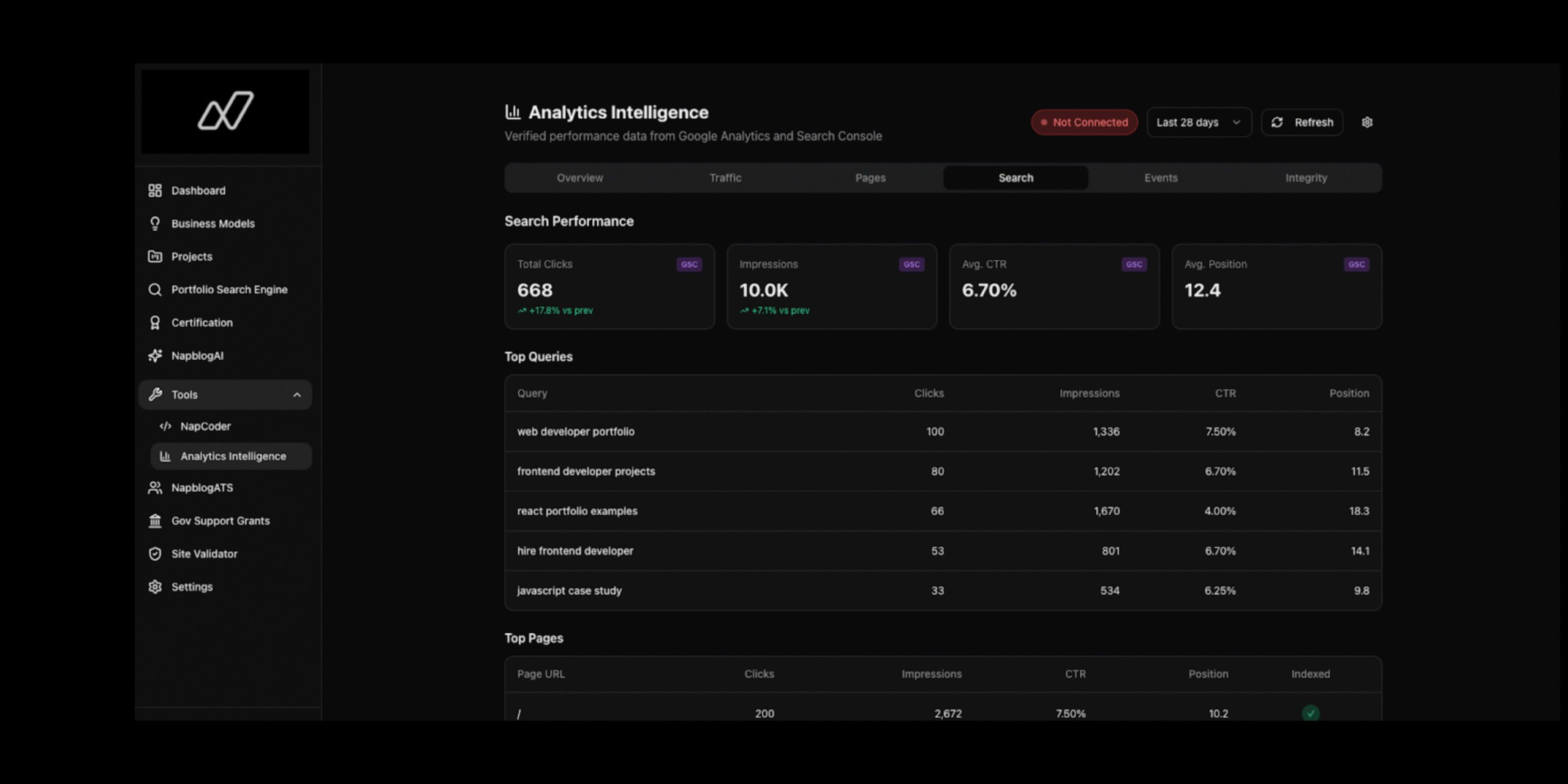
The demo video walks viewers through the core building blocks of NapblogOS. Each feature exists to solve a specific career friction point. 1. Portfolio-First Career Architecture The demo highlights NapblogOS’s portfolio-centric design. Instead of asking students to “prepare a portfolio someday,” the system is built around continuous portfolio creation. Every project, article, campaign, case study, or experiment becomes structured career evidence. Over time, this compounds into a searchable, verifiable professional footprint. Students are no longer invisible to recruiters or dependent on a single-page resume. 2. Portfolio Search Engine One of the most powerful elements demonstrated is the internal portfolio search engine. This allows work to be discovered based on skills, domains, industries, and outcomes rather than keywords on a CV. This fundamentally changes how students are positioned. They are not applicants waiting to be selected. They are contributors whose work can be evaluated directly. 3. Project Dashboard: Work as the Central Currency The demo shows a unified project dashboard where students manage real work, not theoretical assignments. Projects are structured with timelines, outcomes, reflections, and proof of execution. This teaches accountability, planning, and delivery—skills that employers consistently say are missing in graduates. 4. NapblogATS: Career Applications as a System Job applications are usually chaotic. Students apply across platforms with no central tracking, no learning loop, and no feedback system. NapblogATS changes this by turning applications into structured data: The demo shows how this visibility reduces anxiety and creates clarity. Career progress becomes measurable rather than emotional. 5. Recruitment Agency Workflows The demo introduces recruitment-focused workflows that help students understand how hiring actually works. Instead of guessing what recruiters want, students align their portfolios, projects, and communication to real hiring pipelines. This bridges the knowledge gap between candidates and recruiters. 6. Government Schemes and Automation Many students are unaware of government grants, startup schemes, or employment incentives available to them. The demo shows how NapblogOS integrates awareness and automation around these opportunities, reducing friction and missed chances. This is particularly critical for international students and first-generation graduates. 7. Freelance and Entrepreneurial Readiness The demo clearly positions freelancing and entrepreneurship not as alternatives, but as parallel pathways. Students can manage freelance projects, client work, and entrepreneurial experiments inside the same system they use for job preparation. This aligns with the reality of modern careers, where linear employment is no longer guaranteed. Why the MVP Matters More Than Perfection NapblogOS deliberately launched a functional MVP rather than waiting for a “perfect” product. This decision reflects the philosophy behind the platform itself. Careers are not built in theory. They are built through iteration, feedback, and visible work. The MVP demonstrates: The demo video does not oversell. It shows what exists, what works, and what is intentionally still evolving. Built by Working Through the Same Constraints Students Face The NapblogOS team did not build this in ideal conditions. The demo launch represents work done across long hours, limited resources, and constant prioritization decisions. This is important context. NapblogOS is not designed by people disconnected from student reality. It is built by individuals who understand financial pressure, visa timelines, employment uncertainty, and the emotional weight of career ambiguity. The demo video reflects this grounded perspective. Turning Students Into Entrepreneurs Before Graduation One of the strongest messages embedded in the demo is this: students should not wait until graduation to think like professionals or entrepreneurs. NapblogOS encourages: This mindset shift is not theoretical. The demo shows how the platform structurally nudges students toward these behaviors. Why This Launch Is Different From Typical EdTech Announcements Most edtech launches focus on promises: AI-powered learning, personalized pathways, or future employability. The NapblogOS demo video focuses on present capability. Students can use the platform independently, build in public, and take control of their trajectory immediately. Who the Demo Is For The demo video is particularly relevant for: It is intentionally not designed for those looking for shortcuts, automation without effort, or surface-level credentialing. The Broader Vision Beyond the Demo While the demo focuses on current functionality, it also hints at a broader vision: a unified operating system where learning, work, career management, and entrepreneurship coexist in one continuous loop. The launch is not the finish line. It is the starting point of an ecosystem designed to grow with its users. A Personal Note Behind the Launch NapblogOS is also a deeply personal project. Built by a proud Griffith University alumnus (International Business, 2020), the platform reflects firsthand experience with the gap between education and employability. The demo video is an open invitation—to students, institutions, and partners—to engage in building something that prioritizes outcomes over optics. What Happens Next After the Demo Launch Following the demo release: This is deliberate. NapblogOS is designed to be shaped by its users, not assumptions. Final Thoughts: Why This Demo Matters Now The timing of this launch matters. With millions of graduates entering an increasingly competitive and uncertain job market, students cannot afford to wait for institutions or employers to change. They need systems that help them act today. The NapblogOS demo video is not just a product showcase. It is proof that a different approach to career preparation is possible—one built on work, ownership, and continuous progress. This launch is a beginning. And for many students, it may be the first time their effort finally compounds into visible opportunity through a system designed for reality, not theory.

NapblogOS Job Tracking - Napblog.com
NapOS

NapblogOS Job Tracking: From Copy-Paste to Interview-Ready — Built for Accountability, Not Noise

Every student today applies to jobs across platforms that were never designed to work together. LinkedIn. Indeed. Company career pages. WhatsApp referrals. Email follow-ups. Screenshots. Notes apps. Memory. What begins with motivation slowly turns into fragmentation. Most students do not fail because they lack talent.They fail because their job search has no operating system. NapblogOS was built to change that. This article explains—clearly and practically—how the NapblogOS Copy-Paste Job Tracking feature works, why it is fundamentally different from bookmarks, spreadsheets, or “job boards,” and how it introduces real accountability and interview-readiness triggers, not just another dashboard. The Core Problem: Job Applications Are Invisible Work Students apply to dozens—sometimes hundreds—of roles. Yet when asked simple questions: The honest answer is often silence. Not because students are careless, but because applications disappear the moment they are submitted. LinkedIn saves jobs.Indeed emails confirmations.Gmail buries follow-ups.Notes apps store fragments. Nothing connects. NapblogOS treats job applications as active projects, not passive submissions. The NapblogOS Principle: If It’s Not Trackable, It’s Not Real NapblogOS does not scrape data, violate platform terms, or require integrations with “big tech.” Instead, it uses the most universal action available to every student: Copy → Paste This is intentional. Because copy-paste forces awareness, ownership, and clarity. How Students Copy-Paste Jobs into NapblogOS (Step-by-Step) Step 1: Open Any Job Post No restrictions. Step 2: Select All (Ctrl + A) → Copy (Ctrl + C) Students copy the entire visible job content: Step 3: Paste into NapblogOS “Add Job Update” Inside NapblogOS, students see a simple modal: They click Extract Details. NapblogOS parses the unstructured text into structured, trackable data. No browser extensions.No scraping.No permissions. Just ownership. What NapblogOS Automatically Creates After Paste Once pasted, NapblogOS generates a Job Application Record, similar to a CRM deal card, including: This is where NapblogOS diverges from every other tool. Because the system does not stop at storage. It starts accountability. Applied Is Not the End. It Is the Start. Most platforms celebrate the act of applying. NapblogOS questions it. The moment a job is marked Applied, NapblogOS activates a preparation lifecycle. Because interviews do not reward applicants.They reward prepared candidates. NapblogOS Interview-Readiness Triggers (This Is the Difference) When a job is marked as Applied, NapblogOS automatically triggers: 1. Skill Gap Awareness NapblogOS compares: It highlights: Not to shame—but to direct focus. 2. Micro-Preparation Tasks (No Overwhelm) Instead of generic advice like “prepare well”, NapblogOS creates contextual preparation prompts, such as: Each task is small.Each task is relevant.Each task compounds. 3. Time-Based Reality Triggers NapblogOS tracks time since application. If: This is not a reminder app. It is behavioral nudging aligned with hiring timelines. When a Student Gets Interview-Selected The moment a job is moved to Interview Selected, NapblogOS changes mode. It stops tracking applications. It starts tracking performance readiness. Interview Mode Activates: Everything is contextual to that specific job, not generic interview advice. Why This Is Not “Just Another Job Tracker” Let’s be clear. NapblogOS is not: It is a student operating system that treats job search as a disciplined process. Most tools answer: “Where did you apply?” NapblogOS answers: “Are you becoming interview-ready because you applied?” Accountability Without Guilt Traditional productivity tools rely on: NapblogOS uses: Students are not punished for inactivity.They are guided back to meaningful action. That distinction matters. Why This Matters for Students Globally In a market where: The edge belongs to students who: NapblogOS turns every application into: Even rejections create progress. The Hidden Benefit: Proof of Work Over time, NapblogOS builds something most students never have: A living record of effort. Not claims.Not promises.Evidence. When students say:“I prepared for this role.” NapblogOS can show: This changes how students see themselves. And how employers experience them. Final Thought: Systems Beat Motivation Motivation is fragile.Systems are durable. NapblogOS does not ask students to be more disciplined. It builds discipline into the workflow—quietly, consistently, without noise. Copy. Paste. Track. Prepare. Improve. That is how applications turn into interviews.And interviews turn into outcomes. NapblogOS is not helping students apply for more jobs. It is helping them become ready when opportunity responds.

NapblogOS - Over 300+ Million Graduates. One Job for Every 140.
NapOS

The Unspoken Truth About Education, Survival, and Why NapblogOS Cares?

In 2025, the world quietly crossed a number that should have shaken every policymaker, educator, employer, and family dinner table conversation. Over 300 million people now hold higher-education degrees globally.Bachelor’s. Master’s. PhDs. Certifications layered on top of certifications. Yet for many of them, the lived reality is far more sobering: Roughly one job opportunity exists for every 140 graduates competing for it. This is not a statistic meant to frighten students. It is a mirror. And mirrors, while uncomfortable, are necessary if we want to change direction rather than continue pretending the road is fine. Degrees were never supposed to end like this. The Promise Education Made (and Quietly Broke) For decades, education carried a clear promise: Families invested their savings, their retirement plans, sometimes even their ancestral land, into this promise. Students invested their youth, their energy, and their belief. But families do not live in policy reports.Dreams do not accept macroeconomic explanations.Rent does not wait for “market correction.” At the end of the day, people need jobs. They need dignity. They need to survive. So the uncomfortable question emerges: Where did all that educational money go? The Education Investment Paradox Globally, trillions are spent every year on higher education: Yet employers increasingly say: This creates a paradox: No villain. No single failure. Just a systemic gap. The Gap No One Wants to Own The gap is not intelligence.It is not effort.It is not ambition. The gap is translation. Academic knowledge is not automatically translated into: In today’s market, influenced heavily by automation, AI, and risk-averse hiring, companies are looking for something very specific: Proof of execution, not proof of attendance. Reports from organizations like the World Economic Forum consistently highlight this shift: This is not cruelty. It is survival—from the employer’s side. Why the Odds Feel Personal (Because They Are) Statistics are impersonal. Life is not. Behind every “unsuccessful application” is: Many graduates do not fail publicly.They fail quietly, with dignity, absorbing the blame themselves. That silence is dangerous. Because the narrative becomes: “Maybe I’m not good enough.” When in reality: The system never gave them a fair translation layer. This Is Where Most Advice Goes Wrong Graduates are often told: These are not wrong.But they are incomplete. What is missing is structure. Without structure: Consistency without direction does not compound. Why Pugazh and NapblogOS Care? NapblogOS was not built to sell hope.It was built because of lived observation. Pugazh has seen the pattern repeatedly: NapblogOS exists for one reason: To reduce uncertainty by replacing it with visible, consistent action. Not motivation.Not hype.Not shortcuts. Systems. Where the Money Should Have Gone? If education investment were truly aligned with outcomes, graduates would leave with: NapblogOS attempts to retrofit this missing layer: This reframes the graduate narrative from: “I am looking for a job.” To: “Here is what I have already done.” The Pathway That Increases Probability (Not Promises) There is no guaranteed job system. Anyone claiming otherwise is lying. What can be increased is probability. 1. Replace Passive Learning with Active Proof Reading, watching, and listening are inputs.Employers evaluate outputs. Graduates must build: 2. Build a Single Source of Truth Scattered certificates confuse recruiters.A structured system builds trust. Consistency over time signals reliability. 3. Learn to Work With AI, Not Against It AI is removing entry-level tasks.Graduates who show AI-assisted execution stand out, not because they use AI—but because they show judgment. 4. Stop Waiting for Permission The modern market rewards initiative.NapblogOS encourages students to act as if they are already professionals—because eventually, employers notice behavior before titles. Confidence Does Not Come from Hope It comes from evidence. Every week of consistent, documented action: NapblogOS is not therapy.It is exposure therapy to the real world, in a controlled, structured way. A Message to Graduates and Families This is not your failure. You were sold a partial map. But maps can be updated. The future does not belong to the most decorated graduate—it belongs to the most adaptable, visible, and consistent one. Degrees still matter.But degrees alone are no longer sufficient. Closing: From Fear to Agency This article is not written to scare students.It is written to return agency. You may not control: But you can control: That is where confidence is rebuilt. That is why NapblogOS exists. Not to promise jobs.But to make sure that when opportunity appears—even briefly—you are ready, visible, and undeniable. If one in 140 gets the job, the goal is not panic. The goal is to make sure you are no longer invisible in the 139.

The Hidden Cost of Survival Jobs: Why Skilled Students End Up in Cafés? How NapblogOS solves?
NapOS

The Hidden Cost of Survival Jobs: Why Skilled Students End Up in Cafés?

Walk into any café in Dublin, Cork, Galway, or Limerick on a weekday evening and you will notice a quiet contradiction. Behind the counter, taking orders or cleaning tables, are students enrolled in highly specialised postgraduate programmes—MSc Digital Marketing, Data Analytics, Cybersecurity, AI, Finance. These are not unskilled individuals. They are ambitious, qualified, and investing heavily—financially and emotionally—into their education in Ireland. Yet instead of working as a Digital Marketing Assistant for 20 hours a week, many are serving coffee, guarding buildings at night, or stacking shelves to survive. This is not a failure of effort.It is not a lack of intelligence.It is a systemic gap between education and employability. This newsletter examines the real pain points faced by students who want domain-relevant part-time work but are forced into survival jobs—and explains how NapblogOS addresses this problem efficiently and sustainably, without adding more pressure to already overstretched students. 1. The Reality No Prospectus Mentions Ireland attracts thousands of international students each year with a promise—explicit or implied: “Study here, gain global exposure, work part-time, and build a future.” The legal framework allows students to work 20 hours per week during term time. On paper, this looks like an opportunity. In practice, it creates a harsh paradox. What Students Expect What Actually Happens These jobs pay the bills, but they extract time without creating career value. 2. The Core Pain Points (Beyond Money) The problem is often described as financial, but money is only the surface symptom. The deeper pain points are structural and psychological. 2.1 No Entry-Level Gateway for Part-Time Roles Most companies hiring Digital Marketing Assistants want: Students, meanwhile, have: The result: no bridge between theory and paid work. 2.2 Time Is Consumed, Not Invested A student working 20 hours in a café loses: After 12 months, they have: This creates a silent career debt that only becomes visible after graduation. 2.3 Emotional Burnout and Identity Conflict Students rarely talk about this openly, but it is pervasive. Working survival jobs erodes professional identity. Over time, students stop seeing themselves as marketers, analysts, or strategists—and start seeing themselves as temporary workers. 2.4 Post-Graduation Shock After graduation, many expect the situation to improve. Instead: The café job that once felt temporary now becomes permanent—not by choice, but by momentum. 3. Why the System Fails (Even with Good Intentions) This issue persists because multiple systems do not connect. Universities Employers Students Everyone is trying—but there is no operating system that aligns them. 4. NapblogOS: Not Another Course, Not Another Internship NapblogOS exists precisely in this gap. It is not: NapblogOS functions as a real-world execution layer between education and employment. 5. How NapblogOS Solves the Part-Time Relevance Problem 5.1 Turning Time into Proof, Not Just Pay Instead of spending 20 hours a week on unrelated labour, NapblogOS enables students to: Students still need income—but NapblogOS ensures that at least part of their effort compounds into career capital. 5.2 Portfolio-First, Job-Second Model Recruiters do not hire degrees.They hire evidence of execution. NapblogOS gives each student: This replaces the weak “student project” narrative with a working professional profile. 5.3 Domain-Relevant Execution for MSc Digital Marketing Students Instead of saying: “I studied digital marketing” Students can say: This language matches employer expectations, not academic descriptions. 5.4 Asynchronous and Flexible by Design NapblogOS respects reality: The system is built to work without fixed schedules, allowing progress without burnout. 5.5 From Survival Jobs to Signal Jobs NapblogOS does not shame students for working cafés or security. Survival is real. What it does is prevent survival work from becoming invisible time. Over months, students accumulate: This changes the trajectory. 6. What Changes After 6–12 Months Students using NapblogOS consistently experience a shift: Many transition into: Even when café work continues temporarily, the exit path becomes visible. 7. The Bigger Truth: This Is Not a Student Problem This is not about laziness.This is not about lack of ambition. It is about a missing infrastructure. NapblogOS was built to act as that infrastructure—quietly, systematically, and without adding noise to an already overwhelming student experience. 8. Final Thought No student travels across countries, pays international fees, and sacrifices comfort to pour coffee forever. They do it because they believe it is temporary. NapblogOS exists to make sure it truly is. Not through hope.Not through motivation.But through real work, real signals, and real outcomes—while students are still studying, not after it is too late. If you are a student working hard just to survive, understand this clearly: Your struggle is valid. Your ambition is intact. You do not need another lecture—you need a system that works with reality. That is what NapblogOS is designed to be.

Who Is Not NapblogOS For?
NapOS

Who Is Not NapblogOS For?

There is a popular narrative in education and career marketing that says:“Every student can succeed with the right tool.” That statement sounds inclusive, optimistic, and safe.But it is also incomplete — and sometimes misleading. Because the truth is this: Not every system is built for every mindset.And NapblogOS is intentionally not for everyone. This article is not written to exclude people.It is written to set clarity, protect outcomes, and respect effort — especially for students who are genuinely trying to change their trajectory before graduation. NapblogOS was designed as a real-world operating system, not a motivational poster, not a shortcut, and not a substitute for effort. It mirrors how work actually happens outside universities — with uncertainty, accountability, rejection, iteration, and delayed gratification. So let’s be clear and honest. NapblogOS Is NOT for Students Who Outsource Their Assignments Let’s address this directly — because it’s more common than institutions admit. NapblogOS is not built for students who outsource their academic or practical work. Not because they are “bad students.”But because outsourcing breaks the very feedback loop NapblogOS depends on. NapblogOS works on a simple principle: Your portfolio is your proof. Your proof must come from your own decisions, mistakes, and corrections. When a student outsources: They are not just outsourcing work —they are outsourcing learning signals. Why This Matters NapblogOS tracks: If the work is not yours, the system cannot: In the real world, clients don’t ask: “Did you submit something?” They ask: “Can you solve this problem?” NapblogOS is designed for students who want to become capable, not just appear qualified. If your goal is to “get through” coursework with minimum friction —NapblogOS will feel uncomfortable. And that discomfort is intentional. NapblogOS Is NOT for Students Who Blame External Factors for Not Getting Jobs This is one of the hardest sections to write — not because it’s controversial, but because it’s emotionally sensitive. NapblogOS is not for students who consistently blame external factors for their lack of progress, such as: Here’s the uncomfortable truth: All of those factors may be partially true —but they are not actionable. NapblogOS does not deny systemic issues.It simply refuses to let students build their identity around powerlessness. Why Complaining Blocks Growth When a student stays in complaint mode: NapblogOS operates on agency-first thinking. It asks: The system is structured to move students from: “Someone should give me a chance” to: “Here is undeniable proof of my ability” If a student is unwilling to: Then NapblogOS will not work — not because the system failed, but because the mindset resisted responsibility. NapblogOS Is NOT for Students Who Quit After 2–10 Interviews This is a critical distinction. NapblogOS is not for students who: Why? Because NapblogOS treats rejection as data, not judgment. The Real World Truth No One Teaches In the real economy: NapblogOS was built with this reality in mind. It does not promise: Instead, it creates a system where: Students who quit early are not failing —they are exiting before compounding begins. NapblogOS is designed for students who understand: “Confidence is built after competence, not before.” If someone expects success without: NapblogOS will feel demanding. That is not a flaw.That is alignment. These Are Not Disqualifications — They Are Growth Pitfalls It is important to clarify something: The points above are not labels.They are phases many students go through. Most capable professionals: The difference is not who experiences these phases —the difference is who moves through them. NapblogOS is built as a transition system, not a comfort system. It exists to help students: Why NapblogOS Takes a Different Approach Traditional education systems reward: NapblogOS rewards: Instead of asking: “Did you finish the assignment?” NapblogOS asks: “Did this work in the real world?” That shift alone filters mindsets. The Students NapblogOS Is Built For By contrast, NapblogOS is designed for students who: These students don’t want motivation. They want systems. They want: Why This Clarity Matters When a system tries to serve everyone, it serves no one well. NapblogOS chooses clarity over popularity. By clearly stating who it is not for: This protects: A Final Thought for Students Reading This If any part of this article felt uncomfortable — that’s not a rejection. That’s an invitation. An invitation to ask: NapblogOS does not promise ease. It promises alignment with reality. And reality, while demanding, is fair to those who show up consistently. NapblogOS is not for everyone. But for the right student —it changes how they see themselves long before the market does.