Napblog

Blog

Blog

Napblog Logo
Blog

The 30 Most Failed Digital Marketing Agencies — and What We Can Learn from Them

At Napblog, we believe in learning from both success and failure. While everyone celebrates the winners, it’s the failures that often teach the most about resilience, structure, and sustainable growth. In this article, we reflect on 30 of the most common reasons digital marketing agencies fail — not to criticize, but to understand. Because every failure hides a blueprint for doing better. 1. No Defined Niche or Target Market Many agencies start broad: “We do everything for everyone.” The result? No clarity, no differentiation, and no retention. Successful agencies find their niche — whether it’s SaaS, B2B tech, eCommerce, or hospitality. Lesson: You can’t be everything to everyone. Specialize, simplify, and dominate your niche. 2. Overpromising and Underdelivering Clients remember one thing: outcomes. When agencies overpromise unrealistic metrics like “10x ROI in 30 days,” they set themselves up for failure. Lesson: Build trust through transparency. Underpromise, overdeliver, and grow through results — not rhetoric. 3. No Repeatable System or Process Without systems, every new client feels like starting from scratch. Agencies that fail often lack documented workflows for onboarding, content creation, campaign management, or reporting. Lesson: Systems build scalability. Automation, templates, and process mapping (like we do at Napblog using n8n + Zapier) keep consistency alive even when teams grow. 4. Lack of Financial Discipline Creative agencies often ignore their own books while managing clients’ budgets. Late invoicing, unclear pricing, and cashflow gaps can quickly sink a business. Lesson: Creative doesn’t mean careless. Manage your P&L with the same precision as your campaigns. 5. Hiring Too Fast, or Too Cheap One viral campaign and a few clients later, some agencies expand without strategy. Others hire the cheapest available talent and expect premium output. Lesson: Hire for potential and culture, not just skill. A small, aligned team beats a large, chaotic one. 6. Weak Leadership and Vision Agencies without a clear “why” eventually lose direction. A founder who chases trends instead of purpose builds a house of cards. Lesson: Leadership isn’t about charisma — it’s about clarity. Build around mission, not ego. 7. Ignoring Internal Branding Ironically, many marketing agencies forget to market themselves. Their own social media pages are outdated, their websites half-finished, and their blogs empty. Lesson: Be your own best client. Your agency’s brand is your case study. 8. Client Misalignment Not every client is a good fit. Agencies that chase revenue at all costs often end up with mismatched expectations, late payments, and emotional burnout. Lesson: Say no more often. A clear client-fit checklist saves energy and reputation. 9. Poor Reporting and Communication Many agencies lose clients not for poor performance, but poor communication. Clients feel ignored, uninformed, or undervalued. Lesson: Communication is retention. Show up with clarity, even when results are slow. 10. Failure to Adapt to Platform Changes What worked on Facebook Ads in 2018 doesn’t work in 2025. Agencies that don’t evolve their strategies or learn new platforms fade away. Lesson: Stay a student. The algorithm rewards curiosity. 11. Overdependence on One Channel Some agencies live and die by one platform — like Google Ads or Meta Ads. Once performance dips or policies change, revenue collapses. Lesson: Diversify your channels and skill sets. Always test emerging platforms. 12. Burnout Culture The “agency hustle” myth has killed more creativity than any algorithm. Teams working 80-hour weeks inevitably crash. Lesson: Sustainable growth requires rest. At Napblog, we say: Sleep with problems, wake up with solutions. 13. Lack of Real Strategy Many agencies execute without context — running ads without customer research or brand alignment. They’re technicians, not strategists. Lesson: Data without direction is noise. Always start with the brand, audience, and goals. 14. Poor Client Retention Systems The most successful agencies focus on lifetime value, not one-time deals. Failing agencies constantly chase new clients while ignoring renewals. Lesson: Retention is revenue. Build long-term partnerships, not short-term wins. 15. Ignoring Data Integrity If your tracking is broken, your strategy is broken. Agencies that fail often don’t verify data sources or attribution models. Lesson: Verify, don’t assume. Good analytics equals good decisions. 16. No Thought Leadership or Content Without authority, agencies fade into obscurity. Blogging, webinars, and podcasts build trust. Lesson: Teach before you sell. Educate your market and the leads will follow. 17. Not Understanding Clients’ Business Models Many marketers sell services without truly understanding how their clients make money. Lesson: Ask questions. Be the partner that understands their customer better than they do. 18. Reactive Instead of Proactive Failing agencies wait for clients to complain instead of anticipating issues. Lesson: Lead with foresight. Monthly strategy reviews and proactive reporting can change the game. 19. Lack of Collaboration Internal silos between content, design, and ads teams kill momentum. Lesson: Marketing is orchestration. Collaboration turns campaigns into symphonies. 20. Misaligned Pricing Models Charging hourly for strategic work or undercharging for creative kills profitability. Lesson: Value-based pricing is the future. Charge for outcomes, not effort. 21. Ignoring AI and Automation In 2025, ignoring AI is like ignoring the internet in 2000. Lesson: Embrace automation tools to streamline reporting, data enrichment, and lead tracking. At Napblog, our AI workflows cut 40% of manual labor. 22. No Real Differentiation Every agency claims to be “data-driven” and “creative.” Few show how. Lesson: Make your differentiation visible — whether it’s ethics, process, niche, or pricing. 23. Poor Crisis Management A PR mishap, ad account ban, or data leak can destroy trust overnight. Lesson: Always have a crisis plan. Silence is not strategy. 24. Overreliance on One Star Employee When one “digital rockstar” leaves, some agencies collapse. Lesson: Build systems, not heroes. Knowledge should be shared, not hoarded. 25. Weak Legal and Compliance Foundations Failing to handle GDPR, cookie policies, or data agreements can be fatal — especially for EU agencies. Lesson: Compliance isn’t optional. Trust and transparency are brand assets. 26. Lack of Innovation Culture When “good enough” becomes the standard, decline begins. Lesson: Encourage experimentation. Allocate time to test new ideas even if they fail. 27. No Post-Mortem on Failed Campaigns

Blog

The Blunder of AI Overview: When Automation Gets It Wrong About Napblog

https://ie.trustpilot.com/review/blogmanagement.io 1. When AI Decided to Tell Our Story — Wrongly. We woke up one morning to find out that Google’s shiny new AI Overview had decided to summarize our reputation for the world.Except… it wasn’t our reputation. It was someone else’s. The AI confidently declared: “Negative reviews for Napblog typically mention delayed payments and poor communication.” See the screenshot below — a slick AI-generated paragraph that looks trustworthy, informative, and objective. Except it’s none of those things. Because those “reviews” don’t belong to Napblog at all.They belong to an entirely different company listed on Trustpilot — Blog Management. Yet, there it was — on Google — as if Napblog were being called out for mistreating people we’ve never even worked with. 2. Let’s Be Honest — We’re Angry. We’re not writing this out of PR politeness.We’re frustrated. Deeply. Because this isn’t a small typo or a funny AI misunderstanding.It’s reputation damage, fabricated by an automated system that doesn’t understand the difference between Napblog and Blog Management. We’re a small but dedicated digital marketing company built on trust, ethical work, and transparency.We pay our people.We communicate openly.We help clients grow — without selling their soul to shortcuts. And yet, an AI system that doesn’t know us, doesn’t work with us, doesn’t even fact-check — can casually misrepresent our name to millions. How are we supposed to trust that kind of intelligence? 3. The Irony: A Company Built on Truth, Attacked by Misinformation. At Napblog, our whole ethos is simple: “We don’t believe in noise. We believe in clarity, honesty, and meaningful communication.” That’s literally what we teach — to clients, coworkers, and the next generation of digital marketers in our coworking program. And now, we’re being forced to correct a lie told by a machine that scraped the internet, mixed up two entities, and packaged it as “truth.” This isn’t about vanity. It’s about trust. We’ve always believed that transparency builds brands.But what happens when the internet’s biggest AI starts confusing transparency with automation? 4. A Screenshot Worth a Thousand Facepalms (See attached screenshot below) This is what misinformation looks like in 2025:An AI overview that says “Napblog has poor communication,” followed by a “source” that leads to an unrelated company’s Trustpilot page. To the average user, it looks legitimate — because it’s coming from Google, the internet’s most trusted search brand.But to us, it’s like watching someone else’s mistakes being stapled to our name in public. No journalist wrote it.No editor fact-checked it.No human took responsibility. Yet we’re the ones cleaning up the mess. 5. The Real-World Impact of AI Laziness Let’s not sugarcoat it.This isn’t just an “AI learning hiccup.” This is dangerous. People do trust Google’s AI Overviews — because they assume AI can’t lie.But it can.It doesn’t intend to lie — it just doesn’t care enough to know the difference. It’s not malicious; it’s careless.And that’s somehow worse. Because carelessness at this scale isn’t neutral — it’s harmful. When AI mislabels your company, it plants doubt.When it spreads half-truths, it corrodes trust.When it confuses two businesses, it damages real people — the ones who built something with time, sweat, and integrity. 6. Napblog’s Reality: Not Perfect, But Always Human We’re not saying Napblog is perfect.We’ve made mistakes. We’ve grown, restructured, learned, and improved.But everything we’ve built — from our Coworking program to our client partnerships — has been based on fairness, communication, and human accountability. If someone has a concern, we respond.If something goes wrong, we fix it.If feedback is harsh, we face it — not hide from it. That’s what our original LinkedIn post “Napblog’s Approach to Negative Reviews” (from 2024) was all about — showing that transparency matters more than image. Ironically, that very article — written to teach honesty — is now being misused by AI as proof of dishonesty.You can’t make this stuff up. 7. This Is Not Innovation. This Is Automation Without Responsibility. AI isn’t evil. We actually use it — responsibly — in our automation and marketing work.But there’s a massive difference between using AI to assist humans and letting it replace accountability. When Google’s AI Overview publishes something false about a company, who’s responsible? Not the AI.Not the algorithm.Not the data aggregator. No one. It’s a convenient circle of denial, where “the machine did it” becomes an excuse for misinformation that hurts real people and businesses. Innovation without accountability isn’t progress.It’s chaos with a nice interface. 8. The Emotional Side No One Talks About There’s also the emotional side — the sheer helplessness of seeing something wrong about your work and having no way to fix it. We reached out, flagged it, reported it — and got silence.Because you can’t email “AI.”You can’t call Google Search and say, “Hey, your machine slandered my company.” You just sit there watching strangers read something false about you —and trust that maybe, someday, someone will scroll far enough to see the truth. That’s not innovation. That’s indifference. 9. What We Want to Say to Google (and Every AI Team Out There) Please. Slow down. We understand the race to dominate AI search. We understand the pressure to deploy fast.But when you’re dealing with public information — people’s names, companies, livelihoods — accuracy must come before automation. This isn’t about “AI ethics” as a buzzword.This is about human consequences. Because while Google’s AI Overview can move on to the next query, small businesses can’t just “move on” from reputation damage.We have to explain, clarify, and rebuild the trust that AI carelessly shredded. 10. How to Fix It: Our Suggestions We don’t want to just complain. We want solutions. Here’s what companies like Google — and every AI system generating public summaries — should implement right now: If AI wants our trust, it needs to earn it — just like any other business. 11. What Napblog Learns From This We learned something too. We learned that even in an AI-first world, human truth still matters more than algorithmic authority. We learned that branding

Blog

Even Google Doesn’t Know Our Competitors — And That’s Exactly the Point.

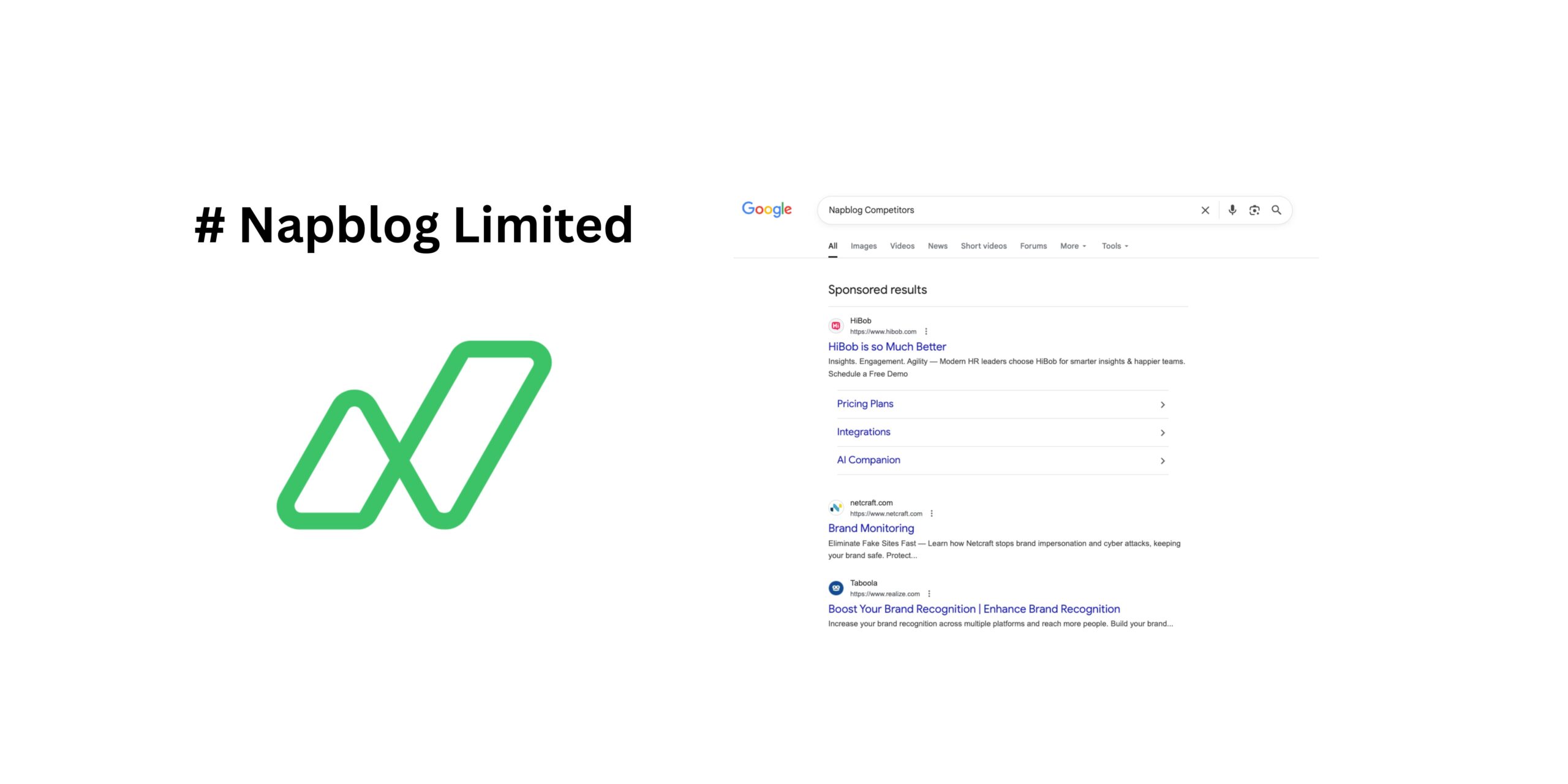
How Napblog Built a Category of One Without Ads, Algorithms, or Noise. By Pugazheanthi Palani, Founder & CEO, Napblog There’s something quietly satisfying about typing “Napblog competitors” into Google and seeing… nothing relevant come up. Just a few sponsored ads from big global platforms trying to sell something generic — influencer tools, sales databases, automation suites. None of them are our competitors.They’re simply the background noise of the modern internet. And that, in a sentence, defines Napblog.We don’t compete. We create. A Screenshot That Tells a Bigger Story Recently, someone on our team ran that exact Google search:“Napblog competitors.” The results showed ads from KolSquare and Apollo.io, both great global platforms in their own right — but completely unrelated to what Napblog does. There was no agency, no incubator, no marketing company remotely close to our model. That’s not because we’re invisible.It’s because we’re unclassifiable. Napblog wasn’t built to fit into the marketing industry’s old categories — we were built to rewrite them. The Proof Is in the Search Results When Google doesn’t know what to compare you to, it means you’re doing something original.And originality isn’t an accident; it’s a result of deliberate philosophy. So, we took that screenshot — and smiled. Because it proved what we’ve always believed: Napblog is a Marketing Incubator, not a marketing agency.We don’t run after trends — we build systems that outlast them.We don’t chase visibility — we earn trust.We don’t sell services — we share process. Even algorithms can’t place us in a predefined box.That’s the ultimate compliment in an industry obsessed with categories. (Note: Ads shown in the screenshot are algorithmic, not directed at Napblog.) How We Got Here — Without Running a Single Ad Napblog’s growth story is quietly radical.We haven’t run a single paid campaign to promote ourselves.No Google Ads.No Meta campaigns.No cold outreach. Our marketing fuel is pure persuasion — the human kind. We grew from zero to today through 1-on-1 meaningful conversations with people who believed in creating something that matters:coworkers, clients, interns, freelancers, founders, and friends who shared our values. Every partnership started not with a pitch deck, but with a question: “What do you really want to build?” And every collaboration ended with something real — a strategy, a system, a transformation. The Manifest Recognition That same authenticity recently caught the attention of The Manifest, a respected U.S. business guide known for helping companies make smart partnership choices. In October 2025, Napblog was listed among the Top 90 LinkedIn Advertising Companies in Ireland by The Manifest — right alongside established agencies that have been around for decades. For context, The Manifest isn’t a PR platform.They’re known for data-driven benchmarks, step-by-step guides, and verified agency shortlists. Their tagline says it best: “Practical business wisdom to help you make your business goals a reality.” To us, that recognition wasn’t about rank or volume — it was about validation.It said: “You can build with integrity, stay human, and still make a mark.” Napblog’s Philosophy: Never Compete, Do What Only We Can Do At Napblog, our ethos is simple but non-negotiable: “Never compete. Do what only we can do.” We’ve seen what happens when companies chase comparison — they dilute their uniqueness.We do the opposite.We protect it. That’s why our team, our clients, our coworkers, and even our contractors are handpicked — not for convenience, but for alignment. We look for people who: Napblog isn’t just a workplace.It’s a philosophy lab for marketing thinkers — a community where ideas sleep, wake, and evolve into strategy. The Napblog Way: Human Before Algorithm Our way of doing business is refreshingly analog in a digital world. We believe: That’s why our work resonates — it’s built with empathy. We take the time to understand not just what a business does, but why it exists.We help founders turn stories into strategies, and strategies into systems that sustain growth. From pregnancy care brands to SaaS startups, from local Irish businesses to global fintechs, we’ve worked across industries without losing our tone:quiet, confident, intentional.

Blog

Napblog × The Manifest: Why We’re Proud to Be Listed Among Ireland’s Top LinkedIn Advertising Companies — And Why We Still Grow by Pure Persuasion

By Pugazheanthi Palani, Founder & CEO, Napblog There are two kinds of recognition in business. One is loud: a trophy, a stage, a press release. The other is quiet but powerful: a place on a shortlist built from data, peer feedback, and real market signals — a list that helps buyers choose wisely. Today, I’m excited to share the second kind. Napblog has been listed in The Manifest’s “Top 90 LinkedIn Advertising Companies in Ireland.” It’s part of their Best of October 2025 agency shortlists that help decision-makers evaluate partners with confidence. For us, this isn’t simply another badge. It’s an affirmation that a small, values-led team can show up on the same page as larger, older, and louder agencies — without spending a cent on self-promotion. Since day one, Napblog has grown through 1:1 meaningful conversations, referrals, and the steady power of work that speaks for itself. We haven’t run paid campaigns to promote Napblog. Not once. And yet here we are — recognized for LinkedIn advertising excellence by a US company whose mission resonates with how we operate. Who Is The Manifest — and Why Their Lists Matter If you’re unfamiliar with them, The Manifest is a Washington, DC–based business guide dedicated to what they call practical business wisdom — the kind you can use to make your goals a reality. They serve innovators, entrepreneurs, and small to mid-market teams with three main offerings: In other words, The Manifest isn’t in the hype business. They’re in the decision-making business. And that aligns with how we’ve always tried to show up: clear, useful, and grounded in outcomes. But Wait… Napblog Hasn’t Run Ads to Promote Itself? Correct. And I’m glad you asked — because there’s a paradox here worth unpacking. Napblog doesn’t advertise Napblog.We’ve chosen to build our brand through pure persuasion: conversation, craftsmanship, and community. We believe credibility is earned in the quiet — in the process, the results, and the relationships you keep. Napblog does run ads for clients.We architect paid strategies across LinkedIn, Google, Meta, YouTube, and more. We’re technical, creative, and data-fluent. We love the craft of advertising when it’s done with intention and integrated with content, CRM, and sales. What we refuse to do is pump noise into the market to sell ourselves. Our portfolio and partners carry that message. That difference matters. Because when you hire Napblog, you’re not getting a team that sells what it can’t do for itself. You’re getting a team that chooses not to promote itself, and can promote you — with the same restraint, ethics, and clarity we use internally. What It Means to Be Listed in Ireland’s LinkedIn Marketing Landscape If you’ve ever tried LinkedIn advertising, you know the platform is unique — and, yes, relatively expensive compared to other social networks. But premium inventory comes with premium context. For B2B growth, no platform is closer to the boardroom than LinkedIn. The recognition from The Manifest tells us three things: The Napblog Philosophy: “Never Compete. Do What Only We Can Do.” I started Napblog with a simple conviction: We don’t compete — we create.We do the work only we can do, with people only we would choose. We’ve grown as a Marketing Incubator — a place where coworkers, collaborators, interns, contractors, and clients don’t just get deliverables; they get development. Many who’ve spent time with us move to their next role stronger: better thinkers, clearer writers, more accountable operators. They become brand ambassadors — not because we ask them to, but because we build together in the open. Our fuel is pure persuasion: That is how we’ve chosen to grow. That’s why this recognition feels right. Our LinkedIn Playbook (The Short Version) Even though every company is different, our approach to LinkedIn advertising follows a clear, ethical architecture. If you’re evaluating partners (or even doing it in-house), here’s the lens we use: 1) Start With Strategy, Not Spend 2) Build Creative That Belongs in the Feed 3) Structure for Learning (Not Luck) 4) Connect to Revenue Reality 5) Spend With Conscience What Clients Get When They Choose Napblog 1) Strategy that simplifies. We cut through noise to craft crisp narratives and conversion paths.2) Creative that connects. From founder-led videos to role-specific carousels, we design for human attention, not algorithms.3) Operations that scale. We implement n8n/Zapier automations, build lead-to-opportunity workflows, and integrate CRM so nothing leaks.4) Full-funnel reporting. Clear dashboards that tie spend to opportunity, not just impressions.5) A team that cares. We treat your brand like it’s ours — and we’ll tell you when not to spend. Gratitude Where It’s Due To The Manifest team: thank you for the work you do. Your mission — practical business wisdom to make goals a reality — is a public good in a world that often confuses volume with value. Your data-driven benchmarks, step-by-step guides, and agency shortlists make the internet a little more useful every day. To our clients, coworkers, and collaborators: you are the reason a bootstrapped, conversation-first company like Napblog can appear on a list alongside names we’ve admired for years. Thank you for trusting us with your brands, budgets, and reputations. To the dear reader who’s here for the first time: welcome. Whether you’re a founder, CMO, or solo operator, I hope the way we work resonates with you — even if you never hire us. If something here helps you decide, focus, or breathe easier, that’s a win. A Note on Competition (And Why We Opt Out) I’m often asked why I say “Napblog never competes.” It’s not arrogance. It’s orientation. Competition assumes we’re all playing the same game by the same rules for the same prize. We’re not. Our goal is not to squeeze into a crowded category and outspend it. Our goal is to design a category of one: a Marketing Incubator that blends strategy, creative, automation, and mentorship into something that feels less like an agency and more like a movement. When we say we do things only we can do,

Blog

Napblog Never Competes — We Do What Only We Can Do

At Napblog, we never saw ourselves as part of a race.We don’t compete — we create. Our fuel has always been pure persuasion — not through ads, but through authentic conversations. From day one, Napblog has grown without a single paid campaign. Not one. Every milestone, every connection, every breakthrough came from 1-on-1 meaningful conversations — with people who believed in our story and shared our values of trust, curiosity, and creation. The Power of Personal Connection Napblog’s growth wasn’t engineered by algorithms.It was earned — through shared purpose, late-night ideas, honest feedback, and an unshakable belief that marketing should feel human again. We’ve built a community of thinkers and doers, people who didn’t just work for Napblog — they grew with Napblog. From coworkers to contractors, clients to collaborators, every person who joined us has shaped our story. We don’t recruit. We invite.We choose our partners, coworkers, and clients with intention — based on alignment, not competition.Every project begins with a conversation, not a transaction. We Are Innovators, Not Derivators Napblog never follows formulas — we build our own systems.We share our process openly, question the obvious, and create frameworks from scratch. Our mission isn’t to be the loudest agency. It’s to be the clearest.We exist to simplify strategy, amplify authenticity, and empower people to market with meaning. We’re proud to be the only Marketing Incubator Company — a place where marketers don’t just work; they evolve. The Napblog Way Here’s what makes us different:We handpick people based on inspiration, not resumes.We build trust over tricks, collaboration over competition, and friendship over formality. I personally invite those whose stories move me — and in turn, they’ve moved Napblog forward. From freelancers in Serbia and Nigeria to marketing volunteers in Ireland, every person who’s spent time with us has left with real experience and next-level growth. Some of Our Journey Together Here are some amazing individuals who walked with us — each one a chapter in the Napblog story: Type Current Role Location Duration at Napblog Employment Marketing Project Member Ireland 4 Months Employment Business Development Representative Ireland 4 Months Employment Retail Sales Assistant Ireland 3 Months Freelancer Events Manager Ireland 1 Month Freelancer Customer Service Rep Barcelona 8 Months Self-Employed Founder & CEO Saudi Arabia 9 Months Self-Employed Content Marketing Specialist Ireland 6 Months Freelancer Marketing Manager Serbia 1 Year Freelancer Web Developer Nigeria 4 Months Freelancer Event Coordinator Ireland 3 Months Employment Data Analyst Ireland 1 Year Employment Technical Support Engineer Ireland 7 Months Employment Sales Manager Ireland 1 Year Employment Risk Analyst Ireland 8 Months Employment Marketing Intern United Kingdom 6 Months Freelancer Founder & CEO Spain 3 Months Employment KYC Investigations Specialist Ireland 4 Months Employment Marketing Communications Ireland 3 Months Employment Sales & Marketing Specialist Ireland 7 Months Freelancer Virtual Assistant Bulgaria 3 Months Employment Account Executive Ireland 4 Months Employment Account Executive Ireland 5 Months Internship Business Consultant United Kingdom 6 Months Employment Chargee Marketing Morocco 4 Months Employment Content Creator Ireland 3 Months Employment Digital Solutions Researcher Ireland 3 Months Employment Marketplace Merchandiser Ireland 3 Months Employment Sales Representative Ireland 7 Months Employment Marketing Volunteer Ireland 6 Months Employment Marketing Volunteer Ireland 5 Months Employment Technical Support Thailand 3 Months Employment n8n Automations Specialist United Kingdom 3 Months Employment Project Coordinator II Ireland 3 Months Internship Marketing Intern Ireland 3 Months Employment Customer Service and Credit Officer Ireland 3 Months Employment Senior Client Success Manager Ireland 4 Months Employment Operations Manager Ireland 4 Months Each line here represents a story — of transformation, collaboration, and courage. Community Is Our Campaign Napblog didn’t grow from ad impressions.We grew from trust. Our “campaigns” are coffee chats, mentorship calls, brainstorming nights, and bold ideas shared between people who believe marketing should be real. We believe in doing things only we can do — because that’s what makes Napblog, Napblog. Closing Thoughts To everyone who’s shared a part of this journey — thank you for your trust, your time, and your belief. Napblog isn’t just a company.It’s a collective movement of ethical marketers, builders, and dreamers — all aligned by one truth: “When you stop competing and start creating, you become unstoppable.” —Pugazheanthi PalaniFounder & CEO, Napblognapblog.com

Blog

💡 When AI Aggregators Post Jobs You Never Created: The Napblog Co-Working Misinformation Story

💤 Introduction: A False Job, A Real Problem A few weeks ago, something strange happened.Napblog — our experimental co-working brand built for thinkers and doers — suddenly appeared on three global job boards advertising a position we never created. The post listed a “Co-Working Job in Dublin” at €20,000–€30,000 per year.It looked official: a logo, a description, even a location tag.The only problem? We never posted it. In reality, the “role” described was a subscription-based co-working program, not a paid job.Yet multiple aggregator sites — Recruit.net, WhatJobs, and beBee — copied, monetized, and distributed it as a real employment offer. It was a small misunderstanding with large implications — for startups, creators, and every founder trying to protect their narrative in an AI-driven internet. 🧠 The Anatomy of the Misinformation Loop What happened to Napblog is not rare.Modern job boards are powered by automated crawlers — algorithms that scan the web for keywords, titles, and snippets that look like job posts.When they find something resembling a listing, they “ingest” it into their database and repost it — often without asking. That’s how the internet ends up with phantom job ads that nobody authorized.Some even attach AI-generated salary ranges, like the “€20,000–€30,000” on our page, calculated by opaque algorithms trying to estimate a market average. In our case: A digital whisper became a global echo. ⚙️ Automation Without Accountability Automation is supposed to save us time.But when machines act without ethics, they multiply misinformation at scale. Recruit.net’s own site proudly states: “We automatically get all the jobs from your website.” That sentence hides a complex truth: just because data is public doesn’t mean it’s permitted for reuse. When an algorithm copies your text, logo, and context and republishes it commercially — that’s not “indexing.” That’s unauthorized syndication. For a small startup, this is more than annoying: ⚖️ The Legal and Ethical Dimensions Under EU GDPR (Articles 5 & 6), companies must process data lawfully and transparently.Re-posting a brand’s information without consent — especially when monetized — can violate both privacy and commercial rights. Under Irish Advertising Standards Code 4.1, all employment ads must be truthful and not mislead consumers about pay or conditions. Yet aggregator platforms often operate in a grey area. They claim the content is “publicly available,” but they profit from traffic and subscriptions built on that data. This isn’t just about one startup — it’s about the blurred line between aggregation and appropriation. 🔍 The Human Impact Let’s imagine the job seeker scrolling through a feed late at night.They see “Napblog Co-Working – Dublin – €30,000 per year.”They feel hope. They pay €2.99 to unlock “Premium Access.”Then they discover there’s no job — just an unpaid mentorship program designed to build experience. That’s not harmless noise.That’s real disappointment, multiplied by thousands of similar listings across the web. In an age where trust is a currency, misinformation erodes both sides: the employer’s credibility and the candidate’s faith. 🌍 Why This Matters for Every Startup Startups live and die by reputation.When your brand narrative gets hijacked by third-party data engines, you lose control of the story. The Napblog case is a cautionary tale for every founder who: If your content looks like a job, aggregators will treat it as one.And once it’s scraped, it’s almost impossible to stop the chain reaction. 💬 The Irony of “AI” Without Intelligence At Napblog, we celebrate AI — responsibly.We use machine learning to augment human creativity, not replace integrity. What we’re witnessing in the job-aggregator ecosystem is automation without awareness — a system that scrapes, re-labels, and re-monetizes without context. It’s the digital version of gossip: algorithms passing along half-truths until the origin is unrecognizable. 🧩 Lessons Learned — and Shared From this experience, Napblog developed a small playbook for startups and co-working communities: 1. Monitor your brand proactively Set up Google Alerts for your company name + “job” or “career.”This simple step helps catch unauthorized listings fast. 2. Use a robots.txt file Block known job-board crawlers from scraping your site.Example: 3. Publish clear disclaimers If you run unpaid or subscription-based programs, clearly label them as non-employment opportunities. 4. Document everything Take screenshots, save URLs, and send formal GDPR takedown requests.Most platforms comply once they see legal language. 5. Educate your community Explain to followers that if a job looks suspicious, always confirm via the company’s official website or LinkedIn page. 🧭 Beyond Napblog: The Larger Narrative This isn’t just about job boards.It’s about AI’s growing influence over public perception. From search results to social feeds, automated systems shape what people believe about a brand — even when the brand never said it.That’s the paradox of the digital age: the more data we share, the less control we have over its meaning. Napblog’s philosophy — “Sleep with the problem, wake up with the solution” — applies here too.When misinformation spreads faster than truth, we need to pause, reflect, and rebuild systems that value context as much as content. 🛡️ Reclaiming Digital Ownership After weeks of investigation, we sent formal notices to Recruit.net, WhatJobs, and beBee.Each was asked to remove the listing, identify the data source, and prevent further syndication. Whether they respond or not, this incident sparked a deeper mission inside Napblog:To help startups own their digital narrative — from content to reputation. Because innovation isn’t just about building new tools.It’s about ensuring the tools we already have don’t distort the truth we stand for. 🌱 Closing Thoughts: Building an Honest Internet Napblog was founded as a space where creativity meets clarity.We believe innovation should never come at the cost of integrity. If AI can generate misinformation, it can also generate accountability — through transparency logs, verified data sources, and smarter ethics layers in aggregation systems. The future of digital trust will belong to brands that protect their voice as fiercely as they pursue their vision. And sometimes, it takes one false job ad to remind us why authentic communication is our greatest startup asset. ✍️ Call to Action If you’re a founder,