Napblog

Author name: Pugazheanthi Palani

SIOS: Napblog European Union, unemployment in 2025
AIEOS - AI Europe OS

SIOS: Regional Unemployment Snapshots in 2025, European Union and Euro Area

Across the European Union, unemployment in 2025 has remained relatively stable at around 6%, with the euro area slightly higher. However, stability does not equate to comfort for young people. Youth unemployment in parts of Southern and Northern Europe continues to exceed 12–15%, reinforcing a long-standing pattern: education is often used as a buffer against weak early-career prospects. As a result, outward student mobility—from both high- and mid-income EU states—remains strong. Ireland In Ireland, overall unemployment in 2025 has stayed near 5%, reflecting strong fundamentals in technology, pharmaceuticals, and financial services. Yet youth unemployment remains disproportionately higher. This divergence explains why Irish students increasingly pursue postgraduate degrees abroad, particularly in specialised fields such as AI, data analytics, and global business—areas perceived as offering stronger international employability. United States The United States has experienced a gradual rise in unemployment toward the mid-4% range in 2025. While historically low, this increase has coincided with layoffs in technology, media, and professional services—industries that traditionally absorb international graduates. For US-bound students, unemployment trends now interact more heavily with visa policy and post-study work opportunities, making employment outcomes a central concern in study-abroad decision-making. United Kingdom The United Kingdom has seen unemployment edge above 5%, with employers becoming more selective amid economic uncertainty. At the same time, persistent labour shortages in healthcare, engineering, and STEM continue to attract international students seeking structured post-study pathways. Youth Unemployment: The Real Driver of Study Abroad Demand While general unemployment figures shape headlines, youth unemployment shapes behaviour. In 2025, individuals aged 18–29 face: For this demographic, studying abroad functions as: When domestic employment prospects appear uncertain, students increasingly interpret international education as a calculated investment, not an indulgence. How Unemployment Shapes Abroad Study Interest 1. Education as an Alternative to Unemployment Historically, periods of rising unemployment correlate with higher enrolment in higher education. In 2025, this pattern persists—but with a global twist. Students are not merely studying more; they are studying differently: 2. ROI Becomes Central to Decision-Making Unemployment pressure has made students far more analytical. Questions that now dominate student conversations include: This shift explains why destinations with clear graduate pathways outperform those with purely academic reputations. 3. Destination Choice Is Employment-Led In 2025, students increasingly rank destinations based on: Countries perceived as education-only destinations struggle to maintain demand when unemployment uncertainty rises. Brain Drain, Brain Circulation, and Strategic Migration High unemployment in home countries continues to fuel outward student mobility. However, the narrative has evolved from brain drain to brain circulation. Many students now: In this model, studying abroad is not about permanent migration—it is about maximising employability in a volatile global labour market. The Role of Policy in Converting Interest into Enrolment Unemployment alone does not guarantee higher international enrolment. Policy clarity is decisive. Key policy factors in 2025 include: When unemployment rises but policies tighten, student interest weakens. When unemployment rises and policies remain open, demand accelerates. What This Means for Students For students navigating 2025’s labour-market uncertainty: Students who align education with labour-market demand consistently outperform peers who treat international study as a purely academic pursuit. What This Means for Platforms Like SIOS For SIOS, these trends reinforce the importance of: In an era where unemployment shapes aspiration, platforms that bridge education, policy, and employment intelligence become essential infrastructure for global mobility. Conclusion: Unemployment as a Catalyst, Not a Constraint In 2025, unemployment is not deterring international education—it is redefining it. Students are not fleeing job markets blindly. They are responding rationally to uncertainty by investing in skills, credentials, and geographies that offer resilience. Studying abroad has evolved from a leap of faith into a strategic, employment-led decision. For those who understand this shift—students, institutions, and platforms alike—uncertainty becomes opportunity.

Napblog Competitor Ads Analysis Jan 10th (2026)
Blog

Napblog Competitor Ads Analysis Jan 10th (2026)

When someone searches for Napblog on Google and encounters sponsored results from global platforms, it is not accidental. It is a deliberate, data-backed decision by mature advertising organisations that understand one truth: branded keywords signal intent. This document analyses how top companies leverage competitor-branded searches—specifically around Napblog—to capture attention, redirect demand, and position themselves as alternatives or category leaders. This is not a surface-level comparison of ad copies. This is a strategic examination of why companies like Klaviyo, X (formerly Twitter), Camphouse, and Common Good appear in sponsored placements, how their messaging is architected, and what it reveals about the current and future state of marketing competition. The Strategic Context: Searching for Napblog A branded search such as “Napblog” represents: For competitors, this is premium inventory. For Napblog, it is proof of market relevance. The sponsored results shown are not random tools; they represent four distinct strategic archetypes: Each competes differently, but all intersect at the same moment: attention. Competitor 1: Klaviyo – Owning the AI Marketing Narrative Ad Positioning Klaviyo’s ad focuses on AI autonomy: This is not feature selling. It is labour displacement messaging—appealing directly to marketers overwhelmed by execution fatigue. Strategic Objective Klaviyo is not trying to steal Napblog users directly. Instead, it is: Competitive Insight Klaviyo’s weakness is also its strength: scale. It optimises for B2C CRM universality, whereas Napblog operates closer to idea velocity, experimentation, and strategic cognition. Napblog is not competing with Klaviyo on automation. It competes on thinking. Competitor 2: X Ads – Monetising Influence at Scale Ad Positioning X positions itself around: The tone is aggressive, performance-oriented, and numbers-heavy. Strategic Objective X Ads intercepts branded searches to: Competitive Insight X sells distribution, not strategy. It assumes the marketer already knows: Napblog exists earlier in the chain—before media spend—where thinking, framing, and narrative formation occur. Competitor 3: Camphouse – Controlling the Operations Layer Ad Positioning Camphouse uses credibility signals: This is CFO-friendly language. Strategic Objective Camphouse targets: By bidding on Napblog, Camphouse is positioning itself adjacent to strategic planning conversations, not creative ones. Competitive Insight Camphouse assumes campaigns already exist. Napblog questions why campaigns exist at all. Operations versus origination. Competitor 4: Common Good – Purpose as Differentiation Ad Positioning Common Good is values-driven: This is emotional, ethical advertising. Strategic Objective They aim to: Competitive Insight Common Good competes in outcomes, not platforms. Napblog overlaps philosophically but diverges structurally: Napblog is not an agency—it is an ideation engine. Cross-Competitor Pattern Analysis 1. Everyone Is Buying Thinking Time Despite different surfaces, all competitors: 2. AI Is Table Stakes AI is no longer differentiation. It is assumed. The real differentiation is: 3. Napblog Is the Signal Competitors do not bid on irrelevant brands. They bid on: Napblog’s presence in competitor ads confirms its strategic gravity. What Napblog Represents to the Market Napblog is not perceived as: Napblog is perceived as: This is why platforms with billions in valuation still feel the need to appear next to it. Strategic Recommendations for Napblog Conclusion: Competition Is Recognition Competitor ads on Napblog-branded searches are not a threat. They are a recognition signal. In 2026, competition is no longer about features—it is about where thinking begins. Napblog occupies that space. And that is why the world’s largest platforms are paying to stand beside it.

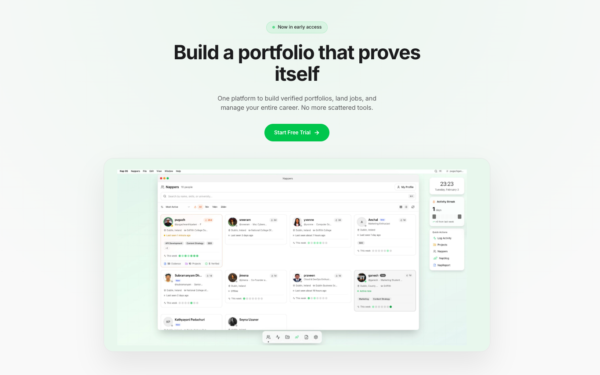
NapOS Tracker: How a 3rd-Year Marketing Student Turns Consistency Into a Career?
NapOS

NapOS Tracker: How a 3rd-Year Marketing Student Turns Consistency Into a Career?

By the time a marketing student reaches their third year, something quietly shifts. The excitement of starting university has worn off. The pressure of “what comes next” starts to feel real. Internships are no longer optional. LinkedIn stops being a social app and starts feeling like a scoreboard. CVs feel thin. Everyone seems busy, productive, and confident—at least on the surface. This is the exact moment where most students don’t fail because of lack of talent.They fail because of inconsistency, fragmentation, and uncertainty. NapOS Tracker was built for this moment. Not as another productivity tool.Not as a generic habit tracker.But as a student-first operating layer that helps a 3rd-year marketing student feel in control, stay consistent, and quietly compound effort into a portfolio that actually gets noticed. This is the story of how. The Reality of a 3rd-Year Marketing Student Let’s be honest about where a typical 3rd-year marketing student stands. They’ve completed: Yet when they open a blank CV or portfolio, they feel stuck. Questions keep looping: Most students are doing work.They just aren’t capturing, structuring, or signaling it properly. Effort exists. Evidence doesn’t. NapOS Tracker exists precisely to close that gap. The Emotional Problem Before the Career Problem Before we talk about features, it’s important to talk about how students feel. A 3rd-year student doesn’t wake up thinking: “I need a portfolio architecture.” They wake up thinking: NapOS Tracker doesn’t start by demanding output.It starts by reducing mental friction. Instead of asking: “Build a perfect portfolio.” It asks: “What did you do today?” That single shift changes everything. Day One: The First Small Win When a student opens NapOS Tracker for the first time, the interface doesn’t overwhelm them. They see: On Day One, the student logs something small: Nothing flashy. But something important happens psychologically. For the first time, effort feels counted. NapOS Tracker tells the student: “This matters. This is evidence.” That feeling is addictive—in a healthy way. Consistency Without Motivation Most tools rely on motivation. NapOS Tracker relies on structure. Marketing students don’t fail because they’re lazy.They fail because motivation fluctuates. NapOS Tracker removes the need to “feel motivated” by: A student doesn’t think: “I need to build a portfolio.” They think: “I’ll just log today’s activity.” One log becomes a streak.A streak becomes identity.Identity becomes confidence. This is how consistency is built quietly. Turning Daily Activity Into Portfolio Evidence Here’s where NapOS Tracker fundamentally differs from traditional trackers. It doesn’t just record time.It records signal. Every logged activity can be: Over weeks, something powerful happens. The student can see their marketing journey forming: What once felt like “random effort” now looks like a coherent story. That story becomes the portfolio. The Shift: From Student to Marketer-in-Progress Around week three or four, a subtle shift happens. The student stops asking: “What should I do?” And starts asking: “What’s worth logging today?” That question changes behavior. They: Why? Because NapOS Tracker removes the fear of: “What if this doesn’t matter?” Everything matters when it’s logged, contextualized, and connected. This is how students start thinking like marketers, not just studying marketing. Building a High-Signal Portfolio Without Realizing It By mid-semester, the student opens their Tracker history. They see: Their portfolio is no longer a rushed end-of-semester task. It’s already built. NapOS Tracker turns time into leverage. Instead of cramming: This is how confidence replaces anxiety. Preparing for Internship Season (Without Panic) When 4th semester internship season approaches, most students panic. NapOS Tracker users don’t. Why? Because: When applying for internships, they don’t just submit a CV. They submit: Recruiters don’t need perfection.They need signal. NapOS Tracker trains students to produce signal daily. The Feeling Before the Interview The night before an interview, the student opens NapOS Tracker. Instead of fear, they feel grounded. They can see: They’re not pretending to be a marketer. They’ve been practicing like one for months. That confidence is visible in how they speak, explain, and reflect. And interviewers notice. Why This Works When Other Tools Fail NapOS Tracker works because it respects how students actually live. Most importantly, it helps students feel: “I’m not behind. I’m building.” That emotional reassurance is the foundation of consistency. From 3rd Year to Internship—and Beyond By the end of 3rd year, the student isn’t just internship-ready. They’ve built a habit: NapOS Tracker doesn’t end at the internship. It carries forward into: It’s not a tool they outgrow. It’s a system they evolve with. Final Thought: Small Actions, Big Outcomes NapOS Tracker proves a simple truth: Careers aren’t built in breakthroughs.They’re built in quiet, consistent days. For a 3rd-year marketing student, that consistency is the difference between: NapOS Tracker doesn’t promise overnight success. It delivers something far more valuable: Confidence earned through consistency. And that’s what turns students into professionals—before graduation.

Napblog believes in Speed to test and validate in real-time
NapOS

Speed as a Philosophy: Why NapblogOS Is Built to Test and Validate in Real Time

where ideas move faster than institutions, speed is no longer a tactical advantage. It is a philosophical stance. For NapblogOS, speed is not about moving recklessly, shipping half-baked solutions, or glorifying hustle for its own sake. It is about respecting reality. Reality is feedback.Reality is friction.Reality is time-bound opportunity. NapblogOS is built on the belief that the fastest way to truth is not speculation, planning, or prediction—but contact. Contact with users. Contact with constraints. Contact with the real consequences of decisions. Speed, in this sense, is not about acceleration alone. It is about compression: compressing the distance between intention and evidence. This article explains why NapblogOS loves speed—not as a slogan, but as a governing philosophy. Speed Is Not About Shipping Faster — It Is About Learning Faster Most teams confuse speed with output. More releases. More updates. More visible activity. But output without learning is noise. NapblogOS approaches speed as a learning system. Every action exists to answer a question: Speed, therefore, is not measured in lines of code, number of launches, or frequency of announcements. It is measured in how quickly assumptions are invalidated or confirmed. The faster a wrong assumption dies, the cheaper it is. The faster a right assumption is reinforced, the stronger it becomes. NapblogOS optimizes for early truth, not early perfection. Validation Over Conviction Many products fail not because the idea was bad, but because conviction arrived too early. Teams fall in love with their own explanations before the world has had a chance to respond. NapblogOS deliberately avoids overcommitment to untested beliefs. Speed allows the system to stay intellectually humble. When feedback loops are short, ego has less time to solidify. This creates a culture where: Speed enables this humility. Slow systems require confidence. Fast systems require honesty. Real Time Is the Only Time That Matters There is a fundamental difference between simulated understanding and lived understanding. Simulated understanding comes from: Lived understanding comes from: NapblogOS privileges real-time validation because time delays distort truth. When feedback arrives weeks or months later, memory fades, context is lost, and causality becomes unclear. Real-time validation preserves signal integrity. Speed collapses the gap between action and consequence. Speed Forces Clarity When time is abundant, ambiguity thrives. When speed is required, clarity becomes mandatory. Fast systems demand: NapblogOS uses speed as a forcing function. It reveals unclear thinking immediately. Vague goals cannot survive rapid execution. Misaligned incentives surface quickly. Poorly defined problems resist fast resolution. In this way, speed is diagnostic. It exposes weaknesses that slow systems conceal. Speed Is a Respect Signal Moving quickly is not only an internal discipline; it is an external signal of respect. Respect for users’ time.Respect for users’ effort.Respect for users’ urgency. NapblogOS exists in contexts where people are trying to move their lives forward. Waiting weeks or months for feedback, iteration, or response is not neutral—it is costly. Speed communicates that momentum matters. This does not mean being careless. It means being responsive. It means acknowledging that delay is a decision with consequences. Fast Feedback Prevents Overengineering One of the hidden costs of slow validation is overengineering. When feedback is delayed, teams compensate by adding layers of logic, abstraction, and complexity “just in case.” Speed removes the need for speculation. Instead of building for every hypothetical scenario, NapblogOS builds to learn what actually happens. Fast feedback reduces the temptation to solve problems that do not exist. Simplicity survives speed. Complexity thrives in silence. Speed Aligns Philosophy With Reality A philosophy that cannot survive contact with reality is not a philosophy—it is an aesthetic. NapblogOS treats speed as a philosophical stress test. Every principle must endure: If a value only works when conditions are ideal, it is not a value—it is a preference. Speed ensures that principles are operational, not ornamental. Speed Builds Organizational Memory Fast iteration creates dense experiential memory. Instead of relying on theoretical knowledge, NapblogOS accumulates lived understanding. Patterns emerge faster: This memory compounds. Each cycle informs the next. Speed is what makes compounding possible. Slow systems forget. Fast systems remember. Speed Without Direction Is Chaos — Direction Without Speed Is Stagnation NapblogOS does not romanticize speed in isolation. Speed is meaningful only when paired with intent. Direction defines where.Speed determines how quickly truth is reached. The philosophy is not “move fast and break things,” but “move deliberately and learn quickly.” Speed is disciplined, not impulsive. It is constrained by purpose. Speed Reduces Fear Fear thrives in uncertainty. Long delays between action and feedback amplify anxiety. Teams imagine worst-case outcomes because reality has not yet spoken. Fast feedback neutralizes fear. When answers arrive quickly, uncertainty shrinks. Decisions become reversible. Risk becomes measurable. NapblogOS treats speed as an emotional stabilizer. It replaces speculation with evidence. Speed Is a Competitive Advantage Only If It Is Cultural Tools can make teams faster, but only culture sustains speed. NapblogOS embeds speed at the level of mindset. This includes: Speed is not enforced; it is internalized. Speed Protects Against Irrelevance Markets evolve continuously. Expectations shift quietly. What mattered six months ago may already be obsolete. Slow validation creates a lag between reality and response. Speed keeps NapblogOS synchronized with the present. Relevance is not achieved once; it is maintained continuously. Speed is the mechanism. Speed Is an Ethical Choice There is an ethical dimension to speed that is often ignored. When people depend on systems to move forward, delay carries moral weight. NapblogOS views responsiveness as responsibility. Fast learning is a form of care. It minimizes wasted effort and maximizes agency. In this sense, speed is not aggressive—it is considerate. Conclusion: Speed as a Commitment to Truth NapblogOS loves speed not because it is fashionable, but because it is honest. Speed collapses illusion.Speed accelerates learning.Speed aligns intention with impact. Most importantly, speed keeps the system accountable to reality rather than narratives. This philosophy does not promise certainty. It promises contact. And in a complex, fast-changing world, contact with reality is the only sustainable advantage. NapblogOS chooses speed because speed chooses truth.

Napblog.com - AI Europe AI - Digital Europe Programme, aiming for €1 billion/year
AIEOS - AI Europe OS

AIEOS – Building the AI Europe OS for a Regulated, Scalable, and Competitive Future

Introduction: Why Europe Needs Its Own AI Operating System Europe is at a defining moment in its digital and economic evolution. Artificial Intelligence is no longer an experimental technology reserved for research labs or large technology companies. It is rapidly becoming the operating layer of modern businesses, public services, healthcare systems, manufacturing, and governance itself. At the same time, Europe has chosen a distinct path: innovation with responsibility, growth with regulation, and scale with trust. This approach is visible in the European Union’s ambitious investments through the Digital Europe Programme, which aims to mobilise €1 billion per year, contributing to an ecosystem that could reach €20 billion annually by 2030. These investments are not just about technology—they are about sovereignty, competitiveness, and values. Yet a major gap remains. While Europe leads in regulation and ethics, it lacks a practical, unified, AI-native operating layer that allows companies—especially SMEs—to build, deploy, and govern AI systems without excessive complexity, cost, or legal risk. This is where AIEOS – AI Europe OS is born. The Core Problem: AI Adoption Is Fragmented, Risky, and Unequal Despite unprecedented funding and policy support, most European businesses face the same challenges when adopting AI: As a result, AI adoption becomes uneven: Europe needs a different model. AIEOS: What Is AI Europe OS? AIEOS (AI Europe OS) is a foundational AI operating system designed specifically for the European market. It is not a single AI model.It is not just an automation tool.It is not another compliance document generator. AIEOS is an orchestration layer that sits between: Its purpose is simple but ambitious: To make AI usable, compliant, and scalable for every European organisation—without requiring deep technical or legal expertise. Built for Europe, From the Ground Up AIEOS is European by design, not by adaptation. 1. Regulation-Native Architecture Instead of treating regulation as an afterthought, AIEOS embeds regulatory logic directly into its core: This transforms compliance from a cost centre into a built-in system feature. 2. Data Sovereignty First AIEOS prioritises: This aligns directly with Europe’s digital sovereignty objectives under the European Commission and related digital strategies. From Policy to Practice: Making the Digital Europe Vision Real The Digital Europe Programme outlines a bold vision: However, funding alone does not solve execution. AIEOS acts as the practical execution layer between policy ambition and business reality. Where Digital Europe Funds the “What” AIEOS delivers the “How”. Instead of each company reinventing AI governance, infrastructure, and automation: This approach ensures that €1 billion per year in funding does not fragment into isolated pilots, but compounds into a shared, scalable ecosystem. Democratizing AI for SMEs: The Missing Middle Europe’s economy is built on SMEs. Yet these businesses are the most excluded from AI adoption. AIEOS directly addresses this gap by enabling: Examples include: For SMEs, this means: AI as Infrastructure, Not Experiment One of Europe’s biggest challenges is that AI is still treated as an experiment, not infrastructure. AIEOS reframes AI as: This is critical for sectors such as: In these environments, AI must be: AIEOS provides the scaffolding to make this possible at scale. Preventing the Hidden Cost of Failed AI Automations A rarely discussed problem in AI adoption is automation failure. Broken APIs, model drift, missing approvals, and silent errors can: AIEOS addresses this through: Instead of fragile automations, organisations gain resilient AI systems. Human-Centric by Design Despite its technical depth, AIEOS is fundamentally human-centric. Key principles include: This aligns directly with Europe’s ethical AI stance and societal expectations. AIEOS does not aim to remove humans from the loop—it ensures they are placed where they matter most. Economic Impact: From Cost to Compound Growth When AI adoption becomes easier and safer, the economic effects multiply: At scale, platforms like AIEOS help transform AI from a capital-intensive gamble into a predictable growth engine. This is how Europe can realistically reach €20 billion annually by 2030 in AI-driven value—not through hype, but through infrastructure. The Strategic Role of AIEOS in Europe’s AI Future AIEOS is not competing with AI models, cloud providers, or regulators. It complements them by: In doing so, it helps Europe answer a critical question: Can Europe lead in AI without sacrificing its values? AIEOS demonstrates that the answer can be yes. Conclusion: A New Foundation for European AI Europe does not need to copy Silicon Valley.It does not need to deregulate to compete.It does not need to slow innovation to ensure safety. What it needs is infrastructure that reflects its unique strengths. AIEOS – AI Europe OS is that infrastructure: As AI becomes the operating layer of the global economy, AIEOS positions Europe not as a follower—but as an architect of a responsible, scalable, and competitive AI future.

SIOS: Why Students and Strangers Become the Most Important Lifelines
SIOS - Students Ireland OS

SIOS: Why Students and Strangers Become the Most Important Lifelines

There is a quiet truth about migration that rarely makes it into brochures, application portals, or visa checklists. The most important lifelines in a student’s journey are not systems, policies, or even institutions.They are students themselves—and strangers who choose to notice potential and light the way forward. Every international student who decides to leave home carries more than documents and dreams. They carry uncertainty, expectation, fear, ambition, pressure, and hope—often all at once. And while universities offer education and governments offer permission, it is people and moments that often decide whether a student merely survives abroad or truly progresses. This is the belief at the heart of Students Ireland OS (SIOS). Not as a slogan.Not as a campaign line.But as a responsibility. The First Step Is Never Academic — It’s Human Before the visa.Before the offer letter.Before the accommodation search. There is always a moment when a student asks themselves: “Am I really capable of doing this?” This question does not appear on application forms, but it shapes every decision that follows. For many students moving to Ireland or Europe for the first time, the journey is not just international—it is transformational. They are stepping out of a familiar ecosystem where language, systems, social norms, and support structures are known, and into one where almost everything must be learned from scratch. What often surprises people is that intelligence is rarely the missing factor.Resilience, guidance, clarity, and timing usually are. This is where lifelines matter. Students as Lifelines to Each Other One of the most overlooked realities of international education is that students learn survival faster from other students than from institutions. A senior student explaining how to open a bank account.A classmate sharing how to manage part-time work schedules.A peer clarifying what lecturers actually expect in assignments.Someone who has already failed once explaining how to recover. These are not formal services.They are lived knowledge. Students do not just carry academic potential—they carry contextual intelligence. They know what it feels like to land confused, to struggle silently, to make mistakes, and to figure things out the hard way. When that knowledge is shared, it becomes a lifeline. SIOS recognises that students are not just beneficiaries of systems; they are contributors to ecosystems. When their experiences are structured, supported, and amplified, they become guides for others who are just starting out. The Power of Strangers Who See Potential Every successful international student can usually trace at least one turning point back to a stranger. Not someone obligated to help.Not someone paid to guide them.But someone who simply chose to act. A lecturer who noticed effort before results.An employer who offered a chance instead of demanding perfection.A community member who explained something without judgement.An advisor who said, “You can do better than you think.” These moments rarely look dramatic. But they change trajectories. Strangers who identify potential early and offer direction often do more than systems ever can. They validate effort when confidence is low and provide clarity when the path feels overwhelming. SIOS exists because these moments should not depend on luck alone. Why SIOS Thinks in Scale, Not in Stories Alone Individual stories are powerful. But stories alone do not solve structural problems. Every year, thousands of students repeat the same mistakes: These are not failures of ambition. They are failures of access to structured insight. SIOS operates on a simple but demanding principle: If a problem repeats across thousands of students, it deserves a scalable solution. Scale does not mean impersonality.Scale means consistency, fairness, and reach. It means ensuring that the support one student received by chance becomes accessible to many by design. From Fragmented Journeys to Connected Lifelines Traditionally, the study abroad journey is fragmented. One platform for applications.Another for accommodation.Another for jobs.Another for compliance.Another for advice—often informal and unreliable. Students are expected to connect the dots themselves while adapting to a new country. SIOS challenges this fragmentation by thinking in terms of lifelines rather than steps. A lifeline: When systems mirror how real journeys unfold—not how institutions prefer to organise them—students move with less friction and more intention. Natural Conversations, Not Institutional Language One of the most intentional choices behind SIOS is language. Students do not think in policy terms.They think in lived questions: SIOS aims to communicate in natural, human conversation, not institutional abstraction. Because clarity is not about simplifying intelligence—it is about respecting it. When students understand why something matters, they comply better, plan smarter, and perform stronger. Responsibility Before Arrival, Not After Failure A core belief within SIOS is that support must begin before arrival, not after problems arise. Too many systems intervene only when students are already struggling: By then, recovery is harder and confidence is already damaged. SIOS positions itself as a pre-arrival responsibility partner—helping students understand: Preparation is not about control.It is about reducing avoidable regret. Lighting the Path Without Controlling the Journey There is an important distinction SIOS makes. It does not aim to decide for students.It aims to light the path clearly enough for students to decide well. True empowerment is not dependency on guidance—it is the ability to make informed choices independently. By identifying potential early, highlighting risks honestly, and offering structured visibility into the journey, SIOS respects student agency while reducing blind spots. Migration Is a Risk — and That Deserves Respect Leaving one country for another is not a casual decision. It is a calculated risk taken by people who believe their future can be better than their present. SIOS does not romanticise this risk.It respects it. Respect means: When systems treat students as numbers, that respect disappears. When systems treat students as people carrying responsibility beyond themselves, support becomes more thoughtful and outcomes improve. Students Ireland OS Is Not a Platform — It Is an Ethos At its core, SIOS is not defined by software alone. It is defined by an ethos: Technology is simply the medium that allows this ethos to operate at scale. A Shared Future Built on Shared Light Every student who

Napblog Half-Four Morning Strategy
Blog

When No One Is Working, the Cosmos Is Wide Awake: Napblog’s Half Four

Half-four in the morning is not a time.It is a state of consciousness. At 4:30 a.m., no one is performing.No one is watching.No one is competing. The world is not demanding anything from you. This is precisely why this moment matters. Napblog’s Half-Four Morning Strategy is not about productivity hacks, routines, or discipline. It is about alignment—alignment between the higher self, the biological self, and the cosmic order that quietly governs energy, creativity, and clarity. When no one is working, existence itself is working. 1. Silence Is Not Empty — It Is Charged At half-four, silence behaves differently. It is not the silence of absence.It is the silence of pre-creation. Before ideas become language.Before decisions become strategies.Before ambition becomes noise. This silence is dense with potential. Most people avoid it because silence removes excuses.There is no distraction to hide behind.No urgency to justify confusion. In this silence, the higher self speaks—but softly.Not in words.In sensations, intuitions, and subtle recognitions. Napblog treats this silence as raw energy, not emptiness. 2. A Conversation With the Higher Self (Not a Motivation Talk) This strategy is not about asking: “What should I do today?” That question belongs to the ego. Instead, the half-four conversation begins with: “What is trying to move through me?” The higher self does not shout instructions.It reveals direction through resonance. At this hour: This is not meditation for calm.This is attunement for truth. When you stop trying to control the day, the day starts revealing itself. 3. Drawing From the Cosmic Elements (Without Ritual, Without Drama) Napblog’s approach to cosmic elements is practical, not symbolic. Earth — Stability Without Stagnation At half-four, the body is closest to the earth’s natural rhythm. Sit. Stand. Walk slowly.Feel weight. Gravity. Presence. Earth energy answers one question: “What is real right now?” Not ambition.Not imagination.Reality. Air — Thought Without Overthinking Breath at this hour is unpolluted by urgency. You are not breathing to calm down.You are breathing to clear channels. Air energy removes mental residue from yesterday. Fire — Intention Without Aggression Fire is not motivation here.It is quiet ignition. Not “I must win.”But: “I am ready to move when the moment arrives.” Fire without impatience. Water — Emotion Without Attachment Thoughts may surface. Memories may arise. Do not analyze them.Let them pass. Water energy teaches: Flow does not need explanation. Space — The Fifth Element Napblog Honors Most Space is what allows everything else to exist. At half-four, space is abundant. Do not fill it. Let it hold you. 4. Why No One Working Is the Advantage The modern world glorifies hustle.Napblog respects timing. When no one is working: Your nervous system finally exits defense mode. Creativity does not emerge from pressure.It emerges from permission. This is why breakthrough ideas often arrive: Half-four is when the mind stops trying to be useful and starts being accurate. 5. Energy Before Action: Napblog’s Core Principle Most strategies begin with action. Napblog begins with energy calibration. If energy is misaligned: At half-four, energy can be adjusted before it hardens into behavior. You are not asking: “What should I build?” You are asking: “What energy do I need to carry today?” Clarity first.Movement later. 6. The Biological Advantage of Dawn Awareness This is not spiritual poetry alone.It is biological intelligence. At early dawn: This creates a window of coherence. Napblog uses this window not to consume information—but to receive insight. No phone.No news.No metrics. Just coherence. 7. No Affirmations. No Visualization. No Forcing. The Half-Four Morning Strategy explicitly avoids: Why? Because the higher self does not respond to commands.It responds to availability. You are not programming the mind.You are opening the channel. 8. The Question That Matters Most at Half-Four Only one question is permitted: “What is essential today?” Not urgent.Not profitable.Not impressive. Essential. The answer is rarely complex.Often uncomfortable.Always simple. This is why many avoid asking it. 9. From Stillness to Strategic Action After the half-four window closes, something shifts. You do not carry the silence with you.You carry the signal. Action becomes cleaner.Decisions shorten.Distractions lose authority. This is not because you tried harder. It is because you listened earlier. 10. Why Napblog Calls This a Strategy (Not a Ritual) A ritual seeks repetition.A strategy seeks leverage. Napblog’s Half-Four Morning Strategy is leverage over: It is not required every day.It is not mandatory.It is available. And availability is power. Closing: When the World Sleeps, Truth Walks Freely At half-four, the world is not asking you to be anything. No titles.No roles.No expectations. Just presence. This is where: Napblog does not chase inspiration.It meets it where it already exists. Before the noise.Before the rush.Before the performance. When no one is working—existence is doing its most precise work.

Automating the Abroad Study Journey - Napblog.com
SIOS - Students Ireland OS

Students Ireland OS: Why SaaS Is No Longer Optional, but Foundational?

Studying abroad is not a single decision. It is a long, emotionally charged, high-risk process involving discovery, documentation, compliance, money, time, and trust. For decades, this journey has been managed using fragmented tools—spreadsheets, email threads, WhatsApp messages, shared folders, and human memory. In 2025, this approach is no longer sustainable. As global student mobility increases, visa scrutiny intensifies, and compliance expectations rise, the abroad study ecosystem faces a defining question: can human effort alone manage systemic complexity?The answer is increasingly clear—no. This is where Software as a Service (SaaS) becomes not just useful, but essential. The Structural Problem in the Abroad Study Ecosystem Before understanding the usefulness of SaaS, we must acknowledge the structural reality of the abroad study process. The journey typically includes: Each stage depends on accuracy, timing, traceability, and accountability. Yet, in most cases: This is not a people problem.It is a system design problem. What SaaS Changes at a Fundamental Level SaaS does not merely digitise existing tasks. It re-architects the workflow. At its core, a SaaS platform for abroad studies introduces: Instead of managing chaos manually, SaaS converts the abroad study journey into a governed process. This shift is foundational. Usefulness of SaaS for Education Consultants and Institutions 1. Workflow Automation Instead of Human Chasing Consultants spend disproportionate time on: SaaS automates these workflows: This reduces operational fatigue and increases throughput without increasing headcount. 2. Centralised Student Lifecycle Management All student data—academic, financial, visa, communication—is stored within one structured system. Benefits include: For organisations operating across countries or teams, this is non-negotiable. 3. Reduced Errors and Higher Visa Confidence Visa rejections are rarely caused by ambition. They are caused by: SaaS platforms enforce: This moves visa filing from hope-based to evidence-based execution. 4. Scalable Growth Without Operational Collapse Traditional consulting growth relies on hiring more counsellors. SaaS enables non-linear scalability. With automation: This is critical for sustainable growth. Usefulness of SaaS for Students For students, studying abroad is one of the most emotionally expensive decisions of their lives. SaaS directly improves their experience. 1. Clarity Over Confusion Instead of scattered messages, students receive: This replaces anxiety with control. 2. Real-Time Transparency Students can track: Transparency builds trust—and trust reduces drop-outs. 3. Reduced Dependency on Individuals When information is system-driven: This is especially important for first-generation international students. 4. Personalised, Data-Backed Guidance Advanced SaaS platforms use structured data to: Guidance becomes responsible, not aspirational guesswork. Why SaaS Is Different from CRM, Excel, or Shared Drives A common misconception is equating SaaS platforms with CRMs or spreadsheets. The difference is fundamental. SaaS is not a tool.It is an operating system for decision-critical journeys. How SIOS Views SaaS Responsibility in the Abroad Study Ecosystem At SIOS, SaaS is not built to replace human guidance. It is built to protect it. The responsibility is threefold: SIOS treats automation as: In a world where one mistake can alter a student’s future, systems must be stronger than intentions. The Long-Term Impact of SaaS on Global Student Mobility Over time, SaaS adoption will: This is not just operational evolution.It is structural reform. Final Reflection: Automation Is About Responsibility, Not Speed The usefulness of SaaS in the abroad study process is not measured by how fast applications move—but by how safely, transparently, and responsibly lives are guided. In that sense, SaaS is not removing the human element.It is ensuring that human effort is applied where it matters most: mentorship, judgment, and care. That is the role of platforms like SIOS.Not to replace people—but to build systems worthy of the dreams they carry.

AIEOS -> Napblog.com - The biggest EU AI adoption challenges for clients
AIEOS - AI Europe OS

AIEOS: A Simple Story About AI, Europe, and How Companies Can Feel Safe With AI Europe OS

Imagine Europe is like a big playground.In this playground, many children (companies) want to play with a new smart toy called AI (Artificial Intelligence). AI is a very clever toy.It can help you: But this toy is also very powerful.So the grown-ups of Europe said: “We must make rules, so nobody gets hurt.” These rules are called Europe’s AI Regulations, also known as the EU AI Act. This story will explain: We will use very simple words, short ideas, and friendly examples. Part 1: Why Europe Made AI Rules Europe cares a lot about people. Europe wants: Europe does not want: So Europe said: “Before you use AI, you must promise to use it nicely.” That promise became rules. These rules say: This sounds good.And it is good. But now comes the hard part. Part 2: Why AI Rules Feel Scary to Companies Now imagine you are a small company. Maybe: You hear about AI and think: “Wow! AI can help me answer calls and messages!” Then you hear about regulations and think: “Oh no… am I going to get in trouble?” This is where fear starts. Not because companies are bad.But because the rules feel big, heavy, and confusing. Part 3: The Biggest Pain Points of Europe’s AI Regulations Let us talk about the biggest problems, using simple words. Pain Point 1: The Rules Are Very Complicated The AI rules are written by lawyers.Lawyers use big adult words. Most companies ask: For many companies, it feels like reading a book in a language they do not speak. This causes: Pain Point 2: Companies Are Afraid of Doing Something Wrong Europe has fines if rules are broken. Even if a company: This makes companies think: “Maybe it is safer to not use AI at all.” That fear slows innovation. Pain Point 3: Innovation Feels Slower Than the Rest of the World AI grows very fast. Every day: But rules move slowly. Companies worry: This creates stress and pressure. Pain Point 4: One Europe, Many Countries, Many Interpretations Europe has 27 countries. Each country: A company working in many countries asks: “Which version of the rule do I follow?” This creates: Pain Point 5: Small Businesses Feel Forgotten Big tech companies: Small companies: Many small businesses feel: “These rules are made for big companies, not for us.” That feeling is real. Part 4: What Companies Actually Want Most companies do not want to break rules. They want: They want AI that: And this is exactly where AIEOS comes in. Part 5: What AIEOS Is (In Very Simple Words) Think of AIEOS like a friendly guide. AIEOS says: “You can use AI.You can be safe.You can follow the rules.We will walk with you.” AIEOS is built inside Europe, for European rules, with European values. Part 6: How AIEOS Helps With AI Regulations Let us explain step by step. 1. AIEOS Builds AI the Right Way From the Start Many companies make a mistake: AIEOS does the opposite. It: This means: 2. AIEOS Uses Simple, Explainable AI Europe wants transparent AI. That means: AIEOS builds systems that: Even a non-technical person can understand it. 3. AIEOS Protects Data Like a Treasure In Europe, data is very important. AIEOS ensures: This supports: 4. AIEOS Avoids High-Risk AI Unless Truly Needed Not all AI is dangerous. AIEOS: This keeps companies: 5. AIEOS Explains Everything in Human Language No legal jungle. AIEOS explains: No scary words.No long legal documents for daily use. Part 7: Why This Matters for the Future of Europe Europe does not want to stop AI. Europe wants: AIEOS believes: When companies feel safe: Part 8: A Simple Example Imagine a small café in Ireland. They want: Without guidance, they fear: With AIEOS: The café owner feels: Part 9: The Big Message (For Everyone) AI is not the enemy.Rules are not the enemy. Fear is the enemy. When AI is: Everyone wins: AIEOS exists to remove fear and confusion. Final Words If you remember only one thing, remember this: You do not have to choose between AI and rules.With the right partner, you can have both. AIEOS is here to help companies: Simple.Friendly.Responsible. That is the future of AI in Europe.

Founder-Led Distribution Is Not a Strategy
NapOS

Founder-Led: It Is the Only Way NapblogOS Reaches Students

There is a hard truth most people building for students do not say out loud. If you genuinely want to put a product into students’ hands—not into pitch decks, not into institutional slides, not into procurement pipelines—you cannot outsource belief. Distribution, in the student ecosystem, is not solved by ads.It is not solved by partnerships alone.It is not solved by logos, incubators, or press releases. It is solved when someone shows up, every day, without hiding behind a company name. That is why NapblogOS is founder-led in distribution.Not as a choice.Not as a phase.But as a commitment. And that commitment is personal. Why “Founder-Led” Even Matters Here Students do not trust platforms easily.They trust people who sound like them, struggle like them, and stay when things are uncomfortable. Most student products fail distribution not because the product is bad—but because no human takes responsibility for its adoption. When a student asks: They are not asking a company.They are asking a person. NapblogOS is being distributed founder-first because students deserve accountability, not abstraction. The Gap No One Wants to Own Every year: And then—silence. Students are told: But no system takes responsibility for the messy middle: NapblogOS exists because this gap exists. And that gap cannot be bridged by marketing teams or automated funnels. It must be bridged by presence. Distribution Is Not Reach. It Is Responsibility. Most people confuse distribution with exposure. They think: Students do not work that way. For students, distribution means: Founder-led distribution means owning the outcome, not just the message. Why NapblogOS Cannot Be “Delegated” to Growth Hacks NapblogOS is not a utility.It is not a dashboard.It is not a resume tool pretending to be a platform. NapblogOS touches: You do not push that through paid ads. You walk with it. Founder-led distribution ensures: This is slow.This is demanding.This is emotionally expensive. And it is non-negotiable. 24×7 Commitment Is Not a Slogan When it is said that Pugazheanthi Palani is 100% committed, 24×7, it is not performative. It means: Students do not need inspiration once.They need consistency over time. Founder-led distribution creates that consistency. Why Students Respond to Founder Presence Students are not looking for perfect systems.They are looking for honest ones. When the founder is visible: Founder presence tells a student: “This platform will not disappear when things get hard.” That belief is the foundation of real adoption. NapblogOS Is Built in Public Because It Must Be NapblogOS is not pretending to be finished. It is evolving alongside students: Founder-led distribution allows: Students are not users.They are co-travellers. Distribution Through Conversations, Not Campaigns NapblogOS grows through: Not: Founder-led distribution respects students enough to not manipulate them. The Unspoken Advantage of Founder-Led Distribution When the founder distributes: Students sense authenticity immediately. They know when something is being sold.They know when something is being built with them. This Is Not Scalable. And That’s the Point. Founder-led distribution is not scalable in the traditional sense. It does not optimise for: It optimises for: NapblogOS is choosing depth before scale. Because students are not funnels. What This Means for Students It means: NapblogOS exists to walk with students, not ahead of them. What This Means for Institutions and Partners It means: Founder-led distribution ensures integrity at scale, not compliance. A Personal Closing Note NapblogOS is not being distributed because it must grow. It is being distributed because students need a system that does not abandon them after graduation. Founder-led distribution is the only ethical choice in a world where: NapblogOS chooses ownership. And that ownership is personal. Final Thought Products can be delegated.Belief cannot. Founder-led distribution is not about control.It is about care. And as long as students are struggling to bridge the gap between education and opportunity, NapblogOS will be placed in their hands—directly, intentionally, and relentlessly. That is not a strategy.That is a promise.