Last updated: February 17, 2026
5 min read
Introduction: Why Europe Needs Its Own AI Operating System
Europe is at a defining moment in its digital and economic evolution. Artificial Intelligence is no longer an experimental technology reserved for research labs or large technology companies. It is rapidly becoming the operating layer of modern businesses, public services, healthcare systems, manufacturing, and governance itself.
At the same time, Europe has chosen a distinct path: innovation with responsibility, growth with regulation, and scale with trust.
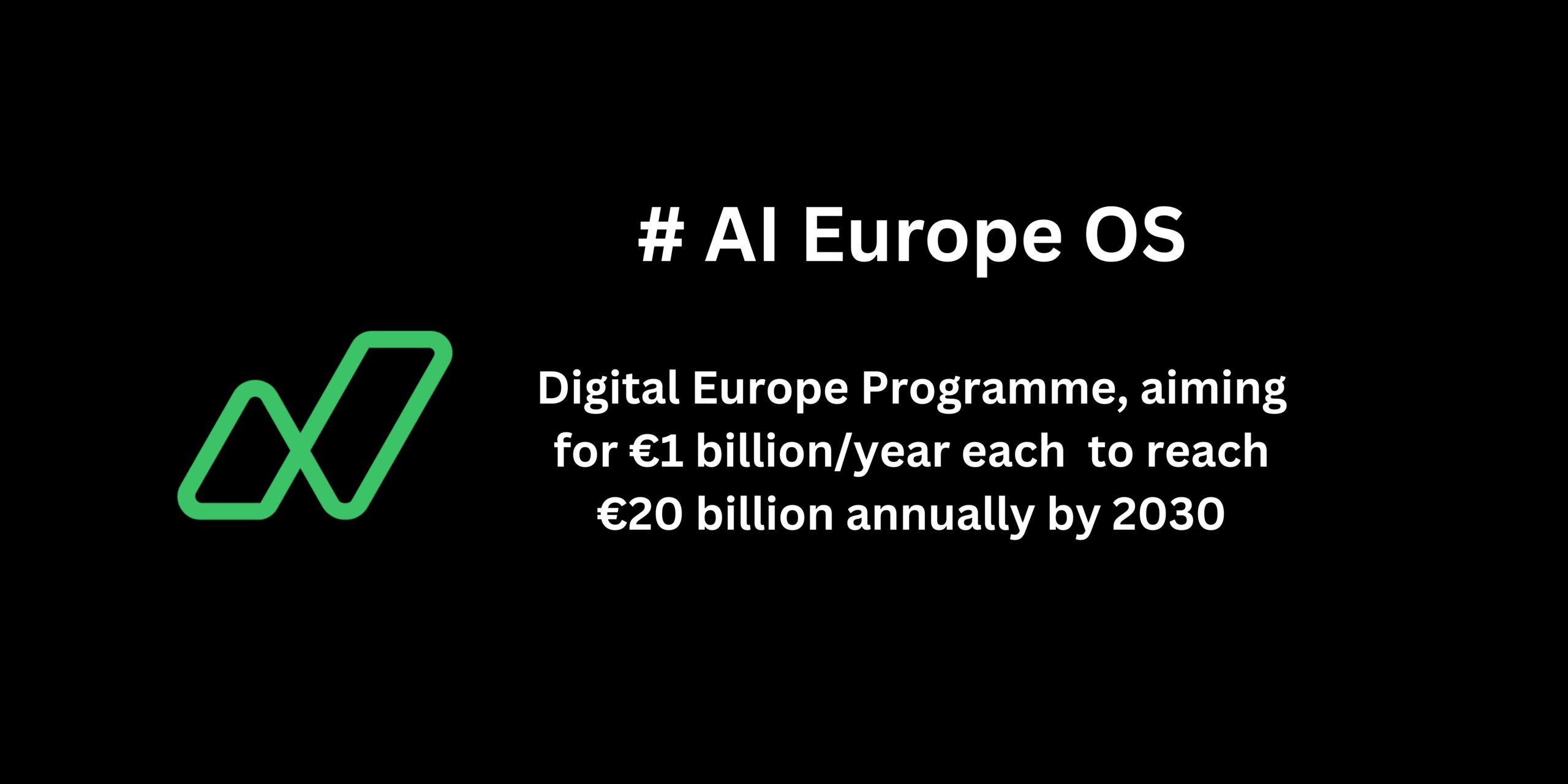
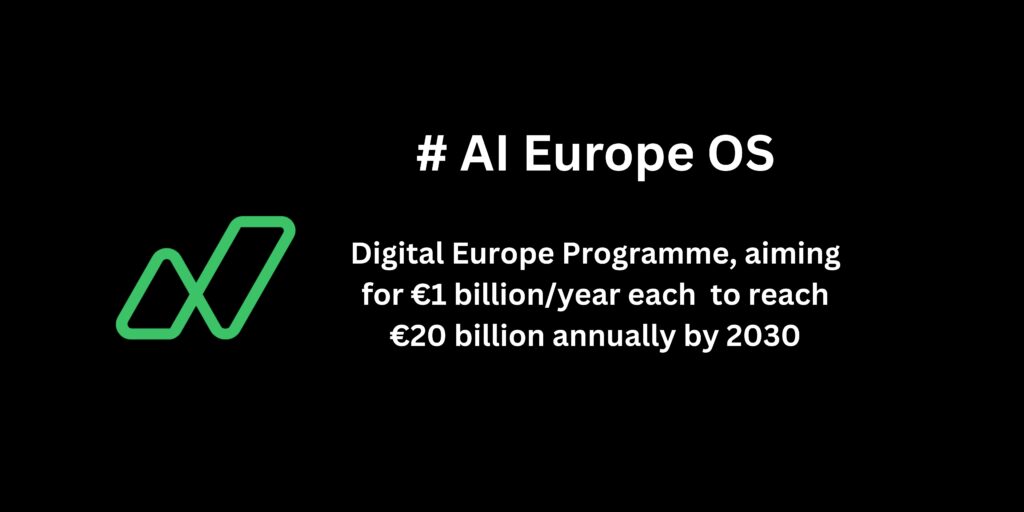
This approach is visible in the European Union’s ambitious investments through the Digital Europe Programme, which aims to mobilise €1 billion per year, contributing to an ecosystem that could reach €20 billion annually by 2030. These investments are not just about technology—they are about sovereignty, competitiveness, and values.
Yet a major gap remains.
While Europe leads in regulation and ethics, it lacks a practical, unified, AI-native operating layer that allows companies—especially SMEs—to build, deploy, and govern AI systems without excessive complexity, cost, or legal risk.
This is where AIEOS – AI Europe OS is born.
The Core Problem: AI Adoption Is Fragmented, Risky, and Unequal
Despite unprecedented funding and policy support, most European businesses face the same challenges when adopting AI:
- Regulatory complexity
The European Union AI Act introduces risk-based obligations, transparency requirements, and accountability measures. While necessary, these rules are difficult to interpret and operationalise—especially for small and mid-sized companies. - Technical fragmentation
AI today is built across disconnected tools: APIs, automations, cloud platforms, compliance workflows, data pipelines, and human approvals. There is no “AI operating system” that unifies them. - Dependence on non-European platforms
Many AI stacks rely on US- or China-based infrastructure, creating concerns around data sovereignty, compliance, and long-term strategic dependence. - Skills gap
AI engineers, compliance experts, and automation architects are scarce and expensive. Most businesses simply cannot hire entire AI teams.
As a result, AI adoption becomes uneven:
- Large enterprises move forward with risk and budget.
- SMEs hesitate or fail.
- Innovation slows.
- Compliance becomes reactive instead of built-in.
Europe needs a different model.
AIEOS: What Is AI Europe OS?
AIEOS (AI Europe OS) is a foundational AI operating system designed specifically for the European market.
It is not a single AI model.
It is not just an automation tool.
It is not another compliance document generator.
AIEOS is an orchestration layer that sits between:
- AI models
- Business workflows
- Regulatory obligations
- Human decision-making
Its purpose is simple but ambitious:
To make AI usable, compliant, and scalable for every European organisation—without requiring deep technical or legal expertise.
Built for Europe, From the Ground Up
AIEOS is European by design, not by adaptation.
1. Regulation-Native Architecture
Instead of treating regulation as an afterthought, AIEOS embeds regulatory logic directly into its core:
- AI Act risk classification baked into workflows
- Automated logging, traceability, and audit trails
- Human-in-the-loop controls where legally required
- Explainability and transparency layers by default
This transforms compliance from a cost centre into a built-in system feature.
2. Data Sovereignty First
AIEOS prioritises:
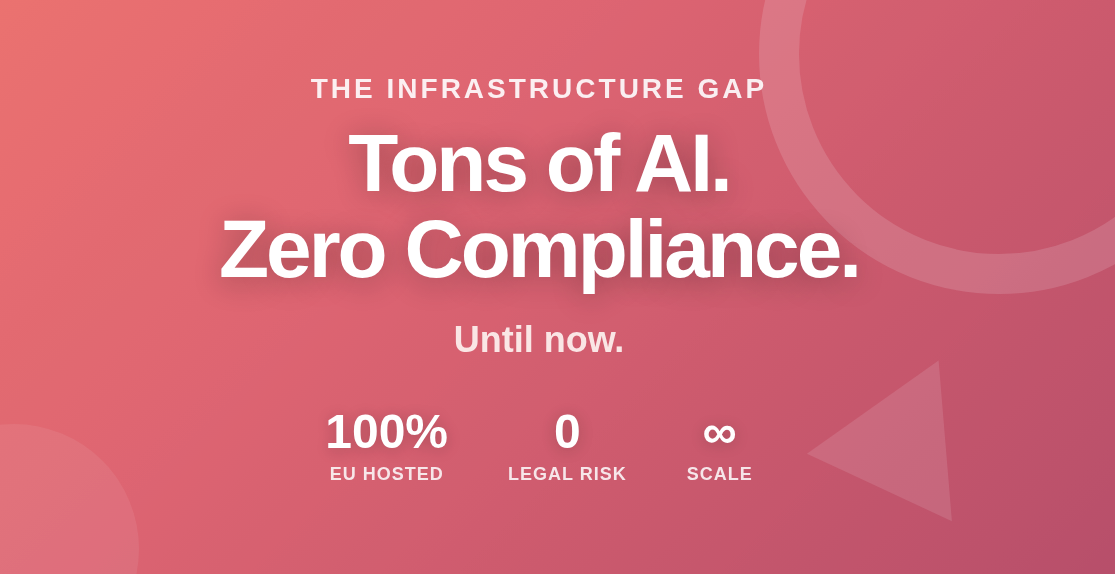
- EU-hosted infrastructure
- Clear data residency controls
- Vendor-agnostic AI model orchestration
- Minimal data exposure by design
This aligns directly with Europe’s digital sovereignty objectives under the European Commission and related digital strategies.
From Policy to Practice: Making the Digital Europe Vision Real
The Digital Europe Programme outlines a bold vision:
- AI adoption across public and private sectors
- Increased productivity and competitiveness
- A digitally skilled workforce
- Secure and ethical AI deployment
However, funding alone does not solve execution.
AIEOS acts as the practical execution layer between policy ambition and business reality.
Where Digital Europe Funds the “What”
AIEOS delivers the “How”.
Instead of each company reinventing AI governance, infrastructure, and automation:
- AIEOS standardises best practices
- Abstracts complexity
- Accelerates time-to-value
This approach ensures that €1 billion per year in funding does not fragment into isolated pilots, but compounds into a shared, scalable ecosystem.
Democratizing AI for SMEs: The Missing Middle
Europe’s economy is built on SMEs. Yet these businesses are the most excluded from AI adoption.
AIEOS directly addresses this gap by enabling:
- No-code / low-code AI workflows
- Natural-language configuration of automations
- Pre-built compliant templates for common use cases
- Automated risk assessments without legal teams
Examples include:
- AI-powered customer support with audit trails
- Lead qualification and booking systems
- Document analysis with human approval checkpoints
- Predictive analytics with explainability controls
For SMEs, this means:
- Faster adoption
- Lower cost
- Reduced legal risk
- Competitive parity with larger players
AI as Infrastructure, Not Experiment
One of Europe’s biggest challenges is that AI is still treated as an experiment, not infrastructure.
AIEOS reframes AI as:
- A repeatable operational layer
- Governed like finance or security
- Integrated into daily workflows
This is critical for sectors such as:
- Healthcare
- Finance
- Manufacturing
- Public administration
- Legal and compliance services
In these environments, AI must be:
- Reliable
- Auditable
- Controlled
- Explainable
AIEOS provides the scaffolding to make this possible at scale.
Preventing the Hidden Cost of Failed AI Automations
A rarely discussed problem in AI adoption is automation failure.
Broken APIs, model drift, missing approvals, and silent errors can:
- Disrupt operations
- Create compliance breaches
- Lead to revenue loss
- Damage trust
AIEOS addresses this through:
- Continuous monitoring of AI workflows
- Automated fallback logic
- Human escalation triggers
- Versioned decision histories
Instead of fragile automations, organisations gain resilient AI systems.
Human-Centric by Design
Despite its technical depth, AIEOS is fundamentally human-centric.
Key principles include:
- Humans remain accountable decision-makers
- AI assists, not replaces, critical judgment
- Oversight is visible, not hidden
This aligns directly with Europe’s ethical AI stance and societal expectations.
AIEOS does not aim to remove humans from the loop—it ensures they are placed where they matter most.
Economic Impact: From Cost to Compound Growth
When AI adoption becomes easier and safer, the economic effects multiply:
- Increased productivity across sectors
- Faster innovation cycles
- Reduced operational waste
- More resilient supply chains
- Higher quality public services
At scale, platforms like AIEOS help transform AI from a capital-intensive gamble into a predictable growth engine.
This is how Europe can realistically reach €20 billion annually by 2030 in AI-driven value—not through hype, but through infrastructure.
The Strategic Role of AIEOS in Europe’s AI Future
AIEOS is not competing with AI models, cloud providers, or regulators.
It complements them by:
- Connecting policy to execution
- Turning rules into workflows
- Making compliance programmable
- Enabling innovation within boundaries
In doing so, it helps Europe answer a critical question:
Can Europe lead in AI without sacrificing its values?
AIEOS demonstrates that the answer can be yes.
Conclusion: A New Foundation for European AI
Europe does not need to copy Silicon Valley.
It does not need to deregulate to compete.
It does not need to slow innovation to ensure safety.
What it needs is infrastructure that reflects its unique strengths.
AIEOS – AI Europe OS is that infrastructure:
- Built for regulation, not against it
- Designed for SMEs, not just giants
- Focused on systems, not demos
- Aligned with Europe’s long-term vision
As AI becomes the operating layer of the global economy, AIEOS positions Europe not as a follower—but as an architect of a responsible, scalable, and competitive AI future.
Building a regulated AI system for Europe requires infrastructure and vision. Follow AIEOS progress on LinkedIn.