Last updated: May 29, 2026
6 min read
Milan stands at the intersection of finance, manufacturing, design, and advanced services—making it one of Europe’s most strategically positioned cities for artificial intelligence deployment. For small and medium-sized enterprises (SMEs) in Lombardy, 2026 presents a rare alignment of European Union funding instruments, national Italian incentives, and regional digital transformation programs.
From the perspective of AI Europe OS, developed by Napblog Limited, this moment is not simply about access to capital. It is about building a structured operating layer that enables Milanese SMEs to:
- Identify the correct EU funding instruments
- Structure AI deployment projects compliant with EU regulation
- Align with Italy’s digital transition strategy
- Accelerate productivity and competitiveness
This article provides a detailed breakdown of the investment landscape, grant mechanisms, eligibility criteria, funding intensities, and strategic positioning opportunities for SMEs in Milan seeking to adopt AI at scale.
1. The Strategic Context: Why Milan Is a Prime AI Funding Hub
Milan is not only Italy’s financial capital; it is also a major node within the EU’s digital industrial transformation strategy. Lombardy accounts for:
- A significant share of Italy’s GDP
- High concentration of manufacturing SMEs
- Strong fintech and fashion-tech clusters
- Growing data center and AI infrastructure investments
With Italy aligning national policy under Piano Transizione 5.0, and the European Commission accelerating AI deployment under Horizon Europe and Digital Europe, Milan-based SMEs are uniquely positioned to benefit.
2. EU-Level AI Funding Instruments (2024–2027)
2.1 Horizon Europe
Budget (2024–2027 AI envelope): ~€4 billion dedicated AI-related investments
Cluster relevance: Digital, Industry and Space
What It Funds:
- Generative AI for manufacturing
- AI for green transition
- AI for healthcare diagnostics
- Industrial data platforms
- Trustworthy AI systems
SME Participation:
SMEs can participate as:
- Direct applicants
- Consortium partners
- Technology demonstrators
- Pilot deployment sites
Funding intensity:
- Up to 70% for innovation actions
- Up to 100% for research actions
Milan Relevance:
Manufacturing SMEs in precision engineering, textile automation, robotics, and supply chain optimization are ideal candidates.
2.2 Digital Europe Programme
Focuses on deployment, not pure research.
Key Instruments:
- AI testing and experimentation facilities
- Digital Innovation Hubs
- AI-on-Demand Platform
- Cybersecurity integration
Funding supports:
- AI integration into existing business systems
- Workforce AI upskilling
- Cloud and high-performance computing access
For Milan SMEs, this is highly relevant because many require deployment capital rather than early-stage research funding.
2.3 GenAI4EU Initiative
The European Commission’s GenAI4EU flagship mobilizes over €700 million specifically for generative AI applications across strategic sectors:
- Healthcare
- Advanced manufacturing
- Public administration
- Green technologies
Milan’s industrial SMEs can apply where generative AI enhances:
- Predictive maintenance
- Demand forecasting
- Product design simulation
- Automated compliance
3. Italian National AI and Innovation Incentives
3.1 Mini Development Contracts (Contratti di Sviluppo Minori)
Published via Italy’s industrial policy framework, these contracts support:
- Digital innovation
- Clean technologies
- Biotechnology
- AI system integration
Financial Parameters:
- Eligible investment size: €5 million – €20 million
- Grant coverage:
- Up to 55% for small enterprises
- Up to 45% for medium enterprises
For Milan-based SMEs scaling advanced AI infrastructure, this mechanism is highly attractive.
3.2 Piano Transizione 5.0
Italy’s successor to Industry 4.0 policies incentivizes:
- Energy-efficient digital systems
- AI-enabled production optimization
- Data-driven sustainability reporting
Tax credits and grants can be layered with EU programs when structured correctly.
4. Infrastructure Acceleration: AI Factories & Supercomputing Access
The EU has launched six new AI Factories to provide SMEs access to:
- Supercomputing resources
- Large-scale AI model training infrastructure
- High-quality industrial datasets
These facilities support SMEs that cannot independently finance:
- Large language model customization
- Industrial AI simulation
- Advanced robotics training
For Milan’s advanced manufacturing base, this infrastructure significantly reduces AI deployment costs.
5. Financing Through the European Investment Bank (EIB)
Beyond grants, debt instruments are critical.
The EIB provides:
- Long-term low-interest financing
- Infrastructure loans
- Public-private AI deployment capital
In 2025, the EIB approved major investment programs in Italy, including infrastructure support in Lombardy.
For SMEs, EIB-backed intermediated loans via Italian banks can finance:
- Data centers
- AI-driven industrial retrofits
- Energy-efficient automation
6. Regional Lombardy Support Mechanisms
Lombardy Region supplements EU and national funding through:
- Digital transition vouchers
- SME innovation calls
- Export-oriented digital transformation grants
These are often smaller in ticket size (€50,000–€500,000) but can serve as co-financing to larger EU instruments.
7. Eligibility Criteria for Milan SMEs
To qualify for EU and Italian AI funding, SMEs must:
- Meet EU SME definition:
- <250 employees
- <€50M turnover
- Be registered in Italy
- Demonstrate technological innovation
- Provide co-financing capacity
- Ensure regulatory compliance with the EU AI Act
This last point is critical.
8. Compliance: The Hidden Barrier
The EU AI Act introduces:
- Risk classification
- Transparency requirements
- Data governance obligations
- Documentation standards
Many SMEs fail not because of lack of innovation—but because of regulatory misalignment.
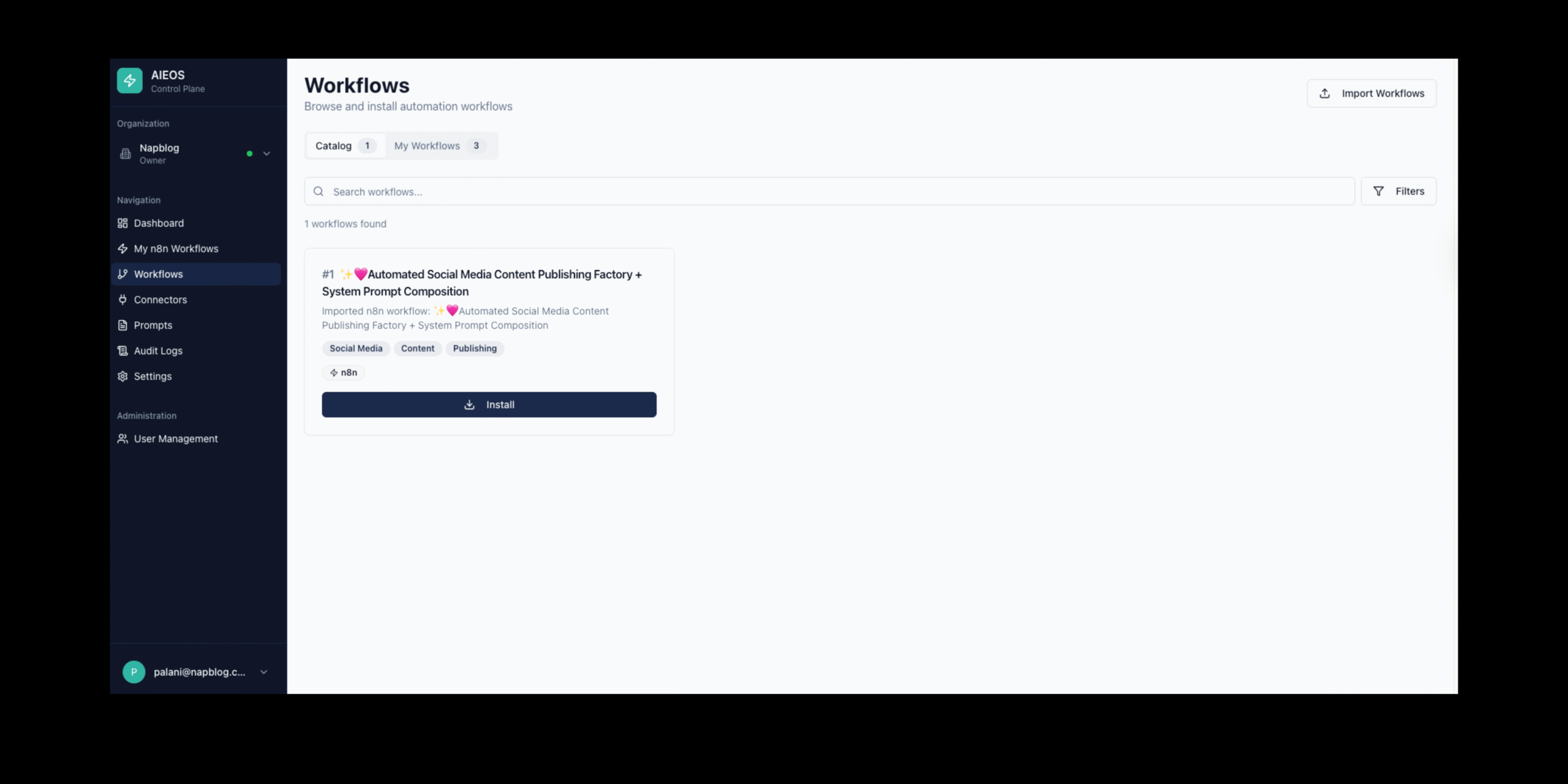
This is precisely where AI Europe OS by Napblog Limited positions itself as a strategic infrastructure layer.
9. The Role of AI Europe OS in Grant Enablement
AI Europe OS is not merely a software stack. It is:
- A compliance-ready AI deployment architecture
- A funding-aligned AI documentation framework
- A modular AI integration environment
It enables SMEs to:
- Structure AI projects to match Horizon Europe criteria
- Generate required documentation for Digital Europe submissions
- Track funding milestones
- Maintain AI Act compliance logs
- Align deployment with sustainability KPIs
This dramatically increases funding approval probability.
10. Sector-Specific Opportunities in Milan
10.1 Manufacturing
- Predictive maintenance AI
- Computer vision quality control
- Robotics optimization
- Supply chain digital twins
Funding alignment:
- Horizon Europe
- GenAI4EU
- Mini Development Contracts
10.2 Fashion & Design Tech
Milan’s global fashion ecosystem can deploy:
- AI-driven trend prediction
- Sustainable materials modeling
- Automated inventory intelligence
Strong alignment with:
- Digital Europe Programme
- Lombardy innovation vouchers
10.3 Fintech & Financial Services
Milan’s banking and fintech ecosystem can adopt:
- AI-based fraud detection
- Automated compliance AI
- ESG analytics
Funding alignment:
- Horizon Europe Cluster 4
- EIB-backed loans
10.4 Green Tech & Energy
AI applications:
- Smart grid optimization
- Carbon tracking systems
- Industrial energy reduction AI
Alignment:
- Transizione 5.0
- EU Green Deal-linked funding
11. Deadlines and Strategic Timing
Horizon Europe Cluster calls (Digital, Industry and Space) frequently close in April cycles.
SMEs should begin preparation:
- 6–9 months before submission
- With structured consortium mapping
- Technical feasibility documentation
- Financial modeling
Late-stage scrambling significantly reduces success probability.
12. Financial Structuring Strategy for SMEs
Optimal funding stacking strategy:
- Regional Lombardy voucher (seed feasibility)
- National Mini Development Contract (infrastructure)
- Horizon Europe (innovation scaling)
- EIB loan (capital expansion)
This blended structure reduces equity dilution and preserves SME ownership.
13. Risk Factors SMEs Must Mitigate
- Overestimating internal AI maturity
- Underestimating compliance documentation
- Poor consortium selection
- Weak financial co-funding planning
- Lack of measurable KPIs
AI Europe OS mitigates these risks by providing structured deployment governance.
14. Investment Trends Supporting Milan’s AI Growth
Europe’s AI investment landscape continues to expand rapidly, with billions raised across AI-focused companies annually.
Data center investments in Italy are projected to exceed €10 billion in the 2025–2026 period, reinforcing the infrastructure backbone required for AI deployment.
This creates a supportive macro-environment for Milan SMEs to scale.
15. Why 2026–2027 Is a Critical Window
Three structural forces converge:
- EU strategic autonomy in AI
- Industrial decarbonization mandates
- Generative AI commercialization
Funding intensity is highest during early regulatory cycles.
Waiting reduces advantage.
16. How Milan SMEs Should Proceed (Action Framework)
Phase 1 – Diagnostic
- AI maturity audit
- Compliance readiness assessment
- Sector funding mapping
Phase 2 – Structuring
- Funding stack design
- Consortium building
- Financial modeling
Phase 3 – Deployment
- AI Europe OS integration
- Documentation automation
- Grant submission
Phase 4 – Scaling
- KPI monitoring
- EIB capital expansion
- Cross-border EU partnerships
17. Conclusion: From Grants to Competitive Sovereignty
For Milan-based SMEs, AI funding is not merely about subsidized technology—it is about securing long-term competitive positioning within Europe’s digital industrial framework.
The EU is deploying billions in AI capital across:
- Horizon Europe
- Digital Europe Programme
- GenAI4EU
- National Italian industrial programs
- European Investment Bank financing instruments
However, capital alone is insufficient.
Execution, compliance, structured architecture, and funding-aligned deployment determine success.
AI Europe OS by Napblog Limited provides the operational backbone enabling Milan’s SMEs to move from fragmented experimentation to structured AI adoption—aligned with EU regulatory, financial, and industrial strategy.
The window is open.
The capital is available.
The competitive advantage will belong to those who structure correctly and move decisively.