Napblog

January 18, 2026

AIEOS Grants are structured across EU
AIEOS - AI Europe OS

AI Europe OS and the Acceleration of AI Implementation Grants in France

France is emerging as one of the principal execution hubs for European artificial intelligence policy. The convergence of European Union–level funding instruments, national strategic investment, and implementation-focused grant mechanisms has created a uniquely favorable environment for operational AI deployment. AI Europe OS positions itself within this environment as an execution framework: a governance-aware, compliance-native operating system designed to translate European AI policy into deployable systems. This article examines how AI Europe OS aligns with AI Europe Advance–style implementation grants in France, how those grants are structured across EU and national layers, and why France is becoming the preferred jurisdiction for scaling trustworthy, industrial-grade AI in Europe. 1. France’s Strategic Role in Europe’s AI Execution Layer France occupies a structurally distinct position in Europe’s AI ecosystem. While several EU member states excel in research or startup density, France uniquely combines: The French state has explicitly framed AI as a strategic sovereignty asset rather than a purely market-driven technology. This framing aligns tightly with the European Commission’s shift from experimentation to deployment under the AI Continent and Apply AI strategies led by the European Commission. AI Europe OS is designed to operate precisely at this intersection: where regulation, infrastructure, and applied AI converge. 2. From Policy to Practice: What “AI Europe Advance” Represents “AI Europe Advance” is best understood not as a single program, but as a policy execution direction: prioritizing implementation grants over exploratory pilots. These grants are characterized by: France has become a preferred beneficiary country because it can absorb and operationalize these grants at scale. 3. The Architecture of AI Europe OS AI Europe OS is not a model or a single platform. It is an operating framework that integrates: This architecture is intentionally aligned with funding requirements under Horizon Europe, Digital Europe, and national French programs. 4. EU-Level Funding Streams Supporting AI Implementation in France 4.1 Horizon Europe: From Research to Deployment Horizon Europe increasingly prioritizes late-stage research and first-of-kind deployment. Large calls such as GenAI4EU fund consortia deploying generative AI in healthcare, manufacturing, and public services. AI Europe OS integrates directly with Horizon Europe grant logic by: 4.2 Digital Europe Programme: Operational AI at Scale The Digital Europe Programme focuses explicitly on deployment, not research. France has secured a significant share of DEP calls, particularly in: AI Europe OS acts as a “deployment substrate” for DEP projects, reducing friction between grant award and system go-live. 5. National Acceleration: France 2030 and the AI Strategy 5.1 France 2030 as an Implementation Engine France 2030 allocates billions of euros toward deep tech, with AI as a core pillar. Unlike EU programs, France 2030 is explicitly execution-driven, favoring: AI Europe OS aligns with France 2030 by providing a standardized operational layer that can be reused across sectors, reducing duplication and compliance overhead. 5.2 AI for Humanity to AI at Scale France’s AI strategy has evolved from “AI for Humanity” to AI at scale. The emphasis is no longer on ethical framing alone, but on measurable productivity gains, particularly in: This evolution directly benefits implementation-ready frameworks like AI Europe OS. 6. Infrastructure as a Grant Multiplier: AI Factories and EuroHPC France hosts one of Europe’s flagship AI Factories through the EuroHPC JU. Central to this is the Alice Recoque system, which provides AI-ready compute capacity to research and industry. AI Europe OS is designed to orchestrate workloads across: This capability is increasingly a prerequisite for large implementation grants. 7. Sectoral Deployment Focus in France 7.1 Healthcare France is a lead country for GenAI deployment in clinical decision support. Implementation grants prioritize: AI Europe OS embeds these controls natively. 7.2 Manufacturing and Energy Industrial AI grants emphasize predictive maintenance, digital twins, and optimization. France’s industrial base makes it an ideal testbed for scalable AI deployment. 7.3 Public Administration France is piloting AI-enabled services across taxation, social services, and justice—areas where compliance-first AI frameworks are mandatory. 8. Why France Is Becoming Europe’s AI Implementation Hub France’s advantage is structural: AI Europe OS leverages these conditions to function as a pan-European execution layer, with France as its primary deployment anchor. 9. Implications for SMEs, Scale-Ups, and Consortia For SMEs and consortia, AI Europe Advance-style grants in France offer: AI Europe OS lowers the entry barrier by abstracting regulatory and operational complexity. 10. Strategic Outlook: From France to Europe-Wide Deployment France is not the end state—it is the proving ground. The objective of AI Europe OS is to: As Europe shifts decisively from policy to practice, implementation frameworks will matter more than models themselves. Conclusion AI Europe OS sits at the convergence of funding, regulation, and infrastructure. France, through its alignment with EU AI policy and its commitment to implementation grants, provides the ideal environment for this convergence to materialize. The next phase of European AI leadership will not be defined by who trains the largest models, but by who deploys trustworthy AI at scale. In that race, France—and execution-centric frameworks like AI Europe OS—are moving decisively ahead.
Students Ireland Offers and discounts Mindset
SIOS - Students Ireland OS

Student Discounts on Technology Products: How They Shape Student Mindsets and Academic Outcomes

Technology is no longer a luxury—it is foundational infrastructure. From laptops and tablets to licensed software, cloud platforms, and digital accessories, students are expected to arrive “tech-ready” from day one. Against this backdrop, student discounts on technology products have become a defining feature of the modern student experience. While these discounts are often framed as simple financial incentives, their impact goes much deeper, shaping student mindset, academic behaviour, confidence, and long-term digital literacy. From a Students Ireland OS (SIOS) perspective, the discussion around technology discounts is not merely about saving money. It is about equity, access, psychological reassurance, and the development of responsible, digitally empowered graduates. This article examines how student discounts on technology products affect students holistically—financially, psychologically, and academically—while also addressing potential risks and policy considerations. The Rising Centrality of Technology in Student Life Higher education in Ireland and globally has undergone a structural transformation. Lecture halls are increasingly hybrid, assignments are cloud-based, collaboration happens through digital workspaces, and assessment often requires specialised software. A student without adequate technology is at a structural disadvantage. Key areas where technology is now indispensable include: In this environment, access to reliable, modern technology is directly linked to student success. Student discounts offered by major providers help reduce barriers to entry and ensure that learning outcomes are not dictated by personal financial capacity. Financial Relief and Reduced Cognitive Load One of the most immediate effects of technology discounts is financial relief. Students face mounting costs related to accommodation, transport, food, and tuition. High upfront technology costs—often €1,000 or more for a capable laptop—can significantly increase financial stress. Discounts offered by companies such as Apple, Microsoft, and Adobe reduce this burden in tangible ways. Lower prices translate not only into savings but into reduced anxiety. When students are not preoccupied with financial strain, they can redirect cognitive energy toward learning, engagement, and creativity. From a mindset perspective, this reduction in “financial noise” is critical. Research consistently shows that financial stress impairs concentration, memory, and decision-making. Technology discounts, therefore, function indirectly as academic performance enablers. Shaping a “Smarter Consumer” Mindset Beyond affordability, student discounts influence how students think about purchasing decisions. Rather than defaulting to the cheapest available option, students are encouraged to evaluate value, longevity, and suitability for academic use. This mindset shift has several long-term benefits: Platforms like ISIC Ireland play a key role in legitimising and centralising access to verified student discounts, reinforcing the idea that smart spending is part of responsible adulthood. Over time, this cultivates financially literate graduates who understand return on investment—an essential life skill extending far beyond university. Psychological Impact: Feeling Valued and Included There is also a strong psychological dimension to student discounts that is often overlooked. When global technology companies explicitly acknowledge students through discounted pricing, it sends a powerful message: students matter. This sense of recognition contributes to: For many first-generation or international students, discounted access to premium technology can be especially affirming. It reduces the perception that high-quality tools are reserved only for those with economic privilege. From a SIOS viewpoint, this psychological inclusion aligns closely with broader student advocacy goals—ensuring that higher education remains a pathway to opportunity rather than a reinforcement of inequality. Academic Productivity and Skill Development Access to appropriate technology directly influences how students study, collaborate, and perform. Discounted software suites, cloud services, and hardware upgrades enable students to: For example, discounted access to platforms like Microsoft 365 or Adobe Creative Cloud allows students to graduate with hands-on experience in tools commonly used in workplaces. This narrows the gap between education and employment, enhancing graduate readiness. Importantly, students who gain early familiarity with these tools often demonstrate greater confidence during internships and graduate roles, reinforcing the long-term value of student-focused pricing models. Equity, Access, and the Risk of Digital Stratification While student discounts significantly improve access, they do not fully eliminate inequality. Not all students are equally positioned to take advantage of discounts, particularly those who still cannot afford reduced prices. This raises critical policy questions: From a SIOS advocacy perspective, discounts should be viewed as one component of a broader access strategy. Institutions, government bodies, and private-sector partners must collaborate to ensure that digital participation is universal, not conditional. Potential Downsides and Critical Considerations It is important to acknowledge that increased access to technology is not without risks. Overreliance on devices can contribute to distraction, reduced deep learning, and digital fatigue. Some studies suggest that excessive screen use may negatively affect attention spans and retention if not balanced with effective pedagogy. Additionally, aggressive discount marketing can encourage unnecessary upgrades or consumption, fostering a “latest-is-best” mentality that conflicts with sustainability goals. Therefore, student discounts must be accompanied by: The objective should not be maximal technology use, but optimal technology use. Long-Term Brand and Societal Implications From a business perspective, student discounts represent long-term investment strategies. Students who adopt specific platforms during university often carry those preferences into professional life. However, from a societal perspective, the benefits are broader. Well-designed discount programmes contribute to: When aligned with student welfare objectives, these programmes can support national goals around skills development, inclusion, and economic competitiveness. Conclusion: More Than a Discount Student discounts on technology products are far more than marketing tools. They are structural supports that influence how students learn, think, and engage with the digital world. By reducing financial pressure, fostering confidence, and enabling access to professional-grade tools, these discounts help shape resilient, capable, and forward-thinking graduates. From the SIOS standpoint, the continued expansion and refinement of student technology discount schemes should be encouraged—but always alongside broader conversations about equity, sustainability, and responsible digital use. When implemented thoughtfully, student discounts are not just helpful; they are transformative. As higher education continues to evolve, ensuring fair and meaningful access to technology will remain central to the student experience—and student discounts will continue to play a critical role in that journey.

Curriculum resources, examination fees, learning materials,
HOS - Homeschooling OS

Homeschooling Grants: What Financial Support Really Exists, and How Families Can Navigate It

Homeschooling is often described as a choice rooted in values: flexibility, child-centred learning, safety, cultural alignment, or responsiveness to special educational needs. Yet behind the philosophy lies a practical reality that every home-educating family must confront—cost. Curriculum resources, examination fees, learning materials, technology, therapies, and in some cases private tuition all add up. This leads many families to ask a fundamental question: are there grants for homeschooling? The short answer is nuanced. Direct, universal state funding for homeschooling is rare in most countries, including Ireland and the United Kingdom, and only partially available in parts of the United States. However, a closer examination reveals a complex ecosystem of targeted grants, conditional schemes, tax credits, charitable support, advocacy-based assistance, and indirect resources that families can leverage—particularly when homeschooling intersects with medical, developmental, or placement-related needs. This article provides a clear, evidence-based overview of homeschooling grants, with particular attention to Ireland and comparative insights from the United States and other jurisdictions. More importantly, it reframes the discussion: moving away from the expectation of “free homeschooling” and toward strategic financial planning within existing systems. 1. Understanding the Policy Context: Why Homeschooling Is Rarely Funded Directly In most education systems, public funding follows institutions, not families. State education budgets are structured around schools—staffing, buildings, inspections, and standardised delivery. Homeschooling, by definition, operates outside that institutional framework. As a result: This distinction underpins nearly all homeschooling-related grant schemes worldwide. 2. Homeschooling Grants in Ireland: What Exists and What Does Not Ireland provides one of the clearest examples of this policy logic. Parents have a constitutional right to educate their children at home, but that right does not carry automatic financial support. No General Homeschooling Grant There is no general grant available to families who choose to homeschool in Ireland. This applies regardless of income level, educational philosophy, or duration of home education. Homeschooling families are not eligible for: This position is consistently confirmed by the Department of Education, Citizens Information, and Tusla. 3. The Home Tuition Grant Scheme (Ireland): Frequently Misunderstood The most commonly cited scheme in discussions about “homeschooling grants” in Ireland is the Home Tuition Grant Scheme, administered by the Department of Education via gov.ie. However, this scheme is not a homeschooling grant in the conventional sense. What the Scheme Is For The Home Tuition Grant Scheme exists to support children who cannot attend school, including: What the Scheme Is Not For The scheme does not apply to families who have chosen homeschooling as an educational preference. If a child is withdrawn from school to be homeschooled, eligibility for home tuition funding typically ceases. Key Features of the Scheme Understanding this distinction is critical. While many homeschooling families have children with additional needs, eligibility depends on access to school, not choice of education. 4. Registration and Oversight: The Role of Tusla All homeschooling families in Ireland must register with Tusla under Section 14 of the Education (Welfare) Act 2000. While Tusla does not provide funding, registration is essential because: Importantly, Tusla’s remit is educational suitability, not financial support. Registration neither enables nor restricts access to grants, but it is a prerequisite for lawful homeschooling. 5. The United States: A Patchwork of Grants, Credits, and Private Support In contrast to Ireland, the United States presents a more fragmented but sometimes more flexible landscape. Advocacy-Based Grants: HSLDA One of the most prominent sources of homeschooling financial support in the US is the Home School Legal Defense Association (HSLDA). HSLDA offers curriculum grants to member families who can demonstrate financial need. These grants may be used for: However, eligibility is restricted to: This model highlights a key trend: non-state actors increasingly fill funding gaps left by public policy. 6. Tax Credits and Education Savings (US-Specific) Some US states offer education-related tax credits or deductions that homeschooling families can access. These may include: These mechanisms do not provide upfront funding, but they can significantly offset annual costs. Families must retain receipts and comply with state-specific tax regulations. It is important to note that these benefits vary widely by state and are subject to legislative change. 7. Scholarships and Support for Older Homeschoolers While rare, some scholarships exist for: These are typically merit-based or need-based and are offered by private institutions, foundations, or universities rather than governments. For secondary-level homeschoolers, financial planning increasingly shifts from grants to strategic accreditation and examination pathways, such as GCSEs, A-Levels, SATs, or equivalent qualifications. 8. Indirect Financial Support: Often Overlooked, Highly Valuable Although direct grants are limited, many families underestimate the value of indirect supports. Free and Low-Cost Resources In Ireland, platforms such as Scoilnet provide curriculum-aligned materials at no cost, even though they are not homeschooling-specific. Homeschooling Co-ops and Networks Local homeschooling groups often offer: While informal, these networks can substantially reduce costs over time. 9. Why “Free Homeschooling” Is a Misleading Concept The expectation that homeschooling should be free often arises from comparisons with public schooling. However, public education is not cost-free—it is collectively funded through taxation. When families homeschool, they effectively: Understanding this trade-off helps reframe the grants discussion from entitlement to resource optimisation. 10. Strategic Financial Planning for Homeschooling Families Given the realities outlined above, successful homeschooling families adopt a long-term financial strategy rather than relying on grants alone. Key components include: In this context, limited grants or supports—when available—are treated as supplements, not foundations. 11. Looking Ahead: Could Homeschooling Funding Models Evolve? Globally, homeschooling participation continues to grow, driven by: As numbers increase, pressure may mount for governments to reconsider funding models, particularly for hybrid or part-time arrangements. However, any future change is likely to involve greater oversight and reduced autonomy, a trade-off many homeschooling families approach cautiously. Conclusion: Clarity Over Assumptions Homeschooling grants do exist—but rarely in the form families initially expect. In Ireland, financial support is tightly linked to inability to access school, not educational choice. In the United States, advocacy groups, tax mechanisms, and state-level initiatives provide more flexibility, but still stop short of universal funding. For families considering or already engaged in

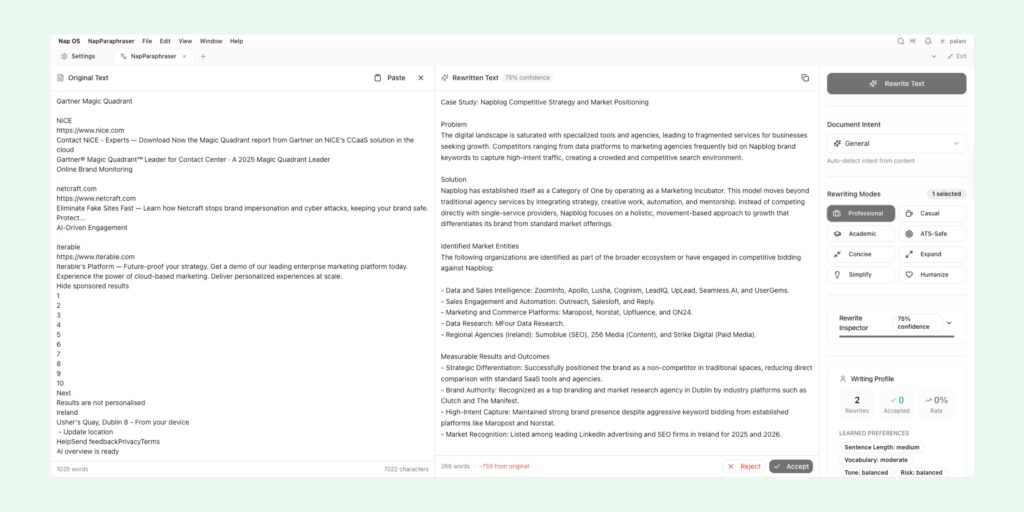
OS introduces NapParaphraser, an intelligence layer designed
NapOS

Nap OS — NapParaphraser. An Intelligent System for Auto-Formalized, Systematically Sorted, Time-Relevant Knowledge Creation

Nap OS introduces NapParaphraser, an intelligence layer designed to transform unstructured, inconsistent, or poorly regulated input into formalized, systematically sorted, time-relevant, and reusable knowledge artifacts. Unlike conventional paraphrasing tools that merely rewrite sentences, NapParaphraser operates as a semantic normalization and structuring engine. It interprets intent, extracts signal from noise, resolves ambiguity, aligns tone and format, and anchors content to relevant temporal and contextual frames. This newsletter explains why NapParaphraser exists, how it works internally, and what outcomes it enables for students, professionals, founders, and teams operating inside Nap OS. The Problem NapParaphraser Solves Most real-world input is messy: Traditional tools fail because they assume: Nap OS rejects these assumptions. NapParaphraser is built for reality, not ideal input. What NapParaphraser Actually Is (and Is Not) It Is: It Is Not: NapParaphraser sits between raw thought and finished output, acting as an intelligent intermediary that understands what the content is becoming, not just what it currently is. Core Design Philosophy NapParaphraser is built on four principles: 1. Input Agnosticism Users should not be punished for poor structure. The system assumes: The burden of structure is shifted from the user to the system. 2. Intent Before Expression NapParaphraser prioritizes what the user means, not how it is written. It decouples: This allows one input to generate multiple valid outputs. 3. Time Is a First-Class Variable Content is always evaluated against: This enables time-aware paraphrasing, summaries, and prioritization. 4. Systematic Reusability Every output is structured so it can: Internal Architecture Overview NapParaphraser operates as a multi-stage intelligence pipeline. Stage 1: Raw Input Ingestion Accepts: No assumptions are made about quality or completeness. Stage 2: Semantic Decomposition The system breaks input into: Each unit is tagged with: Stage 3: Intent & Context Resolution NapParaphraser infers: Signals used include: Stage 4: Temporal Anchoring Each semantic unit is evaluated for: This allows: Stage 5: Formalization Engine Content is rewritten into: This is where paraphrasing happens, but it is informed by all prior stages. Stage 6: Systematic Sorting The output is organized by: The same input can produce: Stage 7: Output Packaging Final content is delivered as: Ready for use across Nap OS. Why “Auto-Formalized” Matters Formalization is not about sounding complex. It is about: NapParaphraser ensures that even casual notes can be transformed into: This removes friction between thinking and shipping. Handling Poorly Regulated Input A defining feature of NapParaphraser is its tolerance for chaos. Examples of what it can handle: Instead of rejecting or flattening input, the system: The output is always cleaner than the input, without losing meaning. Systematic Sorting: Beyond Simple Organization Sorting is not alphabetical or cosmetic. NapParaphraser sorts content by: This creates cognitive flow, making the output easier to read, understand, and act upon. Time-Relevant Intelligence Time relevance enables capabilities such as: For students, this means: For professionals: For founders: Use Cases Inside Nap OS Students Job Seekers Founders Knowledge Workers Why This Is a Nap OS-Native Advantage NapParaphraser is not a standalone tool. It is embedded in Nap OS, meaning: Every interaction improves: Strategic Differentiation Most AI writing tools optimize for: NapParaphraser optimizes for: This is why it feels less like “rewriting” and more like thinking with structure. The Long-Term Vision NapParaphraser is foundational infrastructure. As Nap OS evolves, this system will: The goal is not better text.The goal is better thinking, captured systematically. Closing Note NapParaphraser represents a shift from reactive writing tools to proactive intelligence systems. It respects how humans actually think: non-linear, imperfect, and time-bound. By absorbing disorder and producing structured, time-aware, formalized output, NapParaphraser becomes a silent partner in every serious intellectual workflow inside Nap OS. This is not just paraphrasing.This is knowledge refinement at system scale.

unrelated to Napblog’s core mission
Blog

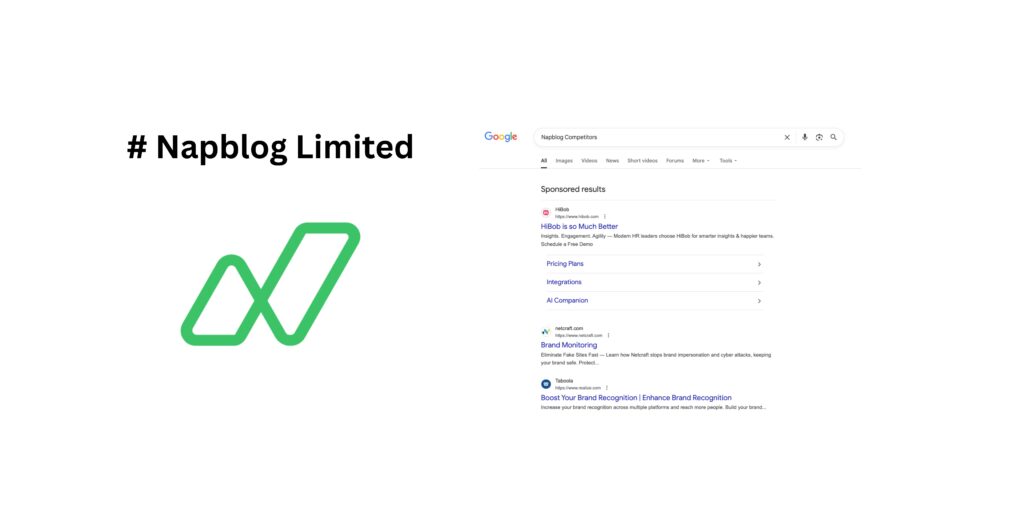
Why You’re Seeing Competitor Ads When Searching for Napblog (And Why That’s Normal)

When you search for Napblog competitors or related terms on Google, you may notice sponsored results from platforms that appear, at first glance, unrelated to Napblog’s core mission. One such example is HiBob, a modern HR software platform that frequently appears in sponsored listings. This article explains why that happens, what it means, and why it’s not a problem—nor a threat to Napblog Limited or its long-term vision. This is not a takedown.This is not a comparison war.This is a clarity piece. Understanding Google Ads: Intent, Not Identity Google Ads does not work on brand loyalty.It works on search intent. When someone types a query like: Google interprets this as commercial investigation intent, not brand allegiance. That tells advertisers: “This user is exploring solutions, not defending one.” As a result, platforms operating in adjacent problem spaces—HR, productivity, workforce systems, talent management—can appear, even if they do not directly compete with Napblog. This is how the ad auction is designed. Why Platforms Like HiBob Appear Let’s be precise. HiBob is positioned as: Napblog, by contrast, is building: These are different layers of the ecosystem. However, Google Ads does not fully understand philosophical differences. It understands: If a company bids on: It may appear next to Napblog-related searches. That’s not competition.That’s overlapping vocabulary. The Important Distinction: Platform Layer vs Operating Layer One helpful way to understand this is to think in layers. HiBob and Similar Platforms Operate at the Organization Layer They answer questions like: They are company-centric systems. Napblog Operates at the Individual Execution Layer Napblog answers different questions: Napblog is person-centric, not organization-centric. That distinction matters. Why Google Still Groups Them Together Because Google Ads works on intent clusters, not mission statements. If someone searches: “career execution system” Google may associate: From Google’s perspective, they all live in the same commercial neighborhood, even if they are on different streets. This is why seeing competitor ads does not mean Napblog is being targeted unfairly. It means Napblog is being recognized as commercially relevant. That is actually a signal of progress. Sponsored Results Are Not Search Results It’s critical to separate two things: Sponsored listings: They simply indicate: “This company paid to be visible for this query.” That’s all. Why Napblog Does Not Need to Imitate This Strategy Napblog’s growth thesis is different. Napblog is not built to: Napblog is built to: That kind of adoption is driven by: Not ad saturation. A Note on “Competitor” as a Word The word competitor is often misleading. In reality: That is not conflict.That is ecosystem layering. Napblog does not need others to fail to succeed. Why This Is Actually a Healthy Signal for Napblog If Napblog were invisible, no ads would appear around it. The fact that: Means one thing: Napblog is entering the consideration phase of the market. That is a necessary step before category creation. The Long Game: Category Creation vs Keyword Capture Many companies fight for keywords. Napblog is building for category creation. That means: When a category is new, Google struggles to classify it. That’s normal. Every new category goes through this phase. What Users Should Do When They See These Ads If you’re exploring Napblog and see sponsored ads from other platforms: They are different needs. Napblog’s Position Remains Clear Napblog is not trying to be: Napblog is building: That clarity matters more than ad placements. Final Thought: Ads Are Noise, Systems Are Signal Google Ads come and go. Bids change.Budgets shift.Campaigns pause. What remains is: Napblog is focused on the signal. Everything else is background noise. Napblog LimitedBuilding systems for execution, not impressions.