Ideas that execute.
Every article is born from real execution inside Nap OS. Insights on building skills, launching careers, and creating systems that work.
Telling × Doing = Luck, Work Work Work Work & Advertise
Everyonelikes to talk. Ideas flow easilythrough conversations. Plans sound brilliantwhen spoken aloud. But tellingis not doing. Wordsare light.…
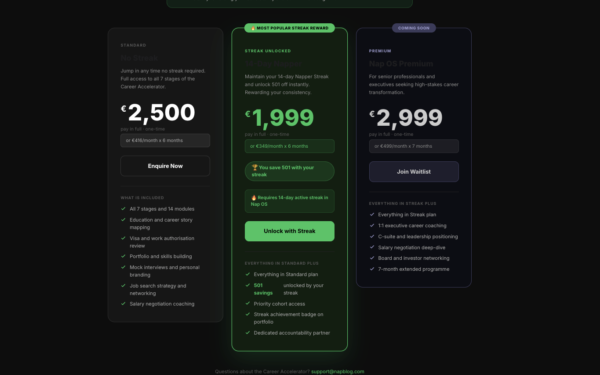
Why Nap OS Career Accelerator Is Priced the Way It Is?
The modern job market has changed. Degrees are no longer enough.Experience is no longer guaranteed.And applying to jobs…
Napblog Limited: Creative Product Development That Solves Undisputed Problems
Companies iterate on features, improve user interfaces, and add incremental innovation to products that already exist. Napblog Limited…
Homeschooling and Leaving Cert Problems with Practical Answers
Homeschooling in Ireland has grown significantly over the last decade. Many parents now prefer home education because it…
Intuition Psychology: How Habits Shape Results and Transform the Mind from Survival to Thriving?
The Hidden Bridge Between Instinct and Success Many people live most of their lives reacting rather than consciously…
Build something real today
Nap OS turns these ideas into executable skills — verified portfolios, AI coaching, and a complete career system.
Try Nap OS Free
Psychophysis Bipolar Memory for Optimism
My mindremembers extremes. The highest hope. The deepest doubt. Two polesinside one memory system. Lightand shadow. Victoryand vulnerability.…
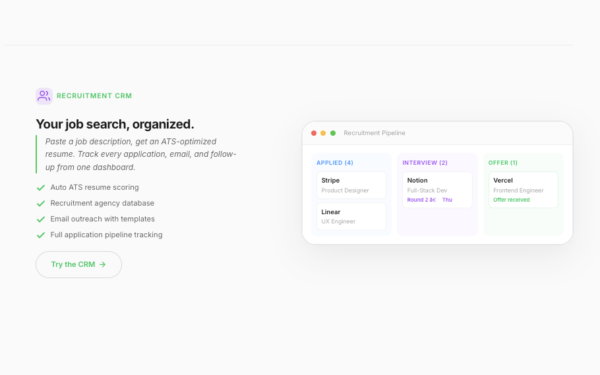
NapRecruitment CRM: How Nap OS Is Rebuilding the Job Search Operating System
The modern job search is broken. Graduates send hundreds of applications into online portals without receiving a response.…
Napblog Limited: The Disruptive Marketing Ideology
Every day, millions of brands compete for attention across social media, search engines, digital platforms, and physical environments.…
AI Europe OS: Sentiment Analysis on New Product Development Support from the EU Commission
Across global markets, governments are racing to establish ecosystems that enable innovation while maintaining public trust and regulatory…
Pitfalls to Avoid in Homeschooling Methodologies and How to Recover
Parents choose homeschooling for many reasons—flexibility, personalized learning, stronger family bonds, and the ability to tailor education to…
Every category maps to a
Nap OS app.
Content is organised around the tools you use. Click to explore articles or open the app directly.
Blog
NapNotesThoughts on building in public, product development, career systems, and the future of human-AI collaboration.
154 articlesNapOS
Portfolio EngineInsights, updates, and deep dives into the Nap OS platform â the career execution operating system…
89 articlesAIEOS - AI Europe OS
NapAIHow AI Europe OS helps startups and SMBs navigate EU regulation, compliance, and infrastructure to build…
79 articlesOut of Box Thinking
64 articlesHOS - Homeschooling OS
DashboardBuilding the operating system for homeschooling families â curriculum tracking, skill verification, and personalized learning paths.
58 articlesSIOS - Students Ireland OS
NapCertsResources, guides, and stories for students in Ireland navigating education, employment, and career development through technology.
43 articlesIPOS - Intuition Psychology OS
28 articlesPugazheanthi Palani
4 articlesStop reading about careers.
Start executing one.
Every article here was written from inside the system. Now it's your turn to use it.