
Introduction: Why NapblogOS Needs More Than Software
NapblogOS was never designed to be “just another platform.”
From its inception, NapblogOS has been positioned as an Enterprise Marketing Incubator Operating System—a system that evaluates execution, not intention; outcomes, not attendance; evidence, not claims.
This distinction matters.
Most educational and incubation platforms collapse under scale because they rely on:
- subjective mentor opinions,
- self-reported progress,
- easily fabricated digital portfolios.
As NapblogOS scales into universities, colleges, accelerators, and institutional programs, brand protection becomes existential. The stronger the certification promise, the higher the risk if execution integrity is compromised.
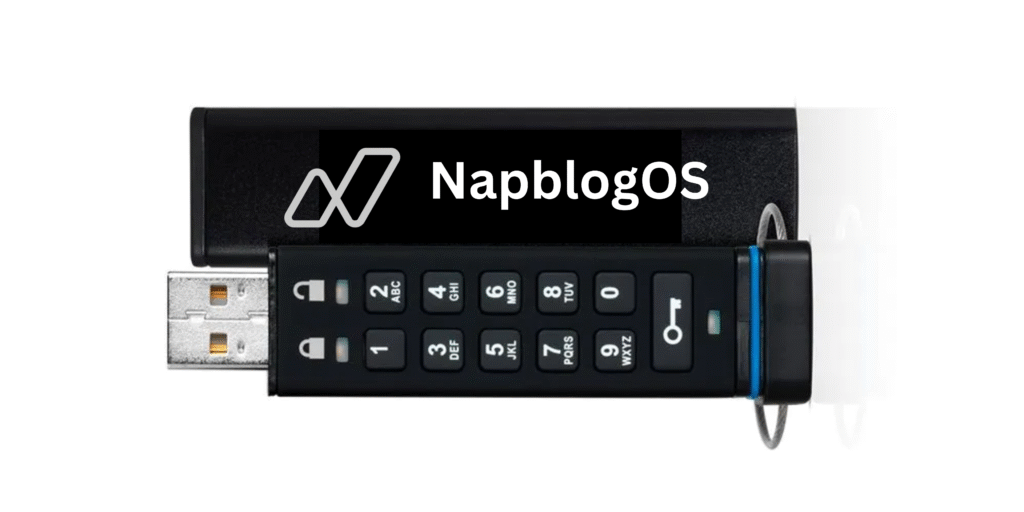
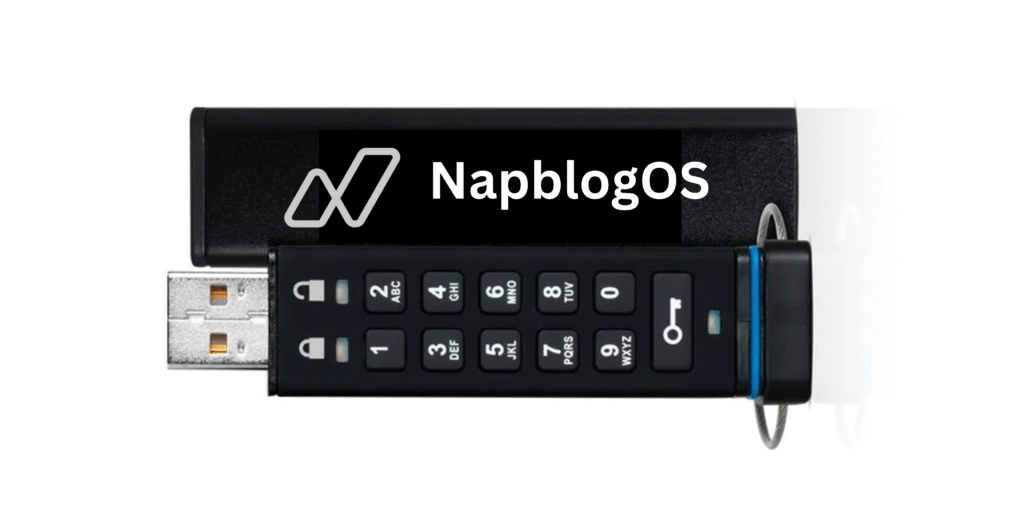
This is where the NapblogOS™ Execution Drive becomes foundational—not as a gadget, not as a storage accessory, but as a governance instrument that protects NapblogOS at the system, institutional, and brand level.
What the NapblogOS Execution Drive Actually Is
The NapblogOS Execution Drive is a secure, hardware-encrypted physical evidence device, issued to students or participants enrolled in NapblogOS programs that lead to certification.
It is designed to:
- preserve execution evidence,
- enforce chronological integrity,
- reduce manipulation and fabrication,
- provide offline, institution-owned proof of work.
Unlike generic USB drives, the Execution Drive operates under enterprise-grade security constraints and is logically bound to NapblogOS workflows.
Why Digital-Only Systems Eventually Fail at Scale
Before understanding why the Execution Drive protects NapblogOS, it is important to understand the structural weakness of digital-only execution systems.
1. Digital Evidence Is Easy to Manipulate
Screenshots, documents, PDFs, and cloud folders can be:
- edited retroactively,
- created in batches at the end of programs,
- reused across cohorts.
Even with timestamps, digital-only evidence lacks friction.
2. Cloud Platforms Centralize Risk
Purely cloud-based evidence:
- increases data liability,
- raises compliance concerns for universities,
- creates dependency on a single vendor environment.
Institutions prefer distributed ownership of execution records.
3. Certification Without Physical Anchors Loses Credibility
Once certifications scale:
- employers scrutinize them,
- universities audit them,
- students attempt to “game” them.
Without physical enforcement, certification authority erodes.
NapblogOS was explicitly designed to avoid this trap.
The Role of the Execution Drive in NapblogOS
The Execution Drive acts as a physical anchor for NapblogOS’s digital logic.
NapblogOS Does the Thinking
- Defines milestones
- Enforces execution workflows
- Scores outcomes
- Issues certification
The Execution Drive Does the Protecting
- Stores immutable execution evidence
- Preserves chronological order
- Enables audits
- Raises the cost of cheating
Together, they form a closed execution loop.
How the NapblogOS Execution Drive Works (System-Level View)
1. Institutional Issuance
The Execution Drive is issued by the university or program—not casually distributed. Each drive is:
- uniquely serialized,
- hardware-encrypted,
- institution-approved.
This already elevates its status from “USB” to official execution artifact.
2. System Binding
When a participant begins a NapblogOS program:
- the Execution Drive is bound to their NapblogOS account,
- the serial ID is registered,
- the cohort and program context is fixed.
This prevents:
- drive swapping,
- reuse across students,
- untracked evidence injection.
3. Real-World Execution Capture
Participants store:
- decision logs,
- market validation recordings,
- iteration assets,
- campaign outputs,
- pitch materials.
The drive does not judge quality.
NapblogOS does.
The drive’s role is preservation, not evaluation.
4. Milestone-Based Verification
At predefined milestones:
- NapblogOS requests specific evidence,
- files are verified against timestamps and hashes,
- mismatches trigger rework or rejection.
This ensures that evidence aligns with execution timing, not post-hoc assembly.
5. Lock & Archive
At program completion:
- the Execution Drive is locked (read-only),
- final evidence state is archived,
- certification decisions are finalized.
The drive becomes a sealed execution record.
How the Execution Drive Protects NapblogOS as a Brand
1. Protects Against Portfolio Fabrication
The most common failure mode of execution-based platforms is fabricated portfolios.
The Execution Drive:
- raises friction for falsification,
- preserves real-time execution artifacts,
- enables audits long after program completion.
This protects the credibility of every NapblogOS-certified portfolio.
2. Protects Certification Integrity
NapblogOS certifications are not symbolic. They are meant to signal:
- execution capability,
- market-tested thinking,
- operational readiness.
The Execution Drive ensures that certification decisions are:
- defensible,
- evidence-backed,
- institutionally credible.
This protects NapblogOS from becoming “another badge.”
3. Protects University Trust
Universities do not only buy software—they buy risk reduction.
The Execution Drive helps universities:
- retain ownership of execution evidence,
- comply with data governance requirements,
- demonstrate rigor during audits and accreditation reviews.
As a result, NapblogOS becomes easier to approve, defend, and scale institutionally.
4. Protects NapblogOS from Copycats
Software can be copied.
Logic can be approximated.
But system + physical enforcement is hard to replicate.
The Execution Drive creates a structural moat:
- competitors can copy interfaces,
- they struggle to replicate governance.
This protects NapblogOS’s long-term positioning.
Why the Execution Drive Is Not a Gadget
It is critical to clarify what the Execution Drive is not:
- Not a promotional USB
- Not a freebie
- Not a storage upgrade
- Not a student convenience tool
Positioning it incorrectly would weaken the brand.
Instead, it should be framed as:
A certified execution evidence device required for NapblogOS certification.
This language matters.
Importance Level: Optional vs Mandatory
When the Execution Drive Is Optional
- Early pilots
- Proof-of-concept cohorts
- Non-certification tracks
When the Execution Drive Is Mandatory
- Certification pathways
- Enterprise programs
- University-wide deployments
- Accreditation-facing initiatives
This tiered approach balances speed with protection.
Long-Term Strategic Value
1. Enables Higher Pricing
Execution-backed certification justifies:
- premium seat licenses,
- institutional contracts,
- enterprise partnerships.
2. Enables Employer Trust
Employers care less about course names and more about proof of execution. The Execution Drive enables that trust.
3. Enables Audit-Grade Records
In disputes, reviews, or evaluations, NapblogOS can point to:
- physical evidence,
- system logs,
- locked archives.
Few platforms can.
Why NapblogOS Chose Enterprise-Grade Secure Drives
The Execution Drive is built on:
- hardware-level encryption,
- enterprise security standards,
- institutional deployment models.
This ensures:
- IT approval,
- compliance acceptance,
- long-term durability.
Security here is not paranoia—it is brand insurance.
One Clear Truth
NapblogOS can function without the Execution Drive.
But NapblogOS cannot scale safely as a certification authority without it.
That distinction defines its importance.
Final Positioning Statement
The NapblogOS™ Execution Drive exists to protect what NapblogOS stands for: real execution, real evidence, and defensible outcomes.
It does not replace the platform.
It completes it.
Closing: Building Systems That Endure
NapblogOS is not built for short-term experimentation.
It is built to become infrastructure inside institutions.
Infrastructure must be:
- trusted,
- auditable,
- resistant to misuse.
The NapblogOS Execution Drive is a deliberate design choice in service of that future.
Not because it is flashy.
But because execution deserves protection.